




















About WorldFirst
Resources
More brands of Ant International
This country is supported by WorldFirst affiliates, Zyla
We provide coverage in South Asia and Middle East: servicing 210+ countries and territories.
Home > Blogs > Global business expansion > Your guide to import taxes in Australia
Navigate import taxes in Australia with ease—learn the key fees, exemptions and strategies to streamline your business imports.
Key takeaways

Outline
When goods arrive from other countries to Australia, they are first cleared through customs by the Australian Border Force (ABF). The import taxes and customs duties will depend on the type and volume of goods you’re importing. You may even need a special licence or permit to import some goods into Australia.
Not calculating customs tax and duty on imported goods in advance means unexpected expenses that can cut through your profit margins and affect your bottom line. To help you better understand how much import taxes you’ll need to pay when bringing goods into Australia, we have put together this guide. Keep reading to learn how to manage your import tax in Australia and pay tax authorities directly through your World Account.
There are two types of duties and import taxes you’ll need to pay when getting your goods shipped to Australia:
Customs duties are levied on imported goods if any of the following conditions are true:
The exact import duty in Australia will depend on the category of products and the country of origin. Australia has trade agreements with various countries, making goods eligible for preferential tariffs. For instance, if you’re sourcing from China to Australia, you may be able to get special rates due to the China–Australia Free Trade Agreement (ChAFTA). Similarly, selling in New Zealand from Australia can also get you preferential rates.
Goods and services tax (GST) is levied on all goods that are imported into Australia that have a value of more than AUD 1000 (unless an exemption covers the goods you’re importing into Australia). You’ll be asked to pay GST in the same time and manner as the customs duty. The usual GST rate charged on imported goods is 10% of the total value of taxable importation.
As per the Australian Border Force, the total value of taxable importation is calculated as the sum of:
Note that goods that are only entered in Australia for warehousing are not levied any GST until they are out of the warehouse to enter commerce in Australia (home consumption).
The Australian Taxation Office (ATO) also offers a deferral of GST on certain imported goods. Make sure you check the list thoroughly to get your documentation in place.
Import processing charges are also levied when you declare imported goods valued at more than AUD 1000. The charges can be anywhere between AUD 23 and AUD 193, depending on the value of the goods and how you plan to store them.

Other than the GST and customs fees in Australia, there are other charges that you may have to pay, including:
You might have to pay all the import taxes before your goods are imported or when they reach the Australian border (It can vary on a case-to-case basis). But, you will have to pay Australian import taxes before your goods enter the country.

Calculating the taxes you’ll have to pay in advance can help you prepare the funds and get a clear idea about how much it’s costing your business to source and ship the products to Australia. You can ask your shipping partner to help you determine the expected charges for your shipment or use an import customs duty calculator.
There are various concessions, deferrals and exemptions available on import taxes in Australia.
Australia has numerous free trade agreements with countries like China, Japan, South Korea and the United States. You can benefit from preferential tariffs when exporting bulk goods from these countries.
For instance, the trade agreement with China was first introduced in 2015 and Australia has removed tariffs on over 82% (by value) of imported goods from China. As a result, the costs of importing from China to Australia have decreased significantly in the last decade.
→ Take a look at our complete guide on shipping from China to Australia
TCOs apply to specific goods that are unavailable or in limited supply within Australia.
Though, keep in mind that you’ll have to get all of your documentation in place to benefit from these decreased tariffs. Improper or insufficient documentation can lead to delays in shipment clearance and even increase costs.
ABF requires all importers and exporters to use their ABN on documentation and also link the ABN to customs owner codes (Take a look at how to find your ABN). If you are an importer who isn’t entitled to an ABN yet, you can use customs owner codes only.
ABN and ACN are different from each other. So, make sure not to confuse the two. Check out our ABN vs ACN guide to understand the major differences between the two.
WorldFirst is a global payment provider that lets you make payments to suppliers, import tax authorities and shipping partners in their preferred currency. It supports cross-border payments in 90+ currencies.
With a World Account, you can:
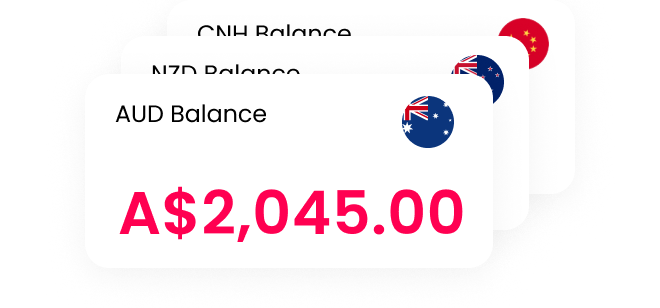
Manage multiple currencies with one account
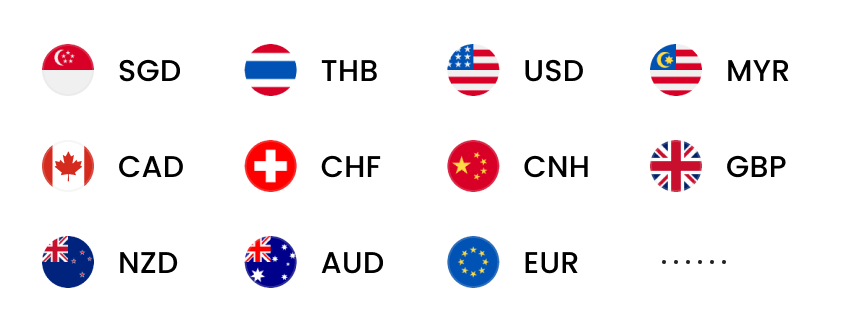
You can set up virtual local currency accounts in 15+ currencies without any overseas address or banking relationship. Your World Account supports major currencies like CNH, USD, AUD, NZD, EUR, SGD and JPY.
Hold collected funds
You can collect customer payments in multiple currencies, hold funds, and use them to make further payments. Your funds are available to be repatriated back to your bank account at any time.
Send timely payments
Pay suppliers and tax authorities in their preferred currency, whether CNH, AUD, USD, or HKD.
Get your goods shipped on time
You can make same-day or next-day payments. Authorise transfers before the cut-off times and WorldFirst handles the rest.
Boost your profit margins
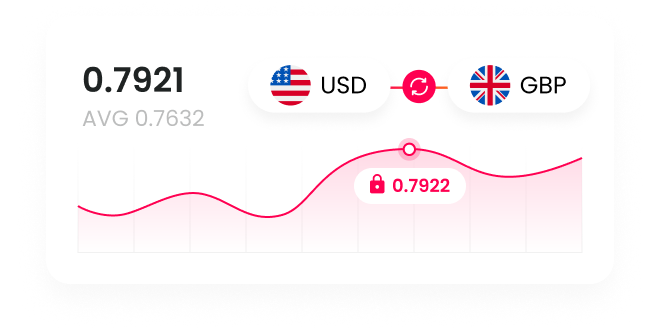
WorldFirst offers competitive exchange rates and lets you lock in exchange rates through forward contracts.
Disclaimer: The information contained is general only and largely our views. Before acting on the information you should consider whether it is appropriate for you, in light of your objectives, financial situation or needs. Although information has been obtained from and is based upon multiple sources the author believes to be reliable, we do not guarantee its accuracy and it may be incomplete or condensed. All opinions, estimates, mentioned products/services and referenced material constitute the author’s own judgement as of the date of the briefing and are subject to change without notice. WorldFirst shall not be responsible for any losses or damages arising from your reliance of such information.
Based in Sydney, Jim is responsible for the WorldFirst business across Australia and New Zealand. He brings with him over 25 years of experience helping Business Owners, CFO’s and Treasury Managers overcome the challenges with cross border payments and navigating volatile foreign exchange markets.
Jim Vrondas
Author
Choose a product or service to find out more
Save money, time, and have peace of mind when expanding your global business.
© 2026, Ant International or its affiliates