


























Your supplier payments, Meta ad spend, freight invoices and SaaS subscriptions probably all sit on the same one or two business cards right now.
When a bookkeeper asks which card paid which supplier last quarter, you’re scrolling through a single statement trying to untangle it. That’s the specific problem ‘unlimited virtual cards’ claims are supposed to solve, and it’s worth knowing exactly what you’re actually being offered before you switch.
The search for unlimited virtual cards in the UK has grown because more SMEs are managing multi-currency spend across marketplaces, ad platforms and overseas suppliers than ever before, and separate cards for separate cost centres solve a real reconciliation headache.
This article explains what an established UK importer should actually look for, how WorldFirst’s World Card compares, and where the number of cards matters less than the fees attached to each one.
Key takeaways:
- ‘Unlimited’ rarely means literally unlimited: providers set different card caps and account-level controls, so the headline claim matters less than the actual issuance rules
- Card count should match how you manage spend: separate virtual cards can make supplier, ad, logistics and subscription costs easier to control and reconcile
- FX fees can matter more than the number of cards: using cards linked to supported currency balances can reduce foreign transaction costs on recurring international spend
- Cashback and controls add practical value: spending limits, card-level tracking and rewards can make a capped card allowance more useful than a higher limit with fewer features
- China sourcing needs more than virtual cards: direct supplier-payment tools can be more useful than card payments for larger orders or suppliers that don’t accept cards
- WorldFirst combines virtual cards with importer-focused payment tools: the World Card offers multiple fee-free virtual cards, zero FX fees on supported balance currencies and uncapped cashback alongside 1688 World Pay and WorldTrade
Open a World Account to issue virtual cards for supplier, ad and logistics spend with no per-card fees.
What ‘unlimited virtual cards’ really means for UK importers
The honest answer is that no major UK business card provider gives you a literally infinite number of cards, and the ones claiming “unlimited” still operate within account-level risk controls.
What you actually need as an established importer is enough cards to segregate spend by supplier, marketplace, ad platform and subscription, plus the ability to issue new ones without a fee every time.
This distinction matters because the pain point behind the search isn’t really about hitting a hard numerical ceiling. It’s about per-card fees and low starting caps that force you back onto one shared card for multiple suppliers, which is exactly what makes reconciliation slow at month-end.
A provider that caps you at 20 or 25 cards but charges nothing to issue them solves the practical problem for almost every SME importer, because you’re unlikely to need more than a handful of active cards per cost centre: one or two for recurring China suppliers, one for marketplace fees, one for ad platforms, one for logistics and customs agents, and one for software subscriptions.
WorldFirst’s own marketing uses ‘unlimited’ to describe uncapped cashback rather than card count, and that’s the more defensible claim. The distinction between issuance limits and issuance fees is the one worth understanding before you compare providers, because a generous cap with no fees usually beats a headline ‘unlimited’ claim that comes with other trade-offs, such as no cashback.
Meet the World Card
WorldFirst’s World Card is a Mastercard-powered virtual business card linked to your free World Account, designed for spending rather than just holding currency.
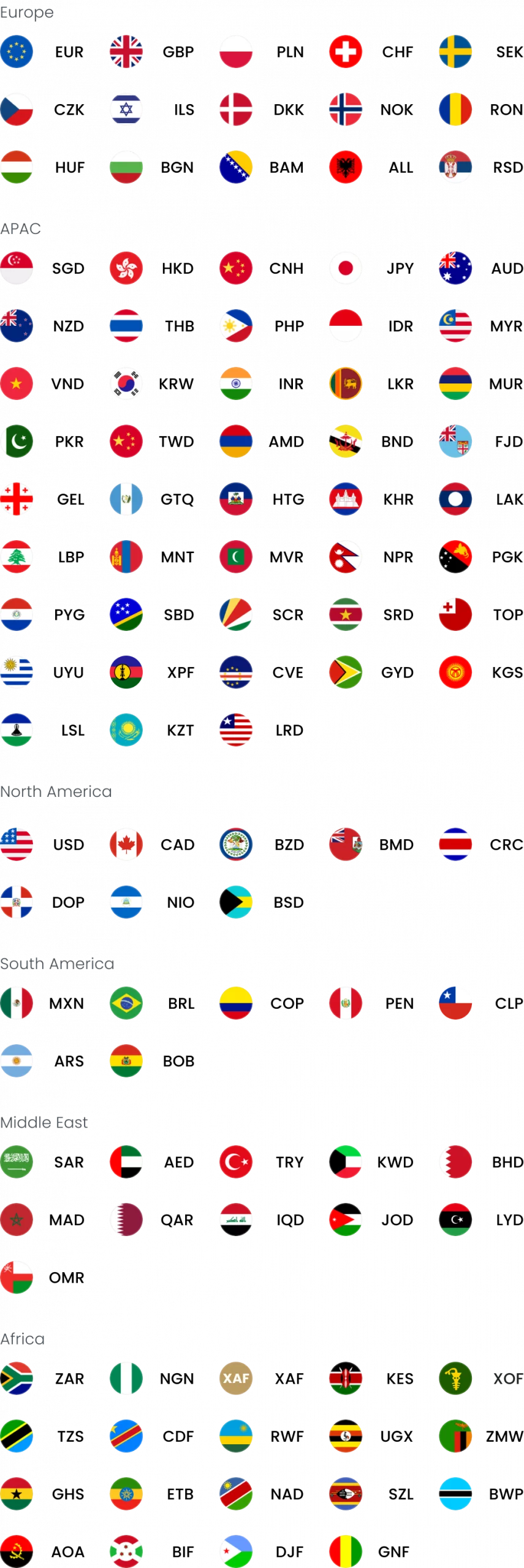
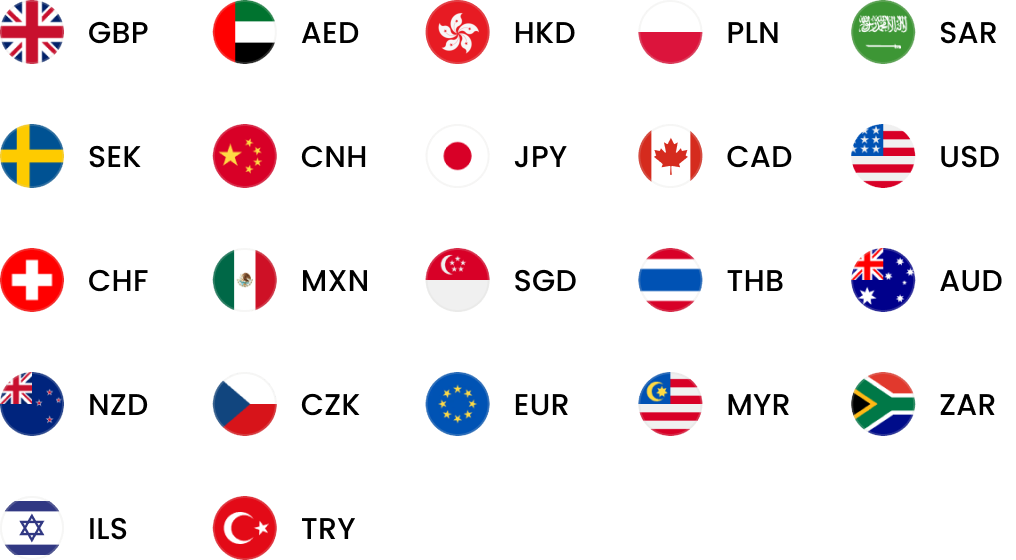
It lets you spend in 150+ currencies wherever Mastercard is accepted, with 0% FX fees on 15 major currencies when you pay directly from your World Account balance, including CNH, USD, EUR, GBP, AUD, CAD, JPY, HKD, SGD, CHF, MXN, NZD, PLN, SEK and CZK, according to WorldFirst’s currency support page.
There’s no setup fee and no monthly card fee, so the only ongoing cost consideration is which currency you’re spending in and whether it falls within the zero-FX list.
Every card carries 3D Secure authentication and two-factor login, and you can freeze or cancel individual cards instantly if a subscription needs cancelling or a card number is compromised. Real-time transaction tracking tags spend by user, card and purpose, which is the feature that actually solves the reconciliation problem behind the ‘unlimited cards’ search, and it syncs with accounting platforms including Xero and NetSuite.
On top of that, eligible business spend earns up to 1.2% uncapped cashback, credited monthly, which is genuinely unlimited in the sense that there’s no ceiling on how much you can earn back.
How many virtual cards do you actually get?
WorldFirst’s official UK product page states you can issue up to 25 virtual cards per World Account, described as ‘one card platform, 25 cards’ with the ability to set spending limits and track everything from one dashboard, according to the World Card product page.
That’s the canonical figure to work from, though it’s worth flagging that WorldFirst’s own campaign pages and some blog content have referenced a higher cap of 50 cards, and older blog posts have cited 20.
Given that inconsistency across WorldFirst’s own published material, treat 25 as the safe planning figure and confirm the current limit directly with WorldFirst or in your account dashboard before you build a card-per-supplier structure around it.
What’s consistent across every WorldFirst source is that there are no fees to issue or hold virtual cards, whichever cap applies. For most established importers, a cap in the 20 to 50 range is not the binding constraint.
If you’re running five to ten active supplier relationships plus marketplace, ad and logistics accounts, you’ll typically use somewhere between eight and fifteen cards in practice, well within any of the quoted limits. The number becomes relevant only if you’re planning to issue a unique card per purchase order or per one-off supplier, in which case you should verify the current cap and compare it against Airwallex or OFX, both of which advertise genuinely unlimited virtual Visa cards.
Where the cards save an importer money
The financial case for switching from a bank card to a specialist multi-currency card rests on two things: avoiding foreign transaction fees and earning cashback on spend you’d make anyway.
Traditional bank business cards typically charge foreign transaction fees in the region of 2 to 3% on non-sterling spend, with WorldFirst citing figures as high as 3.25% at some UK banks. If you’re an importer paying USD ad spend on Meta or Google, SGD logistics invoices, or CNH supplier deposits every month, that mark-up compounds quickly across a year of recurring transactions.
Against that backdrop, the World Card’s 0% FX on 15 currencies removes the mark-up entirely on transactions in those currencies, provided you’re paying from your World Account balance rather than triggering a currency conversion at the point of sale.
Combine that with up to 1.2% cashback on eligible spend and the maths becomes straightforward: a business spending, say, £4,000 a month across ad platforms, logistics and supplier deposits in supported currencies avoids the bank’s foreign transaction fee and earns cashback on top, rather than paying a mark-up with nothing in return.
The exact saving depends on your spend mix and which currencies you’re transacting in, so it’s worth mapping your last three months of card statements against the 15 supported currencies before assuming the full benefit applies.
Cards and China supplier rails: the importer edge
Virtual cards work well for suppliers who accept card payments, for marketplace seller fees, for digital ad platforms, and for software subscriptions, but they’re not always the right tool for paying a Chinese manufacturer directly. This is where WorldFirst’s importer-specific rails matter more than card count.
1688 World Pay is WorldFirst’s official payment provider for 1688.com, letting you pay suppliers directly from your World Account CNH or USD balance at checkout without needing a Chinese bank account or a sourcing agent. Note that suppliers on 1688 typically invoice in CNY (onshore yuan), while your international payment settles in CNH (offshore yuan), a distinction that matters for how the rate is quoted. For larger or newer supplier relationships where you want payment protection,
WorldTrade offers an escrow-based B2B payment and order-management platform, holding funds until shipment is confirmed, with payment from your World Account balance free of charge or by card at a default 2.9% service fee. WorldFirst also states that roughly 90% of payments to China clear the same-day, and that over 150,000 Chinese suppliers are already on the WorldFirst network, which makes account-to-account transfers between WorldFirst users instant and free.
Practically, this means an established importer’s toolkit looks less like ‘one unlimited card’ and more like a layered approach: the World Card for ad spend, marketplace fees, logistics and card-accepting suppliers; 1688 World Pay for direct CNH sourcing; and WorldTrade escrow for higher-value or first-time supplier orders where you want funds held until dispatch.
Spending controls, security and reconciliation
Segregating spend across multiple virtual cards only helps if you can actually control and monitor each one, and this is arguably the more important half of the ‘unlimited cards’ pitch.
Each World Card lets you set daily, monthly or per-transaction spending limits, so a card issued for a single supplier or campaign can’t be used beyond its intended purpose even if the card number is exposed. Every card is protected by 3D Secure authentication, and you can freeze or cancel any individual card instantly from your dashboard, isolating exposure without disrupting your other cards.
For an importer juggling multiple suppliers and marketplaces, the reconciliation benefit is the real payoff: transactions flow into Xero and NetSuite in real time, cutting down the manual work of matching card statements to purchase orders at month-end. This is the operational case for having enough separate cards in the first place, rather than the headline card-count number itself.
FX visibility and risk control for recurring imports
If you’re placing repeat orders with the same suppliers every quarter, currency movement between order and payment date is a real margin risk, and virtual cards only address the transaction fee side of that equation. WorldFirst shows you the exchange rate before you confirm a payment, with fixed fees and no intermediary deductions on supported corridors.
For larger, planned purchases, forward contracts let you lock in a rate for up to 24 months ahead, which is useful if you’ve agreed pricing with a supplier in CNH or USD and want to protect your margin against sterling weakening before the deposit or balance payment is due.
This combination of upfront rate visibility and forward contracts addresses a different risk to card FX fees: it protects your landed cost on planned orders rather than your day-to-day card spend, and both matter for an importer managing supplier relationships over multiple purchase cycles.
How WorldFirst compares on the ‘unlimited’ question
The table below compares virtual card limits, cashback and zero-FX currency support across WorldFirst and four other UK business card providers:
| Provider | Virtual card limit (UK) | Cashback | Zero-FX currencies |
| WorldFirst World Card | Up to 25 (some WorldFirst pages cite 50; verify current cap) | Up to 1.2% uncapped | 15 currencies incl. CNH, USD, EUR, GBP |
| Airwallex | Unlimited virtual Visa cards | No cashback for UK customers | 0% FX on 15 wallet currencies |
| OFX | Unlimited virtual cards | Up to 0.5% (Full-Suite/Custom plans) | 30+ currencies supported |
| Wise Business | Up to 3 virtual cards | Up to 0.5% | 40+ currencies |
| Revolut Business | Up to 200 virtual cards | Varies by plan | Varies by plan |
For an established importer, the decision usually comes down to what you value more: a literal unlimited card count with no cashback, or a generous but capped allowance with uncapped cashback and dedicated China sourcing rails that none of these competitors replicate.
WorldFirst doesn’t win on the ‘unlimited’ claim itself, and it’s worth being upfront about that limitation rather than dressing it up. Where it’s arguably stronger is in the combination of cashback, zero-FX currencies that include CNH, and integrations like 1688 World Pay and WorldTrade built specifically for businesses sourcing from China and wider Asia-Pacific supply chains.
UK trust and regulation
WorldFirst operates in the UK as World First UK Limited, company number 05022388, incorporated on 21 January 2004 and registered with Companies House. It’s authorised by the Financial Conduct Authority as an Electronic Money Institution under the Electronic Money Regulations 2011, FCA Firm Reference Number 900508, according to WorldFirst’s regulatory information page.
It’s worth being clear here: WorldFirst isn’t a bank. It’s a regulated payments provider, and while it safeguards client funds in segregated accounts, this doesn’t carry FSCS deposit protection in the way a UK bank account would. If deposit protection under the Financial Services Compensation Scheme is a priority for your cash reserves, that’s a genuine trade-off to weigh against WorldFirst’s FX pricing and China-specific rails.
WorldFirst is now part of Ant International, the same group behind Alipay, and has been named a Top Global Fintech Company by CNBC and Statista, having supported more than 1.5 million businesses since 2004.
Open a World Account to issue virtual cards, manage international spend and access importer-focused payment tools from one account.
FAQs
1. Are WorldFirst’s virtual cards really unlimited?
No. WorldFirst’s UK product page states a limit of up to 25 virtual cards per World Account, and the word “unlimited” in WorldFirst’s marketing refers to uncapped cashback rather than card issuance.
2. How many virtual cards can I actually issue with the World Card?
The official figure is up to 25, though separate WorldFirst pages have referenced 50 and older content cited 20. Confirm the current cap in your account dashboard before planning a card-per-supplier structure.
3. Does WorldFirst charge fees to issue virtual cards?
No. There are no setup fees and no monthly fees to issue or hold virtual cards on the World Card platform.
4. Can I pay Chinese suppliers directly with a virtual card?
Only where the supplier accepts card payment. For direct sourcing on 1688.com, WorldFirst’s 1688 World Pay integration lets you pay from your CNH or USD balance without a Chinese bank account, and WorldTrade offers escrow protection for larger or newer supplier relationships.
5. Is the World Card’s cashback capped?
No. Cashback of up to 1.2% on eligible business spend is uncapped, which is the genuinely unlimited element of WorldFirst’s offering.
Sources:
- https://find-and-update.company-information.service.gov.uk/company/05022388
- https://www.airwallex.com/en-uk/blog/virtual-cards-benefits-and-disadvantages
- https://www.ofx.com/en-gb/business/virtual-card/