



























You’ve found a product you think could sell, but you don’t have the cash to buy a container of stock, rent a warehouse, or gamble on Amazon FBA fees before you’ve made a single sale.
That’s the exact position thousands of new UK importers start from, and it’s why the question ‘can you sell on Amazon without inventory’ gets asked so often by people testing an idea before committing real capital.
The scale of the opportunity is real: more than 60% of sales in the Amazon store now come from independent sellers, most of them small and medium-sized businesses, and in 2025 independent sellers in the US averaged over $375,000 in annual sales, with more than 75,000 surpassing $1 million.
This article walks through the four ways Amazon officially lets you sell without buying stock upfront, which products suit a beginner, and how to handle the international payments that come with sourcing from overseas suppliers.
Key takeaways:
- Amazon offers several ways to start without buying stock: dropshipping, Merch on Demand, Kindle Direct Publishing and Amazon Associates all remove the need for upfront inventory
- Dropshipping still comes with strict seller responsibilities: you must remain the seller of record, control the customer experience and comply with Amazon’s packaging and returns rules
- FBA is not a true no-inventory model: it removes the need to store and fulfil orders yourself, but you still have to buy stock before it sells
- Product selection drives the economics: lightweight, non-branded items with enough margin to absorb Amazon fees, shipping and returns are usually easier to test
- Cross-border payments can reduce your margin: FX markups and transfer fees matter when Amazon payouts arrive in one currency and overseas suppliers need to be paid in another
- WorldFirst can support the payment side: sellers can receive marketplace payouts in multiple currencies, hold balances and use those funds for international supplier payments from the same account
Open a World Account to receive Amazon payouts and pay overseas suppliers from one multi-currency account.
Can I sell on Amazon without having the product?
Amazon confirms four models that let you sell without buying or storing physical stock upfront:
- Dropshipping: your supplier fulfils customer orders directly
- Merch on Demand: Amazon prints and ships products after each sale
- Kindle Direct Publishing: books are produced digitally or printed on demand
- Amazon Associates: you earn commission by referring customers to Amazon products
It’s worth being precise about terminology here, because “no inventory” and “no storage” aren’t the same thing. Fulfilment by Amazon (FBA) is often lumped in with these low-capital routes, but it actually requires you to purchase stock and ship it into Amazon’s warehouse network before you can sell a single unit.

FBA solves your storage and delivery problem, not your upfront capital problem. If you’re a new importer with limited cash and you want to test a product idea before committing to a bulk order, the four models above are where you should be looking, and dropshipping in particular sits closest to the classic importing relationship you’ll eventually want to build with an overseas supplier.
Method 1: dropshipping on Amazon
Dropshipping works by listing a product on Amazon, waiting for a customer to buy it, then passing that order straight to your supplier, who ships it directly to the customer under your name.
You never touch, store, or pre-purchase the stock, which is precisely why it’s the most accessible entry point for a new importer with limited working capital.
Amazon allows dropshipping, but only within a specific set of rules known as the Drop Shipping Policy. You must:
- Be the seller of record: you own the products before a customer buys them, you set the retail price, you record the revenue, and you’re responsible for sales tax, not your supplier
- Remove all third-party references: packaging, packing slips, and invoices must be free of any branding, logo or contact detail belonging to anyone other than you
- Handle returns and customer service yourself: you’re accountable for accepting returns and providing support that meets or exceeds Amazon’s standard policies, even though your supplier is the one physically fulfilling the order
Getting this wrong is one of the fastest ways to get a listing or account suspended, so treat the policy as a checklist before you go live, not an afterthought.
On cost, there’s no special dropshipping fee. You simply choose between Amazon’s Individual plan at $0.99 per item sold plus standard selling fees, or the Professional plan at $39.99 a month plus selling fees, inventory-based or not.
You don’t need to set up a limited company or an LLC to get started, though most established sellers move to a formal business structure as volume grows.
Method 2: Amazon Merch on Demand
Merch on Demand suits anyone with design skills rather than sourcing contacts. You upload original artwork, choose the products it appears on (t-shirts, hoodies, mugs, phone cases and similar), and Amazon takes over entirely from there.
When a customer orders, Amazon prints the item, ships it, and deals with any customer service queries. You collect a royalty on every sale with zero upfront cost and no supplier relationship to manage. It’s a genuinely passive model once your designs are approved, but it depends heavily on design quality and trend awareness rather than importing skills, so it’s a narrower fit for a reader focused on sourcing physical products abroad.
Method 3: Kindle Direct Publishing
If you can write, KDP lets you self-publish both digital and print books without printing a single copy in advance.
Amazon prints physical copies on demand as orders come in, and your book can go live in as little as 72 hours across 10-plus countries and more than 45 languages.
Royalties run up to 70% depending on format and pricing, which is a materially higher margin than most physical product categories offer. Like Merch on Demand, this route sits outside the importing and sourcing skill set most new importers are building, but it’s worth knowing as a genuinely zero-inventory alternative if you have content to publish alongside a product business.
Method 4: Amazon Associates
Associates is Amazon’s affiliate programme. You place shoppable links to Amazon products on your own website, blog or social channels, and you earn up to 10% commission on qualifying purchases, with no selling, shipping or customer service responsibility at all. Full commission tiers require reaching three qualified sales within 180 days of joining.
It’s the lowest-effort model on this list, but also the one with the least direct connection to running a product-based Amazon business, so most new importers treat it as a side income stream rather than a primary sales channel.
What is the most profitable thing to sell on Amazon?
Beauty & Personal Care and Home & Kitchen consistently rank as the most profitable categories for Amazon sellers, according to Statista’s 2024 seller survey.
These two categories also dominate seller adoption more broadly: a 2024 Jungle Scout survey of over 2,000 Amazon sellers found Home & Kitchen is stocked by 35% of sellers and Beauty & Personal Care by 26%, well ahead of Toys & Games at 18% and Electronics at 16%.
Profitability isn’t just about category popularity, though. It comes down to what’s left after referral fees (typically 15% in most categories), fulfilment or dropshipping costs, advertising spend, and return rates.
Home & Kitchen tends to combine broad demand with a manageable 8 to 12% return rate, while Beauty & Personal Care carries strong margins but a much steeper barrier to visibility, often requiring 500 to 2,000-plus reviews to reach page one. That review barrier matters enormously for a new seller with no track record, which is why ‘most profitable’ and ‘easiest to break into’ aren’t always the same category.
What kind of products are easiest to sell without inventory?
The easiest dropshipping products are lightweight, non-branded items that solve one specific, obvious problem, typically weighing under 500g and retailing in the $18 to $45 band.
Phone accessories, pet supplies, kitchen gadgets, beauty tools and home organisers are recurring winners because they’re frequently sourced at $3 to $8 and sold on for $25 to $50, producing gross margins in the 60 to 80% range before fees.
There’s a shortlist of products to actively avoid, and Amazon is specific about it. Steer clear of:
- Perishable goods: anything with a shelf life adds return and complaint risk you can’t control from a distance
- Temperature-sensitive products: these are prone to damage in transit, which becomes your problem to resolve as seller of record
- Dangerous goods or hazmat items: these carry extra compliance and shipping restrictions that complicate an already hands-off model
- Products requiring customisation: anything needing personalisation or made-to-order changes doesn’t suit a supplier-fulfils-directly model where you have no visibility of the production process
Clothes, general electronics and pet supplies are the three categories Amazon itself calls out as working well for dropshipping, provided you’re realistic about sizing and return complexity in clothing, and margin compression in electronics.
What to sell on Amazon as a beginner?
Start in Home & Kitchen, Pet Supplies or Sports & Outdoors. All three are largely ungated, sit at a standard 15% referral fee, and carry comparatively low return rates, in the 5 to 10% range depending on category, which matters when you have no operating history to absorb costly reverse logistics.
When you’re evaluating a specific product idea within those categories, a few numbers are worth anchoring to:
- Price band: target a retail price of $20 to $50, high enough to sustain a healthy margin after fees, low enough to convert as an impulse or considered purchase
- Margin target: aim for a minimum 25 to 35% profit margin after landed cost, referral fees and advertising, a benchmark used consistently in product research guides
- Best Seller Rank: look for a BSR under 5,000 within the specific category you’re entering, alongside at least 10 daily sales, as a signal of proven demand rather than a hopeful guess
- Competition depth: favour niches where page-one competitors have fewer than 50 reviews, since that’s a realistic bar for a new listing to climb over within months rather than years
Amazon’s own Product Opportunity Explorer tool is built for exactly this kind of research, surfacing search volume and competition data by niche so you’re not relying purely on gut feel.
Equally useful is knowing what to avoid on your first product:
- Clothing: return rates can reach 25% to 35%, while the referral fee is higher than in many beginner-friendly categories
- Electronics: margins are often thin, and sellers can face direct competition from Amazon’s own retail operation
- Beauty: strong profitability comes with a high review barrier, with new listings often needing hundreds or thousands of reviews to gain meaningful page-one visibility
None of these categories are permanently off-limits, but they are harder places to learn the basics.
Should you start with dropshipping or FBA?
Dropshipping suits a lower budget and a testing mindset; FBA suits a proven product and a push for scale. Dropshipping lets you pay your supplier only after a customer has already paid you, which is about as capital-light as importing gets. FBA requires buying inventory upfront and shipping it into Amazon’s fulfilment network, but in exchange you get the Prime badge, generally faster delivery, and tighter control over product quality since you’re inspecting stock before it reaches a customer.
Neither has to be a permanent choice. A common and sensible pattern is to validate a product idea through dropshipping first, confirming there’s real demand and a workable margin, then transition that same product into FBA once sales data justifies the upfront stock purchase. That sequencing protects your cash in the riskiest early phase and only commits capital once you have evidence, not a guess, to back the decision.
Tips for selling without inventory on Amazon
A few habits separate dropshippers who scale from those who get their listings pulled within a month:
- Read the Drop Shipping Policy before you list anything: compliance issues are the single most common reason accounts get suspended, and they’re entirely avoidable with basic diligence upfront
- Set clear shipping expectations with customers: supplier-fulfilled orders often take longer than FBA, so communicate realistic delivery windows rather than letting Amazon’s default estimates create disappointed buyers
- Build a genuine working relationship with your supplier: fast, reliable communication when something goes wrong (a stock-out, a shipping delay) protects your seller metrics far more than price alone
- Automate order forwarding where you can: manually re-entering every order into a supplier’s system doesn’t scale past a handful of daily sales, so look at basic integration tools early
- Track category trends, not just your current product: demand shifts quickly on Amazon, and the product research tools Amazon itself recommends are built specifically to help you spot the next opportunity before competitors do
Managing international payments when dropshipping on Amazon
The practical challenge with dropshipping isn’t finding a product, it’s managing the currency mismatch between how you get paid and how you pay your supplier.
You’ll typically collect Amazon payouts in USD, EUR or GBP depending on which marketplace you sell into, while your supplier, especially if they’re based in China, invoices you in CNY onshore, even though the international payment itself settles in CNH, the offshore version of the yuan used for cross-border transfers.
Route that through a traditional bank wire and you’ll usually meet two costs stacked on top of each other: a marked-up exchange rate that’s rarely disclosed upfront, and a flat wire transfer fee on top, sometimes with an intermediary bank taking an additional cut before the funds even reach your supplier. On a business running 60 to 80% gross margins on a $25 product, a few percentage points lost to FX slippage on every payment adds up fast, and it compounds every time you reorder.
This is precisely the friction a multi-currency account is designed to remove.
WorldFirst integrates directly with Amazon, which means you can receive your marketplace payouts the same day, within one working day, rather than waiting on a standard bank settlement cycle, helping you reinvest in stock or advertising faster.
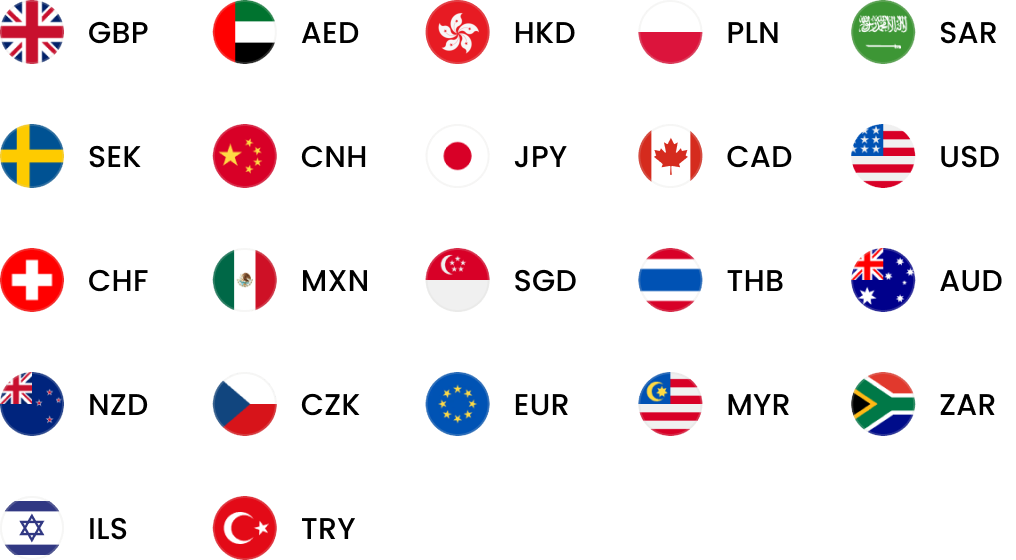
From the same World Account, you can hold and manage more than 20 currencies, including USD, GBP, EUR, CNH, AUD and SGD, and pay suppliers directly using a dedicated CNH account rather than routing every China payment through an expensive international wire. WorldFirst’s FX margin typically sits at up to 0.6% above the mid-market rate for major currency conversions, and the rate is shown to you before you confirm a transfer, so there’s no guessing what a payment will actually cost.
| Old way (bank wire) | With a multi-currency account |
| Exchange rate margin often undisclosed | Rate shown before you confirm the transfer |
| Flat wire fee plus possible intermediary deductions | Typically up to 0.6% FX margin, no incoming fees |
| Amazon payout settlement can take several days | Amazon payouts received the same working day |
| Separate accounts needed per currency | 20+ currencies managed from one dashboard |
Comparison reflects WorldFirst’s published account terms; verify current rates and settlement timing on worldfirst.com before relying on them for a live payment decision.
Read more: Amazon seller payment schedule: when do UK sellers get paid?
How WorldFirst helps UK importers sell on Amazon without inventory
Whichever model you choose, the mechanics of getting paid and paying suppliers stay largely the same, and that’s where a dedicated cross-border account earns its place alongside your Amazon seller account.
A World Account is free to open, with no setup fees, no monthly fees and no minimum balance, and it connects directly to 130-plus marketplaces, Amazon included, so your payouts land quickly rather than sitting in a standard multi-day settlement queue.
For a new importer specifically, the two features that matter most day to day are the CNH account for paying Chinese suppliers directly, avoiding the layered fees of a standard international wire, and the ability to hold 20-plus currencies simultaneously so you’re not converting money back and forth every time you move between a UK marketplace payout and a Chinese supplier payment.
Add a World Card, a multi-currency business Mastercard with no issuance or annual fee, letting you spend in 15 major currencies without extra FX charges while earning cashback on the side, and you’ve covered most of the payment friction that trips up sellers in their first year.
WorldFirst isn’t a bank. It’s authorised and regulated by the FCA as an electronic money institution, and client funds are held in segregated safeguarded accounts rather than covered by the FSCS deposit protection scheme that applies to UK bank deposits. WorldFirst doesn’t offer lending, payroll or full domestic banking, so if those are core to how you run your business, you’ll still need a banking relationship alongside it.
Open a World Account to start managing Amazon payouts and supplier payments from one place.
FAQs
1. Can I sell on Amazon without having the product?
Yes. Amazon officially supports four models that don’t require you to buy or store stock upfront: dropshipping, where a supplier ships directly to your customer; Merch on Demand, where Amazon prints and ships your designs; Kindle Direct Publishing, where books are printed on demand; and Amazon Associates, an affiliate model with no products involved at all.
It’s worth distinguishing these from FBA, which still requires you to purchase inventory in advance, just not to store it yourself.
2. What is the most profitable thing to sell on Amazon?
Beauty & Personal Care and Home & Kitchen rank as the most profitable categories overall according to recent seller survey data, with Home & Kitchen also being the most widely stocked category among sellers.
That said, profitability depends heavily on your specific product’s margin after referral fees, fulfilment costs and advertising spend, so category alone doesn’t guarantee a profitable outcome; a well-chosen niche product in a less fashionable category can outperform a poorly differentiated one in a “profitable” category.
3. What kind of products are easiest to sell without inventory?
Lightweight, non-branded items under roughly 500g that solve a clear, specific problem tend to be easiest to dropship successfully.
Phone accessories, pet supplies, kitchen gadgets, beauty tools and home organisers are common examples, often sourced cheaply and sold at a healthy markup. Avoid perishables, temperature-sensitive goods, hazardous materials and anything requiring customisation, since all of these add complexity that’s hard to manage in a supplier-fulfilled model.
4. What to sell on Amazon as a beginner?
Home & Kitchen, Pet Supplies and Sports & Outdoors are sensible starting categories because they’re largely ungated, carry standard referral fees, and have comparatively low return rates.
Look for products priced between $20 and $50 with at least a 25 to 35% margin, a Best Seller Rank under 5,000 in the relevant category, and page-one competitors with fewer than 50 reviews, a realistic bar for a first listing to clear. Clothing, Electronics and Beauty are generally harder first choices due to high returns, thin margins or steep review requirements respectively.
Sources:
- https://sell.amazon.com/blog/dropshipping-on-amazon
- https://www.statista.com/statistics/1400287/amazon-most-profitable-sellers-category/
- https://www.junglescout.com/resources/articles/amazon-product-categories/
- https://jarvio.io/blog/choose-amazon-product-category
- https://dropship.me/low-cost-products-with-high-profit-margin/
- https://www.threecolts.com/blog/amazon-product-research-guide/