



























A sale can show as complete in Seller Central while the money is still out of reach. Between delivery, reserves and payment processing, the sale date tells you surprisingly little about when you can actually use the proceeds.
UK SMEs selling on Amazon generated over £3.8 billion in export sales in 2024. For marketplace sellers generating cross-border revenue, payout timing affects when funds are available for inventory, logistics and supplier costs.
In this article, you can learn more about the Amazon seller payment schedule from the moment an order is delivered to when the money reaches your receiving account, including the points that can delay a payout along the way.
Key takeaways:
- Amazon payouts start with delivery, not the sale date: Under DD+7, eligible proceeds become available for disbursement seven days after Amazon confirms delivery
- Available funds are not the same as paid funds: Money can clear the reserve and still wait for Amazon to include it in a disbursement
- Delays and lower payouts can have different causes: Reserves, refunds, fees and account changes can affect when Amazon pays you and how much you receive
- Selling across Amazon marketplaces adds a currency decision: International marketplace proceeds may be converted before payout or kept in the original currency for later use
- WorldFirst can simplify how you manage Amazon payouts: The World Account can receive eligible marketplace payouts, hold supported currencies and use them for international business payments or later conversion
Open a World Account to manage Amazon marketplace revenue across currencies with more control over when you convert and use the funds.
How does the Amazon seller payment schedule work in the UK?
Before an Amazon sale turns into usable cash, two timing points matter: when the proceeds become available and when Amazon sends the payout. The final stage begins after Amazon sends the payout, as the transfer moves to your receiving account.
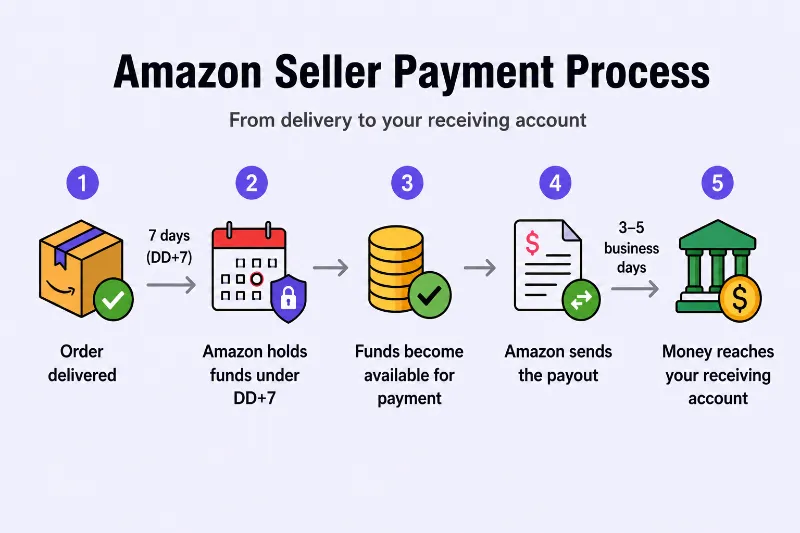
From delivery to account receipt, an Amazon payout moves through five main stages:
1. The order is delivered
For payments covered by Amazon’s delivery date policy, the important date isn’t when the customer places the order; it’s when Amazon confirms delivery.
An order placed on Monday and delivered on Friday starts its reserve period later than an order delivered on Tuesday, even if both sales were made on the same day. That’s why two orders placed together can make their proceeds available at different times.
2. Amazon holds the funds under DD+7
Amazon’s standard delivery-based reserve policy is DD+7, short for delivery date plus seven days. Under the policy, proceeds become available for disbursement seven days after Amazon confirms delivery.
The holding period provides time after delivery for potential payment issues to emerge and helps Amazon manage chargebacks.
Until the applicable reserve period ends, those proceeds remain unavailable for disbursement.
3. The funds become available for payment
At that point, the proceeds are eligible for disbursement, but Amazon hasn’t necessarily sent the money yet.
Availability and disbursement are separate stages. The reserve period determines when an order’s proceeds can be paid, while the payment setup on your seller account determines when available funds are disbursed.
4. Amazon sends the payout
Amazon then groups eligible funds into a disbursement rather than sending the proceeds from each order separately.
5. The money reaches your receiving account
After Amazon initiates the transfer, it can take up to five working days for the funds to appear in your receiving account.
Only after that transfer clears does the Amazon payout become money you can use outside the marketplace.
Read more: Amazon FBA UK: Complete setup guide
Want more Amazon seller tips? Watch this short video for practical advice on getting started and managing your Amazon seller operations:

Selling on Amazon — Top Tips for New Sellers
How to understand your next Amazon payment
Amazon’s payment rules explain how funds move through the payout process, but your own payment date depends on what’s happening in your seller account. Seller Central separates available money, money that’s still deferred and payments that have already been sent.
Those views clarify three different points about your Amazon payout.
1. Your next scheduled payment
The Statement View in the Payments Dashboard shows when and how much Amazon expects to pay you.
It also brings together your current balance and next scheduled transfer, giving you an account-specific view rather than a general estimate based on Amazon’s wider payment cycle.
The amount shown for an upcoming payment can change as new transactions affect your balance. The payment date and amount are best understood as a current view of the next disbursement, rather than a fixed forecast of all recent sales.
2. Deferred transactions and release dates
Not all of the money visible in your Amazon balance is necessarily ready for the next payout.
In Transaction View, filtering for Deferred transactions separates proceeds that are still being held from funds that are already available for disbursement. For each deferred order, Transaction View can show the reason for the deferral and an estimated payment release date.
That makes the deferred balance more useful than the total balance alone when you’re trying to understand what could form part of an upcoming payout.
3. A payout Amazon has already sent
The Disbursement Tracker can show the transfer moving through four stages:
- Scheduled Payout: Amazon has scheduled the funds after the settlement closes
- Processing: Amazon is processing the funds through its systems
- Sent to Bank: Amazon has sent the transfer to its partner bank
- Acknowledged by Bank: Amazon’s partner bank has confirmed the transfer to your bank
Together, these views give you a clearer picture of where your money is in the payout process, from deferred funds to a payment already on its way to your receiving account.
Why is my Amazon payout delayed?
A payout taking longer than expected doesn’t always mean the transfer has failed. The cause depends on where the funds are being held or processed after the sale.
Four situations can push an expected Amazon payment back or keep the money unavailable for longer:
1. Amazon has extended the reserve period
DD+7 is the standard delivery-based reserve period, but Amazon can apply a longer reserve period after assessing a seller’s overall risk and historical performance. A longer reserve moves the release date for affected funds beyond the standard point explained earlier.
The length of that hold can vary by account, so two sellers with similar delivery dates may not always see their proceeds released at the same time.
2. Amazon is holding an account-level reserve
An account-level reserve can keep part of your balance unavailable to cover potential obligations such as A-to-z Guarantee claims, chargebacks, refunds and, where relevant, tax withholding.
That makes it different from a delivery-based reserve tied to a particular shipment. A sale may have had its normal delivery reserve cleared while part of the wider account balance remains held for another reason.
3. You recently changed your receiving account details
Adding or changing bank account information triggers a three-day security hold. Amazon can’t initiate fund transfers during that period, including payments from settlement cycles that close while the hold is active.
The hold affects the timing of the disbursement rather than the underlying sales. Funds may already be available in the seller account but still have to wait before Amazon can send them to the new receiving account.
4. The payout has been sent but hasn’t reached your account
A payout can leave Amazon successfully and still take longer to appear in the receiving account. At that stage, the delay concerns the transfer itself, rather than Amazon’s reserve or release process.
A disbursement can include a Trace ID, which identifies the transfer once it has moved into the banking stage. The receiving bank can use that reference to investigate a payment that hasn’t appeared after the expected processing period.
The important distinction is where the delay occurs: a hold inside Amazon and a payment already moving through the banking system have different causes.
Why is my Amazon payout lower than my sales?
Sales show what customers have bought, while the payout reflects the balance currently eligible for disbursement.
Four factors can explain the difference between your sales and payout:
- Amazon fees: Selling and fulfilment fees are deducted from your account balance before eligible funds are paid out
- Customer refunds: Refunds can reduce your current balance even when they relate to orders included in an earlier payout
- Deferred or reserved funds: Proceeds that haven’t yet become available for disbursement won’t be included in the current payout
- Other credits and charges: Account adjustments can increase or reduce the balance that moves into the final disbursement
The more useful comparison is between the transactions included in a payout and the amount Amazon sends.
Read more: Do you have to pay to sell on Amazon? UK seller fees explained
How selling across Amazon marketplaces changes your payouts
Selling across several Amazon marketplaces can mean a UK business earns in more than one currency. Revenue from Amazon.co.uk may be in GBP, while sales through Amazon.de or Amazon.com can generate EUR or USD proceeds.
For those sellers, the payout route includes an extra decision: when the marketplace proceeds are converted into the currency you eventually receive.
1. Amazon can convert your marketplace proceeds
Amazon Currency Converter for Sellers (ACCS) can convert proceeds from an overseas Amazon marketplace into the currency your receiving account accepts.
For example, a UK seller receiving international marketplace revenue into a GBP account may have those proceeds converted before the payout arrives.
Amazon applies the exchange rate and applicable ACCS pricing as part of that conversion. Currency conversion can affect the final value of an international payout without changing Amazon’s underlying payment schedule.
Read more: 7 best marketplace payment solutions for secure payouts
2. Some marketplace proceeds can stay in the original currency
An alternative is to receive eligible marketplace proceeds through a local deposit account, subject to the relevant account and country requirements.
For a UK seller earning EUR and also paying business costs in EUR, keeping those proceeds in the same currency avoids converting them into GBP as part of the initial payout route. Conversion can instead take place later if another currency is actually needed.
The key difference is when you exchange the money: during the Amazon payout or later, after the proceeds reach an eligible account.
Read more: Amazon bestsellers: what online retailers should know
Manage Amazon marketplace payouts across currencies with WorldFirst
If you receive Amazon revenue in several currencies, the receiving account can shape what happens to that money after Amazon sends it.
A UK seller receiving €20,000 from Amazon.de and US$15,000 from Amazon.com may also have logistics, inventory or supplier costs due in EUR and USD.
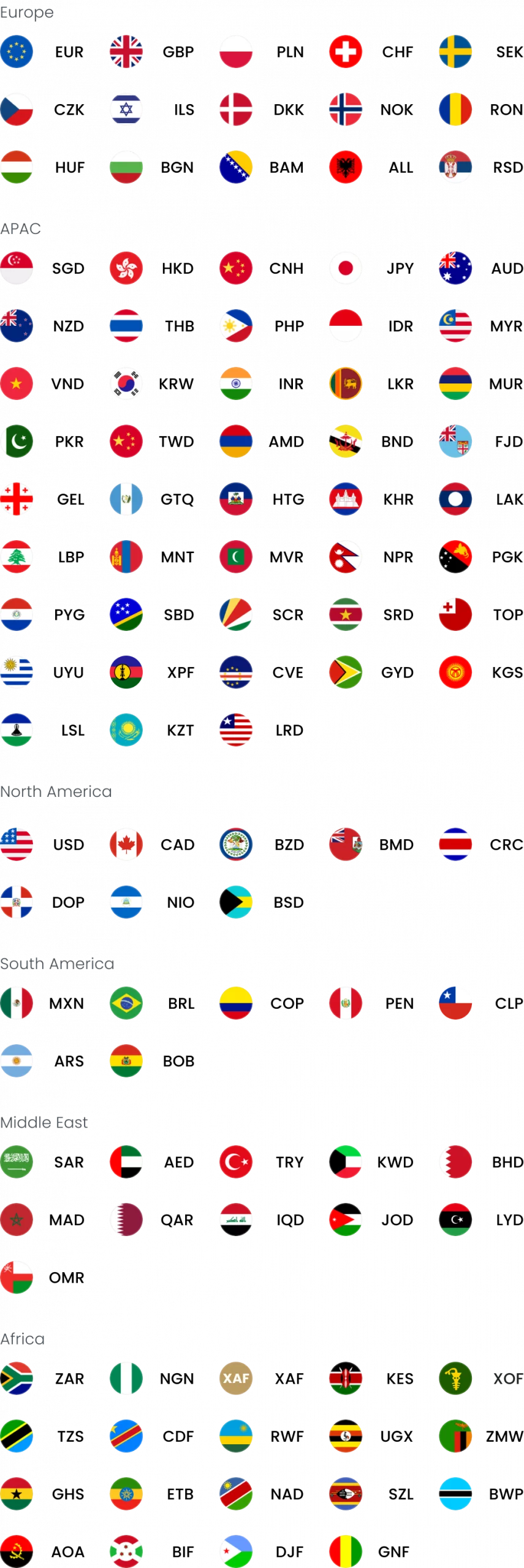
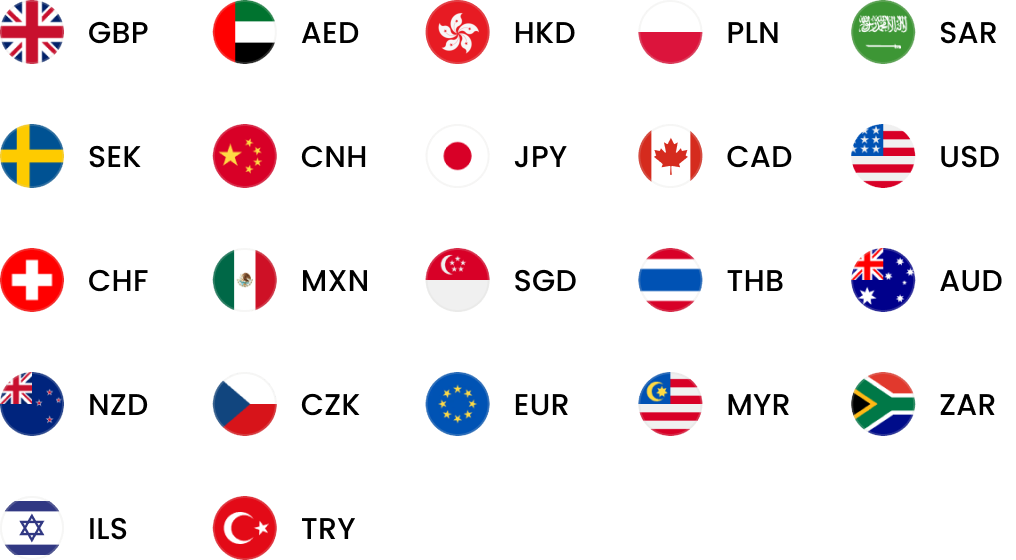
WorldFirst doesn’t change Amazon’s DD+7 reserve period or decide when Amazon sends a disbursement. The World Account is a multi-currency business account that can receive Amazon seller payouts in 20+ currencies.
For eligible Amazon payouts, the World Account can provide Receiving Account details in the currency of the Amazon marketplace. EUR proceeds can arrive in a EUR balance and USD proceeds in a USD balance, rather than both being converted into GBP as part of the receiving route.
If your European logistics provider needs EUR, you can keep eligible EUR marketplace revenue in that currency. If a US supplier invoices you in USD, eligible USD revenue can stay in USD until you need to use it.
You can also make international payments in 100+ currencies to 200+ countries from the World Account, so that marketplace revenue held in a supported currency can be used for overseas business payments rather than being withdrawn into GBP first.
The World Account gives that money a clear route after Amazon sends it:
- Receive: Collect eligible Amazon payouts in supported marketplace currencies
- Hold: Keep supported balances for business costs in the same currency
- Pay or convert: Use the balance for overseas business payments or convert when another currency is required
WorldFirst isn’t a bank. Customer funds are safeguarded in line with the Electronic Money Regulations 2011 but aren’t covered by the Financial Services Compensation Scheme (FSCS).
Open a World Account to receive and manage eligible Amazon marketplace payouts across multiple currencies.
FAQs
1. Can I request an Amazon payout before my scheduled payment?
Yes, if Disburse on Demand is available for your account and you have funds available for disbursement. Amazon allows eligible sellers to request a disbursement once every 24 hours, but reserved or deferred funds aren’t included until they become available.
2. What happens to my Amazon payouts if my seller account is suspended?
Amazon may hold your funds while your account is deactivated. If an appeal results in reinstatement, eligible funds are released according to your disbursement schedule.
3. What happens if my Amazon seller account has a negative balance?
You won’t receive a payout while your seller account balance remains negative. A negative balance can occur when fees and refunds exceed sales during a settlement period, and Amazon offers repayment options to clear the amount owed.
4. Can I use the same bank account for Amazon UK, Europe and US payouts?
Potentially, if Amazon accepts and verifies the bank account for each marketplace. Amazon allows one bank account per marketplace and up to five deposit methods across multiple marketplaces, with each deposit method assigned to the relevant marketplace.
5. How do I download Amazon settlement reports for accounting?
Amazon settlement reports are available through the Payments Reports Repository in Seller Central. They provide a detailed breakdown of transactions for a settlement period and can be downloaded for use in a spreadsheet, database or accounting workflow.
Sources:
- https://www.aboutamazon.co.uk/news/policy-news-views/amazon-reform-tax-collection
- https://sellercentral.amazon.co.uk/help/hub/reference/external/G202124090
- https://sellercentral.amazon.co.uk/help/hub/reference/external/G791
- https://sellercentral.amazon.com/help/hub/reference/external/19321
- https://sellercentral.amazon.co.uk/help/hub/reference/external/GFLRKM5TG3LHNCV8?locale=en-GB
- https://sellercentral.amazon.co.uk/help/hub/reference/external/G200381250?
- https://sell.amazon.co.uk/global-selling/guide