



























To compare business bank account features, look at the costs, payment options, transfer speeds, FX rates, card controls, integrations, support, security, eligibility rules and how well the account matches the way your business moves money.
At the start of 2025, the UK had 5.64 million small businesses, representing 99.18% of the total business population. That includes local service providers, e-commerce sellers, importers, exporters and SMEs managing customers, suppliers or teams across more than one market. Each one has different payment habits, cost pressures and admin needs.
Below, we’ll break down how to compare business bank accounts, what to check before you apply and how a multi-currency account can help when your business pays suppliers, receives revenue or manages costs across borders.
Quick checklist: how to compare business bank accounts:
- How your business sends and receives money each month
- Monthly fees, transaction fees, card fees and less obvious charges
- Support for Faster Payments, Bacs, CHAPS, Direct Debits and standing orders
- Transfer limits, cut-off times and expected payment speeds
- International payment fees, SWIFT charges and local payment route availability
- FX rates, currency conversion margins, rate-locking options and multi-currency features
- Supported currencies for customer payments, supplier payments and marketplace payouts
- Local receiving account details for overseas payments and international sales revenue
- Debit cards, virtual cards, employee cards and spend controls
- Accounting integrations, reporting tools and export options
- Security controls, user permissions, payment approvals and fraud alerts
- Regulation, FSCS protection or safeguarding arrangements
- Customer support channels, onboarding requirements and eligibility rules
- Credit, overdraft, savings, cash deposit and branch access needs
14 business bank account features to compare before you apply
The business bank account features to compare before you apply are those that affect your costs, payment speed, cash flow, admin workload and control over business spending.
Here’s how to review each one before you choose an account:
1. Start with how your business actually uses money
Before you compare providers, look at how money moves through your business day to day.
Many businesses skip this step and go straight to the monthly fee. Later, they realise the cheaper account does not support the payment methods, currencies, card controls or integrations they need.
Start with your regular activity:
- How many payments do you send each month?
- How many payments do you receive?
- Do you pay suppliers only in GBP or in other currencies too?
- Do customers pay through marketplaces, payment gateways or direct bank transfers?
- Do you need cards for staff, travel, software subscriptions or online ads?
- Do you work with an accountant or a finance team?
- Do you need branch services, cash deposits or in-person support?
- Do you need to hold foreign currency before converting it?
The right account starts with how your business already works.
2. Compare the real cost, not just the monthly fee
The monthly fee only tells part of the story. In some cases, it tells the least important part.
A business account with no monthly fee can still become expensive if transaction fees, cash deposit fees, card fees or FX margins are high. A paid account can also make sense if it includes enough transfers, better support, stronger integrations or lower international payment costs.
Check these charges before you decide:
- Monthly account fee
- Account opening fee
- Minimum balance requirement
- Domestic transfer fees
- Cash deposit fees
- ATM withdrawal fees
- Debit or expense card fees
- International payment fees
- Currency conversion margins
- Receiving fees
- Inactivity fees
- Admin or investigation fees
3. Check payment methods and transfer speed
A business account should support the payments you use every week.
UK Finance says 50% of all payments made by businesses in 2024 used Faster Payments, which shows why speed, limits and payment rail access should be part of the comparison from the start.
For UK payments, check support for Faster Payments, Bacs, CHAPS, Direct Debits and standing orders. Also check transfer limits, cut-off times and expected arrival times.
International payments need a closer review. A SWIFT payment can involve intermediary banks, which may add fees or delays. Some providers can use local payment routes on supported corridors, which may help payments arrive faster and with fewer deductions.
Ask these questions:
- Can you send same-day domestic payments?
- Are there daily or monthly payment limits?
- Does the provider support batch payments?
- Can you pay suppliers in their preferred currency?
- Can you track payment status?
- Are fees shown before you confirm the payment?
- Are intermediary fees possible?
- Does the provider use local payment routes where available?
A faster payment method is useful, but only if it works for the countries, currencies and payment types your business actually uses.
4. Compare FX rates and currency conversion costs
If your business trades across borders, FX costs can matter more than the account fee.
Don’t only ask, “What’s the transfer fee?” Ask what exchange rate you’ll get, what margin applies and when the rate locks in. A low transfer fee can still cost more if the FX margin is high.
Look at four things:
- The exchange rate offered
- The FX margin
- The payment fee
- Any receiving, withdrawal or intermediary fees
Also, check if the account lets you hold foreign currency. Without that feature, you may have to convert money every time you receive or send it.
5. Review receiving features, especially if you sell internationally
Getting paid should be simple. International sales can make it more complicated.
Receiving features deserve close attention for online sellers, with UK retail ecommerce sales predicted to reach 38.1% of total retail sales in 2025.
If your business collects revenue from marketplaces, payment gateways, overseas clients or distributors, how an account handles incoming payments can affect costs, reconciliation and cash flow.
Compare:
- Local receiving account details
- Supported receiving currencies
- Receiving fees
- Marketplace payout support
- Payment gateway support
- Payment references
- Withdrawal options
- Reconciliation tools
Local receiving account details can help your business receive foreign-currency payments without opening bank accounts in each market. For example, a UK e-commerce seller may want to receive USD, EUR or GBP to collect marketplace revenue more easily.
If you sell through Amazon, Shopify, Etsy, PayPal or similar platforms, check if the provider supports marketplace collections directly.
6. Compare cards, spend controls and expenses
Cards can be useful, but only if they give you control over spending. Check card fees, FX charges, limits and expense controls. A card used for software subscriptions, travel, online ads or supplier purchases can create extra costs if the account charges foreign transaction fees. Compare:
- Physical cards
- Virtual cards
- Employee cards
- Spend limits
- Merchant controls
- Approval flows
- FX fees on card payments
- Cashback or rewards
- Expense tracking
- Card reconciliation
7. Look at integrations and reporting
Integrations can remove a lot of manual work. Sage/IPSE research found that 33% of sole traders still rely on pen and paper, 66% use spreadsheets and only 10% use cloud-based accounting software. Every manual step adds more room for delays, duplicate work and reconciliation headaches. If your business uses accounting software, marketplaces or an ERP system, check how easily account data moves into those tools. Manual CSV uploads may work at the start, but they become painful as transaction volume grows. Compare:
- Xero integration
- NetSuite integration
- API options
- CSV exports
- Payment references
- Batch payment reporting
- Marketplace reconciliation
- User permissions for accountants
- Audit trails
- Multi-currency reporting
8. Check security, protection and provider type
Security should show how regulators oversee the provider, how the provider handles customer funds and what payment controls you can use.
UK Finance estimated that criminals stole £1.17 billion through banking fraud and scams in 2024, while the finance industry prevented £1.45 billion in unauthorised fraud. That makes account controls, approvals, alerts and fund protection worth checking before you apply.
When comparing accounts, check:
- Provider type
- Regulatory status
- FSCS protection or safeguarding arrangements
- Two-factor authentication
- User roles and permissions
- Payment approval controls
- Payment alerts
- Device and login controls
- Fraud monitoring
Don’t assume every business account works like a bank account. Read the protection wording carefully before you apply.
9. Compare customer support and onboarding
Support matters most when something goes wrong.
A delayed supplier payment, failed marketplace payout or urgent FX issue can affect stock, fulfilment and cash flow.
Check:
- Application process
- Required documents
- Approval time
- Phone support
- Live chat
- Email support
- Help centre quality
- Local support hours
- Specialist support for international payments
10. Check eligibility, limits and restrictions
A provider may look right on paper, but still cause problems if your business doesn’t qualify.
A UK inquiry found that eight major banks closed nearly 142,000 small business accounts in one year, representing 2.7% of the 5.3 million business accounts. That makes it important to check not only who can open the account, but also what limits, restrictions and review processes apply after approval.
Before you apply, check:
- Business type eligibility
- Sole trader, limited company or partnership support
- UK registration requirements
- Director and beneficial owner checks
- Industry restrictions
- Turnover requirements
- Payment limits
- Card limits
- Currency restrictions
- Country restrictions
- Cash handling limits
Overdraft eligibility
11. Compare overdrafts, credit and savings features
Traditional banks can be useful if you need lending, overdrafts, branch services or cash deposits.
Compare:
- Overdraft availability
- Business loans
- Savings accounts
- Interest on balances
- Credit checks
- Repayment terms
- Personal guarantee requirements
- Branch support
- Cash and cheque services
A multi-currency account may be more useful if your main needs are overseas payments, FX visibility, supplier payments, marketplace collections and currency holding.
12. Decide if you need one account or more than one
You don’t always need one provider for everything.
Over 21,500 SME and charity accounts were switched through the Current Account Switch Service in 2024, which shows that many organisations review and change their banking setup as their needs evolve.
A business with simple UK payments may only need one current account. A business trading across borders may benefit from a main UK account plus a multi-currency account.
For example, a UK e-commerce business could use:
- A business current account for payroll, tax and local bills
- A multi-currency account to receive marketplace payouts in USD and EUR
- Foreign-currency balances to hold funds before converting
- Supplier payments in multiple currencies
- Business cards for eligible international spend
- Accounting integrations for reconciliation
13. Use a simple business account comparison scorecard
| Feature | What to compare | Why it matters | Score |
|---|---|---|---|
| Monthly fees | Account fee, minimum balance, transaction limits | Shows day-to-day cost | |
| Domestic payments | Faster Payments, Bacs, CHAPS, limits | Keeps UK payments moving | |
| International payments | Currencies, countries, transfer fees, speed | Helps you pay overseas suppliers | |
| FX | Margin, rate visibility, conversion timing | Protects margin on currency conversion | |
| Receiving money | Local details, supported currencies, receiving fees | Helps you collect overseas revenue | |
| Cards | FX fees, limits, virtual cards, cashback | Controls spend and travel costs | |
| Integrations | Xero, NetSuite, exports, API options | Cuts finance admin | |
| Security | FSCS or safeguarding, 2FA, approvals | Protects access and funds | |
| Support | Phone, chat, email, specialist help | Matters when payments need attention | |
| Eligibility | Business type, limits, country restrictions | Helps avoid application friction |
Score each provider against your own activity. The highest score should reflect your business needs, not the loudest offer.
14. Watch out for common red flags
Some account features look better in ads than they do in practice.
Watch for:
- Vague FX margins
- “Free” accounts with expensive transaction fees
- Unclear international transfer pricing
- No local receiving details
- Limited currency support
- Poor support availability
- No user permissions
- Weak reporting
- Manual reconciliation
- Fees buried in PDFs
- No clear fund protection wording
- Low limits that don’t match your payment volume
The biggest red flag is unclear pricing. If you can’t see the exchange rate, fee and expected cost before you send money, compare another provider.
When does a multi-currency business account make more sense?
A standard business current account can work well for local payments. But once money starts crossing borders, the comparison changes.
A multi-currency business account can make more sense if you:
- Pay overseas suppliers
- Sell through international marketplaces
- Receive USD, EUR, CNH or other currencies
- Want to hold foreign currency before converting
- Need clearer FX costs
- Want to reduce forced conversions
- Manage payments across several markets
- Need better visibility over global cash flow
For businesses with international customers, suppliers or marketplaces, a multi-currency account can reduce unnecessary conversions, improve payment visibility and make cross-border finance easier to manage.
How WorldFirst helps UK businesses manage global payments
Once you’ve compared fees, payment methods, FX costs, receiving options, integrations and security controls, the next step is choosing an account that can support your day-to-day workflow without adding extra admin.
For UK businesses with international sales, suppliers or marketplace income, WorldFirst helps manage collections, FX, supplier payments and reconciliation from one account.
WorldFirst isn’t a bank. It’s a global payments platform and multi-currency business account provider for companies that need to receive, hold, convert and pay in different currencies.
With the World Account, UK businesses can:
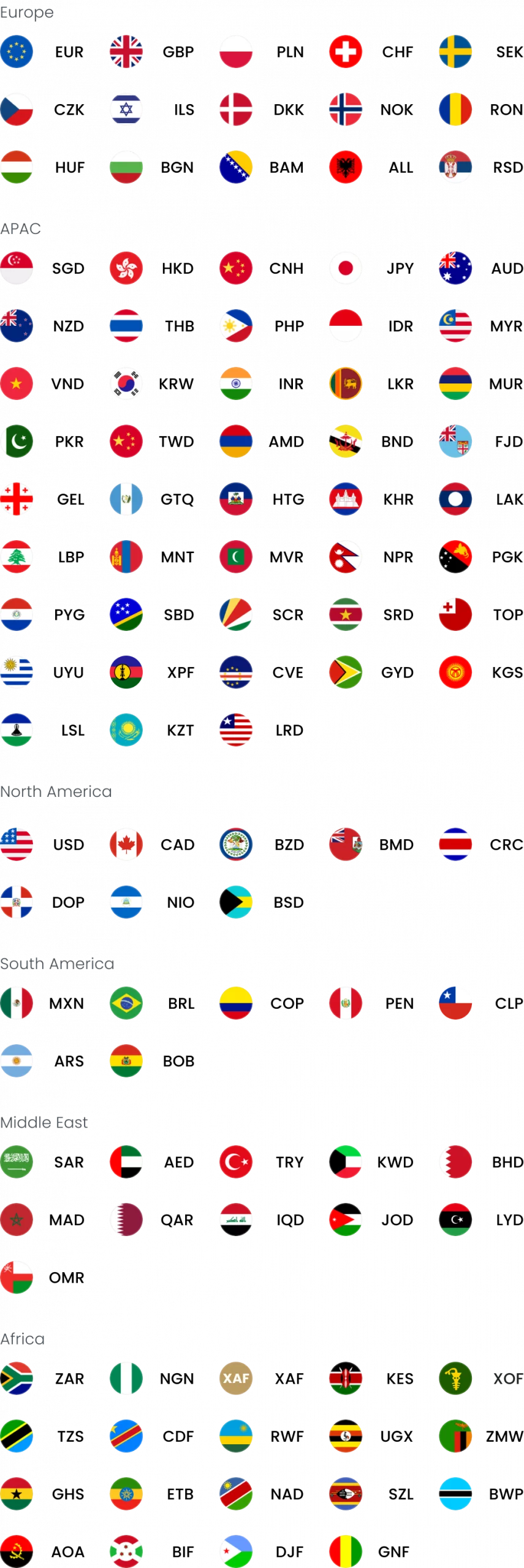
- Receive and hold funds in 20+ currencies
- Pay suppliers in 100+ currencies
- Make payments to 200+ countries
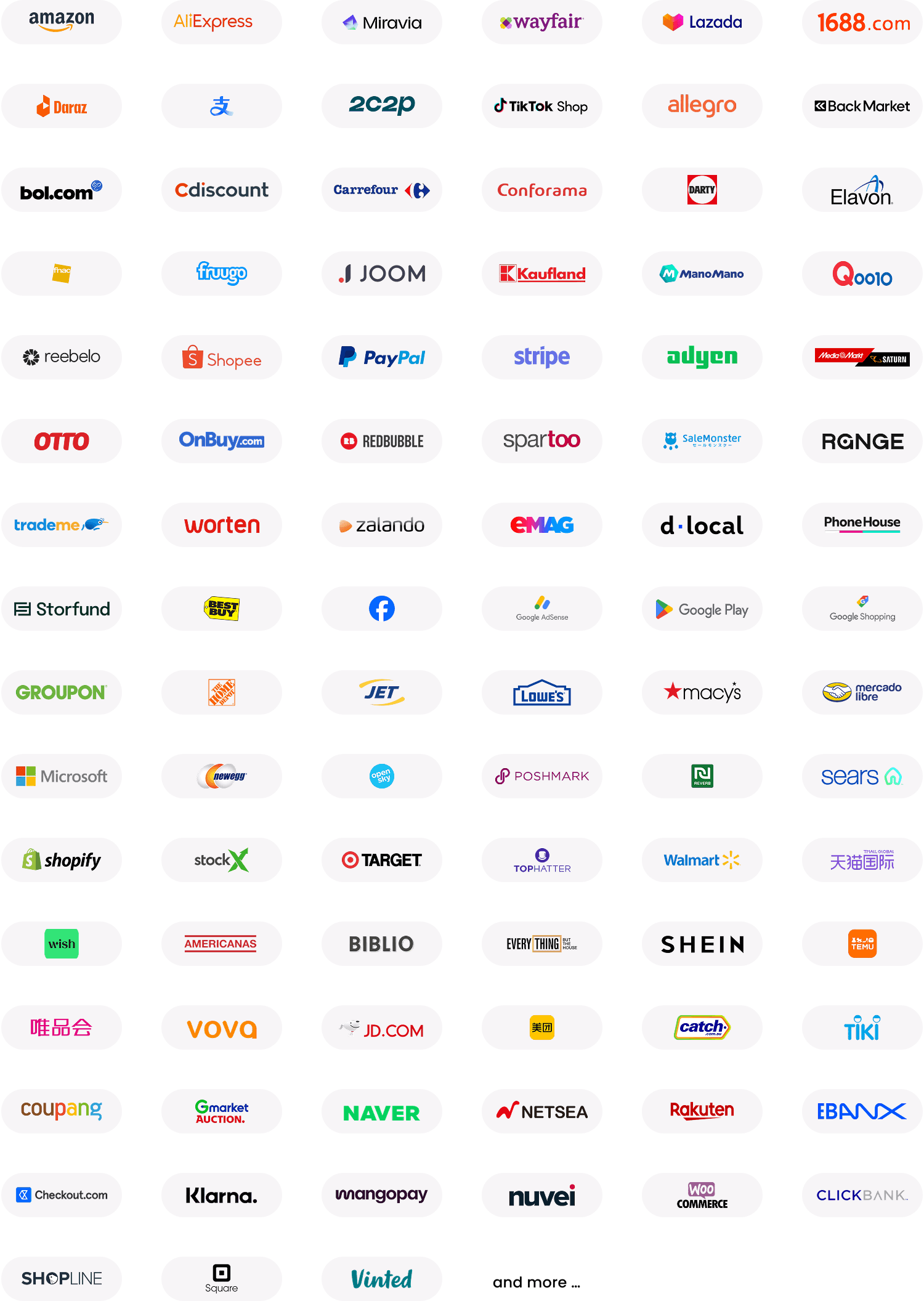
- Collect from 130+ marketplaces and payment gateways
- Convert currencies with transparent pricing
- Set team permissions for better payment control
- Sync with accounting tools such as Xero and NetSuite
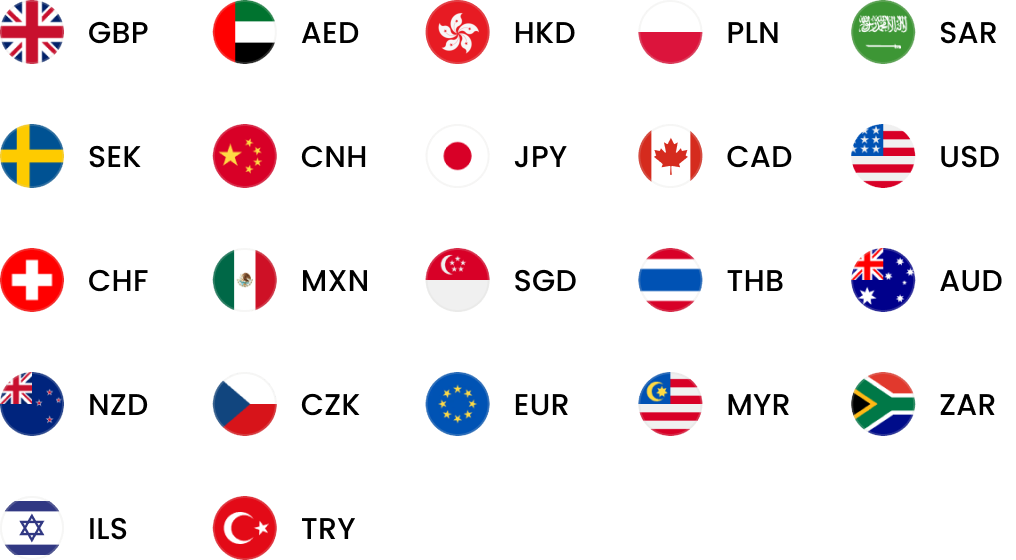
- Use World Card for eligible spend in 15 currencies with 0% FX fees
The account also has no ongoing account fees, no receiving fees and no fee to hold funds in 20+ currencies. That can help if your business collects revenue in one currency, pays suppliers in another and wants more control over when conversions happen.
For businesses that want clearer FX costs, fewer forced conversions and a simpler way to manage international payments, the World Account can help manage collections, payments, cards and reconciliation from one place.
FAQ
1. What documents do I need to open a business bank account?
2. How often should I compare business bank account features?
3. Is the cheapest business account always the best option?
Sources:
- https://www.gov.uk/government/statistics/business-population-estimates-2025/business-population-estimates-for-the-uk-and-regions-2025-statistical-release
- https://www.fca.org.uk/firms/emi-payment-institutions-safeguarding-requirements
- https://www.ukfinance.org.uk/system/files/2025-10/Payment%20Markets%20Report%20Summary.pdf
- https://www.trade.gov/country-commercial-guides/united-kingdom-ecommerce
- https://ipse.imgix.net/downloads/RESEARCH/IPSE-Sage-MTD-Report.pdf
- https://www.ukfinance.org.uk/policy-and-guidance/reports-and-publications/annual-fraud-report-2025
- https://www.businesstimes.com.sg/international/uk-inquiry-finds-banks-shut-142-000-small-business-accounts-in-a-year
- https://www.currentaccountswitch.co.uk/news-insights/latest-news/current-account-switch-service-unveils-sme-and-charity-switching-trends
- https://www.worldfirst.com/uk/