





























Home > blog > Global Business Tips > B2B payments: Definition, methods and trends
B2B payments: Definition, methods and trends
Last update:


B2B payments are transactions between businesses for goods and services, whether domestic or international. For UK businesses making international B2B payments, how these payments are made have as much impact as when they’re made. Fees, foreign exchange margins, settlement timelines and reconciliation processes all affect the final cost, and how much control you have.
This becomes more significant as payment volumes increase. The UK B2B payments market reached around US$110.9 billion in 2024, and is projected to grow to US$225 billion by 2033. When payment flows scale, small inefficiencies compound.
International activity adds further complexity. Cross-border B2B payments involve multiple currencies, cut-off times, intermediaries and compliance checks, often across several systems.
This guide explains how B2B payments work in practice, the main methods UK businesses rely on today and the trends shaping business payments in 2026 and beyond.
Key takeaways:
- Sending a B2B payment is only part of the process: Settlement timing, FX execution and reconciliation ultimately shape cash-flow outcomes
- Cross-border payments increase operational complexity as volume increases: Multiple currencies, intermediaries, cut-off times and compliance checks introduce friction
- FX timing is a major source of margin risk for UK businesses: Losses often occur between invoice approval and settlement, which is why more businesses now manage FX separately from payment release
- Manual processes still slow payments: Missing data, formatting issues and screening checks force human fixes that delay settlement and complicate reconciliation
- A multi-currency platform can restore predictability in B2B payments: Integrated FX management, settlement and reporting tools in one platform – such as the World Account from WorldFirst – can make cross-border B2B payments easier to control
Open a World Account for free to make cross-border B2B payments with clear costs and greater control over FX and settlement.
What are B2B payments?
B2B payments are transactions made by one business to another to settle invoices for goods or services under agreed commercial terms.
They include supplier payments, trade settlements, service contracts and recurring business expenses. Most follow defined approval, timing and reconciliation processes.
In practice, B2B payments involve several steps:
- Invoicing and payment approval workflows
- Settlement timing and cut-off management
- Currency conversion and FX execution (if international)
- Payment routing through banking rails
- Accounting records and reconciliation
How these steps are managed affects the final cost, speed and ease of transaction reconciliation with financial systems.
For businesses trading internationally, B2B payments often cross borders and involve multiple currencies. Minor differences at this stage can create delays, additional charges or reconciliation issues.
As payment volumes and cross-border activity increase, B2B payment management becomes less about individual transactions and more about financial control. . Their reliability affects cash-flow predictability, reporting accuracy and supplier relationships over time.
Common B2B payment scenarios
Most businesses encounter B2B payments through a small set of recurring workflows:
- Paying overseas suppliers in key sourcing and manufacturing markets
- Receiving revenue from international customers, distributors or marketplaces
- Settling ongoing contracts with cross-border service providers
- Managing multi-currency balances to support imports and exports
As these workflows expand, payment execution shifts from sending money to maintaining visibility, control and consistency across transactions.
Key challenges in B2B payments today
Even as payment infrastructure improves, B2B payments remain a source of unpredictability in cross-border trade for UK businesses.
For outgoing payments, settlement delays, FX uncertainty and routing complexity can increase costs and disrupt supplier relationships. For incoming payments, late settlement and uncertain payment schedules directly impact cash flow and forecasting.
1. Late settlement and cash-flow pressure
A 2025 Coface report found that 90% of UK companies experienced late payments in the past year, with an average delay of 32 days, a higher rate than many other European markets.
While the report doesn’t distinguish between domestic and cross-border transactions, these delays directly affect working capital. For the receiving business, they make short-term cash planning harder, particularly for smaller and mid-sized firms that rely on timely supplier settlements.
When international payments settle later than expected, funds remain unavailable for inventory, payroll or reinvestment. Over time, inconsistent settlement timing forces businesses to hold larger cash buffers, tying up capital that could otherwise support growth.
2. FX volatility and margin leakage
Currency volatility adds another layer of risk to cross-border B2B payments.
More than half of UK exporters report losing money due to FX movements, with average losses of around £53,000 per business last year. These losses often occur between invoice approval and payment execution, when exchange rates move against expectations.
In response, around 58% of UK exporters now use risk management tools such as forward contracts or FX-linked invoicing to reduce exposure.
Businesses without control over conversion timing remain exposed to FX swings that directly affect margins, especially when payment volumes are high or settlement windows are long.
3. Manual intervention and processing friction
Operational friction continues to slow international B2B payments.
Only around 26% of cross-border B2B FX payments are processed straight through, meaning nearly three-quarters require manual intervention. Missing reference data, formatting mismatches and compliance checks frequently interrupt payment flows.
Each extra step introduces a delay. Payments pause while teams correct purpose codes, clarify beneficiary details or resubmit supporting information.
4. Compliance checks and intermediary complexity
Cross-border payments must pass through multiple screening stages, including AML and sanctions checks, often across several correspondent banks. Each intermediary applies its own controls, timelines and fee structures.
This layered process increases both cost and uncertainty. Banks and intermediaries can hold payments for review without advance notice and deduct fees mid-route rather than disclose them upfront.
For UK businesses trading internationally, this lack of end-to-end visibility makes it harder to predict when funds will arrive and how much the recipient will ultimately receive.
Common B2B payment methods
Most UK businesses end up with a mix of payment methods rather than a single standard.
Some routes work well for day-to-day domestic supplier payments. Others are more suited to high-value transfers where timing is critical. Cross-border payments often introduce extra steps that businesses only notice once exceptions start stacking up.
1. UK bank transfers
International bank transfers remain the default option for many supplier payments, particularly for higher-value transactions. They’re widely accepted and familiar to finance teams, which makes them easy to approve and deploy.
The challenges tend to appear after the payment is sent:
- Payments can take longer than expected to arrive, especially across borders
- Transfers may pass through several banks before reaching the supplier
- Fees don’t always appear upfront
- Exchange rates apply at the time of release, not invoice approval
UK Finance data shows how central Faster Payments has become for business usage, accounting for 50% of all business payments in 2024. The complexity isn’t in sending the payment. It’s in the constraints around limits, cut-off times and reference requirements.
When a transfer needs a specific reference format, a fixed settlement day or a clean reconciliation trail, these operational details start to matter.
2. Cross-border bank transfers routed through SWIFT
Many businesses still rely on SWIFT international bank transfers for cross-border payments.
SWIFT’s strength is its global reach, especially in less common corridors. The complexity comes from what happens after a payment is sent.
Payments may travel through a chain of correspondent banks, each applying its own processing timeline and deductions. Even when banks provide tracking, the experience can still vary depending on which institutions are involved in the route.
3. Local payment rails in other countries
In many markets, domestic rails can move money faster and with fewer deductions than international transfers.
When a business can pay a supplier via a local rail, it often gets:
- Faster settlement inside that country’s banking system
- Fewer intermediary steps
- Clearer confirmation data for the recipient
Access is the problem. If a business can’t route payments domestically in that market, it falls back to a cross-border transfer even when local clearing would have produced a faster result.
4. Cards for business spending
Cards typically play a limited role in B2B payments. They’re typically used for subscriptions, online services and one-off expenses.
They’re less suited for supplier settlements because:
- Transaction limits don’t suit larger payments
- Processing costs scale poorly for recurring supplier runs
- Chargeback and dispute risk complicate month-end close
5. Multi-currency platforms for cross-border operations
Businesses with regular overseas supplier payments often look for a setup that reduces surprises around FX, timing and reconciliation.
Multi-currency platforms usually help by letting teams:
- Hold balances in multiple currencies rather than convert every time
- Choose when to convert, instead of converting automatically at payment time
- Send payments from one place while keeping reporting clear across currencies
The practical value is consistency. When payment execution becomes more predictable, teams spend less time fixing exceptions and more time managing cash, supplier relationships and reporting cycles.
Common B2B payment methods: comparison table
| Payment method | Best suited for | Speed and settlement | Cost transparency | FX control |
| UK bank transfers | Domestic supplier payments, routine UK transactions | Fast domestically, especially via Faster Payments; slower once cross-border | Moderate; fees and FX costs may appear after execution | Limited; FX applies at release, not approval |
| Cross-border bank transfers via SWIFT | Overseas suppliers, less common corridors | Variable; depends on correspondent banks | Low; intermediary deductions often appear mid-route | Low; little control over timing or rate |
| Local payment rails | Paying suppliers within a specific foreign market | Faster than international transfers within that country | Clearer than SWIFT; fewer intermediaries | Limited unless combined with FX tools |
| Cards for business spending | Subscriptions, online services, one-off expenses | Fast at point of payment | Clear headline fees, but high overall cost | None; FX handled by card issuer |
| Multi-currency payment platforms | Regular cross-border supplier payments and collections | Fast and predictable; local rails used where possible | Good transparency; upfront FX pricing and clear fees | Strong; convert when it suits cash flow |
Emerging B2B payment trends in the UK
B2B payments in the UK are evolving as traditional banking models struggle to keep up with higher volumes, tighter margins and cross-border complexity.
Several trends now shape how UK businesses manage payments in practice:
1. Multi-currency management moves upstream
Historically, businesses treated currency handling as a by-product of payment execution. Funds converted automatically when a payment left the account, often with little control over timing or rate.
That approach is changing. More UK businesses now separate currency management from payment release, holding balances in multiple currencies and deciding when to convert based on cash needs or market conditions. This reduces unnecessary conversions, improves visibility over FX exposure and simplifies reconciliation when revenue and costs sit in different currencies.
Multi-currency accounts have moved from being a specialist solution to a standard part of how exporters, importers and marketplace sellers manage cross-border activity.
2. Faster settlement expectations extend into B2B
Speed expectations no longer stop at consumer payments. UK businesses increasingly expect B2B payments to settle quickly and predictably, especially for domestic suppliers and routine transactions.
The growth of Faster Payments reflects this shift and similar expectations now apply to international flows. Businesses seek payment routes that settle locally and avoid unnecessary delays caused by correspondent banking networks. The focus has moved from “can we send the payment” to “when will funds actually be usable”.
Businesses embed payment execution into procurement, accounting and marketplace systems, allowing teams to move funds without switching platforms or duplicating data.
3. More deliberate FX risk management
Currency volatility has pushed FX risk higher up the agenda. Rather than accepting rate movements as unavoidable, many UK businesses now manage exposure more actively.
The shift appears in wider use of forward contracts, fixed-rate pricing for suppliers and FX-linked invoicing structures. The aim isn’t to speculate on currency markets, but to protect margins and remove uncertainty between invoice approval and settlement.
Demand has also grown for more straightforward FX pricing and real-time rate visibility, especially for businesses that frequently move funds across borders.
4. Regulation and infrastructure start to support better data
Regulatory and infrastructure reforms are starting to address long-standing weaknesses in B2B payments, particularly around transparency and data integrity.
In the UK, updated reporting rules have increased visibility into late payments and disputed invoices, raising the operational cost of poor payment practices.
At the same time, upgrades to core payment systems aim to support richer data standards, allowing businesses to attach more explicit references and invoice details to each transaction.
World Account from WorldFirst: A multi‑currency solution
UK B2B payments are evolving as businesses adopt digital tools. The objective is straightforward: make both cross-border and domestic B2B transactions as transparent and easy to manage as possible, so companies can trade globally without the friction of legacy processes.
The World Account from WorldFirst addresses many common pain points. While it’s not a bank, it provides an all-in-one multi-currency account for managing global receipts and payments.
Key features include:
1. Local collection
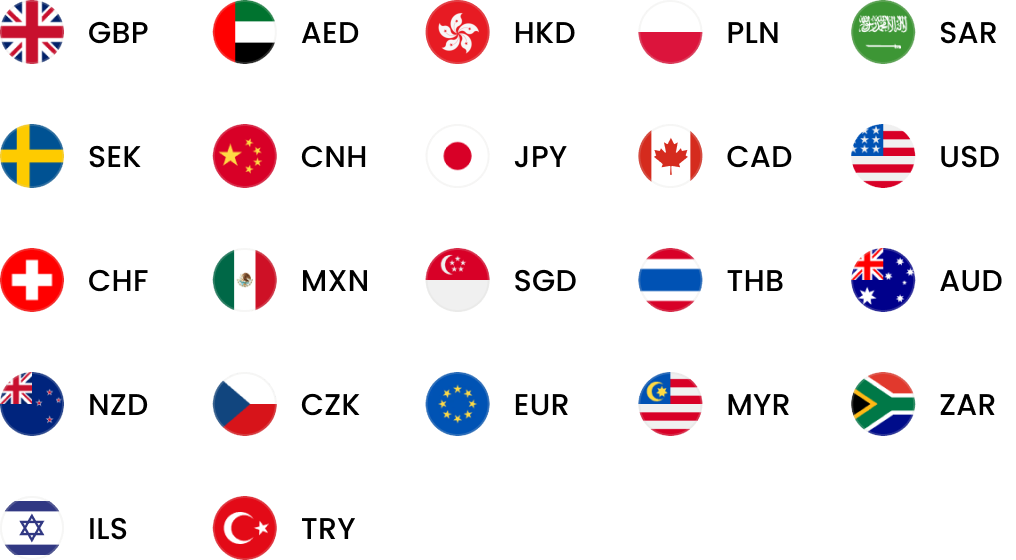
UK firms can receive international revenue just as easily as a local firm. WorldFirst provides local bank details for currencies (e.g., GBP, EUR, USD, AUD, CNH, etc.), so sales from marketplaces or overseas clients land directly into the World Account in those currencies.
There are no fees for receiving or holding funds. This means, for example, an exporter can get paid in USD or EUR and avoid immediate FX conversion. In practical terms, customers can collect business payments from around the world in 20+ currencies for free, as fast and easily as a local.
Marketplace sellers benefit too: the World Account integrates with 130+ global marketplaces (Amazon, Shopify, eBay, PayPal, etc.), so sellers can get paid into their receiving accounts without separate bank accounts in each country.
2. Global payments
From a single dashboard, companies can pay suppliers in 100+ currencies across 200+ countries. Payments use local clearing networks wherever possible, yielding faster settlement.
80% of cross-border payments arrive the same day, using local currency accounts in the UK, US, Europe, China and more. For example, a UK importer can fund a local currency payment to a Chinese vendor in CNH without unnecessary conversions.
There are no hidden transfer fees – you see the FX margins upfront. The system also supports batch payments and a corporate World Card for business expenses.
3. FX management tools
The platform gives businesses more control over when and how currency conversion happens.
Teams can hold balances in multiple currencies, monitor exchange rates and convert funds when it makes sense for their cash flow, using spot or forward contracts where appropriate.
WorldFirst positions this flexibility around control rather than speed alone. Businesses can convert at the current rate, wait for a preferred rate or lock in a rate ahead of a planned payment.
4. Team and accounting features
The World Account supports team-based use rather than single-user access. Businesses can add multiple users and assign roles and permissions, so tasks like payment preparation, approval and review stay separated and aligned with internal controls.
On the accounting side, the World Account connects with tools such as Xero and NetSuite, allowing payment data and references to flow directly into existing financial records. The integration reduces manual uploads, shortens reconciliation and keeps international payments aligned with day-to-day accounting workflows.
Together, these features signal a broader shift in how UK businesses manage payments, currency and cash flow as part of everyday operations, rather than treating them as separate banking tasks.
Open a World Account to manage cross-border payments with greater control over costs, FX and settlement timing.
Sources:
- https://www.statista.com/outlook/fmo/digital-payments/b2b-payments/united-kingdom
- https://www.coface.com/news-economy-and-insights/business-risk-dashboard/united-kingdom-payment-delays
- https://www.mckinsey.com/industries/financial-services/our-insights/global-payments-report
- https://www.wearepay.uk/what-we-do/payment-systems/faster-payment-system/
- https://www.worldfirst.com/uk/world-account/
- https://www.worldfirst.com/uk/foreign-exchange/
Shawn Ma leads business development at WorldFirst UK, with a deep expertise in fintech, risk management and cross-border commerce.

Shawn Ma
Author
Continue reading


Subscribe
The Weekly Dispatch
Get the latest news and event invites. Signup for our weekly update from the worlds of fashion, design, and tech.
You might also like
Choose a product or service to find out more

E-commerce guides


Doing business with China

Exploring new markets

Business Tips

International transactions
E-commerce expansion guides
Doing business with China