




























Choosing between B2B payment solutions involves more than comparing advertised fees. FX margins, extra conversions and overseas bank charges can increase the final SGD cost or reduce the amount received by the supplier.
Singapore’s merchandise imports reached SG$658.3 billion in 2025, up 7.7% from 2024. As cross-border purchasing grows, the platform used for repeat supplier invoices has a greater effect on payment timing, control and annual costs.
The comparison ranks B2B payment solutions, including platforms and banking services used to send, approve and reconcile supplier payments, according to cost, coverage, control and operational fit.
Key takeaways:
- Compare the total supplier payment cost: Look beyond the headline transfer fee and include the FX rate, account charges, intermediary fees and expected amount received by the supplier
- Match the provider to the payment workflow: Specialist platforms may offer stronger currency and payment tools, while banks remain relevant when supplier payments need to connect with credit or trade finance
- Currency management can reduce unnecessary conversions: Holding foreign-currency revenue may allow an importer to pay suppliers without converting every receipt into SGD first
- Controls matter for repeat supplier payments: Beneficiary checks, approval steps, payment tracking and complete records reduce errors and give finance teams clearer oversight
- WorldFirst supports regular cross-border supplier payments: The World Account brings supported currency balances, FX and overseas supplier payments into the same business workflow
Open a World Account to simplify how your business manages repeat supplier payments.
How the B2B payment solutions were assessed
The methodology reflects the needs of an established Singapore importer that regularly pays overseas suppliers. The same six criteria apply to every provider:
1. Total supplier payment cost
Total cost includes FX pricing, transfer fees, account charges and intermediary bank deductions.
A low headline fee can lose its advantage once currency conversion and recipient charges are added. Clear quotes should show both the final SGD cost and the amount due to reach the supplier.
2. Supplier and currency coverage
Coverage refers to the currencies, destinations and payment routes available for business transfers.
China, Southeast Asia, the US and Europe matter most because they represent major sourcing markets for Singapore importers. A long currency list adds little when the provider can’t support the required supplier or recipient account.
Read more:
3. Speed and payment visibility
Atradius reported that 70% of Singapore businesses expected suppliers to continue requesting faster invoice settlement in 2025.
Reliable delivery estimates and payment tracking matter when a deposit starts production or a balance payment releases an order. Clear procedures for delayed, failed or returned transfers also reduce uncertainty.
4. Multi-currency management
Multi-currency tools determine which funds a business can receive, hold and convert.
Direct use of foreign-currency revenue can remove an unnecessary conversion into SGD before a supplier payment. That flexibility carries the most value when incoming revenue and outgoing invoices use the same currencies.
5. Approval and reconciliation controls
Useful controls include beneficiary management, user permissions, transaction limits and approval workflows.
Payment references, statements, FX records and accounting integrations support accurate reconciliation. Separate preparation and approval steps also give finance teams clearer oversight of larger transfers.
6. Singapore suitability and support
Local suitability covers availability, regulatory status, eligibility and customer support in Singapore.
Compatibility with local bank accounts and accounting workflows also affects day-to-day use. Cards, lending and trade-finance services were considered only when they supported international supplier payments.
B2B payment solutions compared for Singapore importers
The table gives a quick view of each provider’s main use case and limitation before the detailed comparison:
| Provider | Best for | Main strength | Main point to check |
| WorldFirst | SG SMEs paying international suppliers | Foreign-currency collections, FX and global supplier payments | Supported holding currency and supplier payment route |
| Airwallex | Integrated accounts payable and finance automation | Global Accounts, Bill Pay, approvals and software integrations | Required plan and local or SWIFT payment route |
| Wise Business | Straightforward transfers with clear transaction pricing | Upfront rate, fee and recipient amount | Currency pair and funding method |
| Aspire | Local finance operations and spend controls | Multi-currency balances, bill approvals, cards and expenses | Limited holding currencies and SWIFT costs |
| DBS | Supplier payments connected with trade finance | International transfers, import finance and documentary services | Full cost under the selected account package |
| OCBC | Existing OCBC businesses paying across many currencies | Several bank transfer routes and broad currency coverage | Route eligibility and possible overseas deductions |
| UOB | ASEAN-focused importers prioritising tracking and controls | SWIFT tracking and detailed authorisation settings | Account eligibility and third-party fees |
| Payoneer | Marketplace-led businesses paying suppliers and contractors | Marketplace collections connected with outgoing payments | Funding source, recipient and withdrawal route |
| HitPay | Collecting B2B invoices | Digital invoicing, PayNow and card acceptance | Focus on collections rather than recurring supplier payments |
Published transfer fees may exclude FX costs, intermediary charges or deductions applied by the recipient’s bank. Compare the final SGD debit and expected supplier amount using the same invoice value and quote time. Pricing and features checked on 22 July 2026.
1. WorldFirst
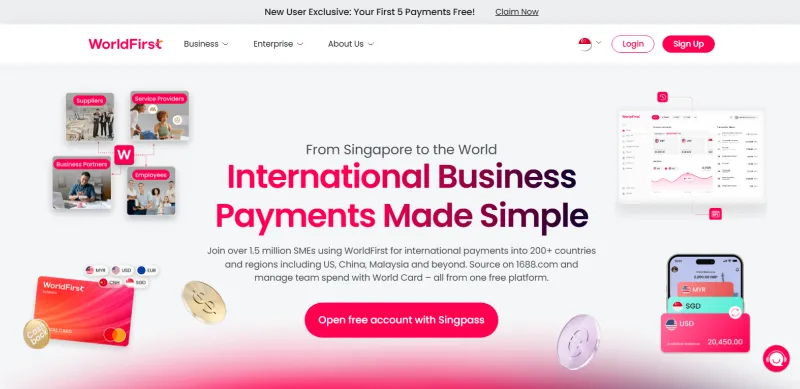
Best for: SG SMEs paying international suppliers
WorldFirst links foreign-currency collections with conversion and overseas supplier payments through the World Account.
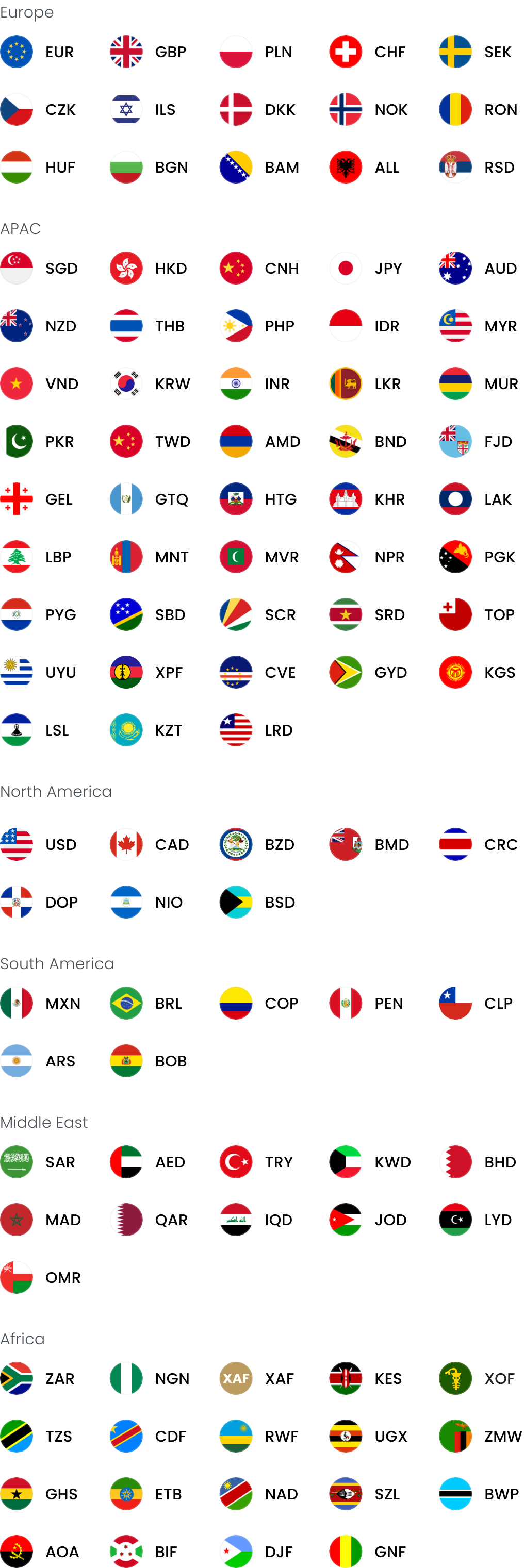
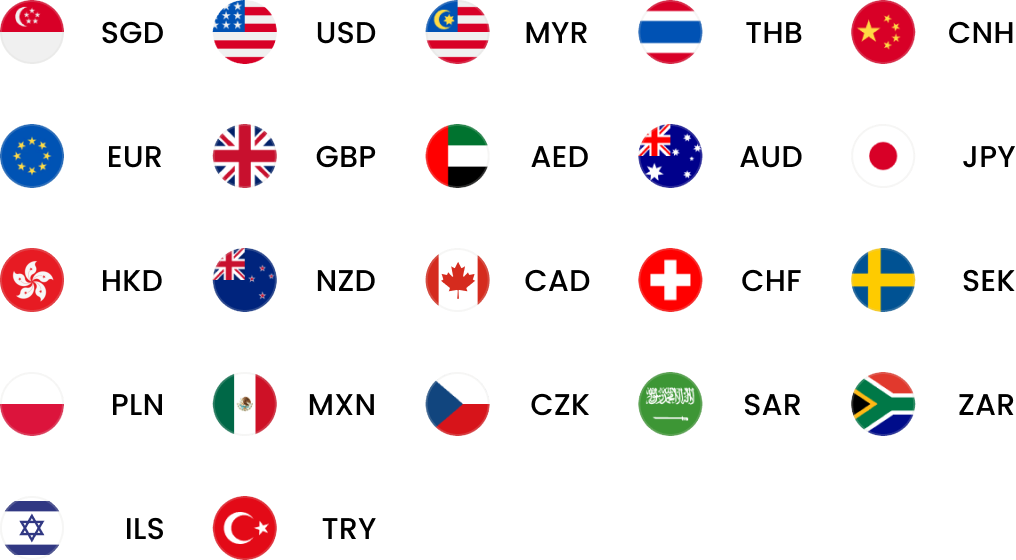
The World Account is a multi-currency account that allows Singapore businesses to receive payments in 20+ currencies, hold balances in 10 currencies and pay in 100+ currencies to 210+ countries and territories. An importer collecting USD or EUR can retain those funds and convert directly into a supported supplier currency rather than routing every receipt through SGD first.
For repeat supplier-payment runs, you can also use:
- Batch payments: Process up to 200 international or local transfers at once, including payments to factories, logistics partners and regional distributors
- User permissions: Separate payment preparation and approval so one person doesn’t control the full process
- Accounting integrations: Connect transaction records with Xero and NetSuite
- WorldFirst transfers: Send free, instant payments to another WorldFirst Account in 12 supported currencies
1688 World Pay adds a dedicated route for eligible 1688.com purchases. Buyers can connect their World Account and pay participating Chinese suppliers from the available balance. WorldFirst charges 0.8% for each eligible 1688 World Pay transaction, while 1688.com applies a separate 0.2% platform fee.
Pricing:
WorldFirst charges no fee to open the account and no subscription or monthly maintenance fee. Currency conversion carries an FX markup of up to 0.6% for major currencies, while payment charges depend on the currency and route. Local non-SWIFT SGD payments carry no transfer fee, selected local-currency routes start from US$1 and SWIFT payments start from US$5.
Trade-offs:
WorldFirst doesn’t provide cash deposits, letters of credit or business loans, so an importer may retain a Singapore bank for local banking and trade finance.
2. Airwallex
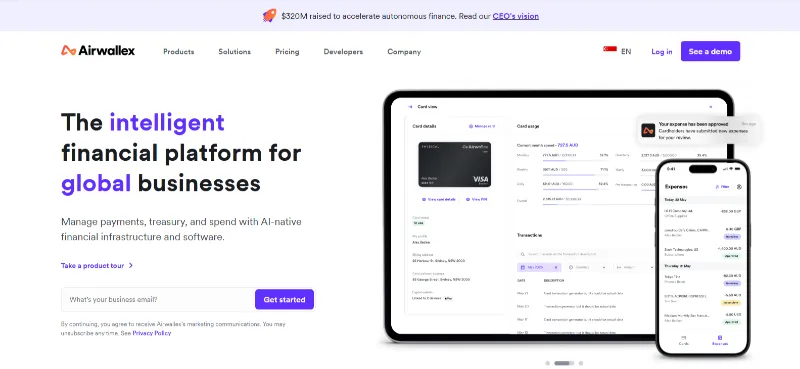
Best for: Integrated global accounts, payables and finance automation
Airwallex lets finance teams move a supplier invoice from capture to approval and payment within the same platform.
Global Accounts support collection and holding in 20+ currencies, while local transfer routes cover more than 120 countries.
Relevant tools include:
- Bill approvals: Upload invoices and assign the required authorisers
- Accounting connections: Integrate with Xero, QuickBooks and selected enterprise systems
- APIs: Automate payment instructions and account processes
- Corporate cards: Set controls for employee and operational spending
Pricing:
The Explore plan has no monthly fee. Grow costs SG$79 a month, while Accelerate starts from SG$399 a month. Airwallex charges 0.4% above interbank rates for major currencies and 0.6% for other currencies. Local transfers to supported countries may carry no transfer fee, while SWIFT payments have separate charges.
Trade-offs:
Advanced vendor controls, purchase-order functions and selected integrations require a paid plan. Importers that make only a small number of monthly transfers may not gain enough value from the wider card, expense and automation suite.
Read more:
3. Wise Business
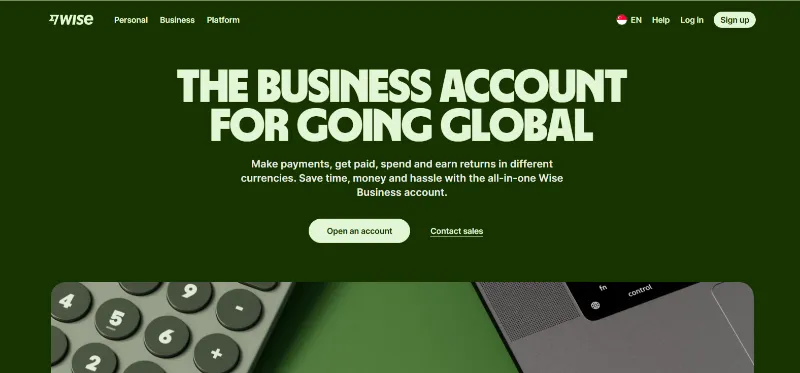
Best for: Straightforward transfers with clear transaction pricing
Wise separates the exchange rate from the transaction fee and shows the expected recipient amount before approval.
A one-off SG$99 setup fee provides access to receiving details in 22 currencies.
Useful functions include:
- Batch payments: Pay up to 1,000 recipients through one payment run
- Volume discounts: Access lower pricing after eligible monthly transfers exceed SG$30,000
- Team controls: Assign account permissions to staff
- Accounting integrations: Connect transaction data with supported software
Pricing:
Wise lists sending and conversion fees from 0.23%, but the exact charge depends on the transaction.
Trade-offs:
Wise doesn’t provide a dedicated payment route for eligible 1688.com purchases. Import lending, letters of credit and documentary trade services fall outside its product range.
Read more: Wise Singapore review
4. Aspire
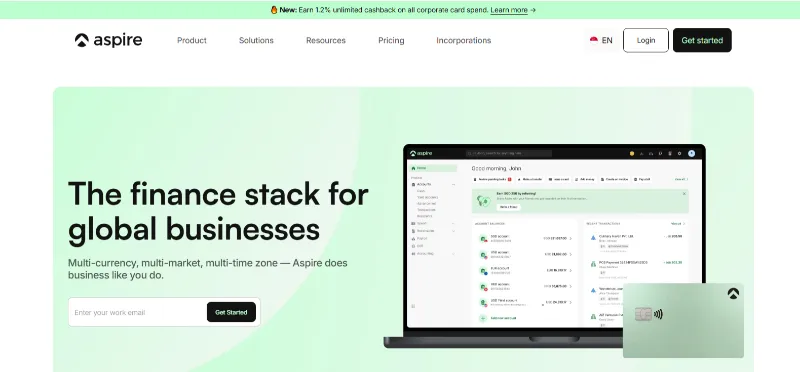
Best for: Local finance operations, corporate cards and spend controls
Aspire fits importers that handle most operating costs in SGD but need role-based controls for occasional overseas supplier payments.
Businesses can hold SGD, USD, GBP and EUR and send or receive payments involving 30+ currencies across more than 130 countries.
Essential features include:
- Bill approvals: Capture invoices, assign approvers and track payment status
- User roles: Separate administrators, finance users and employees submitting expenses
- Bulk payments: Process several local or international payments together
- Corporate cards: Set limits for employee and operational spending
Pricing:
The Basic plan has no monthly fee, while Premium costs SG$15 a month and includes additional transfer and FX allowances. Aspire lists outgoing FX from 0.23%. SWIFT payments cost US$15 under shared-charge instructions or US$30 when the sender covers listed charges.
Trade-offs:
Businesses can hold only four currencies. Importers receiving revenue or paying suppliers across a wider currency mix may need additional conversions.
Read more: Best Aspire Alternatives
5. DBS Business Multi-Currency Account
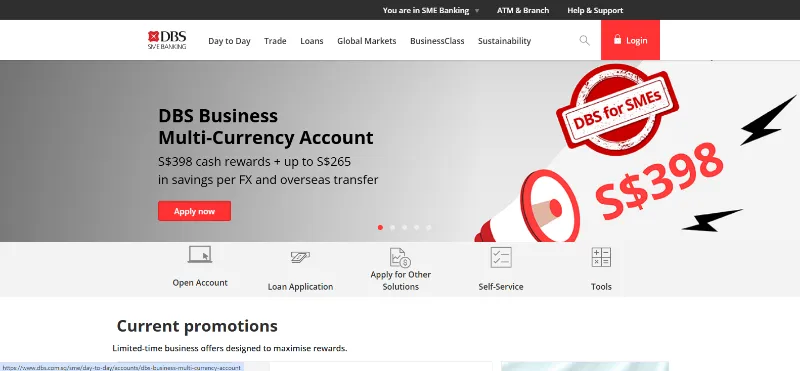
Best for: Supplier payments connected with trade finance and business credit
DBS becomes more relevant when a supplier requires documentary payment terms or the importer needs financing for the order.
The DBS Business Multi-Currency Account supports 13 currencies, including SGD, USD, CNH, EUR, JPY and GBP. DBS IDEAL handles payment preparation, authorisation and transaction records.
Importers can also access:
- Import letters of credit: Pay suppliers under agreed documentary conditions
- Trade loans: Finance inventory or supplier invoices
- Banker’s guarantees: Support contractual obligations
- SWIFT gpi: Track eligible telegraphic transfers
- Multi-user approvals: Separate payment creation from authorisation
Pricing:
The Business Multi-Currency Account lists an SG$30 outward telegraphic-transfer fee, excluding agent-bank charges. Other DBS account packages may use different handling, cable and currency-conversion charges.
Trade-offs:
A business that only needs international transfers may pay for banking services it rarely uses. Sender-paid charges also don’t always prevent the beneficiary bank from applying a receiving fee.
6. OCBC World Transfer
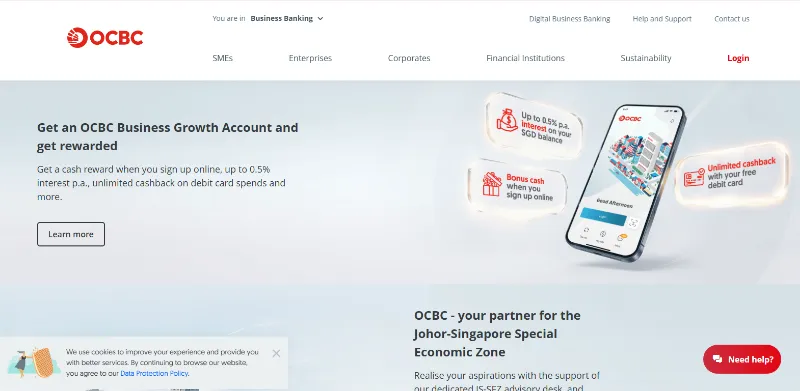
Best for: Existing OCBC businesses paying suppliers across many currencies
OCBC lets business customers choose between World Transfer, Network Transfer and international ACH according to the supplier’s bank and destination.
Differences between these methods are:
- World Transfer: Payments in more than 60 currencies
- Network Transfer: Payments between participating OCBC accounts in selected markets
- International ACH: Payments to supported destinations through a lower-cost bank route
Pricing:
World Transfer currently costs SG$30 per digital transaction. From 1 August 2026, OCBC will charge US$30 for telegraphic transfers funded from a foreign-currency account through OCBC Velocity, host-to-host or API.
Trade-offs:
Network Transfer and international ACH support fewer currencies and destinations than World Transfer. Overseas bank deductions may also apply to some World Transfer payments.
Read more: Best OCBC bank alternatives
7. UOB Infinity and telegraphic transfers
Best for: ASEAN-focused importers that prioritise tracking and bank controls
UOB combines SWIFT gpi tracking with account-level controls for larger and repeat supplier payments.
UOB Infinity is UOB’s digital banking platform for businesses, and it provides:
- Custom limits: Set approval thresholds by user
- Approved-payee controls: Restrict transfers to verified beneficiaries
- Audit trails: Record each step in the authorisation process
- Bulk uploads: Prepare multiple supplier payments from one file
Pricing:
UOB currently advertises a promotional telegraphic-transfer fee of SG$15 for eligible eBusiness and BizTransact accounts and US$11 for BizGlobal accounts. The promotion runs until 31 December 2027.
Trade-offs:
Eligibility depends on the business account and payment channel. SWIFT gpi also relies on participating banks, so tracking details can vary by route.
8. Payoneer
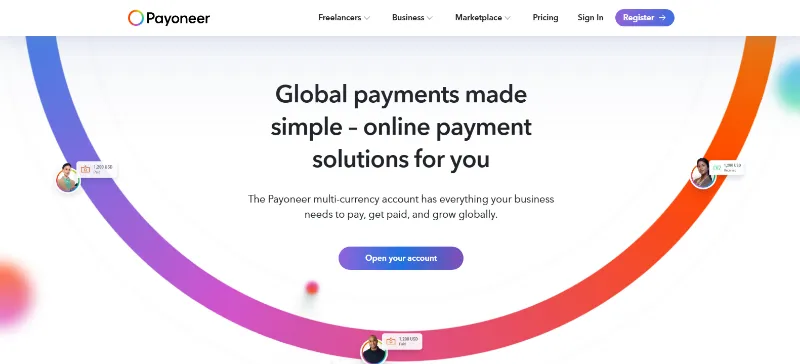
Best for: Marketplace-led businesses paying suppliers and contractors
Payoneer lets eligible marketplace revenue remain in the platform for conversion and business payments before the remaining balance is withdrawn to Singapore.
Payoneer supports business payments across 190+ countries and territories and 70 currencies, although availability depends on the payment method and recipient.
Relevant functions include:
- Marketplace collections: Receive payouts from connected platforms
- Network payments: Pay eligible Payoneer users
- Mass payouts: Send funds to several vendors or contractors
- Local receiving accounts: Collect selected currencies through local account details
Pricing:
Payoneer uses route-based pricing. Cross-border payments to another Payoneer account may cost up to 1% plus US$4, while payments or withdrawals to bank accounts generally cost 1.2% to 4%.
Converting between Payoneer currency balances costs 0.5%.
Trade-offs:
Importers that don’t collect marketplace revenue gain less from the platform. Moving funds into a Singapore bank account can also add a withdrawal charge.
9. HitPay
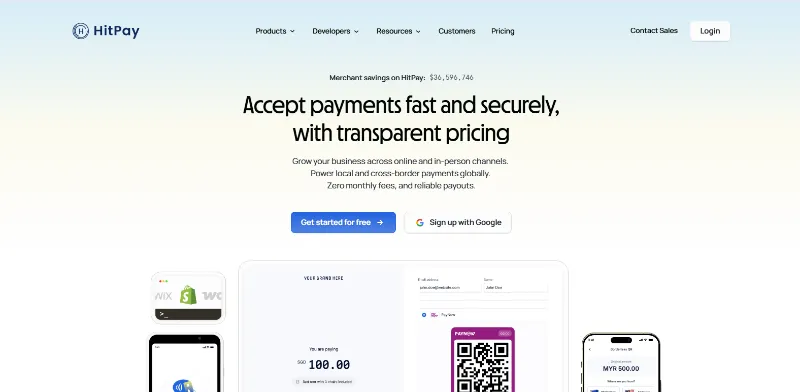
Best for: Collecting B2B invoices from Singapore and regional customers
For importers that also sell wholesale, HitPay adds digital invoicing and local collection methods to the incoming side of cash flow.
Businesses can offer several payment methods without paying a monthly subscription:
- Digital invoices: Send payment requests with integrated collection options
- Payment links: Collect without building an online checkout
- PayNow: Give local customers a bank-based payment method
- Card acceptance: Serve domestic and international buyers
Pricing:
HitPay charges 0.65% plus SG$0.30 for PayNow transactions of SG$100 or more. Transactions below SG$100 cost 0.9%, subject to an SG$0.20 minimum.
Trade-offs:
HitPay doesn’t provide foreign-currency balances or a recurring overseas supplier-payment workflow, so importers need another provider for FX and outbound settlement.
How to build a repeatable B2B supplier payment workflow
A clear routine makes supplier payments easier to check, approve and record. You should:
- Verify the supplier details. Confirm the bank information with a trusted contact before making the first payment
- Check the invoice. Make sure the supplier name, amount, currency and payment terms match the agreed order
- Prepare the payment. Enter the agreed amount and currency, then review the payment before submitting it
- Get the payment approved. Send the payment to the right person for review before the funds leave the account
- Track the payment. Follow its progress and contact the provider if it is delayed, rejected or returned
- File the payment record. Save the invoice, payment confirmation and final SGD amount together
How WorldFirst supports regular B2B supplier payments from Singapore
Consider a Singapore importer and regional distributor that receives US$80,000 from overseas wholesale customers and needs to pay a Chinese manufacturer in CNH.
If the revenue enters an SGD-only bank account, the business may convert USD into SGD when the customer payment arrives, then convert SGD into CNH when the supplier invoice becomes due. Collection, currency exchange and settlement may also appear across separate records.
With the World Account, the importer can retain the USD revenue and convert it directly into CNH before paying the manufacturer.
| Payment stage | Bank-led workflow | WorldFirst workflow |
| Wholesale revenue | USD may convert into SGD | USD remains in a supported balance |
| Supplier invoice | SGD converts into CNH | USD converts directly into CNH |
| FX conversions | Two | One |
| Payment records | Collection, conversion and settlement may appear separately | Collection, conversion and payment records remain available in the World Account |
Removing the first conversion doesn’t guarantee a specific saving. The result depends on the rates, fees and timing of each transaction, but the shorter route removes one stage at which an FX margin may apply.
WorldFirst isn’t a bank. It is regulated by the Monetary Authority of Singapore as a Major Payment Institution under the Payment Services Act 2019.
Open a World Account and compare the total cost of your next B2B supplier payment.
FAQ
1. Are there payment limits for large overseas supplier invoices?
Yes. Limits depend on the provider, account status, currency and payment route, so check the maximum before approving a large invoice.
2. Can I split a supplier invoice into deposit and balance payments?
Yes, if the supplier agrees to the schedule. Record the deposit and final payment against the same purchase order and invoice.
3. What do OUR, SHA and BEN charges mean?
OUR means the sender covers the listed transfer charges, SHA splits them between sender and recipient, and BEN deducts them from the amount sent to the supplier.
4. What happens when a supplier refunds a payment?
The refund usually returns through the original payment route. The amount may differ because of FX movements, bank deductions or refund fees.
5. Does a B2B payment solution protect me if the supplier doesn’t deliver?
Usually not. Payment services move funds, while delivery protection depends on the contract, marketplace programme, escrow service or trade-finance arrangement.
Sources:
- https://www.singstat.gov.sg/find-data/explore-data-themes/trade-investment/merchandise-trade/latest-news-data
- https://atradius.at/dam/jcr%3A1644c5be-185f-4353-b889-7d0219045368/payment-practices-barometer-asia-2025-singapore-en.pd
- https://www.airwallex.com/en-sg
- https://wise.com/sg/business/
- https://hitpayapp.com/sg/
- https://aspireapp.com/business-account
- https://www.dbs.com.sg/sme/day-to-day/accounts/dbs-business-multi-currency-account
- https://www.uob.com.sg/business/transact/payments/telegraphic-transfers.page
- https://www.ocbc.com/business-banking
- https://www.payoneer.com/

![Revolut Business Card review Singapore [2027]: Features, fees & more](https://mdn.marmot-cloud.com/worldfirst/sites/9/2026/09/20261001002258848-300x200.webp)