




























The three most common ways for Singaporean businesses to buy wholesale from China are:
- Platform-based sourcing through Alibaba, Made-in-China or TaoWorld. These marketplaces make sourcing products from China easy. As such, they’re good options for beginners, but they’re often more expensive than other approaches.
- Direct factory sourcing through 1688.com. 1688.com is a domestic Chinese e-commerce site specialising in wholesale. It offers prices up to 40% lower than better-known alternatives, but often requires local payment capabilities and Chinese language support.
- Trade show and agent-based sourcing. This is the historical approach to wholesale sourcing. It lets you assess product quality first-hand, but does involve higher costs and longer timelines than sourcing through platforms.
China remains one of Singapore’s largest sources of imported goods, with Singapore importing US$56.68 billion in goods from China in 2024, so getting sourcing and payments right matters for a large share of Singaporean businesses.
In this guide, we’ll cover each method in detail, to help you decide on the best approach for your business.
We’ll also introduce you to what we do at WorldFirst and how our multi-currency World Account makes buying wholesale from China easier for Singaporean businesses. It helps you access better pricing, streamline supplier payments and manage currency risks, regardless of which sourcing approach you choose.
Ready to start saving money on supplier payments? Open a World Account for free today.
The 3 most common methods for buying wholesale from China
When it comes to sourcing wholesale products from China, businesses typically use one of three main approaches. Each method offers different advantages depending on your budget, sourcing experience and business requirements.
1. Platform-based sourcing through Alibaba and other marketplaces
Established B2B marketplaces like Alibaba.com, Made-in-China and TaoWorld remain the most popular starting point for international buyers. These platforms offer extensive supplier databases, built-in communication tools, and trade protection services such as Alibaba’s Trade Assurance certification, for peace of mind when finding suppliers and buying products.
- Alibaba.com is the best-known China wholesale website, offering access to millions of suppliers across virtually every product category. It’s easy to use to find suppliers, with supplier verification badges, integrated communication tools including real-time translation, and established dispute resolution processes.
- Made-in-China.com is another major marketplace, with particular strengths in industrial products and manufacturing equipment. This platform tends to attract more established manufacturers and offers detailed company verification processes, so it’s more suitable for businesses looking for technical or specialised products.
- TaoWorld focuses on streamlined sourcing with integrated fulfilment services, combining quality product discovery with logistics solutions. This platform is particularly useful for businesses wanting simplified supply chain management alongside their sourcing activities.
While they’re designed for ease of use, these platforms have wholesale prices that are typically marked up for international buyers. You’re also competing with thousands of other businesses for supplier attention, which can limit your negotiating power.
Read more: Importing from China to Singapore: How to keep costs low and suppliers happy.
2. Direct factory sourcing through 1688.com, for prices up to 40% lower
1688.com is the largest domestic Chinese wholesale marketplace, originally designed for Chinese businesses to trade with each other. The platform has significantly lower prices than other platforms because it eliminates the export-focused markups typically found on international platforms.
The cost advantage comes from accessing the same suppliers that sell to international platforms, but at their domestic pricing structure. Suppliers don’t need to account for international marketing costs, platform commissions or the additional services typically required for export customers. This often results in competitive pricing that’s 20 to 40% lower than equivalent products on international platforms.
The platform offers access to over 10 million suppliers across more than 1,700 product categories, with genuine factory-direct pricing. Verified suppliers on 1688.com are typically the original manufacturers that also supply international platforms, meaning you’re accessing the same quality at domestic Chinese pricing levels.
Read more: WorldFirst and 1688.com: All you need for wholesale sourcing in Singapore.
3. Trade show and agent-based sourcing
An alternative option is to use traditional methods for sourcing wholesale suppliers. Two methods stand out in particular: visiting trade shows and using sourcing agents to manage the process for you.
Trade shows are a great way to meet suppliers face to face. However, they typically require significant upfront investment in travel, accommodation and time away from business operations. The Canton Fair is held twice yearly in Guangzhou and remains China’s largest trade event, and can be a hugely valuable place for establishing relationships and performing quality control firsthand.
That said, trade shows are becoming less critical for international businesses. Digital communication tools have come a long way, and there’s much less need to find and verify suppliers in person.
Sourcing agents take much of the work of finding and vetting reliable suppliers off your hands, providing local expertise and relationship management. They can be particularly valuable for complex new products requiring extensive customisation, or for businesses lacking the internal resources to manage Chinese supplier relationships directly.
This convenience comes at a cost. Agents typically charge 3 to 8% commission on orders. They’re also the ones maintaining the relationship, which may mean re-establishing contacts or sourcing new partners if you change agents.
Read more: What is a China export licence (and what are the requirements?).
Comparing minimum order quantities and costs across the three methods
Since the right method often comes down to how much you’re ordering and how hands-on you want to be, here’s a rough comparison of what to expect from each approach:
| Method | Typical minimum order | Relative pricing | Time to first order |
|---|---|---|---|
| Alibaba and international platforms | Often lower MOQs, sometimes single units via trading companies | Highest, due to export markups and platform fees | Days to a few weeks |
| 1688.com direct factory sourcing | Usually higher MOQs, set by the manufacturer | Lowest, at 20 to 40% below international platforms | Days, once payment and language barriers are solved |
| Trade shows and agents | Varies widely by supplier and product | Mid to high, plus agent commission of 3 to 8% | Weeks to months, including travel or agent onboarding |
These are general patterns rather than fixed rules. Individual suppliers set their own MOQs and pricing regardless of platform, so it’s worth confirming both directly before committing to an order.
Vetting suppliers before you commit to a wholesale order
Whichever method you choose, a wholesale order is a bigger commitment than a single-unit purchase, so it’s worth putting a few checks in place before you pay in full.
- Order samples first. Request a sample before placing a bulk order, and check materials, finishing and packaging against your expectations.
- Check supplier credentials. Look for verified supplier badges, a registered business licence, and evidence of previous export experience where relevant.
- Tie payment to inspection. A common structure is a deposit of around 30% upfront, with the balance paid after a pre-shipment inspection confirms the order matches your agreed specification.
- Put terms in writing. A clear purchase agreement covering specifications, tolerances, delivery dates and Incoterms reduces the risk of disputes once goods are in transit.
These steps add a little time upfront, but they can save considerable cost and disruption if a wholesale shipment doesn’t meet expectations.
Why your payment infrastructure is critical to your China sourcing success
When it comes to sourcing products internationally, many Singaporean businesses pay lots of attention to the platforms or channels through which they connect with suppliers. But they often neglect something that’s just as important: how they pay their suppliers.
Payment methods are a critical consideration for cross-border businesses, because getting it wrong can be costly:
- Foreign exchange fees can add up fast. Most international payment providers add a markup of 2 to 4% on top of the mid-market rate for currency exchange. If you’re making regular large payments to international suppliers, these rates can eat into your margins.
- Currency volatility can wipe out expected profits between order placement and payment. As exchange rates are constantly fluctuating, it can be hard to predict how much you’ll actually have to pay for the products you order. FX tools such as forward contracts can help give you certainty about exchange rates for up to 24 months.
- Payments to China via traditional payment methods can take as long as six business days to settle. Most traditional bank accounts use the SWIFT network to send payments to China, and this method can have very slow settlement times, which can strain relationships with suppliers who understandably prefer to be paid quickly.
- Suppliers may prefer to receive payment in local Chinese currency. In particular, suppliers could set prices lower in CNY, onshore renminbi. Yet it’s historically been extremely difficult for cross-border companies to hold CNH or make payments in CNY.
- Many businesses simply can’t access platforms such as 1688.com because they don’t have the right payment integrations. As a result, they miss out on lower prices.
At WorldFirst, we created the World Account to solve exactly these challenges. WorldFirst is not a bank; it’s a payment platform regulated by the Monetary Authority of Singapore as a Major Payment Institution. In the next section, we share why it’s an indispensable tool for Singaporean businesses looking to source from China.
Read more: How to open a Chinese bank account: A guide for businesses.
How WorldFirst makes it simpler and more affordable to buy wholesale from China
At WorldFirst, we specialise in making international payments simpler, more affordable and more secure for Singapore businesses. Since 2004, we’ve supported over 1.5 million businesses and processed more than US$500 billion in transaction volume globally.
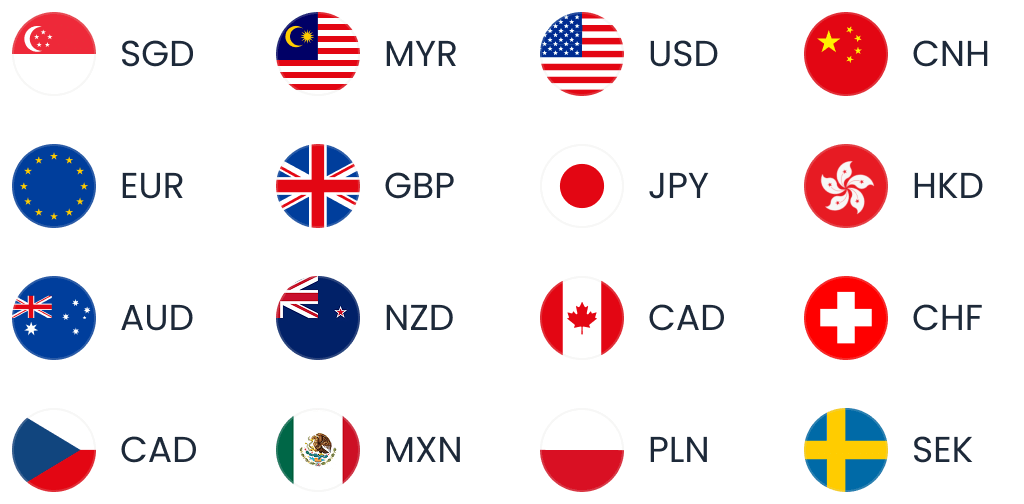
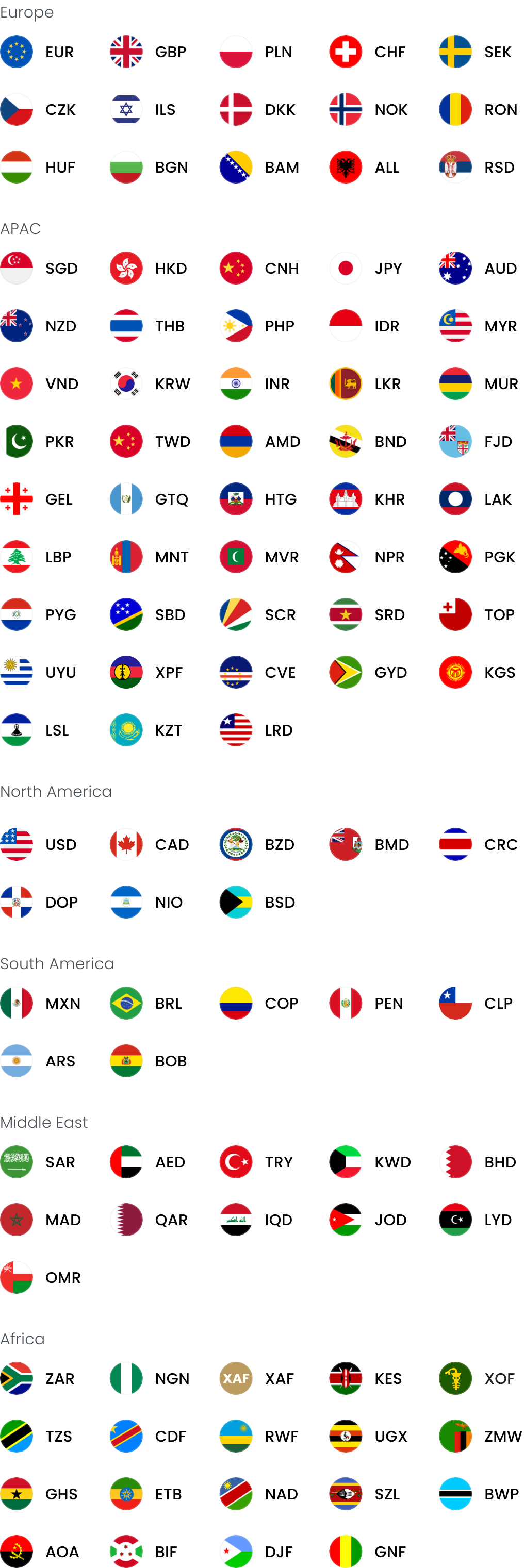
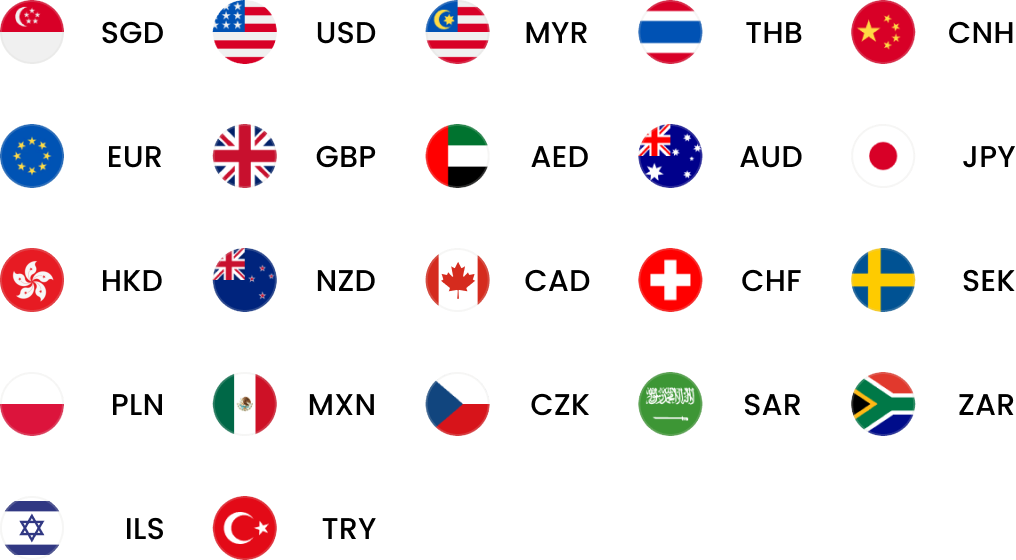
Our World Account is a multi-currency account for businesses looking to make regular cross-border payments. As soon as you open an account, you can hold funds in 20+ currencies, including SGD, CNH and USD. You’ll receive local account details for each currency you hold, so you can pay Chinese suppliers as if you had a local business account.
We’re also one of the few platforms in Singapore that lets you pay Chinese suppliers directly in CNY. Simply hold one of the G10 currencies and you can make fast payment in China’s local currency, which suppliers tend to prefer. With WorldFirst, 80% of international payments land on the same day.
We’re regulated by the Monetary Authority of Singapore (MAS), and we partner with major international banks, including J.P. Morgan, HSBC and DBS, to keep your funds safeguarded.
Here are four reasons why you should open a World Account with WorldFirst.
1. Hold 20+ currencies in a single global account
A World Account eliminates the complexity of managing multiple banking relationships across different countries. You can hold and manage funds in CNH, USD, SGD and 17+ other currencies from a single World Account dashboard, giving you complete visibility over your purchasing power across all your wholesale operations.
When you set up your CNH account, you’ll receive local Chinese account details that work seamlessly with 1688.com and other domestic platforms. This means Chinese suppliers can receive payments through local payment rails rather than slow international wire transfers, building trust and often securing better pricing terms.
Managing all your wholesale purchasing currencies through one intuitive online dashboard means you can monitor exchange rates, track payments and manage supplier relationships without logging into multiple banking platforms or dealing with different customer service teams across various institutions.
Read more: How to open a business bank account online in Singapore (4 options).
2. Make payments to China’s largest wholesale platform, 1688.com
WorldFirst offers direct payment integration with 1688.com, giving you instant access to over 10 million Chinese suppliers across 1,700 product categories. This integration, called World Pay, is exclusive to WorldFirst customers, eliminating the typical barriers that prevent international buyers from accessing this marketplace.
At checkout on 1688.com, you simply select 跨境宝, the World Pay option, and complete the transaction using your available WorldFirst balance. You can pay suppliers directly in seconds, which is crucial for securing inventory during peak seasons or taking advantage of time-sensitive pricing offers.
The streamlined checkout process eliminates payment delays and communication barriers that often complicate wholesale purchasing from China. Instead of negotiating payment terms, providing banking details, or dealing with payment confirmation delays, you can complete transactions instantly through the integrated platform.
Read more: Amazon dropshipping: What Singaporean e-commerce businesses should know.
3. Make currency management more predictable and affordable
WorldFirst also offers tools to save you money on currency exchange:
- Forward contracts allow you to lock in exchange rates for up to 24 months, protecting profit margins on future orders when you know you’ll be making regular purchases from Chinese suppliers. It’s particularly valuable for businesses with predictable ordering cycles or those looking to budget for large inventory purchases months in advance.
- Firm orders automatically convert currencies when your target rates are reached, eliminating the need to constantly monitor exchange rate fluctuations. You can set your desired CNH rate and focus on running your business while WorldFirst executes the conversion when market conditions meet your requirements.
WorldFirst also offers competitive FX rates of up to 0.6% for major currencies, which is significantly better than the traditional bank markups of 2 to 4% mentioned earlier. On a $50,000 wholesale order, this difference can save you roughly $700 to $1,700 compared to using conventional banking channels.
Read more: How to send money abroad (+ how to avoid hidden costs).
4. Simplify your operations with features built for business
While there are many consumer-focused multi-currency accounts out there, very few have the tools that businesses really need. The World Account is built with the needs of real businesses in mind.
For instance, with a World Card, you can pay business expenses in 16 currencies with zero FX fees, including costs like shipping, customs duties or inspection services that often accompany wholesale purchases. You can issue up to 25 cards per account, allowing you to separate different types of expenses or assign cards to specific team members handling procurement.
Batch payment capabilities also allow efficient and secure payment to multiple suppliers simultaneously, which is essential when you’re sourcing different components or products from various manufacturers for a single order. Rather than processing individual payments, you can execute all payments at once while maintaining detailed records for each transaction, which can then be automatically recorded in your accounting tools thanks to direct integrations with platforms such as Xero and NetSuite.
Open a World Account today, for a better way to buy wholesale in China
It couldn’t be easier to open a World Account. The whole process can be completed online in a matter of minutes, and it’s completely free to get started.
To open your account, visit our online registration portal. You’ll need to provide your mobile phone and email, along with the IDs of all your business directors. Then:
- Click the Sign up button and choose your region
- Click the Create account button
- Enter your business and personal information, including details like estimated monthly turnover and industry
- Upload qualifying documents (see our Account Opening Help page for a full list of documents you might need)
That’s it. You’ll be notified as soon as your account is ready to use. This usually takes less than 24 hours.
FAQs
1. What is the cheapest way to buy wholesale from China?
Direct factory sourcing through 1688.com is typically the cheapest option, with prices 20 to 40% lower than international platforms like Alibaba, since it removes export-focused markups and platform commissions. The trade-off is that 1688.com is built for the domestic Chinese market, so it usually requires local payment capabilities and Chinese language support.
2. Can I buy wholesale from 1688.com without a Chinese bank account?
Yes. With a WorldFirst World Account, you can hold CNH and pay 1688.com suppliers directly through the World Pay integration, without needing a Chinese bank account. This gives you access to domestic factory pricing while paying from Singapore.
3. How much can I save by paying Chinese suppliers directly in CNY instead of converting through a bank?
Traditional bank FX markups typically run 2 to 4% above the mid-market rate, compared with up to 0.6% for major currencies with a specialist multi-currency account. On a $50,000 order, that difference can be worth $700 to $1,700, and suppliers may also offer better pricing when they’re paid in their preferred currency without having to build a conversion buffer into their quote.
4. What is the minimum order quantity for wholesale sourcing from China?
MOQs vary by supplier rather than by platform, but as a general pattern, international platforms like Alibaba often have lower minimums for entry-level orders, while 1688.com’s domestic factory pricing tends to come with higher MOQs. Always confirm the MOQ directly with the supplier before finalising a sourcing method.
5. Is WorldFirst a bank?
No. WorldFirst is not a bank. It’s a payment platform regulated by the Monetary Authority of Singapore as a Major Payment Institution under the Payment Services Act 2019, and it partners with major international banks to safeguard customer funds.

![Trust card review [2027]: Features, fees and more](https://mdn.marmot-cloud.com/worldfirst/sites/9/2026/10/20261020214810193-300x200.webp)
![HSBC business account review [2026] Singapore: Features, fees and more](https://mdn.marmot-cloud.com/worldfirst/sites/9/2026/10/20261020213428771-300x200.webp)

![Revolut Business Card review Singapore [2027]: Features, fees & more](https://mdn.marmot-cloud.com/worldfirst/sites/9/2026/09/20261001002258848-300x200.webp)