



























Until recently, UK businesses were forced to use the international SWIFT network to make cross-border transactions.
The trouble is that SWIFT payments come with a high price tag (about £15 to £25 per transfer), in addition to unpredictable intermediary bank fees. They also leave you exposed to FX fluctuations during payment processing – and they can take as long as five working days to settle.
Even though most UK banks still rely on SWIFT, there’s an easier, faster and more cost-effective way to make global business payments.
Multi-currency accounts allow you to send, hold and receive funds in multiple currencies, often with same-day settlement windows and low, transparent pricing. They offer you more control over FX risks and can help streamline your global cashflow, which is especially useful when making frequent overseas payments.
In this article, we run through how you can use multi-currency accounts (and other payment methods) to manage your global business payments and track international spending.
We also introduce you to WorldFirst’s World Account, a multi-currency account trusted by over 1.5 million businesses worldwide.
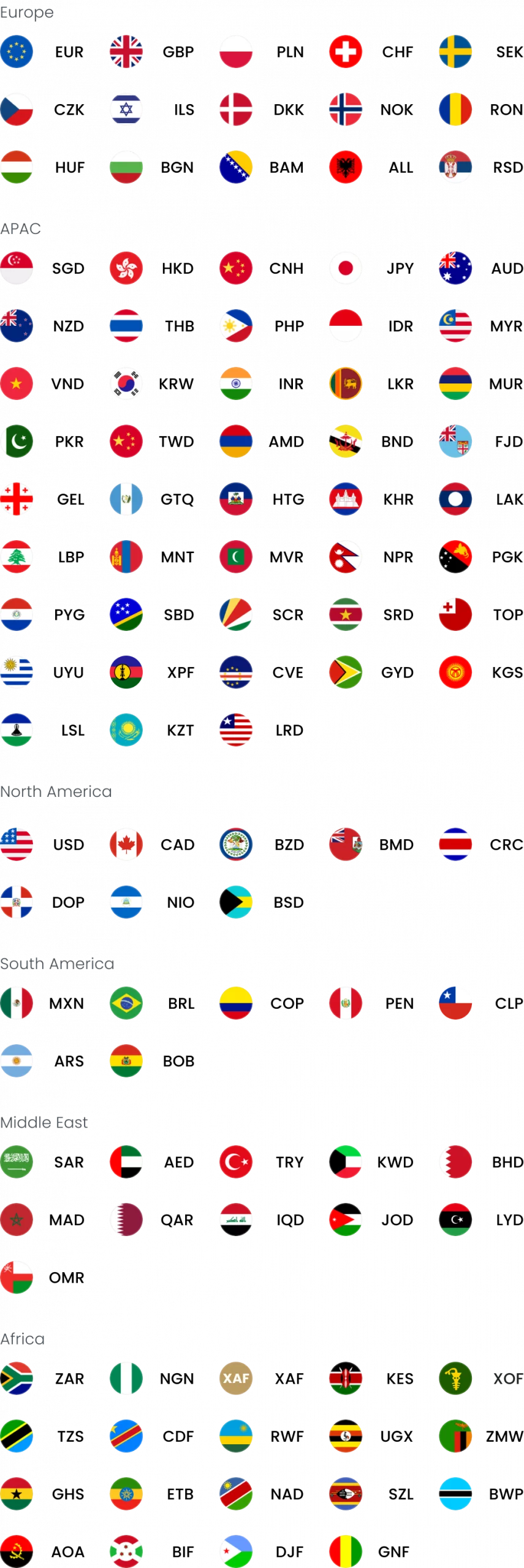
With the World Account, you can make same-day payments in 100+ currencies, separate spending using virtual or physical cards and gain access to over 130 global marketplace platforms. Plus, signing up for a World Account is completely free and can be completed from anywhere in the world.
In this guide:
- 3 ways to make global business payments (without relying on SWIFT wire transfers)
- How WorldFirst’s multi-currency account helps you make global business payments
- How to open a World Account online for free
- 4 ways to make managing global business payments easier
Ready to start making global business payments with WorldFirst? Sign up for a World Account today.
3 ways to make global business payments (without relying on SWIFT wire transfers)
Instead of relying on SWIFT bank transfers, here are three other ways to make global payments as a UK business:
1. Multi-currency account
A multi-currency account lets you hold, send and receive payments in several currencies, all from the same account.
Your payments aren’t automatically converted into GBP (or whatever your home currency may be). This makes it easier for you to control your FX exposure because you don’t have to convert currency as often.
It’s particularly beneficial if you receive payments in multiple currencies, since you can wait until FX rates are favourable before converting. Plus, it allows you to pay overseas suppliers in their preferred currency without being subject to unnecessary FX fees.
Unfortunately, most UK banks and financial institutions don’t offer true multi-currency accounts, though several offer separate foreign currency accounts which sit alongside your main business account.
These foreign currency accounts usually hold one currency at a time, so you might have a separate GBP account, EUR account or USD account. This means any incoming payments in other currencies will be auto-converted into your account currency, usually at the bank’s exchange rate.
Read more: How to choose a multi-currency business account (+7 options)
2. Debit and credit card payments
Card payments are a great option for smaller online payments, especially when you’re paying marketplaces, SaaS providers, ad platforms or other international vendors.
Since card transactions are usually recorded automatically in real-time, they can be easier to reconcile than manual bank transfers. They also only take between one and three business days to settle.
However, bank cards often come with high conversion fees, especially for business users. UK high street banks typically charge around 2.75% to 2.99% per foreign-currency transaction, and some cards add extra FX markup on top of that.
Luckily, you can get around this either by using a fee-free debit card, or by using one that’s linked to a multi-currency account so you can spend without having to convert between currencies.
Read more: How to avoid international wire transfer fees in 2026
3. Cryptocurrency
Crypto refers to digital currency that uses blockchain technology to create highly secure, decentralised payment systems.
It isn’t controlled by a bank or government. Instead, security is maintained by a distributed network of computers, making it practically impossible to alter past transactions or counterfeit coins.
Crypto payments settle quickly (often within minutes) and allow you to make transfers outside of traditional banking hours. That can make it useful for time-sensitive cross-border payments and for businesses working with international partners in different time zones.
Plus, since crypto payments cut out intermediary banks, it can also lower your transaction costs.
However, crypto is extremely volatile, meaning it’s usually better suited to large, one-off payments rather than everyday business payments. It’s also complex to handle (in terms of compliance and tax), meaning not every supplier will accept it.
Sending fees also vary, and costs can spike more than £20+ per transaction during periods of high network demand.
Read more: International business payment methods: What are the options?
How WorldFirst’s multi-currency account helps you make global business payments
WorldFirst is a digital payments platform that helps businesses make payments in 100+ currencies to over 210 countries worldwide. Since 2004, more than 1.5 million business customers have sent US$500+ billion through our platform.
With our multi-currency World Account, you can pay global suppliers quickly, convert funds at low and transparent exchange rates and even manage your expenditure by creating up to 50 virtual cards.
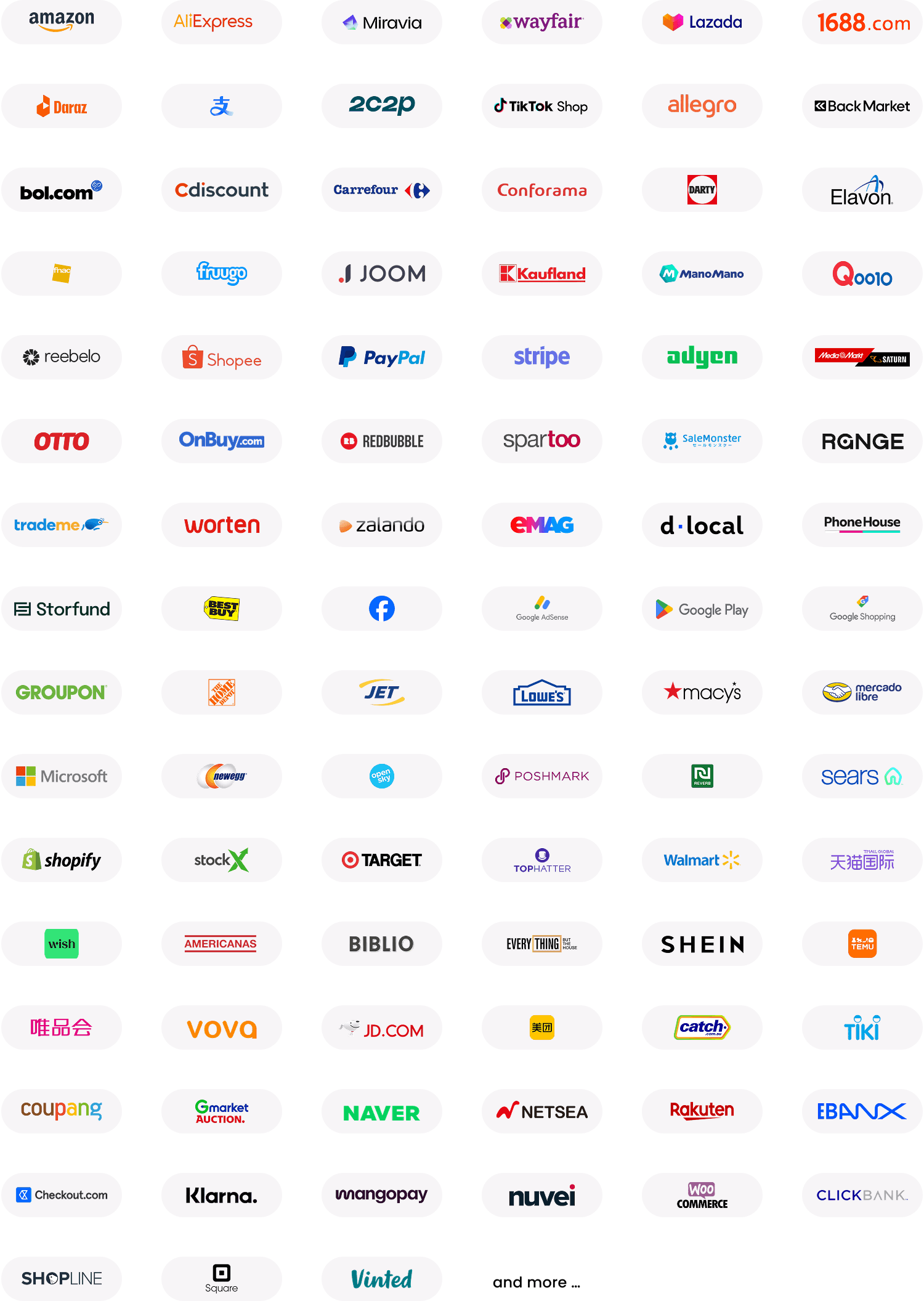
You can even reach new markets by integrating your account with 130+ global marketplaces and payment platforms.
Here’s what you can do with a World Account:
Pay global suppliers, partners and staff in 100+ currencies at low and transparent FX rates
The World Account lets you make global business payments in 100+ currencies at low and transparent FX rates.
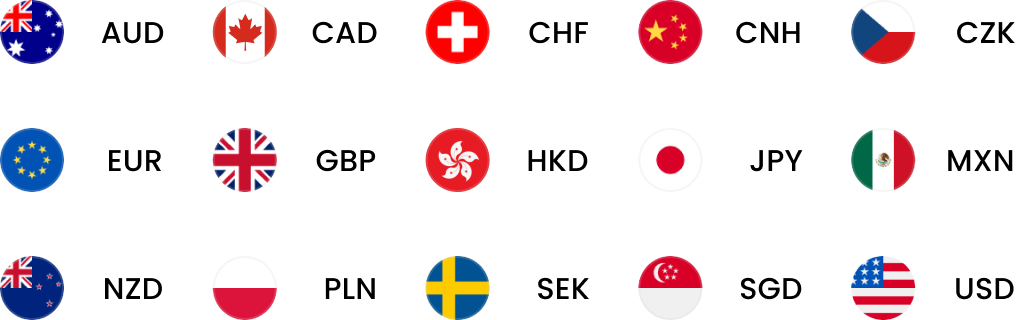
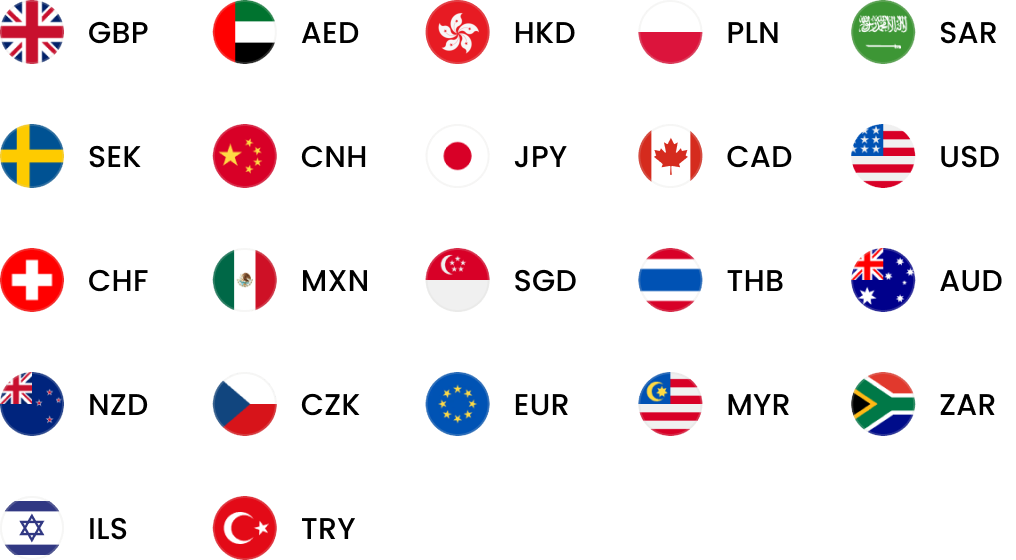
You can also hold EUR, USD and 20+ other currencies alongside your main GBP balance, which gives you the option to wait until FX rates are favourable before converting currency.
Doing this also saves you from paying unnecessary FX fees. For example, if you receive a payout in EUR, you can hold those euros in your account instead of auto-converting them to GBP. Then, when you go to pay an EU supplier, your payment will come out of your existing EUR balance and bypass currency conversion entirely.
FX fees only apply when you don’t hold sufficient balances in the payment currency, but even then our pricing is low and transparent. For currency conversions, WorldFirst uses the mid-market exchange rate, with a 0.5% markup for major currencies and a 0.75% markup for all other currencies.
Other than currency conversion, there are also no monthly fees, sign-up fees, top-up fees or minimum spend requirements.
Create up to 50 World Cards to easily separate and track your expenses
With WorldFirst, you can create up to 50 virtual cards to use anywhere that Mastercard is accepted.
World Cards help you control your spending by allowing you to split up your expenses – for example, you can assign cards to budgets, vendors or even to individual currencies. You might create one virtual card for digital ads and another for holding funds in USD. You’re also able to set daily, monthly, or per-transaction spending limits for each card to keep teams within budget.
Plus, you can easily add or remove authorised users for added security. If you suspect your card details have been stolen, WorldFirst lets you instantly freeze, delete and reissue cards with new details (that are separate from your main World Account).
All transactions are tracked in real time and automatically categorised, as well as synced to accounting tools like Xero and NetSuite to help you reduce manual reconciliation.
Read more: The best way for UK businesses to pay overseas suppliers
Integrate your account with 130+ marketplaces and payment gateways to streamline your payouts
With WorldFirst, you can integrate your account directly with 130+ global marketplaces, including regional variations of larger platforms (such as Amazon, Etsy or eBay), as well as payment gateways like PayPal or Worldpay.
Your earnings will automatically deposit into your World Account as soon as you make a sale, which improves your cash flow since you don’t have to manually release funds. You can even integrate with multiple marketplaces at once and have all your earnings flow into the same account.
This makes reconciliation much simpler, since you can match payouts to sales without chasing transactions across multiple accounts.
Read more: Business foreign currency accounts: 4 options compared
How to open a World Account online for free
To make global business payments with WorldFirst, you’ll first need to sign up for our World Account. Opening an account is free, and the application process is entirely online.
Here’s how to get started:
- Head to our World Account signup portal and enter your personal details
- Fill in your account information and verify your identity with a passport or drivers licence
- Upload your business documents, including shareholder IDs, company ownership documents, proof of address, and the source of your documents.
- Once you click ‘Submit’, you’ll receive an acceptance email (usually within 48 hours)
Then, to make a cross-border payment:
- From your WorldFirst account dashboard, go to ‘Payments’ and choose your recipient
- Select the country you’re sending money to, then enter your payee’s details
- Select the payment currency and amount you want to send
- You’ll be presented with a screen transparently displaying any transfer fees and foreign exchange fees that apply to your transaction
- Review the details, confirm your identity with two-factor authentication (2FA) and send your payment
Read more: International payment processing: A guide to how it works
4 ways to make managing global business payments easier
As a UK business, it can be hard to keep track of all your moving parts when you make domestic and international payments from the same account.
To help, here are some best practices to make managing global business payments easier:
- Keep domestic and international transactions separate: Maintain separate records for each country you do business in. This makes reconciliation easier, and it also helps you keep track of any corporate income tax you might need to pay, especially if you have a permanent business presence overseas.
On a similar note, it’s best to keep supplier transactions separate to ensure you pay the right amount of VAT (or other local sales taxes) to the right tax authority. - Keep separate payroll records: If you employ staff overseas, it’s important to record payroll by country or business entity (rather than mixing it into one general ledger). This helps you calculate the correct local taxes and social contributions, especially if you pay out bonuses and employer contributions.
- Track your multi-currency balances: Monitor how much cash you hold in each currency or business entity so your finance team can forecast liquidity more accurately. This is especially useful if you collect revenue in one currency but need to pay suppliers, staff, or tax authorities in another, since it helps you decide when to convert funds.
- Manage FX risk: Reduce your exposure to exchange rate swings by deciding whether payments should be grouped, timed or hedged in advance of the transfer date. You should also track the fees and margins of each overseas transaction to get a better understanding of where you can cut costs.
Read more: How do small businesses manage invoices and payments in multiple currencies?
Use WorldFirst’s World Account to manage global business payments today
In this article, we’ve shared three payment methods that you can use to make cost-effective global business payments. We’ve also shared how you can use multi-currency accounts like WorldFirst’s World Account to better manage your international payments and track your spending.
For example, with a World Account you can:
- Pay global suppliers in 150+ currencies at low and transparent FX rates
- Hold and receive funds in 20+ currencies at no cost
- Create up to 50 World Cards to easily separate and keep track of your expenses
- Integrate your account with 130+ marketplaces to streamline your payouts
Ready to start managing your global business payments with WorldFirst? Sign up for a World Account today.