


























For UK small and medium-sized enterprises, including importers and ambitious e-commerce sellers, the global marketplace has become the engine of growth. As supply chain resilience becomes a board-level priority, Southeast Asia is emerging as a key sourcing region, with more businesses adopting a “China plus one” strategy. Vietnam, Indonesia and Malaysia are increasingly valued for their production capacity, competitive pricing and improving infrastructure, covering everything from softlines and apparel to electronics and small appliances.
Successfully tapping into this sourcing hub depends on getting cross-border payments right. Too many UK SMEs are still relying on high-street banks by default, and that habit is quietly eating into margins through excessive fees and opaque pricing. More than 70% of UK SMEs still rely on high-street banks for international payments, and that reliance has a real cost: UK SMEs lost around £2.8 billion in 2023 to hidden charges and poor FX margins, a 27% rise since 2018.
The question worth answering is straightforward: how do you make sure supplier payments to Southeast Asia are fast, secure, transparent and cost-effective? The answer combines the right payment technology with a genuine foreign exchange risk management strategy, built around three pillars: cost control, FX hedging and operational efficiency.
Key takeaways
- More than 70% of UK SMEs still default to high-street banks for international payments, despite banks typically embedding a 2% to 5% margin into the exchange rate on top of any visible fee.
- Southeast Asia’s growing role in “China plus one” sourcing is backed by hard numbers: Nike and Adidas now make more than half their global footwear in Vietnam, and the UK’s December 2024 accession to the CPTPP trade bloc gives UK businesses tariff-free access to over 99% of goods traded with Vietnam and Malaysia.
- A specialist multi-currency account can bring FX margins down to around 0.5% (0.3% for new customers in their first 180 days with WorldFirst), against the 2% to 5% typically built into high-street bank rates.
- Forward contracts let you lock in an exchange rate up to 24 months ahead, protecting your margin on recurring supplier payments regardless of which way rates move.
- Southeast Asian sourcing carries its own risks around supplier verification and documentation, alongside the currency risk, so a payments strategy needs to cover both.
The real cost of paying Southeast Asian suppliers through a high-street bank
Small businesses face a familiar set of financial roadblocks when they start trading internationally. SMEs account for a large share of global trade flows, yet they remain underserved by the traditional banking sector, which was built around large corporate clients rather than a business sending £15,000 to a factory in Ho Chi Minh City every month.
The drawbacks of conventional banks are structural, and they cut directly into profitability:
Hidden fees and FX margins. Banks typically make their real profit on the exchange rate itself, adding a margin above the mid-market rate rather than relying on a visible transfer fee. Traditional banks typically embed a 2% to 5% markup in the rate they offer, which is easy to miss if you’re only comparing the headline transfer fee. Specialist providers tend to charge far less. More than 54% of UK SMEs trading internationally reported losses from FX volatility in the past year, averaging £53,000 per business, with over half saying a single poorly timed transfer cost them up to £20,000.
Speed and transparency issues. Traditional banking relies on the correspondent banking network, which introduces multiple intermediaries and, with them, extra costs, delays and a lack of visibility. Settlement can take several business days, which is frustrating for both the importer and the supplier waiting to ship. Late payments caused by this friction are a persistent drag on liquidity for the SME sector as a whole.
Maximising profitability when sourcing from fast-growing markets like Vietnam and Indonesia, where logistics and compliance already add complexity, starts with moving away from slow, expensive banking rails.
Why Southeast Asia matters more for UK sourcing in 2026
The “China plus one” strategy has shifted from a defensive move to a structural part of sourcing strategy for many importers. Manufacturing wages in coastal China have risen substantially over the past decade, and Vietnam, Indonesia and the Philippines now beat China on labour cost in several product categories. Large brands have already made the shift at scale. Nike and Adidas now make more than half of their global footwear in Vietnam, with China still part of the mix rather than replaced entirely. Smaller UK importers are applying the same logic at their own scale, keeping core China relationships while building second-country capacity for the products where risk or cost makes it worthwhile.
Trade policy has moved in the UK’s favour too. The UK formally joined the Comprehensive and Progressive Agreement for Trans-Pacific Partnership (CPTPP) on 15 December 2024, giving UK businesses their first free trade agreement with Malaysia (alongside Brunei), and preferential access to Vietnam. Over 99% of UK goods exports to CPTPP members are eligible for tariff-free treatment. Indonesia isn’t currently a CPTPP member and doesn’t yet have a dedicated UK free trade agreement, so it’s worth checking current tariff and rules-of-origin treatment before you commit to a supplier there, but its cost base and manufacturing capacity still make it a market worth watching closely.
None of this removes the work of sourcing well. Many Vietnamese and Indonesian factories still depend on Chinese components and raw materials, so lead times and customs documentation deserve just as much attention as the headline labour cost saving.
Use a digital payments platform built for cross-border sourcing
Digital payment platforms were built specifically to solve the problems traditional banks create for global trade: opaque pricing, slow settlement and a poor experience for smaller, more frequent payments. For UK SMEs, adopting one is one of the more immediate ways to protect margin and speed up the supply chain.
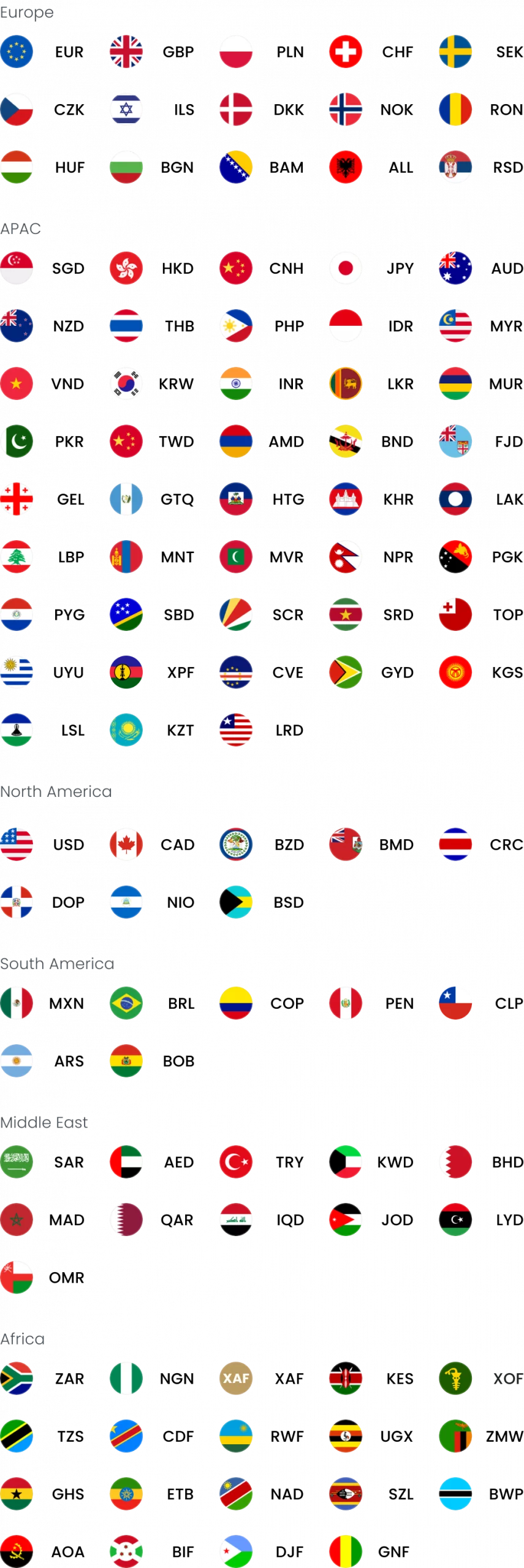
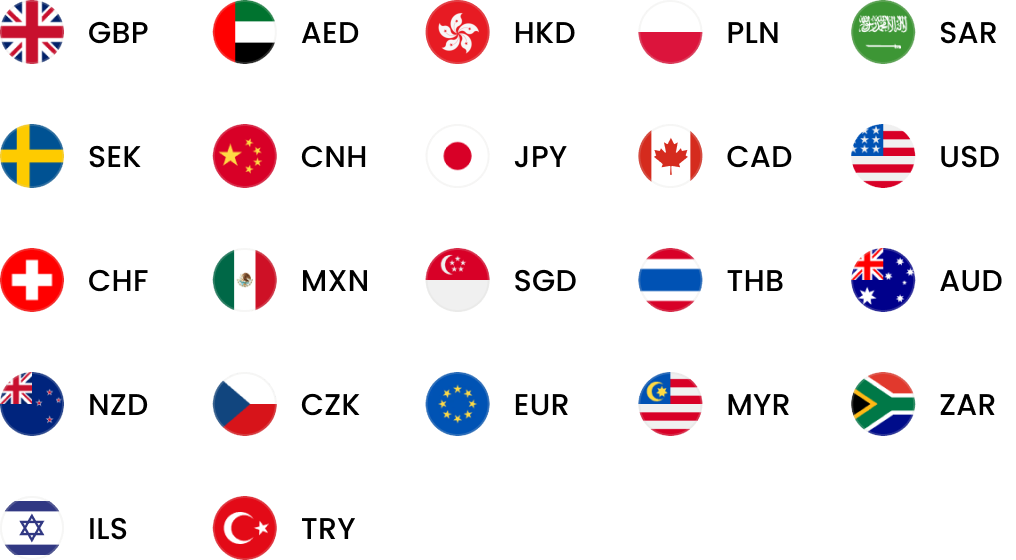
Multi-currency accounts. A multi-currency account, such as WorldFirst’s World Account, lets you hold, send and receive major currencies including GBP, EUR, USD and CNH without converting the moment funds land. That matters for two reasons in particular:
- Local receivables. You can open local receiving accounts in currencies like USD to collect payments from international marketplaces such as Amazon, eBay or Shopify, cutting down on the frequent, costly conversions you’d otherwise make back into GBP.
- Local-style supplier payments. Rather than relying solely on the SWIFT network, platforms can settle payments through local payment methods in the destination country, so a payment to a Vietnamese or Malaysian supplier can move closer to the speed of a domestic transfer.
Sourcing-specific payment tools. Sourcing from China still sits alongside most Southeast Asia strategies, and the payment friction there is well understood. WorldFirst is the official international payment partner for 1688.com, China’s largest domestic wholesale marketplace, through a feature called World Pay. It lets you settle orders directly in offshore RMB (CNH) from your World Account, without needing a Chinese bank account, a sourcing agent or a workaround. For new supplier relationships specifically in China, WorldTrade adds a further layer of protection: funds are held in escrow until an order ships, and the platform already connects close to a million verified Chinese businesses. For new suppliers in Vietnam, Indonesia or Malaysia, that exact product doesn’t apply in the same way, so lean on marketplace-native trade assurance schemes, staged payments tied to shipping milestones, and independent supplier verification, particularly for a first order with a factory you haven’t worked with before.
Low conversion costs. When conversion is unavoidable, for example converting USD marketplace revenue into CNH or MYR to pay a supplier, specialist platforms typically price much closer to the interbank rate than a bank does. Typical FX margins for UK SMEs using WorldFirst sit around 0.5%, with a 0.3% rate for new customers in their first 180 days, against the 2% to 5% margin banks commonly build into their rates. Payments between World Accounts settle instantly and without a fee, which is worth knowing if a supplier or partner already holds one.
Build a foreign exchange risk management strategy
Currency volatility is a constant in global trade. Rates move around the clock, driven by economic data, interest rate decisions and geopolitical events, and those swings can erode a carefully planned margin before a shipment even arrives. A structured FX strategy is what turns that volatility from a threat into a manageable, budgetable cost.
Core hedging instruments.
- Forward contracts. The most commonly used tool. WorldFirst lets you lock in an exchange rate for up to 24 months, removing uncertainty about the cost of a future payment and protecting your budgeting, though you give up any upside if rates move in your favour.
- Currency options. These give you the right, but not the obligation, to convert at a set rate on a future date, protecting against adverse moves while still letting you benefit from a favourable one. That flexibility generally makes them more expensive than a forward contract.
- Automated FX tools. A firm order lets you set a target rate and have the conversion execute automatically the moment the market reaches it, even outside UK business hours. This is useful for capturing a brief window of favourable pricing without watching the market yourself. Read more on how to lock in exchange rates as a cross-border business.
The case for natural hedging. Beyond financial products, the most effective way to manage FX risk is often to structure your cash flows so inflows and outflows match. If you earn USD revenue from Amazon US and pay a Vietnamese supplier who also accepts USD, transacting entirely in USD removes the currency exposure altogether. Holding local currency balances through a multi-currency account, rather than converting back to GBP and out again, reduces both conversion costs and the timing gap between payments and receipts.
Forecasting and visibility. Effective FX management starts with knowing your exposure. Track upcoming payables, receivables, purchase orders and outstanding trades in one place so you can see your currency exposure across VND, IDR, MYR, CNH or USD before it becomes a problem. Running simple stress tests, modelling how your cash flow holds up if a currency moves 5% or 10% against you, supports better decisions about when and how much to hedge.
Tighten operational efficiency and protect against fraud
For resource-constrained SMEs, the speed and visibility of payments directly affects supplier relationships and competitiveness. Getting the back office right matters just as much as getting the FX rate right.
Streamline the payables process. Look for platforms that integrate directly with accounting software such as Xero or QuickBooks, rather than relying on spreadsheets and manual reconciliation. Mass payment tools let you pay multiple suppliers or staff in one batch rather than processing each transfer individually, a genuine time saver once you’re managing several supplier relationships across two or three countries. Real-time payment tracking also matters. Knowing exactly when funds have landed cuts down on the back-and-forth with suppliers chasing confirmation.
Security and verification. When you’re sending significant sums of GBP overseas, security can’t be an afterthought. Methods like Western Union carry high fraud risk and offer no buyer protection for business transactions, so they’re not appropriate here. Old-style bank-to-bank wire transfers are slow and also offer limited protection, and should only be used with long-established, trusted suppliers. For a new supplier relationship anywhere in Southeast Asia, carry out proper due diligence before you commit to a large or first order: verify business registration documents, ask for references from other buyers, and consider a small paid test order before scaling up. Keep complete documentation for every payment, invoices and contracts included, particularly for larger transfers, since incomplete paperwork is one of the more common reasons funds get delayed or flagged during compliance checks.
Turning Southeast Asia payments into a competitive advantage
Cross-border payments have moved from being an expensive, opaque necessity to a genuine source of competitive advantage for businesses that get the infrastructure right. For UK SMEs sourcing from Vietnam, Indonesia, Malaysia and beyond, sticking with high-street banking by default is a reliable way to give away margin you’ve already worked hard to protect.
The practical steps are straightforward:
- Move to a digital platform to access multi-currency accounts and tighter FX spreads, cutting the legacy costs that come with high-street banking.
- Put a layered FX strategy in place, combining forward contracts and automated tools like firm orders to fix costs and remove currency risk from your planning.
- Connect payments to your accounting system to cut administrative overhead and speed up and secure every supplier payment.
Ready to get started? Open a World Account online in minutes and start paying suppliers across Southeast Asia and beyond, with transparent FX rates and no monthly fees. WorldFirst isn’t a bank; in the UK it’s authorised by the Financial Conduct Authority as an Electronic Money Institution, and customer funds are safeguarded in line with regulatory requirements.
FAQs
1. What’s the cheapest way for a UK SME to pay suppliers in Southeast Asia?
A specialist multi-currency account typically offers the lowest total cost, combining a tighter FX margin (often around 0.5%, against 2% to 5% at a high-street bank) with low or no transfer fees, particularly for payments settled through local rails rather than SWIFT.
2. Is SWIFT safe for large supplier payments?
SWIFT is a reliable and widely used network, but it isn’t necessarily the cheapest or fastest option. Payments typically pass through several correspondent banks, each able to add a fee and a delay, and settlement can take several business days. For recurring supplier payments, a multi-currency account settling through local rails is often faster and more transparent.
3. What’s the difference between a forward contract and a spot payment?
A spot payment converts currency at today’s live rate for near-immediate settlement. A forward contract locks in an exchange rate now for a payment that will happen at a set point in the future, up to 24 months ahead with WorldFirst, which protects your margin from rate movements between now and the payment date.
4. Do I need a local bank account in Vietnam, Indonesia or Malaysia to pay suppliers there?
No. A multi-currency account lets you hold and convert relevant currencies and pay suppliers directly, without opening a local bank account in each country you source from.
5. How can I protect against FX volatility when paying suppliers in USD or local Southeast Asian currencies?
Combine natural hedging, matching your currency inflows and outflows where you can, with financial tools like forward contracts or firm orders for the exposure you can’t offset naturally. Tracking upcoming payments and receipts in one place makes it much easier to see where your real exposure sits.
6. Does the UK have preferential trade terms with Southeast Asian countries?
Yes, for some. The UK’s accession to the CPTPP in December 2024 gives tariff-free access on over 99% of goods traded with Vietnam and Malaysia. Indonesia isn’t currently part of that agreement, so it’s worth checking the applicable tariff and documentation requirements separately if you’re sourcing there.