



























An international bank account allows businesses to hold, send and receive money in multiple currencies, often with local payment details attached. In this guide, we’ll cover how UK businesses can get paid from abroad, send payments overseas, and run a multi-currency account alongside their domestic one. Pay close attention to the fees, protection rules and routing codes, as they’re where most businesses get caught out.
Key Takeaways
- UK businesses can use an international bank account to hold several currencies at once, and send or receive money abroad from one account; generally speaking, the steps to open a foreign currency account are very similar across providers.
- Transfer costs are broken into five categories: the monthly account fee, FX (foreign exchange) markups on each conversion, ATM withdrawal fees, foreign transaction fees on card spend, and the fees the banks in the middle take from the transfer itself.
- An IBAN (International Bank Account Number) and local account details allow overseas customers to pay you like a domestic supplier. A SWIFT/BIC code (the routing code that identifies the receiving bank) gets the payment to the right institution, which is why many exporters end up setting up a business currency account.
- A licensed bank may offer protection under the Financial Services Compensation Scheme (FSCS). An Electronic Money Institution (EMI) authorised by the Financial Conduct Authority (FCA) isn’t a deposit taker, and instead must safeguard customer funds under the Electronic Money Regulations 2011.
- HM Revenue & Customs (HMRC) receives overseas account data through the Common Reporting Standard (CRS), so foreign balances and income still need declaring.
If you’re reading this while weighing up the option of opening an international bank account, a World Account gives you multi-currency balances and local details without a branch appointment.
WorldFirst is not a bank and does not offer banking services; the World Account is offered by WorldFirst UK Limited, an Electronic Money Institution authorised by the FCA.
What Does an International Bank Account Actually Let You Do?
An international bank account holds balances in several currencies, receives payments from overseas customers, sends money to suppliers and staff abroad, and converts between currencies when you choose to. Licensed banks and FCA-authorised payment platforms both offer these functions, so the label matters a lot less than the mechanics behind it.
Currency Balances, Local Details and IBANs
GBP, EUR and USD can sit side by side: euros from a Berlin customer stay in euros until you convert them, so an invoice payment never forces an exchange that day.
Local account details matter most for sellers: they let an overseas customer or marketplace such as Amazon, eBay or Shopify pay you like a domestic supplier, routing over domestic payment rails rather than correspondent networks, which means fewer intermediary deductions. The same logic shapes how Amazon seller payouts are scheduled.
How a Payment Reaches the Other Side
Two codes do two different jobs. An IBAN identifies one specific account in a fixed international format, standardised under ISO 13616¹ so each customer’s account can be uniquely identified from its country code, check digits and domestic account number, while a SWIFT or BIC code (Business Identifier Code) names the institution holding it². A missing or mistyped code is a common, but very avoidable, reason that payments stall in transit.
Payment platforms are not the only route to these features: licensed banks offer the same multi-currency balances, local details and IBAN/SWIFT routing, so the choice comes down to what else you need from an account.
International, Multi-Currency, Foreign Currency or Offshore: Which Term Means What
International bank account is the umbrella term, while the others describe narrower setups. A multi-currency account holds several currencies at the same time, a foreign currency account holds one non-GBP currency, and an offshore account simply means an account held outside your country of residence. These don’t change your tax position and none are inherently better than the others; each is just a different slice of the same idea.
Comparison Table of Account Types
| Account type | What it holds | Who typically opens it | Main limitation |
|---|---|---|---|
| International bank account | GBP plus one or more foreign currencies | Businesses trading in several markets | Fees vary widely by provider |
| Multi-currency account | Multiple currencies in parallel balances | Exporters, sellers, agencies | Spread applies on every conversion |
| Foreign currency account | A single non-GBP currency | Businesses with one main corridor | No breadth if you add markets |
| Offshore account | Currencies held outside your country | Non-resident account holders | No tax advantage by itself |
| International business account with a payment platform | Multiple currencies plus local details | E-commerce and SME importers | Not a licensed bank, so no lending |
Account types above are general categories, not specific product offers. Features, eligibility and pricing vary by provider. Always confirm current terms directly with the provider. Comparison correct as of 17 August 2026.
Personal or Business Account for the Self-Employed
A sole trader can technically receive foreign payments personally, but many high-street terms restrict trading activity on personal accounts. This means a dedicated business account is the practical answer if you’re regularly invoicing. Marketplace payout rules also expect the account name to match the trading entity, keeping bookkeeping cleaner at year end.
Is an International Account Useful Beyond Business Trading?
Yes, though the use case differs from a business account. Students studying abroad and frequent travellers often use a multi-currency account to hold living costs in the local currency and avoid repeated foreign transaction fees, while high-net-worth individuals may use one to consolidate balances held across markets. These personal use cases still sit on the same underlying mechanics, currency balances, local details and FX spreads, covered above for business accounts, but eligibility, features and protection can differ from a business account, so always check a provider’s personal account terms separately.
Where the Fees Really Sit
The headline transfer fee is rarely where the money goes. Most of the real cost hides in the exchange rate margin, the gap between the mid-market rate and the rate you are actually given. Illustratively, a “£0 transfer” at a 2.5% spread costs far more than a £10 transfer at 0.4%.
Ask a provider for the exact rate you will receive, then compare it against the mid-market rate for that currency pair – the gap, not the transfer fee, is where most of the cost sits.
The Five-Part Cost Stack
- Monthly maintenance fee which is charged whether you use the account or not
- FX markup or spread applied to every currency conversion
- Foreign transaction fees on any card spend in another currency
- ATM withdrawal charges abroad, often a fixed fee plus a percentage of the withdrawal
- Correspondent banking deductions taken mid-route, so less arrives than was sent
Is a Free International Account Genuinely Free?
Rarely, though not never. Instead of charging conversion fees, some providers will earn from interest on your balance or by taking a share of the fee merchants pay on card transactions. But if there’s no monthly fee or obvious transaction charge, the exchange rate is usually where the margin sits, and it’s the place many businesses overlook.
To work out whether “free” really is free, run three checks on every international bank account quote:
- Compare the rate offered against today’s mid-market rate.
- Ask what the receiving party will actually get after deductions.
- Add up 12 months of conversions at your real volumes.
WorldFirst’s published pricing puts currency conversion at up to 0.50%³ (correct as of 17 August 2026), which gives you a benchmark for those three checks. Fees, exchange rates and eligibility criteria change over time and vary by provider, currency and payment method. Always check current provider terms and pricing before you open an account or send a payment.
How to Open an International Bank Account: Step by Step
Most applications follow the same route: pick your currencies, pick your provider type, submit documents, pass identity and business checks, then verify or fund the account before your first payment lands. Remote opening is normal with payment platforms and increasingly common with banks.
- Confirm which currencies and corridors you trade in
- Choose between a licensed high-street bank and an FCA-authorised payment platform
- Gather your documents before you start the form
- Complete KYC (Know Your Customer) checks along with any credit assessment
- Verify and/or fund the account
- Set up payouts and connect your accounting software
Verified Versus Unverified Accounts
An unverified account is usable but limited: providers cap transaction volumes and sometimes block certain payment types until full KYC checks are complete. A verified account, reached once identity, business and source-of-funds checks clear, removes those caps and unlocks the account’s full features. Until then, treat any balance or payout limits shown during onboarding as temporary rather than the account’s real ceiling.
Documents and Checks to Prepare
- Proof of identity for every director and beneficial owner
- Proof of business and personal address
- Companies House registration number and details
- Evidence of trading activity, such as invoices or marketplace statements
- Expected monthly volumes and destination markets
- Any minimum balance or turnover requirement
Realistic Timelines (and What Slows Approval)
Straightforward limited companies can be verified within a few working days; complex cases take longer. Mismatched addresses, layered ownership, non-resident applicants and unclear source of funds are the usual causes of delay. Exporters scaling up can also check what UK Export Finance⁴ supports alongside their account.
US Citizens and Digital Nomads: Extra Checks to Expect
US citizens opening an international bank account are usually asked for a US taxpayer identification number and FATCA-related self-certification, since providers must report US account holders to the relevant authorities. Digital nomads without a fixed home address face a related but separate hurdle: providers still need a verifiable business or personal address and consistent documentation, so frequent relocation can slow onboarding even where the rest of the application is straightforward.
Fund Protection and Tax: The Two Things Providers Gloss Over
Protection depends on who holds your money. A licensed bank may offer FSCS deposit protection on eligible deposits, while an FCA-authorised EMI is not a deposit taker and instead safeguards customer funds. Both are regulated, but the mechanism protecting your balance differs.
FSCS Deposit Protection Versus Safeguarding
The FSCS covers eligible deposits up to £120,000 per eligible person, per bank, building society or credit union⁵ (correct as of 17 August 2026), and applies only to firms authorised to take deposits⁶.
Safeguarding works differently: customer money is kept separate from company money and is never used for company purposes. WorldFirst safeguards customer funds with tier 1 partnering banks in accordance with regulatory requirements.
WorldFirst UK Limited is a UK registered company (No. 05022388), authorised by the Financial Conduct Authority as an Electronic Money Institution (FRN: 900508), registered at 2nd Floor, International House, 1 St Katharine’s Way, London, E1W 1UN, and part of Ant International. See what sets this provider apart or the walkthrough for opening a company account step-by-step.
What HMRC Sees and What You Must Declare
HMRC already receives account data from other jurisdictions through the CRS⁷, so an overseas balance doesn’t stay invisible for long. Foreign income and gains still need reporting on a Self Assessment or company return.
This article is general information and not tax, legal or financial advice. Speak to a qualified accountant or tax adviser about your own circumstances before acting on anything here.
Which Provider Type Fits Your Business?
Match the provider to the job. Lending, overdrafts and cash handling point towards a bank; currency breadth and marketplace payouts point towards a payment platform. Many UK businesses run both, one for credit and one for cross-border payments.
High-Street and Global Banks
- Branch access, cash deposits and business lending
- Eligible deposits may fall under FSCS cover
- Global and high-street banks also market international trade support to UK businesses
- Onboarding is typically slower, and FX pricing varies widely by provider
Challenger Accounts and Payment Platforms
- Faster remote onboarding and multi-currency balances
- Local details for marketplace and customer payouts
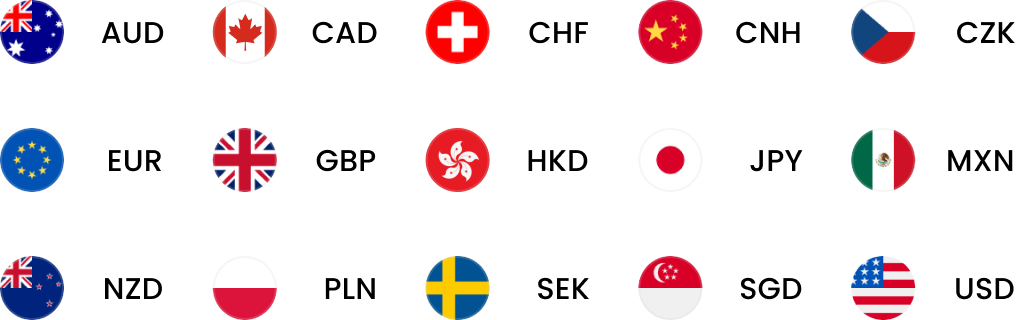
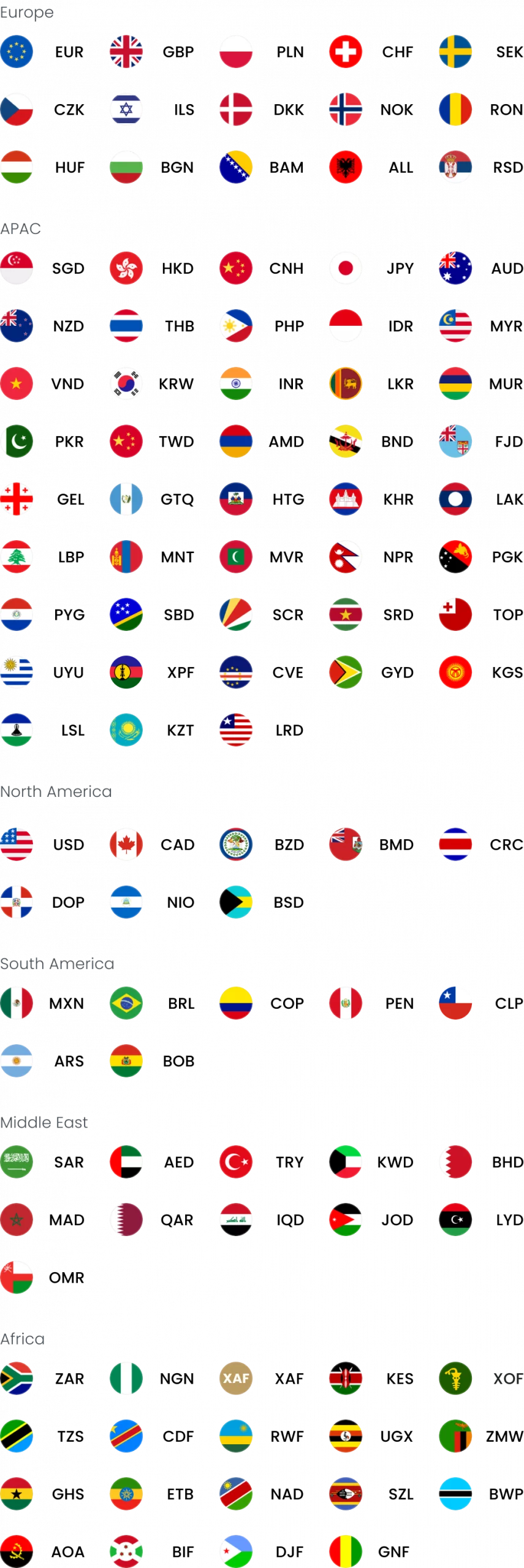
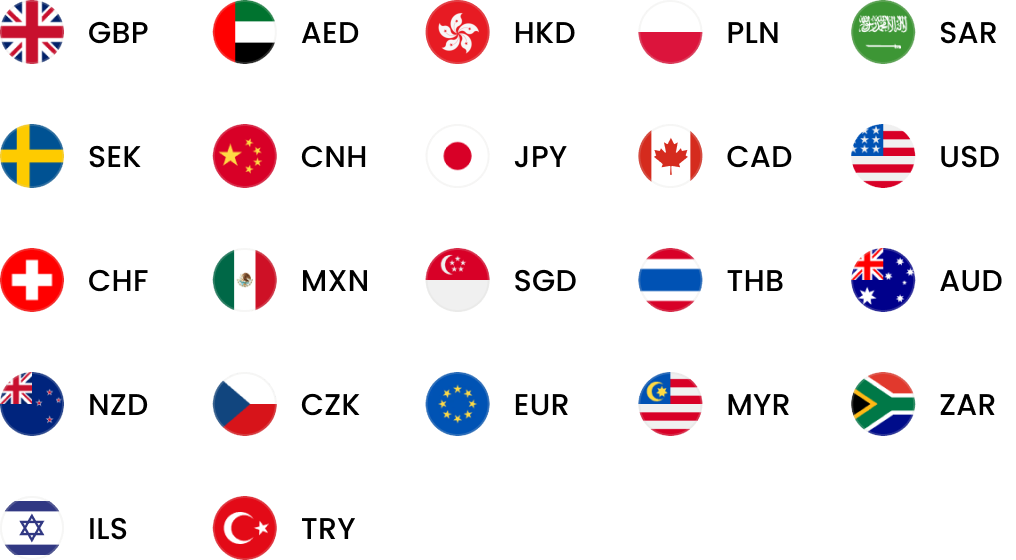
- The World Account holds and collects in 20+ currencies, sends payments to 200+ countries, and connects to your accounting software.⁸
Platforms are not banks: there is no overdraft, no cash deposits, and safeguarding applies rather than FSCS cover. The guides on managing payments across multiple markets and paying overseas suppliers and partners go deeper into both questions.
International bank account alternatives: where a World Account fits
A World Account isn’t a bank account and for cross-border trading that’s often the point. It holds foreign currency, collects from overseas marketplaces and customers, and pays suppliers abroad with local receiving details, so payments arrive the same way a domestic one would.
- Collect in 20+ currencies with local receiving details
- Send payments to 200+ countries
- Currency conversion at up to 0.50%
- Free to open, with no ongoing account fees
- Connects to your accounting software
WorldFirst is not a bank and does not offer banking services. The World Account is offered by WorldFirst UK Limited, an Electronic Money Institution authorised by the FCA. Rates and fees correct as of 17 August 2026.
FAQs
1. Can HMRC See International Bank Accounts, and What Must You Declare?
Yes. HMRC exchanges account data with other jurisdictions under the CRS, covering balances and account holders. You should always declare foreign trading income, gains and any tax already paid abroad on your return, claiming relief where a treaty applies.
2. How Long Does It Take to Open One?
It varies by provider and structure. Payment platforms often complete KYC checks within a few working days for a clean single-director company, while branch-based bank onboarding can run considerably longer, particularly where directors live overseas.
3. What Is the Difference Between an International Account and an Offshore Account?
An international bank account is defined by what it does: holding and moving several currencies. An offshore account is defined by where it sits: outside your country of residence. One is functional, the other geographic, and neither reduces UK tax.
4. Can You Open an Account Somewhere You Don’t Live?
Often yes. A non-resident account is possible with many providers, though banks usually want local presence or a minimum balance. UK-authorised payment platforms generally onboard remotely, provided the company is registered here and directors pass verification.
Tax treatment depends on your individual circumstances and current legislation. This is general information, not tax advice.
Choosing the Setup That Matches How You Trade
There is really one decision here: work out which currencies flow through your business, which corridors you use most, and which fee structure suits that pattern, then pick the account that fits. A business invoicing in euros twice a month has a different answer from one paying suppliers weekly in three currencies.
The same logic applies to protection: know whether your provider offers FSCS cover or safeguards funds instead.
Most businesses end up combining both: a domestic account for payroll and credit, and a multi-currency account for cross-border payments that would otherwise bleed margin through spreads and correspondent charges. Know where the costs sit, who holds your money, and what changes as volumes grow.
This article is intended for informational purposes only and does not constitute legal advice or professional advice. This article should not be regarded as constituting an offer or a solicitation to buy or sell any regulated or financial products or services. WorldFirst makes no representations or warranties regarding the accuracy, completeness, or applicability of the content, and readers are encouraged to consult with legal professionals or other professionals for advice tailored to their specific situation. WorldFirst does not guarantee the accuracy and completeness of this article and expressly disclaims any and all liability to any person in respect of the consequences of anything done or omitted to be done wholly or partly in reliance on this article.
Sources
- SWIFT – IBAN (International Bank Account Number) standard
- SWIFT – BIC (Business Identifier Code)
- WorldFirst UK – Pricing
- UK Export Finance
- Financial Services Compensation Scheme – What we cover
- Bank of England – Financial Services Compensation Scheme
- HMRC – International Exchange of Information Manual
- WorldFirst UK – World Account