





























Home > blog > International Transactions > How to pay overseas contractors safely, quickly, and affordably
How to pay overseas contractors safely, quickly, and affordably
Last update:


Hiring overseas contractors and freelancers opens the door to global talent – and today, it’s a standard part of how modern businesses operate.
But when it’s time to actually pay those contractors, many teams run into friction they didn’t anticipate, including:
- Dealing with slow or delayed payments that erode contractor trust
- Paying high and unpredictable transfer fees
- Managing payments across multiple platforms and currencies
- Feeling uneasy about moving money across borders without clear visibility or notifications
As a result, paying foreign contractors starts to feel expensive, risky and harder to manage than it should be.
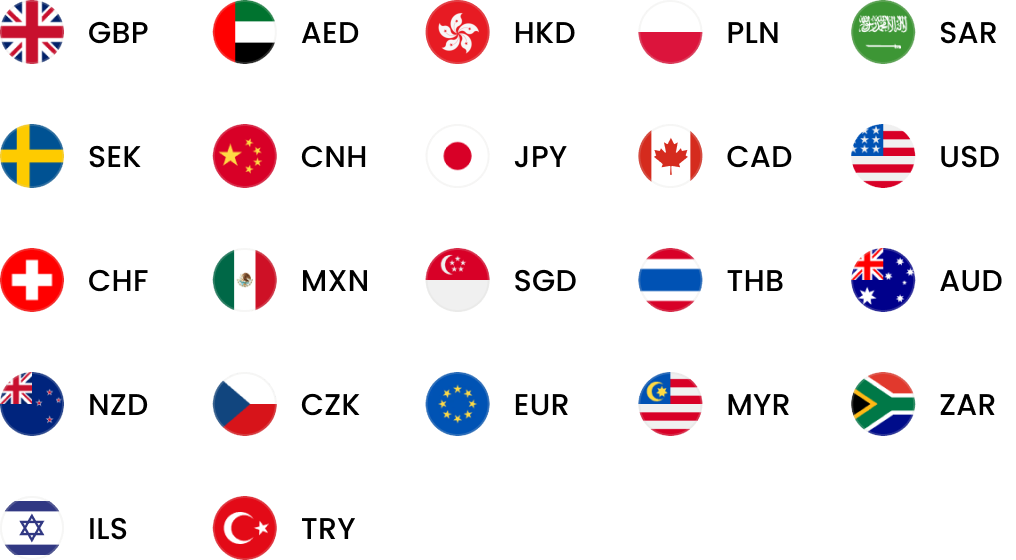
So, how do you find the best payment option for your international contractors? One strong solution is by using a World Account, the multi-currency account from WorldFirst that lets you hold and pay contractors in 20+ currencies without hidden conversion fees or FX markups.
In this article, we’ll introduce WorldFirst, plus cover:
- 5 priorities when you’re paying overseas contractors
- Three common ways businesses pay global contractors – and where they fall short
- Compliance considerations to keep in mind when paying contractors across borders
- How WorldFirst helps simplify overseas contractor payments while reducing cost, risk and administrative burden
Ready for a simpler, more cost-effective way to pay international contractors? Open a World Account for free.
5 priorities when you’re paying overseas contractors
If you’re running into constant roadblocks while paying overseas contractors, it’s easy to spot what’s going wrong – unexpected fees, delays and security concerns. But the bigger challenge is this: how do you find a payments solution that will solve your biggest frustrations – all in one platform?
Here are some of the key things to look for when choosing a method to pay international contractors.
- Low fees and competitive FX rates. High FX fees, hidden markups and fluctuating exchange rates make it difficult to predict monthly costs, especially when fees vary depending on payment route, currency or provider.
A strong payment solution should offer competitive exchange rates and flexible FX options, so costs are predictable and easier to manage. Also, look for providers who are fully transparent about their fees, so you don’t run into surprise costs down the road.
- Security and compliance. Cross-border payments carry added risk, particularly when regulations differ by country and currency. Once a payment is sent, visibility is often limited – making it hard to know if funds are delayed, flagged or received.
Look for a payment solution that has built-in safety checks and complies with global payment rules, reducing risk and helping payments reach contractors without issues.
- Payment visibility. When payments lack visibility, teams are often left investigating delays and reassuring contractors – even when payments were sent correctly. Without clear tracking, it’s hard to know where funds are in the process or when they’ll arrive.
You want a solution that tracks payments and sends instant notifications, offering clarity, building trust and keeping communication clear and professional.
- Speed and reliability. Time-consuming or inconsistent payments frustrate contracts, slow progress and can even damage working relationships. Even reliable contractors may walk away if payments are repeatedly late or unpredictable – and rightfully so.
Look for a fast, reliable payment solution that keeps contractors happy and projects moving forward.
- Operational simplicity and scalability. As contractor networks grow, payment complexity often grows with them. Managing multiple currencies, countries, tools and approval workflows quickly becomes hard to scale, and what works for one or two contractors rarely works for ten or twenty.
A single, scalable platform centralises payments, reduces manual work and keeps operations manageable as your business expands globally.
How WorldFirst simplifies overseas contractor payments
If you’re a business making regular payments to different countries and currencies, WorldFirst was built with you in mind. We make cross-border payments simple and secure, and we’re already trusted by over 1.5 million business customers worldwide.
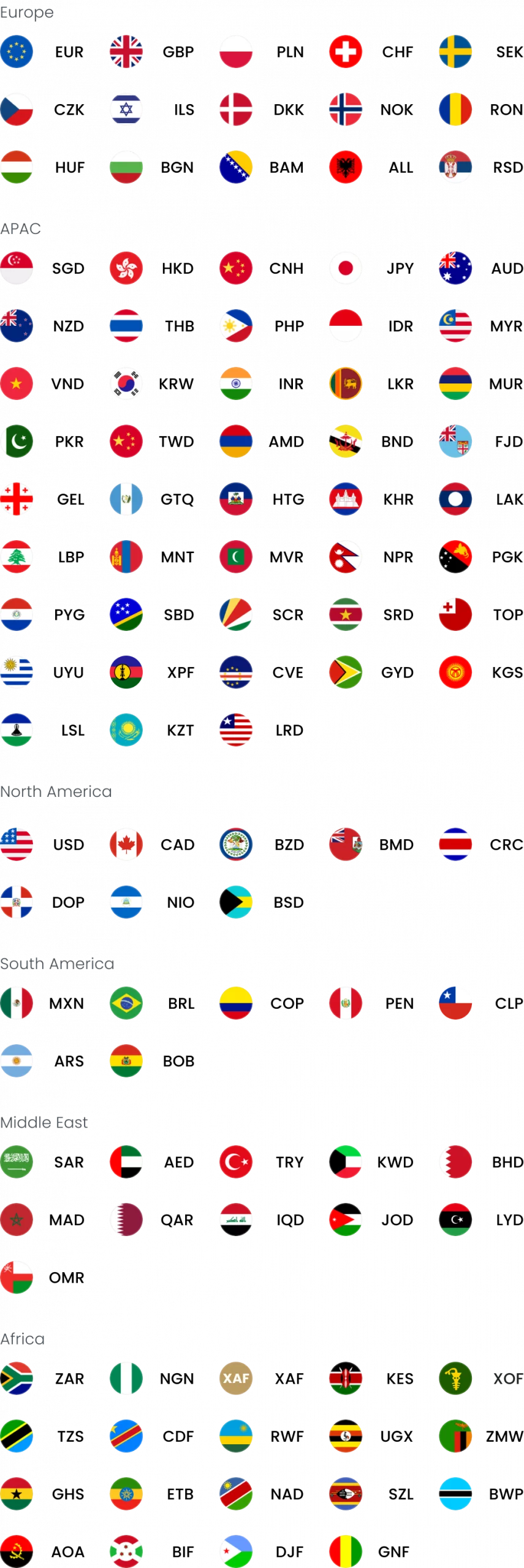
With our multi-currency World Account, you can easily manage payments to contractors from one platform – and reduce payment fees and shorten transfer times while you’re doing it. Simply open an account and you can start paying in 100+ currencies across 210+ countries and regions.
Here are just some of the benefits you’ll find when using our WorldFirst Account:
Pay overseas contractors faster – often the same day
With a multi-currency World Account, you can pay contractors in 100+ currencies to 210+ destinations, using faster, local payment rails where possible.
That’s why around 90% of transfers arrive within one working day. And when local payments aren’t an option, your World Account lets you make faster SWIFT transfers with lower transaction fees than traditional providers.
So instead of paying contractors and then waiting days, you can pay quickly and confidently – eliminating any unnecessary tension around payments.
Plus, if your contractor also uses WorldFirst, payments between WorldFirst accounts are free and instant. All of this is managed from one place, making global contractor payments easier to automate and scale.
Some contractors also invoice and accept payment by card. In those cases, the WorldFirst World Card can offer a faster, more convenient way to pay without waiting on bank transfer timelines. It’s another option that helps keep payments moving and contractor relationships strong.
Read more: Best business bank accounts for foreign transactions: 9 top options
Make international payments affordable – with no hidden FX markups
When you’re paying international contractors, one of the most frustrating parts is not knowing what a payment will actually cost until it’s already gone through. Many banks and payment providers advertise low fees, but then make up the difference with unfavourable exchange rates or hidden FX markups.
WorldFirst makes international payments clear and straightforward by using the mid-market exchange rate and applying a low, transparent FX markup capped at 0.50% for direct transfers on major currencies (including USD, EUR, GBP, AUD, CAD, and JPY).
Before you send a payment, you can see how much it will cost and what exchange rate you’re getting – so there are no hidden fees or unexpected surprises later. With WorldFirst, all costs are shown upfront, which makes it much easier to plan, budget and pay contractors with confidence.
By the way, WorldFirst is also free to set up, with no monthly account fees, and it’s free to receive and hold funds. You only pay when you make a payment or exchange currency – so your costs stay tied to real activity, not access.
Read more: How to pick the best online business bank account (12 options)
Reduce FX risk and avoid unnecessary conversions
When sending money abroad, you have to constantly keep track of fluctuating currencies, which can quietly add cost and uncertainty, especially if you’re converting funds every time you pay a contractor.
In fact, when using a traditional bank account, you’re often forced to convert currencies on the spot, paying unfavourable exchange rates plus transaction fees each time.
With a multi-currency business account from WorldFirst, you can hold, receive, and pay in 20+ currencies, which helps you avoid unnecessary conversions altogether.
For example, if your business gets paid in EUR, you can use those same euros to pay contractors based in Europe – without converting funds back and forth and losing money to FX fees.
WorldFirst also gives you more control over currency exchange. You can lock in an exchange rate ahead of time or set a preferred rate and have the system automatically exchange the money when that rate is reached.
This helps protect you from sudden changes in exchange rates and makes it easier to plan and budget for contractor payments – without worrying about market swings every payday.
Read more: What is a forward contract and why should you use one?
Simplify and scale global contractor payments from one platform
Paying contractors means you don’t have to juggle multiple tools, bank accounts or payment workflows. You can even make batch payments to up to 200 contractors at once.
WorldFirst brings everything into one centralised platform, so you can manage currencies, payments and teams across the world.
Getting started is simple. Apply online in minutes – most accounts are approved within 1–2 days.
Once set up, you’ll have clear visibility into all your funds and currencies, along with the ability to pay all contractors from one dashboard. Plus, integrations with Xero and NetSuite help streamline accounting and reconciliation, and real human support is available whenever you need it.
Ready for a faster, easier way to pay your overseas contractors? Create a free, multi-currency World Account today.
3 common ways businesses pay overseas contractors (and where they fall short)
Before choosing a solution, it helps to understand the most common ways businesses currently pay international contractors – and where those options tend to break down.
1. International bank transfers (SWIFT)
International bank transfers (SWIFT) are a common way businesses pay overseas contractors, using a global network that connects banks around the world. They’re widely accepted and often the default option, especially for one-off payments or when few alternatives exist.
- Pros: Secure, bank-to-bank, support large payments
- Cons: High and unpredictable fees, slow payments (often 3–5+ days), limited visibility once sent, individual setups and confirmations for each transfer
Read more: How to make same-day international money transfers as a cross-border business
2. International money orders or paper checks
International money orders or paper checks involve sending physical payments by mail or courier instead of transferring funds digitally. Some businesses use them because they feel familiar and don’t require online banking.
- Pros: Familiar process, no digital setup required
- Cons: Very slow, manual deposit by contractor, hard to track, vulnerable to delays or loss
3. Digital payment networks (e.g., PayPal)
Platforms (like PayPal) let you send money to international contractors without dealing with traditional banks. They’re easy to set up, familiar to most people, and usually faster than international wire transfers.
- Pros: Easy to use, fast for small payments, widely available
- Cons: Fees for both sender and recipient, FX markups, limited payment visibility, daily limits, currency restrictions, occasional long holds
Each of these methods can work in specific situations – but none are designed for ongoing, scalable, global contractor payments.
Compliance considerations to keep in mind when paying overseas contractors
Employment laws, employment status and tax laws vary by country – and what works locally may not work abroad. You must understand these requirements before you work with overseas contractors so you can avoid penalties or unnecessary risk.
Key compliance areas to watch:
- Worker classification: One of the biggest compliance risks is misclassifying foreign independent contractors as employees. Every country has its own rules about what qualifies someone as a contractor – and if a contractor is treated like an employee under local law, businesses may become responsible for employment-related taxes, including income tax withholding, penalties and back taxes.
Example: In the UK, IR35 rules look at how the person actually works day-to-day – not just what the contract says – to decide whether they should be taxed as an employee.
- Tax withholding requirements: While contractors usually handle their own taxes, some countries require businesses to withhold part of the payment before sending it.
Example: In India, for certain types of contractor services, you can’t just pay the full amount to the contractor – you must deduct a portion for taxes first.
The takeaway: rules can change depending on where your contractors are located – so staying informed becomes more important as your global team grows.
Open a World Account to pay overseas contractors fast
Paying international contractors is as much about trust as it is about getting money across borders. When payments arrive on time and costs are clear, working relationships stay strong, making it easier to run a global business.
WorldFirst makes this process simpler by putting fair exchange rates, fast international transfers and multi-currency accounts in one place. Instead of juggling different tools, you can manage everything in a single platform. Signing up is quick, and most accounts are approved within a day.
Open a World Account today and simplify how you pay overseas contractors.
FAQs
Can I pay contractors in their local currency?
Yes. With WorldFirst, you can pay your contractors across 210+ destinations and in 100+ currencies – and most of the time, the contractor you’re paying receives the payment within a few hours.
Does WorldFirst support local payment methods?
Yes. In certain countries – like the US, UK, EU and Singapore – WorldFirst can send payments through local banking systems instead of international wire transfers. Because the money moves the same way a local payment would, the delivery is often faster, and the fees are often lower.
Is WorldFirst secure for international payments?
Yes. Payments are processed through secure banking rails powered by trusted partners like J.P. Morgan and Citibank, with built-in safeguards for cross-border transactions.
Do tax laws apply when paying overseas contractors?
Yes. While many contractors in different countries will handle their own taxes, tax laws differ by country and may require businesses to withhold or report payments in certain situations. It’s important to understand local tax laws because they help you avoid back taxes or fines.
Do I need a contractor agreement when paying overseas contractors?
Always. A formal independent contractor agreement helps set clear expectations and reduces the risk of misunderstandings or payment disputes later on. Your agreement should clearly outline how and when your independent contractor will be paid, including the payment schedule, currency and method.
Jennifer Dodd leads marketing for WorldFirst UK, and has over 20 years' experience in financial services and publishing.

Jennifer Dodd
Author
Continue reading


Subscribe
The Weekly Dispatch
Get the latest news and event invites. Signup for our weekly update from the worlds of fashion, design, and tech.
You might also like
Choose a product or service to find out more

E-commerce guides


Doing business with China

Exploring new markets

Business Tips

International transactions
E-commerce expansion guides
Doing business with China