



























Payoneer vs Airwallex comes down to how your business handles payments, FX and currencies day-to-day.
Payoneer works best for marketplace payouts and freelancer income, while Airwallex focuses on global business accounts with stronger control over FX, cards and integrations.
This Payoneer vs Airwallex guide focuses on what actually matters in day-to-day use: fees and FX transparency, local account details, transfer routes and speed, cards, integrations and UK regulation.
It also explains how WorldFirst fits if you want a single multi-currency account to receive, hold, convert and pay in multiple currencies.
Payoneer vs Airwallex: an overview
Here’s how Payoneer and Airwallex compare across the features that matter most:
Payoneer overview
Payoneer is a global payments platform founded in 2005, widely used by freelancers, marketplaces and businesses that receive cross-border payments.
It supports payouts from major platforms like Amazon, Upwork and Fiverr, making it a common choice for marketplace-driven businesses.
Key features:
- Multi-currency account (limited holding currencies): Hold balances in a smaller set of supported currencies (commonly USD, EUR, GBP and a few others), while receiving payments globally
- Local receiving accounts (Global Payment Service): Get local account details in currencies like USD, EUR, GBP, AUD and CAD to receive payments as if you had a domestic account
- Marketplace and platform integrations: Direct integrations with platforms such as Amazon, Fiverr and Upwork for receiving payouts
- FX conversion with markup (typically up to ~2% above mid-market): Currency conversion includes a margin, which varies by currency and use case
- Cross-border payments to 190+ countries: Send funds internationally via bank transfer, with fees depending on destination and method
- Payoneer card (Mastercard): Spend directly from your balance, with FX fees applied on cross-currency transactions
- Mass payout capabilities: Send bulk payments to suppliers and contractors globally
- Regulated financial services provider (not a bank): Operates through licensed entities in multiple jurisdictions
Check our Payoneer alternatives guide for more options.
Airwallex overview
Airwallex is a fintech platform founded in 2015 that helps businesses manage global payments, FX and multi-currency balances in a single system.
It’s built for SMEs and growing companies that need more control over international payments and currencies.
Key features:
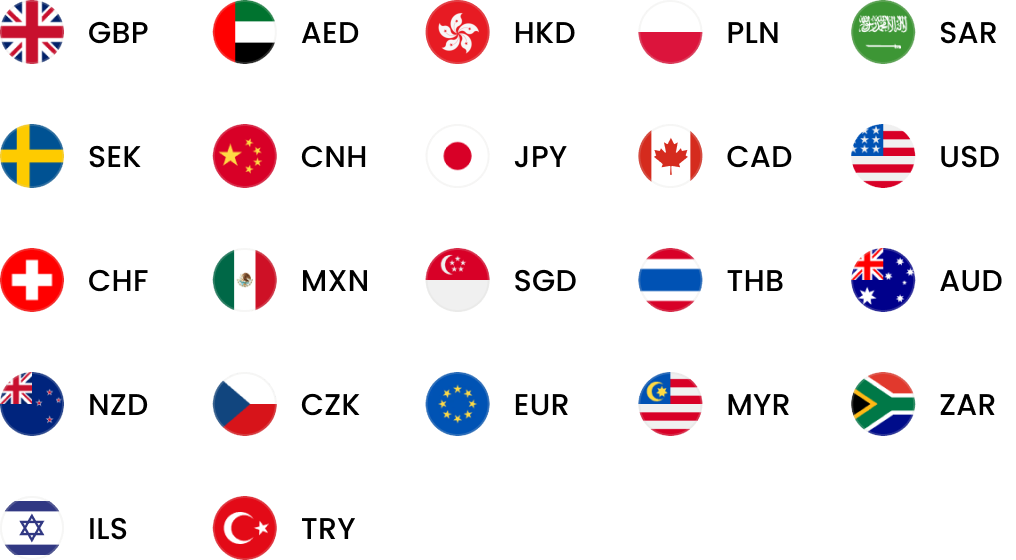
- Multi-currency account (20+ currencies): Hold, receive and manage funds across a wide range of currencies within a single account
- Local account details in major markets: Access local bank details in currencies like GBP, EUR and USD to collect payments without relying on SWIFT
- FX pricing close to interbank rates (markup added): Uses rates near the mid-market level with a margin that depends on volume and currency
- Local payment rails for faster transfers: Uses domestic networks (such as Faster Payments, SEPA and ACH) where available to reduce intermediaries
- Global transfers to 150+ countries: Send payments internationally with more control over routing and delivery
- Corporate cards with spend controls: Issue virtual and physical cards with expense management features
- API-first infrastructure and integrations: Strong API and integrations with tools like Xero, QuickBooks and NetSuite
- Regulated financial services provider: Authorised in multiple jurisdictions, including the UK (FCA), but not a bank
Payoneer vs Airwallex: accounts
Your choice between Payoneer and Airwallex comes down to how you move and manage money across borders in day-to-day operations, not just which currencies you can access.
Payoneer account
Payoneer provides a multi-currency receiving account designed mainly for collecting international payments and marketplace payouts.
You can:
- Hold balances in selected supported currencies, including USD, EUR, GBP, AUD and CAD, depending on your account setup
- Receive payments using local account details in currencies like USD, EUR, GBP, AUD and CAD
- Get paid by international clients and platforms
- Withdraw funds to bank accounts in 190+ countries and in 70 currencies
- Convert currencies within your account when needed, rather than managing a fully flexible multi-currency wallet
Airwallex account
Airwallex offers a full multi-currency business account built to manage global payments, FX and operational spend in one system.
You can:
- Hold and manage 20+ currencies in a single account
- Receive funds using local account details in multiple regions
- Send payments globally using local payment rails where available
- Keep funds in the original currency to control FX timing and costs
- Manage spend and payments within the same platform
What this means for your business:
- Payoneer works best if your main need is receiving payments and withdrawing them to your local bank
- Airwallex gives you more control over holding, converting and using multiple currencies across daily operations
Payoneer vs Airwallex: fees and FX transparency
Cross-border payments still cost businesses 2%–7% once FX and fees add up. That’s where pricing differences between providers become clear.
Payoneer fees and FX
Payoneer uses a mix of transaction fees and FX markups. Your total cost depends on how you receive, convert and withdraw funds.
You can expect:
- Receiving payments may be free or fee-based, depending on the source (for example, marketplace payouts vs card payments, which generally carry higher fees)
- FX markup applied on currency conversion, often up to ~2% above the market rate, depending on currency and transaction type
- Withdrawal fees to local bank accounts, which vary by country and currency (commonly around 1% for some corridors)
- Additional fees for certain payment methods, including card payments and some faster withdrawal options
- FX costs built into the exchange rate, which can make the total conversion cost less visible upfront
Airwallex fees and FX
Airwallex uses a rate-based FX model with separate transfer pricing, providing greater cost visibility.
You can expect:
- FX rates close to interbank levels with a markup applied, which varies by currency pair and volume (not fixed publicly)
- Transparent FX pricing shown before conversion, so you can see the rate and cost before confirming
- Free or low-cost local transfers when using domestic payment rails (such as Faster Payments, SEPA or ACH)
- International transfer fees that depend on destination and routing, rather than a single flat fee
- No forced conversion when receiving funds, allowing you to hold currencies and convert when needed
What this means for your business:
- Payoneer can be convenient for receiving payments, but tracking costs can become more difficult once FX and withdrawals are involved
- Airwallex gives you more control and visibility over FX costs, which is especially helpful if you regularly manage multiple currencies
Payoneer vs Airwallex: transfer speed and routes
Around one-third of cross-border payments still take more than one business day to settle. The key difference here is how often each platform relies on SWIFT versus local payment networks.
Payoneer transfer speed and routes
Payoneer’s strength lies in collecting funds globally (especially from marketplaces) and distributing them, rather than optimising outbound routing speed across all corridors.
You can expect:
- Transfers to bank accounts are often routed via SWIFT, depending on the currency and destination
- Delivery times typically around 1–3 business days, though this can vary based on intermediaries and local clearing systems
- Faster payments within the Payoneer network, especially between Payoneer accounts
- Local receiving reduces inbound delays, as clients can pay you via domestic bank transfers in supported currencies
- Withdrawals take extra steps, as Payoneer routes funds from your balance to an external bank account
Airwallex transfer speed and routes
Airwallex uses a local-first routing model, so it processes many international payments like domestic transfers.
You can expect:
- Local routing via domestic networks (such as Faster Payments, SEPA and ACH) for supported currency corridors
- Same-day or next-day delivery in many major routes, especially for local payments
- SWIFT used when local rails are not available, for less common currencies or destinations
- More predictable delivery times, as fewer intermediary banks are involved
- Direct sending from held currency balances, which removes the need for pre-withdrawal steps
What this means for your business:
- Payoneer works well if your focus is on receiving funds globally, but outbound transfers can involve more steps and variability
- Airwallex offers faster and more consistent payment delivery, especially if your business relies on frequent international payouts
Payoneer vs Airwallex: cards
Businesses are increasingly shifting toward digital and card-based payment methods as part of broader payment modernisation trends.
Both Payoneer and Airwallex offer business cards, but they play different roles depending on how you spend and manage money across currencies.
Payoneer cards
A Payoneer card connects directly to incoming funds, making it a practical way to access and use payments received from clients or marketplaces.
You can:
- Use a Payoneer Mastercard debit card for online and in-store payments
- Spend from specific currency balances (such as USD, EUR or GBP, depending on your card setup)
- Withdraw cash from ATMs, with fixed and percentage-based fees applied
- Pay in other currencies, with FX conversion fees applied
- Use the card as a direct extension of your Payoneer balance, without built-in team expense controls
Airwallex cards
Airwallex cards are part of a wider system that lets you control, assign and track business spending, not just access funds.
You can:
- Issue virtual and physical Visa cards (availability depends on region)
- Create cards for employees with spend limits and controls
- Spend from your account balance, with automatic FX conversion when needed
- Track expenses in real time within the platform
- Use cards as part of a broader spend management system, including approvals and controls
What this means for your business:
- Payoneer cards work best if you want to spend or withdraw funds you’ve already received
- Airwallex cards give you more control over team spending and visibility across expenses
Payoneer vs Airwallex: integrations
The key difference is simple: Payoneer focuses on getting paid through platforms, while Airwallex focuses on connecting to your finance stack.
Payoneer integrations
Payoneer is built around marketplace and payout integrations, making it easier to collect funds from global platforms.
You can:
- Connect directly to marketplaces and platforms like Amazon, Fiverr and Upwork
- Receive payouts automatically from supported platforms into your Payoneer account
- Access API capabilities for mass payouts, often used by businesses paying suppliers or contractors
- Integrate with accounting tools in some cases, but native integrations are more limited and less central to the product
Airwallex integrations
Airwallex offers an API-first integration model, enabling you to build payments and financial workflows directly into your systems.
You can:
- Connect with accounting platforms like Xero, QuickBooks and NetSuite
- Use APIs to automate payments, FX and reconciliation workflows
- Integrate with e-commerce platforms (such as Shopify) and business systems
- Sync transaction data for real-time reconciliation and reporting
What this means for your business:
- Payoneer works best if your priority is receiving payouts from marketplaces and platforms
- Airwallex gives you more flexibility to automate and connect financial processes across your systems
Payoneer vs Airwallex: regulation
Both Payoneer and Airwallex operate as regulated financial service providers, not banks.
Payoneer regulation
Payoneer operates through a network of licensed entities across multiple jurisdictions:
- Authorised and regulated in regions including the UK (FCA), EU and the US
- Provides services through licensed partners and regulated entities
Airwallex regulation
Airwallex is also regulated globally, with a strong presence in major financial hubs:
- Authorised and regulated in the UK (FCA), EU, Australia and other regions
- Holds licences or operates through regulated entities, depending on the market
What this means for your business:
Both platforms offer a similar level of regulatory protection. The main difference is how each platform structures its services and coverage across regions.
Which one should you choose?
Choose Payoneer if:
- You mainly receive payments from marketplaces or international clients
- You want simple access to global payouts without setting up complex workflows
- Your priority is collecting funds and depositing them into your local bank account
- You rely on platform integrations such as Amazon, Fiverr or Upwork
Choose Airwallex if:
- You want to hold, manage and move multiple currencies in one place
- You need clearer FX pricing and better cost visibility
- Your business makes frequent international payments to suppliers or partners
- You want cards, spend control and payments within a single system
Where Payoneer and Airwallex fall short for growing SMEs
As your business grows, these limitations become more noticeable:
- Limited control over FX timing: Both platforms allow currency conversion, but neither is built specifically for actively managing FX exposure at scale
- Costs become harder to manage at volume: FX margins and transaction fees can add up as payment frequency and size increase
- Fragmented workflows for global operations: You may still need to move funds between tools, especially when handling multiple markets, currencies and payment types
You may need:
- More control over when and how you convert currency
- A clearer structure for managing multiple currency balances
- A setup designed for ongoing international trade, not just receiving or sending payments
A better option for global businesses: World Account
WorldFirst offers a World Account, a multi-currency business account designed for companies operating across borders.
WorldFirst is not a bank, but a regulated payments provider that helps businesses manage international payments, FX and currency balances in one place.
How a World Account supports your business:
- Manage currencies without forced conversion: Hold funds in 20+ currencies and convert when it fits your strategy
- Pay globally with fewer limitations: Send payments in 100+ currencies to 200+ countries
- Receive like a local in key markets: Get local account details in the UK, US, EU and Australia
- Clear and consistent FX pricing: See FX margins upfront and plan costs more effectively
- Built for international operations: Manage payments, balances and currencies in one platform
Quick comparison: Payoneer vs Airwallex vs World Account
| Feature / capability | Payoneer | Airwallex | World Account |
|---|---|---|---|
| Currencies you can hold | Limited set | 20+ | 20+ with FX control |
| Currencies you can pay | 190+ countries | 150+ countries | 100+ currencies to 200+ countries |
| FX structure | Markup in rate | Rate + markup | Clear, consistent FX margins |
| FX control | Limited | Moderate | Full control over timing |
| Local receiving accounts | Yes (major currencies) | Yes (multiple regions) | Major markets (UK, US, EU, AU and more) |
| Transfer routing | SWIFT + local mix | Local-first + SWIFT fallback | Global network with predictable delivery |
| Best for | Receiving payments | Managing global spend | Scaling international operations |
In conclusion, choose a World Account if you:
- Want control over when and how you convert currency
- Pay suppliers or receive revenue across multiple markets
- Need predictable FX pricing as volume grows
- Want to hold, convert and move money without friction
- Prefer one platform for global payments and currency management
Open a World Account today and simplify how your business handles international payments, currencies and FX costs.
FAQ
1. Is Payoneer or Airwallex better for small businesses just starting?
If you’re just starting, Payoneer is usually easier to get up and running, especially if you’re earning through marketplaces or freelance platforms. Airwallex takes a bit more effort to set up, but it gives you more control once you’re operational.
2. Can I use Payoneer or Airwallex as a business bank account?
No, neither Payoneer nor Airwallex is a bank. They are regulated financial service providers that offer multi-currency accounts and payment tools.
3. Do Payoneer or Airwallex charge inactivity or hidden fees?
Payoneer may charge an annual inactivity fee if you don’t use your account for 12 months or more. Airwallex does not typically charge inactivity fees, but your costs depend on how you use the account, especially for FX and international transfers.
Sources:
- https://www.payoneer.com/
- https://www.payoneer.com/get-paid-by-marketplaces/
- https://www.airwallex.com/uk
- https://www.airwallex.com/uk/pricing
- https://www.worldfirst.com/uk/
- https://www.ecb.europa.eu/press/key/date/2025/html/ecb.sp250627~de084f5b69.en.html
- https://www.jpmorgan.com/insights/payments/fx-cross-border/2025-trends-for-financial-institutions