



























If you’re weighing up a switch to Monzo Business, the app and the free tier probably caught your eye first. But if your business pays suppliers in China, collects marketplace revenue in USD or EUR, or juggles more than one currency on any given week, the real question isn’t whether Monzo’s app is good. It’s whether a single-currency GBP account can keep up with how your money actually moves.
That question matters more than it used to. UK SMEs are increasingly running cross-border operations by default, whether that’s sourcing from Asia, selling on Amazon US, or invoicing European clients, and the account you bank with shapes how much of every payment you keep.
This review works through Monzo Business plan by plan, tests its international payments capability against what a switching SME actually needs, and answers the questions people search for most, including what Martin Lewis makes of it and whether HMRC can access your Monzo records.
Key takeaways:
- Monzo Business works best for UK-focused businesses: the free Lite plan, fast onboarding and FSCS protection make it a strong option for day-to-day domestic banking
- Multi-currency support is limited: Monzo Business only holds GBP, so incoming foreign-currency payments are converted rather than kept as separate balances
- Receiving foreign currency adds a conversion cost: qualifying inbound payments are subject to a 1% fee, which can add up for businesses collecting regular overseas revenue
- International payments rely on Wise: Monzo uses an external integration for outbound overseas transfers rather than handling the full FX process itself
- Borrowing options depend on business structure: loans and overdrafts are available to eligible sole traders, but not limited companies
- WorldFirst can cover the cross-border gap: businesses can keep Monzo for domestic banking and use a World Account to hold multiple currencies, collect overseas revenue and pay international suppliers
Open a World Account to hold, receive and pay suppliers in multiple currencies alongside your Monzo Business account.
What is Monzo Business?
Monzo Business is the business banking arm of Monzo, the UK challenger bank that launched in 2015 and became a fully licensed bank in 2017, regulated by the PRA and FCA.

It’s built for UK sole traders and limited company directors who want a mobile-first account with instant notifications, budgeting tools and straightforward accounting integrations.
Because Monzo is a bank rather than an electronic money institution, eligible deposits are protected by the Financial Services Compensation Scheme (FSCS) up to £120,000.
That’s a genuine point in its favour if deposit protection is a priority, and it’s worth noting explicitly: this is bank-level protection that non-bank payment providers, including WorldFirst, don’t offer in the same way, since WorldFirst safeguards client funds in segregated accounts rather than providing FSCS-covered deposits.
Eligibility is tighter than it looks at first glance. Monzo Business only accepts UK-based sole traders or limited company directors who are UK tax residents. Partnerships, LLPs, PLCs, charities, CICs, trusts and funds are excluded, along with a list of restricted industries. If your business structure falls outside that list, Monzo Business isn’t an option regardless of how the rest of this review reads.
Read more: Monzo alternatives
The three plans: Lite, Pro and Team
Monzo Business runs three tiers, and the right one for you depends on how many people need access and whether you need invoicing or expense management baked in:
- Lite is free and covers the basics: a full UK business current account, instant UK transfers, Pots for cash management, and Making Tax Digital software
- Pro costs £9 a month (first month free), a price that rose from £5 for new customers from 26 November 2024. Monzo justified the increase by pointing to added invoicing, team access and international payment features layered onto the plan
- Team starts from £25 a month and, launched on 15 October 2024, adds expense cards, payment approval workflows, and individual access levels for up to 15 people in a limited company or 3 in a sole trader setup, plus bulk payments
All three plans include accounting sync with Xero, FreeAgent, Sage and QuickBooks, and Making Tax Digital filing, which matters if you’re already committed to digital record-keeping ahead of HMRC’s phased MTD rollout. Note the eligibility gap runs through the Team plan too: multi-user access is genuinely useful for a growing team, but it’s still gated behind the same sole trader or limited company restriction that applies across the account.
Key features
Beyond the plan structure, a handful of features come up repeatedly in reviews and are worth weighing individually.
- Real-time notifications and budgeting tools: every transaction triggers an instant push notification, which reviewers consistently cite as Monzo’s strongest day-to-day feature for cash-flow visibility
- Savings Pots paying up to 1.30% AER: interest is variable, paid monthly, with no minimum deposit and a maximum balance of £1,000,000
- Instant, free UK bank transfers: Faster Payments moves domestic transfers instantly at no cost, which is a genuine strength for UK-only cash flow
- Same-day account opening for over 80% of applicants: Monzo’s mobile-first onboarding is fast, a real advantage if you’re switching mid-project and need an account live quickly
- 24/7 in-app customer support: available across all plans, though several reviewers flag that complex issues can be harder to resolve without phone-based escalation
- Loans and overdrafts for eligible sole traders only: limited companies get no borrowing facility through Monzo Business at all, a meaningful gap if you’re relying on short-term credit to bridge supplier payment timing
Monzo Business at a glance
The table below summarises Monzo Business pricing, currency support, protection and eligibility across its main account features:
| Feature | Detail |
| Entry price | Lite plan is free |
| Pro plan | £9/month (first month free) |
| Team plan | From £25/month |
| Currency | GBP only, no multi-currency holding |
| Inbound FX fee | 1% of foreign payment, capped at £1,000 |
| FSCS protection | Up to £120,000 on eligible deposits |
| Same-day account opening | Over 80% of applications |
| Eligibility | UK sole traders and limited company directors only |
| Loans/overdrafts | Sole traders only, not limited companies |
Checked against Monzo’s official pricing and features pages as referenced throughout this article.
International payments and FX: the critical gap for cross-border SMEs
Here’s the direct answer: Monzo Business is a single-currency GBP account, and that single fact shapes almost every limitation an internationally trading SME will hit.
Monzo doesn’t let you hold US dollars, euros, Australian dollars or offshore renminbi (CNH) in your account. When a customer pays you in a foreign currency, Monzo auto-converts it to GBP on arrival.
If you collect USD from an overseas marketplace or receive EUR from European customers, those supported foreign-currency payments are converted into GBP rather than remaining available as foreign-currency balances.
That conversion isn’t free. Monzo charges a 1% conversion fee on received foreign-currency payments, capped at £1,000 per transaction, and the exchange rate applied is set by a third party rather than Monzo’s own treasury desk.
If the sender’s bank has already converted the payment to GBP before it reaches Monzo, no fee applies, but you have no control over that outcome either. Inbound payments arrive via SWIFT across more than 40 currencies, and SEPA Credit Transfer is supported for euros across 36 countries and territories.
Outbound is arguably the bigger structural issue. Monzo doesn’t process international outbound payments itself; it routes them through a Wise integration, sending to more than 70 countries.
You can send roughly 40 currencies, including USD, EUR, AUD, CAD, CNY, HKD, SGD and JPY, but GBP itself cannot be sent internationally through this route. In practice, this means you’re relying on a third-party integration for a core piece of your international payment workflow, rather than a native capability built into your primary business account.
For a UK importer paying a China supplier a deposit and balance across two instalments, this structure has a real cash-flow cost. Monzo’s standard business international payment functionality does not provide the same foreign-currency holding and forward-FX tools as a dedicated multi-currency provider.
For a marketplace seller collecting USD or EUR payouts, the 1% inbound fee applies on every payment cycle, and you lose the ability to net foreign-currency revenue against foreign-currency costs, like ad spend or supplier invoices, because everything lands in GBP whether it suits you or not.
Forbes Advisor notes that Monzo’s business debit card carries no foreign exchange fee for card spending abroad, but that applies to physical card use on a business trip, not to holding or receiving currency, a distinction worth keeping separate when you’re assessing the account’s real international capability.
Read more: Monzo vs Revolut
Is Monzo Bank good for business?
Yes, if your business is UK-only or nearly so. Monzo Business works well for a sole trader or limited company that operates domestically, wants a free or low-cost account, values instant spending notifications, and needs straightforward Making Tax Digital compliance alongside Xero, FreeAgent, Sage or QuickBooks integration.
It’s a weaker fit the moment international payments become a regular part of your operation. If you’re paying suppliers abroad every month, collecting marketplace revenue in multiple currencies, or trying to manage FX risk on future orders, the single-currency structure and third-party FX dependency start to cost you real money and control, not just convenience. Finder’s UK business banking guide places Monzo Business at 90% customer recommendation, solid but behind Starling at 100% and Revolut Business at 97%, both of which offer broader multi-currency capability.
What does Martin Lewis think of Monzo?
Martin Lewis and MoneySavingExpert have historically praised Monzo’s personal banking experience, particularly its spending notifications and customer service, but there’s no clear, attributable Martin Lewis statement specifically endorsing Monzo Business.
In MSE’s March 2019 banking customer-service poll of 5,229 votes, Monzo topped the table with 93% rating it ‘great,’ beating First Direct for the first time. Lewis commented at the time that Monzo and Starling provided ‘a real challenge to First Direct’s customer service,’ while noting First Direct still offered the ‘complete package’ of cash, overdraft and savings perks, per MSE’s poll results coverage.
MSE’s ongoing digital and app-based banking guide lists Monzo as a top app-based pick for spending notifications and budgeting help, but positions Starling as the stronger option for overseas card use.
It’s an important distinction for a switching SME: the praise Monzo has earned from MSE is largely about personal banking and customer service quality, not a specific endorsement of the business account’s features or international payment capability.
Can HMRC look into Monzo?
Yes. HMRC has statutory powers to request information from any UK-regulated bank, and Monzo is treated no differently to a high-street bank in this respect.
Under Schedule 36 of the Finance Act 2008, HMRC officers can issue taxpayer notices directly to an account holder, third-party notices, and, since the Finance Act 2021, financial institution notices (FINs) that compel a bank to hand over information without needing prior tribunal approval in every case, per UK legislation on financial institution notices.
There are safeguards. A financial institution notice can only be issued with the agreement of an authorised HMRC officer, the information requested must be reasonably required and not onerous to produce, and HMRC must normally give the taxpayer a copy of the notice and a summary of reasons, according to HMRC’s compliance handbook.
In practice, HMRC’s usual approach is to ask the taxpayer for bank statements first; it only goes directly to the bank via a signed mandate or tribunal-approved notice if the taxpayer doesn’t provide them or there’s reason to suspect the records have been altered. During a full business tax enquiry, HMRC can also request business bank statements, sales and purchase records, and reconciliations, and may extend to private accounts where relevant to a specific risk, according to HMRC’s enquiry manual.
The practical point for a switching SME: holding a Monzo Business account offers no special shield from HMRC scrutiny. If anything, Monzo’s built-in Making Tax Digital filing ties your business more closely into HMRC’s reporting expectations, which is a feature, not a risk, provided your records are accurate.
What is the downside of Monzo?
The clearest downside is the one this review keeps returning to: no multi-currency holding, paired with a 1% inbound conversion fee and a Wise dependency for outbound international transfers. For a UK-only sole trader, that’s a non-issue.
For an SME sourcing from Asia or collecting international marketplace revenue, it’s a structural limitation that no plan upgrade fixes, since even the £25/month Team plan doesn’t add currency-holding capability.
Beyond FX, reviewers also flag several secondary downsides:
- Limited web capability: Monzo Business is largely app-based, which can make desktop bookkeeping less convenient
- No business credit card: businesses that need a dedicated credit facility will need another provider
- Cash deposit limits apply: deposits are capped at £3,000 a month for sole traders and £10,000 for limited companies, with a £1 fee per deposit at the Post Office or PayPoint
- Borrowing is limited to sole traders: eligible sole traders can access loans and overdrafts, but limited companies cannot
- Eligibility excludes some business types: partnerships, LLPs, PLCs, charities, CICs and businesses in restricted industries cannot open a Monzo Business account
None of these are dealbreakers for a UK-focused business. But if you’re comparing providers specifically because international payments or multi-currency reconciliation have become a headache, they’re the reasons Monzo Business alone won’t solve it.
Where WorldFirst fits alongside Monzo Business
The pattern that emerges from this review isn’t ‘Monzo is bad.’ Monzo Business was built for domestic UK banking, and it does that job well. The gap opens specifically around multi-currency holding, FX rate control and supplier payment timing, and that’s a different problem to solve than day-to-day current account banking.
Consider a UK importer who sources electronics from a supplier in Shenzhen and typically pays a 30% deposit followed by a 70% balance on dispatch. Routed entirely through a GBP-only account with third-party FX and a Wise handoff, every conversion happens at a rate set outside your control, on a timeline you can’t plan around, with no ability to hold CNH and wait for a favourable moment to settle the balance payment. That’s the exact friction WorldFirst’s multi-currency account is designed to remove: the ability to hold currency, see the FX margin before you commit to a rate, and pay suppliers without forcing every transaction through GBP first.
The two providers aren’t competing for the same job. Keep Monzo Business for your day-to-day GBP current account, Making Tax Digital filing, and Team expense cards if you’ve got a growing team to manage.
Layer a WorldFirst multi-currency account alongside it to hold foreign currency balances, collect marketplace revenue in its original currency without an automatic GBP conversion, pay suppliers in CNY, CNH or USD, and use rate alerts or forward-fixed rates to manage FX risk on payments you know are coming.
It’s worth being clear-eyed about the trade-off too: WorldFirst is not a bank. It’s authorised and regulated by the FCA as an electronic money institution, and it safeguards client funds in segregated accounts rather than offering the FSCS deposit protection Monzo provides. For most switching SMEs, that’s a fair trade against the FX control and multi-currency flexibility you gain.
| Feature | Monzo Business | WorldFirst World Account |
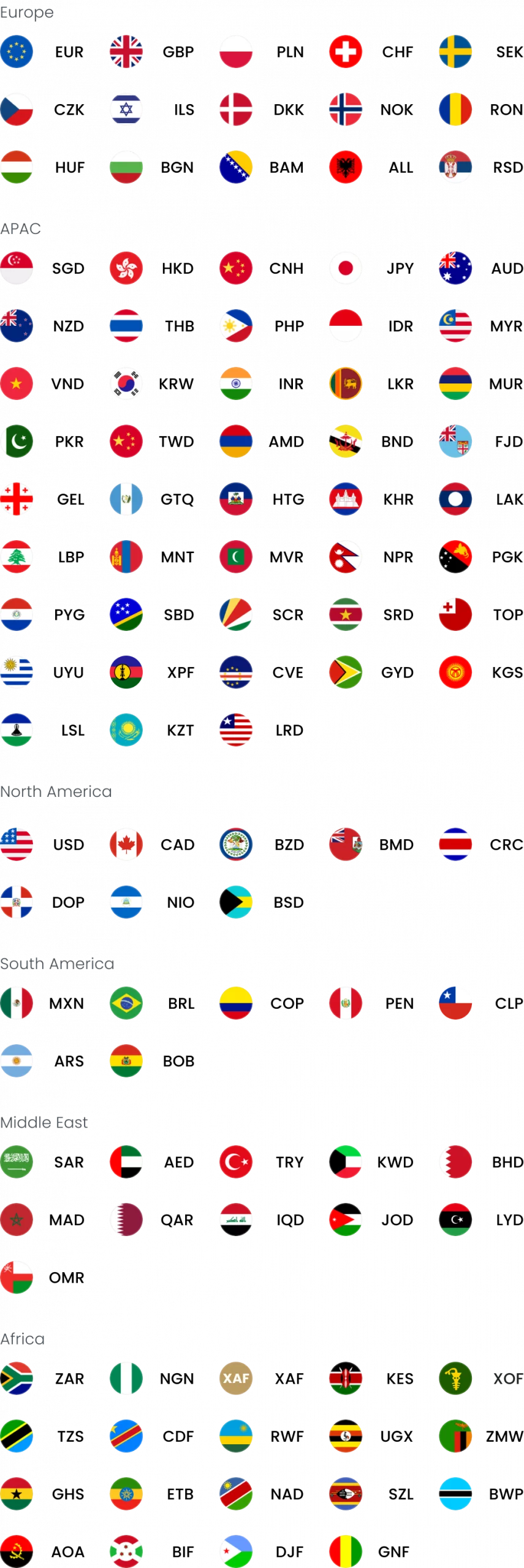
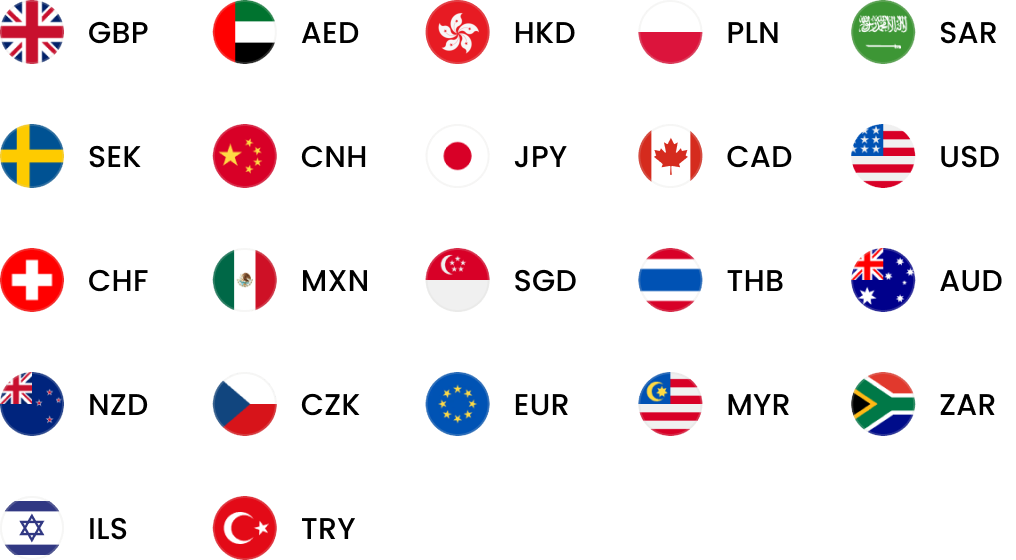
| Foreign-currency holding | Not available; supported incoming currencies convert to GBP | Hold 20+ currencies |
| Receiving foreign currencies | 1% conversion fee when Monzo converts non-GBP receipts, capped at £1,000 | Receiving supported business payments is free |
| Currency conversion | Third-party rate + 1% fee for qualifying incoming conversion | Up to 0.50% standard FX pricing |
| International outgoing payments | 40+ currencies supported in-app; fees shown before sending | Payments to 200+ countries in 100+ currencies |
| Deposit protection | FSCS up to £120,000 on eligible deposits | Safeguarded funds; not FSCS-protected deposits |
If your business has reached the point where FX margins, payment timing or multi-currency reconciliation are costing you more than a monthly plan fee ever would, that’s the signal to stop treating your bank account as your only cross-border payment tool.
Open a World Account to hold multiple currencies, collect overseas revenue and pay international suppliers from one account.
FAQs
1. Is Monzo Bank good for business?
Yes, for UK-based sole traders and limited companies operating mainly domestically. It’s less suited to businesses with recurring international payments, multi-currency collections or supplier FX needs, where its single-currency GBP structure becomes a real limitation.
2. What does Martin Lewis think of Monzo?
Martin Lewis and MoneySavingExpert have praised Monzo’s personal banking app, spending notifications and customer service, including a 2019 poll where Monzo topped satisfaction ratings ahead of First Direct. There’s no clear, specific Lewis endorsement of the Monzo Business account itself.
3. Can HMRC look into Monzo?
Yes. HMRC can issue information notices to any UK-regulated bank, including Monzo, under Schedule 36 of the Finance Act 2008 and the financial institution notice powers introduced by the Finance Act 2021. Monzo receives no special exemption from these rules.
4. What is the downside of Monzo?
The main downside for growing SMEs is the lack of multi-currency holding, combined with a 1% inbound foreign payment fee and reliance on Wise for outbound international transfers. Secondary downsides include app-only banking, no business credit card, capped cash deposits, and loans and overdrafts limited to sole traders only.
Sources:
- https://monzo.com/business-banking/plans-pricing
- https://moneytothemasses.com/banking/monzo-business-bank-account-review
- https://community.monzo.com/t/we-re-increasing-the-price-of-monzo-business-pro-to-9-a-month/171675
- https://monzo.com/blog/introducing-team
- https://monzo.com/business-banking/features
- https://www.forbes.com/advisor/uk/banking/monzo-business-bank-account-review/
- https://monzo.com/help/payments-getting-started/international-transfers-local-currency
- https://monzo.com/blog/receive-international-payments