





















Whether you picture your business in a converted warehouse in Berlin, a canal-side office in Amsterdam or a compact studio in Lisbon, Europe has no shortage of places to put down roots. The EU’s single market alone represents an €18 trillion economy and around 450 million consumers across 27 member states, and that’s before counting Switzerland, Norway, Iceland and the UK’s own domestic market on Europe’s doorstep.
For UK and international businesses, expanding into Europe means access to that customer base, alongside well-established trade routes and skilled talent. It also comes with real costs to weigh up: relatively high taxes in some countries, expensive commercial property in others, and a patchwork of national rules that don’t always line up with a single EU-wide standard.
Here are seven things worth thinking through before you set up a business in Europe, from choosing a legal structure through to managing the cross-border payments that keep a European operation running day to day.
Key takeaways
- The EU single market covers around 450 million consumers and an €18 trillion economy, but each of its 27 member states sets its own tax, registration and employment rules.
- You can register a limited company, branch or European Company (SE) in the EU, or explore a fully digital route like Estonia’s e-Residency programme.
- Corporate tax rates range from 9% in Hungary to 35% in Malta, so the country you choose can materially affect your margins.
- The UK’s post-Brexit relationship with the EU is still evolving. A 2025 reset extended some agreements, but the UK remains outside the single market, the customs union and the Schengen area.
- Whatever structure you choose, you’ll need a plan for opening local accounts, paying suppliers and staff, and managing currency risk before you launch.
1. Weigh up the pros and cons of expanding into Europe
It’s worth asking yourself why Europe, specifically, before you commit time and money to it. Comparing the advantages against the drawbacks can help you decide if the European market is the right one for your business, or if the Americas, Asia or Australasia would serve you better.
One of the biggest practical advantages of a European base is freedom of movement. The Schengen area now covers 29 countries, including Germany, France, the Netherlands, Spain and Poland, after Bulgaria and Romania completed full membership in January 2025. Within Schengen, people can travel and work across borders without routine passport checks, which makes it easier to build a team that draws on multiple countries and to visit customers, suppliers and partners without much friction.
The UK’s own relationship with the EU has also moved on since Brexit. Following a UK-EU summit in May 2025, both sides agreed to hold annual summits, rolled over reciprocal fishing access to June 2038, and made the Trade and Cooperation Agreement’s energy cooperation permanent rather than letting it expire in 2026. A first formal review of the Trade and Cooperation Agreement is due in 2026, and talks on a separate sanitary and phytosanitary agreement, intended to ease food and agricultural trade, were still ongoing as of mid-2026. What hasn’t changed is the basic shape of the relationship. The UK government has been clear there’s no return to the single market, the customs union or free movement, so UK businesses trading with the EU still need an EORI number, customs declarations and, in many cases, local VAT registration (more on both below).
If most of your business is online, it’s also worth weighing the cost of EU wages, property and tax against the cost of shipping from outside the bloc. Some businesses find it cheaper to keep operations in the UK or US and ship into Europe; others save more by opening a local entity and holding stock closer to customers.
2. Choose a legal structure and complete registration
Once you’ve decided Europe is worth pursuing, the next question is how to structure the business itself. Under EU rules, you can typically set up in any EU country, plus Iceland, Norway and Liechtenstein, as either a new company or a branch of your existing business. The main options are:
- Limited liability company (known as an Ltd, GmbH, SARL, Srl or similar depending on the country): the most common structure for small and medium-sized businesses, separating your personal assets from business debts.
- Partnership: two or more people sharing management responsibilities and liability.
- Cooperative: owned and run jointly by its members, common in retail, agriculture and services.
- European Company (Societas Europaea, or SE): a single legal structure that lets you operate under one set of rules across multiple EU countries. To qualify, you need minimum subscribed capital of €120,000, a registered office and head office in the same EU country, and an active presence in at least two EU member states.
For a straightforward local entity, registration itself can be quick. EU countries are encouraged to let businesses register online, through a single administrative body, in no more than three working days and for under €100, though actual timelines vary a lot by country and by how complex your structure is.
Some founders skip the “which country” question altogether and register digitally instead. Estonia’s e-Residency programme, for example, lets you form and run an Estonian limited company entirely online. More than 100,000 e-residents worldwide have founded over 30,000 Estonian companies this way. Profits stay untaxed as long as they’re reinvested, and tax only becomes due when profits are distributed. It’s a genuinely useful route for services businesses and digital agencies, though Estonia has tightened its economic substance rules, so the company needs real activity and decision-making behind it, not just a registered address.
Whichever structure you pick, you’ll usually need a registered business address, a company bank account and, if you plan to hire, a way to meet local employment law. A local accountant or lawyer is worth the cost here. The rules genuinely differ enough by country that generic guidance only gets you so far.
3. Count the real costs, including tax
Europe isn’t one market when it comes to cost. Switzerland has high wages and expensive real estate, while several Eastern European countries offer lower wages and cheaper commodities. The European Commission’s Your Europe portal has a tool to compare income and cost of living by country if you want to model this before committing.
Corporate tax is one of the biggest variables. As of 2026, Hungary has the lowest flat corporate income tax rate in the EU at 9%, followed by Bulgaria at 10% and Ireland at 12.5%. At the other end, Malta’s combined rate reaches 35%, with Germany, Portugal and Italy also above 27%. Cyprus, long known as a low-tax jurisdiction, raised its rate from 12.5% to 15% in January 2026 to align with the OECD’s global minimum tax rules. Across the EU, the average corporate tax rate now sits at around 21.6%. Some countries offer reduced rates for smaller businesses too; Belgium, for instance, applies 20% to the first €100,000 of profit, while Poland offers a 9% rate for qualifying small companies.
If you plan to hire staff, factor in employer social contributions on top of headline tax rates, plus any local taxes on commercial property. In the UK, for example, renting an office or shop means paying business rates to the local council, which you can estimate on gov.uk.
Two other registrations are worth budgeting time for. If you’re moving goods in or out of the EU, you’ll need an EORI (Economic Operators Registration and Identification) number, which customs authorities use to track shipments; UK businesses trading with the EU typically need both a UK and an EU EORI number. And most businesses selling goods or services in the EU need to register for VAT, which is charged on nearly every transaction and varies by country and product type. The EU’s One Stop Shop scheme can simplify this for online sellers, letting you file a single VAT return for cross-border sales to consumers across multiple EU countries rather than registering separately in each one.
None of this is a reason to avoid Europe. It’s a reason to model your costs properly before you commit. A currency mismatch between your revenue and your outgoings can quietly erode the margin you’ve worked out on paper too, which is something to plan for alongside tax and registration. We come back to it in point seven.
4. Check how your sector performs in Europe
Understanding how your sector performs in Europe can help you judge whether it’s the right market for your business right now. Here’s a snapshot of some of the continent’s strongest sectors heading into 2026.
Technology remains one of Europe’s most closely watched sectors. European tech investment reached €72 billion in 2025, the second-strongest year of the past three despite a modest dip from 2024’s peak, with fintech the best-performing category at €11.1 billion raised across nearly 400 deals. Companies built in Europe continue to scale globally: Spotify (Sweden) remains one of the world’s largest audio platforms, Klarna (Sweden) is a major force in buy now, pay later payments, and newer names like Revolut (UK, valued at around $75 billion) and Mistral AI (France, valued at around $14 billion) show that European founders can build category leaders in fintech and AI alike.
The automotive industry is still a cornerstone of the European economy, even as manufacturers navigate the shift to electric vehicles and increased competition from Chinese carmakers. Established names include Volkswagen (Germany), Volvo (Sweden), Renault (France), Stellantis (which now includes Fiat) and Jaguar Land Rover (UK).
Healthcare and pharmaceuticals are another major draw, given Europe’s concentration of global leaders in the sector. Novartis and Roche (both Switzerland) and Novo Nordisk (Denmark) are consistently ranked among the world’s most valuable pharmaceutical companies, with Novo Nordisk’s growth driven largely by demand for GLP-1 treatments like Ozempic and Wegovy. Sanofi (France), GSK and AstraZeneca (both UK) round out a sector that continues to invest heavily in R&D across the continent.
Given the depth of European cuisine, the agri-food sector is also well established, with household names including Nestlé (Switzerland), Danone (France), Heineken (Netherlands), Unilever (Netherlands and UK) and Diageo (UK).
5. Reach European customers through online marketplaces
If you want to reach European customers quickly, selling through an established marketplace is often faster than building a local website from scratch. Amazon and eBay have an obvious presence across the continent, but several region-specific marketplaces matter just as much depending on where you’re selling.
Zalando describes itself as Europe’s leading online fashion platform, working with more than 7,000 brands and reaching over 120 million monthly visitors across markets including Germany, Italy, the Netherlands and Poland. In Poland and Central and Eastern Europe more broadly, Allegro is the dominant platform. In France, Cdiscount remains one of the largest marketplaces, with its third-party marketplace now accounting for around 69% of all product sales on the site. Bol.com leads in the Netherlands and Belgium, OTTO is Germany’s second-largest marketplace after Amazon with a GMV of over €7 billion and 12.2 million active customers, and eMag is a strong option across Eastern Europe.
Different marketplaces suit different products and buyer expectations, so it’s worth researching which platform performs best for your category in each country you’re targeting, rather than assuming one will work everywhere. We’ve covered the strongest options in more detail in our guide to the top online marketplaces in Europe, and if Germany specifically is on your radar, our guide to selling online in Germany covers the VAT, customs and localisation steps in more depth.
6. Choose the right location for your business
If your business needs a physical base, whether that’s a store, a warehouse or an office, Europe offers a genuinely wide range of cities to choose from.
London remains a major financial, commercial and cultural hub with several international airports nearby. Commercial rents are still relatively high, though some landlords have been offering more flexible terms to attract businesses back to city-centre offices. Companies with a London presence include Google, Sky, Goldman Sachs and Deloitte.
Berlin is Germany’s largest city and continues to be the country’s fastest-growing start-up hub, with a strong tech and creative scene that draws talent from across Europe.
Paris is home to major international companies beyond its cultural landmarks and restaurants, including L’Oréal, Hermès and Estée Lauder, all headquartered in the city.
Amsterdam offers a strong work-life balance alongside genuine international connectivity through Schiphol airport. Multinational companies including Adidas, Tesla and Netflix run European or regional operations from the city.
Wherever you land, it’s worth remembering that your registered office, your operational base and your customers don’t all need to be in the same country. A growing number of businesses register in one EU country, base a small team in another, and ship or serve customers across several more.
7. Set up cross-border payments and manage currency risk
Whichever structure and location you choose, you’ll need a practical way to move money between your home market and Europe from day one, whether that’s paying a Berlin-based supplier, receiving euros from an Amsterdam marketplace, or paying a small local team.
Traditional bank transfers via SWIFT can take three to five business days and often carry hidden costs in the exchange rate margin rather than a visible fee, which makes it harder to know exactly what a payment is really costing you. That matters more the further your EU revenue and costs drift from your home currency. A business invoicing in euros while paying UK-based costs in pounds is exposed to exchange rate movements on every transaction, even before tax and registration costs are factored in.
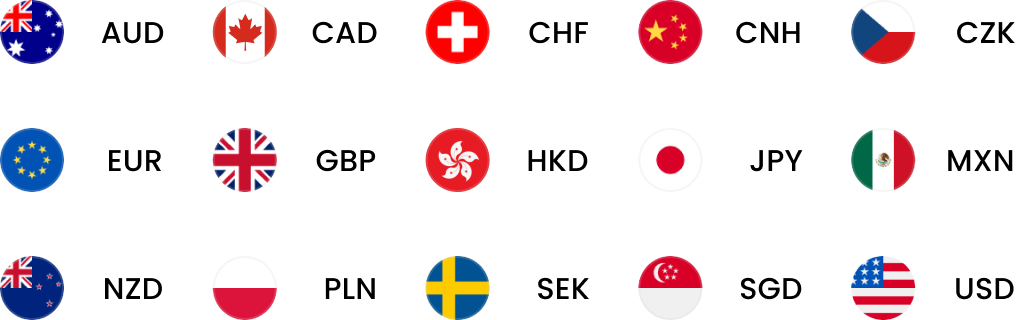
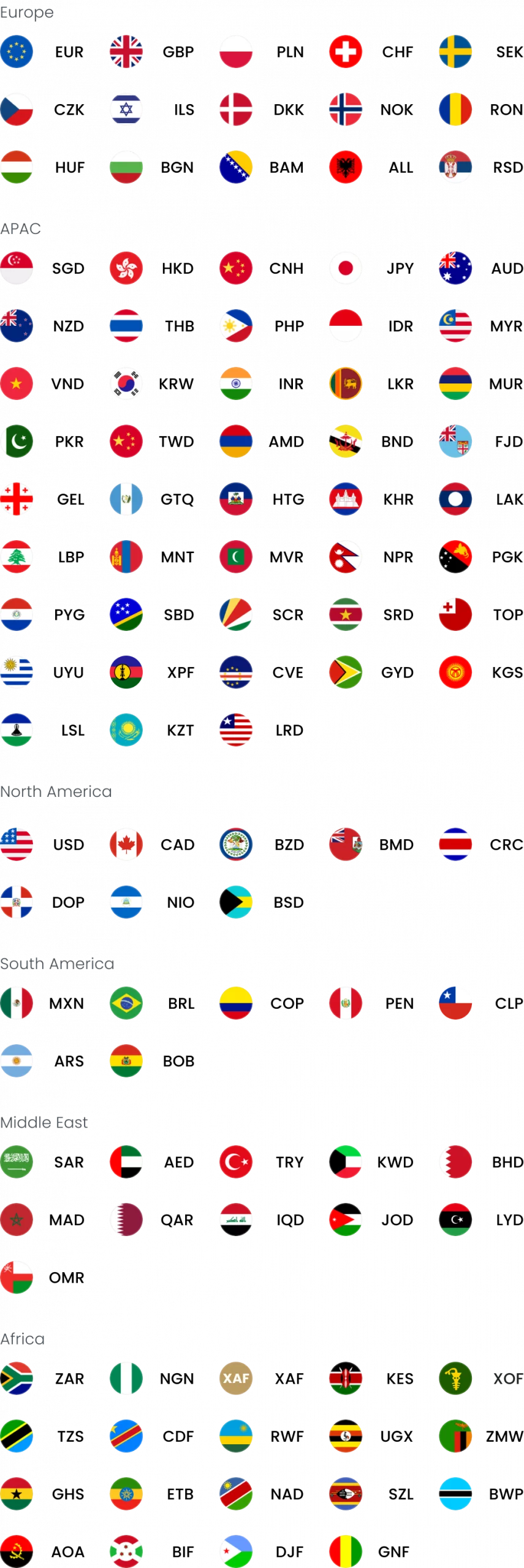
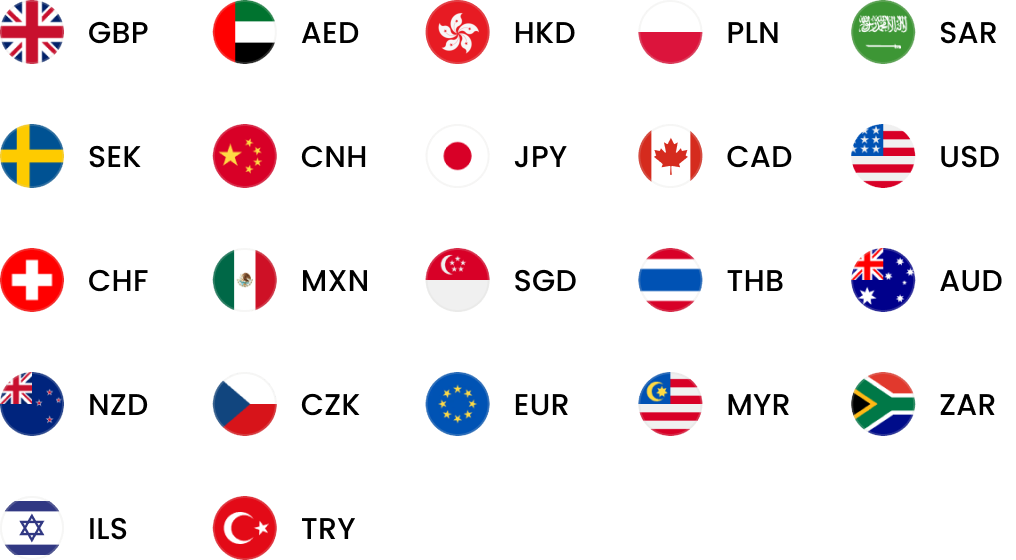
This is where a dedicated multi-currency account can help. WorldFirst’s World Account lets you hold and receive funds in 20+ currencies, including EUR, and pay suppliers, staff and partners in 100+ currencies across 200+ countries and territories, without needing to open a separate local bank account in every market you operate in. It’s free to open, with no minimum balance requirements. WorldFirst isn’t a bank: in the UK it’s authorised by the Financial Conduct Authority, and in the EU its Netherlands entity, World First Netherlands B.V., is authorised by De Nederlandsche Bank as an Electronic Money Institution, with customer funds safeguarded in line with local regulatory requirements.
Beyond day-to-day payments, it’s worth thinking about currency risk more broadly before you launch. If you know you’ll need to convert a set amount of GBP to EUR, or vice versa, in a few months’ time, a forward contract can lock in today’s exchange rate and protect your margin from movements between now and when the payment falls due. We’ve covered this, alongside other options for making and receiving cross-border payments, in our guide to international business payment methods, our comparison of overseas business bank accounts, and our broader guide to expanding your business internationally.
Getting your payments and currency strategy right from the start means you can focus on the parts of expanding into Europe that actually grow the business, rather than firefighting cash flow surprises six months in.
Ready to start trading in Europe? Open a World Account online in minutes and start paying and getting paid in EUR and 100+ other currencies.
FAQs
1. Do I need to live in an EU country to set up a business there?
No. You can register a company in most EU countries, or explore fully digital routes like Estonia’s e-Residency programme, without living there. You’ll usually need a registered business address in the country of registration, and some structures require you to visit in person to open a local bank account, though this isn’t always the case.
2. What’s the cheapest country to register a company in Europe?
Cost varies more by professional fees, minimum capital requirements and ongoing compliance than by the registration fee itself. Estonia’s digital-first e-Residency programme, along with several Eastern European countries, is generally seen as lower cost and lower bureaucracy than setting up in, say, Germany or France.
3. Can UK businesses still trade freely with the EU after Brexit?
Not entirely freely. The UK left the EU single market, customs union and Schengen area, so UK businesses trading with the EU need an EORI number and customs declarations, and often local VAT registration too. A UK-EU reset agreed in 2025 has eased some areas of cooperation, including energy and fisheries, and talks on a sanitary and phytosanitary agreement to ease food and agricultural trade were ongoing as of 2026, but there’s no return to single market membership.
4. Do I need an EORI number to sell into the EU?
Yes, if you’re importing or exporting physical goods to or from the EU. Both EU and non-EU businesses need an EORI number to clear goods through customs. If your business only sells digital services, you’re less likely to need one, but you’ll likely still need to register for VAT.
5. How long does it take to register a company in the EU?
EU countries are encouraged to allow online registration within three working days for under €100, though this is a target rather than a guarantee, and actual timelines vary by country and business structure. Digital routes like Estonia’s e-Residency can be faster still, sometimes completing within a few business days.
6. Do I need a European business bank account to trade in Europe?
Not necessarily a traditional bank account. Many businesses use a multi-currency account, like WorldFirst’s World Account, to hold and receive euros and pay European suppliers and staff without opening a local bank account in every country. Whether that’s enough for your business depends on your structure and how your customers expect to pay you.