Business
Multi-currency accounts, competitive FX, and global transfers — Everything you need to pay and get paid internationally
Products
Enterprise
Built for faster payments, smarter liquidity, and robust compliance-all powered by our next-gen API toolkit and Al-native architecture.
Products
Resources
About us
Named a Top Global Fintech Company by CNBC & Statista, we’ve supported 1.5M+ businesses since 2004.
About WorldFirst
Europe
Asia
Oceania
Africa

We provide coverage in South Asia and Middle East: servicing 210+ countries and territories.

What is a business bank account? A guide for UK importers

Picture your first supplier invoice from a factory in Shenzhen landing in your inbox, priced in US dollars, while your personal current account only really speaks sterling. That gap between how your business actually trades and how your bank account is set up to handle it is exactly where new importers get caught out.

Before you can pay that invoice, negotiate better terms, or even register properly with HMRC, you need to understand what a business bank account is and why it matters more than it might first appear.

Roughly five million private sector businesses operate in the UK, and the vast majority start life needing to answer this exact question early on, according to Business.gov.uk guidance on getting a business bank account. Getting the account structure right from day one saves you paperwork, fees and confusion later, particularly once international suppliers enter the picture.
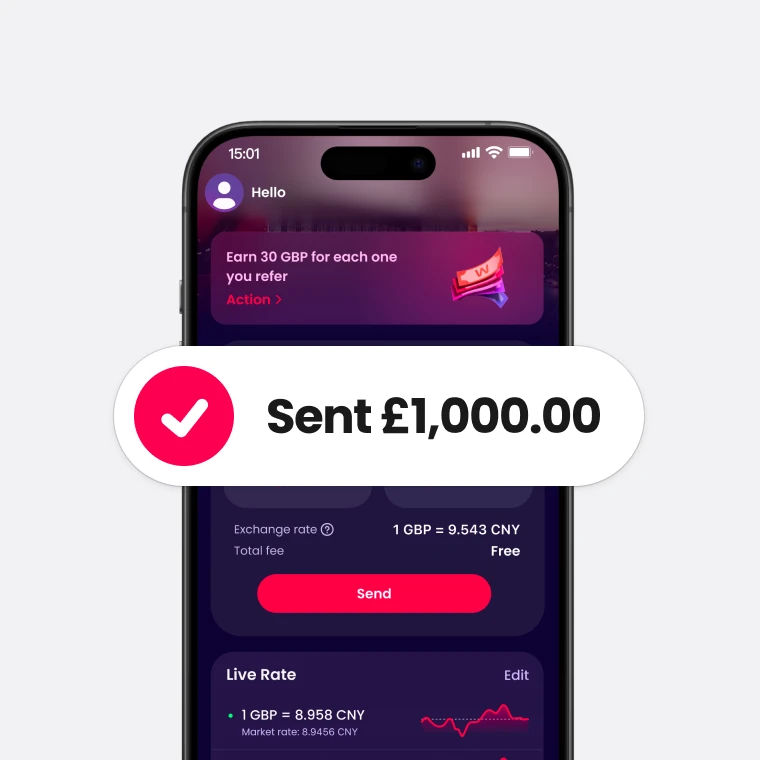
This article explains what a business bank account is, when you legally need one, what it costs, and how a multi-currency account fits alongside it once you start importing.

Key takeaways:

  • Business account rules depend on your structure: limited companies and LLPs need a separate business account, while sole traders and general partnerships usually have more flexibility
  • Keeping business and personal money separate makes admin easier: a dedicated account gives you cleaner records for bookkeeping, tax and cash flow tracking
  • The monthly fee is only part of the cost: transaction charges can become more important once supplier payments and account activity increase
  • Domestic business accounts have limits for international trade: they handle GBP banking well, but FX pricing and overseas payment costs can be harder to see
  • Bank protection and EMI safeguarding work differently: eligible bank deposits can receive FSCS protection, while electronic money institutions safeguard customer funds under a different regulatory model
  • WorldFirst can handle the cross-border side: a World Account can sit alongside your UK business bank account for multi-currency balances and overseas supplier payments

Open a World Account to see how a multi-currency account can sit alongside your business bank account for paying overseas suppliers.

What is a business bank account?

A business bank account is an account opened in your company’s name, used solely to receive, hold and send funds connected to your trading activity, rather than mixing them with personal money.

For a new importer, that distinction becomes practical fast. Once you’re invoicing customers, paying a supplier deposit, or claiming expenses for stock, every transaction needs to be traceable back to the business rather than buried in a personal statement alongside your weekly shop.

A business bank account is specifically for your business finances, and it exists to make several things easier: finding business transactions quickly, tracking cash flow, keeping clean records for accounting and tax, building a business credit rating, accessing loans or overdrafts, accepting card payments from customers, and handling large or high-volume transactions without triggering scrutiny on a personal account.

That last point matters more than it sounds. Many personal current accounts explicitly prohibit business use in their terms and conditions, which means running supplier payments or customer receipts through a personal account can breach your bank’s terms even if you’re technically allowed to trade as a sole trader.

Read more: 10 benefits of using a business bank account in the UK 

Do you legally need a business bank account in the UK?

Whether you legally need one depends entirely on your business structure. Limited companies and limited liability partnerships must have a business bank account because the law treats them as separate legal entities from their owners.
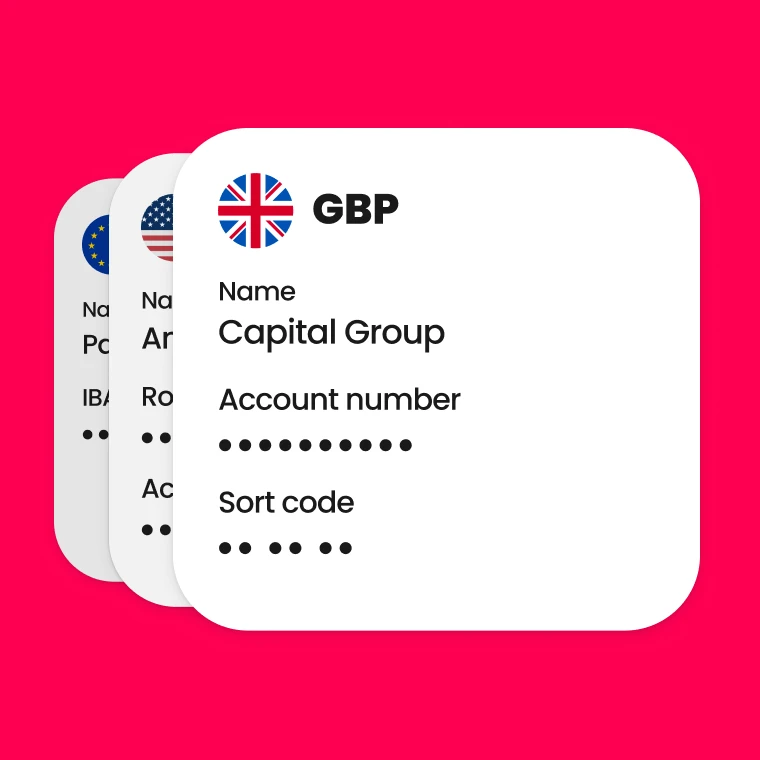
Sole traders and general partnerships face no such legal obligation, since the business and the individual are treated as the same entity for banking purposes. That said, most advisers still recommend opening one, because it simplifies tax reporting to HMRC and protects you if your personal account’s terms don’t permit business transactions.

The table below sets out the position by structure:

Business structure Legally required to have a business bank account?
Limited company Yes
Limited liability partnership (LLP) Yes
Limited partnership Yes
General partnership No
Sole trader No

If you’re planning to import stock as a limited company, this isn’t optional. You’ll need the account open before you can register properly with Companies House processes tied to your business, and before most suppliers or payment platforms will treat you as a verified trading entity.

Who can open one and what documents are needed?

Most UK providers require you to be 18 or over, a UK resident, and either a sole trader, company director, or partner in the business applying.

The documents you’ll need vary slightly by structure, but generally include:

  • Proof of identity and address: a passport or driving licence plus a recent utility bill or bank statement, which confirms who you are and where you’re based
  • Business name and trading details: your business name, the date you started trading, and a description of what the business actually does
  • Business address and financial information: where the business operates from, plus turnover estimates or projections if you’re newly trading
  • Companies House documents for limited companies: your Certificate of Incorporation, company registration number, date of incorporation, registered address and director details, since limited companies face additional verification

For a new importer, gathering these documents early avoids delays right when you need to make a supplier deposit. Providers increasingly verify identity and business documents digitally, but incomplete paperwork is still the most common reason applications stall.

How much does a business bank account cost?

Most UK business bank accounts charge a monthly fee, typically ranging from £5 to £15, on top of per-transaction charges for things like cash deposits, cheques, direct debits and transfers.

That monthly fee is only part of the picture. Real Business notes that per-transaction charges can outweigh the headline monthly rate once your volume of payments increases, which is exactly the pattern a growing importer runs into. A few free transactions a month might cover you when you’re taking your first customer orders, but once you’re paying a supplier deposit, then a balance payment, then reconciling marketplace payouts, those per-transaction fees start compounding.
This is worth interrogating before you commit to a provider. Ask specifically how many transactions are included free each month, what happens above that threshold, and whether international transfers carry a separate, often steeper, charge on top of the standard fee structure.

Types of business bank accounts

UK business banking isn’t a single product. Understanding the main categories helps you work out which one, or which combination, actually matches how your business trades.

  • Business current account: the core account most businesses open first, used for day-to-day domestic transactions including receiving customer payments and paying UK-based expenses.
  • Multi-currency or foreign-currency account: designed to receive, hold and send funds in currencies other than sterling, which matters directly once you’re paying overseas suppliers in US dollars, euros or other currencies.
  • Business savings or call account: used to hold surplus funds and earn interest, generally separate from your day-to-day transaction account.
  • Merchant account: enables you to accept card payments from customers, often bundled with payment processing services.

For a new importer, the current account and the multi-currency account are the two that matter most early on. Your current account handles domestic sterling operations such as paying UK-based costs and receiving customer payments if you sell domestically. But it typically won’t give you competitive rates or visibility on foreign exchange when you’re wiring a deposit to a supplier overseas, which is where the second account type earns its place.
Where a multi-currency account fits alongside your business bank account

A multi-currency account doesn’t replace your business bank account. It sits alongside it, handling the cross-border receiving, holding, converting and sending that a domestic account isn’t built for.

This distinction matters because it’s easy to assume you need to choose one or the other. You don’t. Your business bank account still handles domestic banking functions such as paying UK staff, settling HMRC liabilities, and receiving sterling payments from local customers.

A multi-currency account is built specifically for the part your bank account struggles with: paying a supplier in Shenzhen, receiving a marketplace payout in US dollars, or holding euros for a European buyer without converting back and forth every time.

The World Account from WorldFirst is one example of this kind of setup.

It’s worth being precise here: WorldFirst isn’t a bank. World First UK Limited is authorised by the Financial Conduct Authority as an Electronic Money Institution under the Electronic Money Regulations 2011, with FCA Firm Reference number 900508.

For a new importer, the practical features look like this:

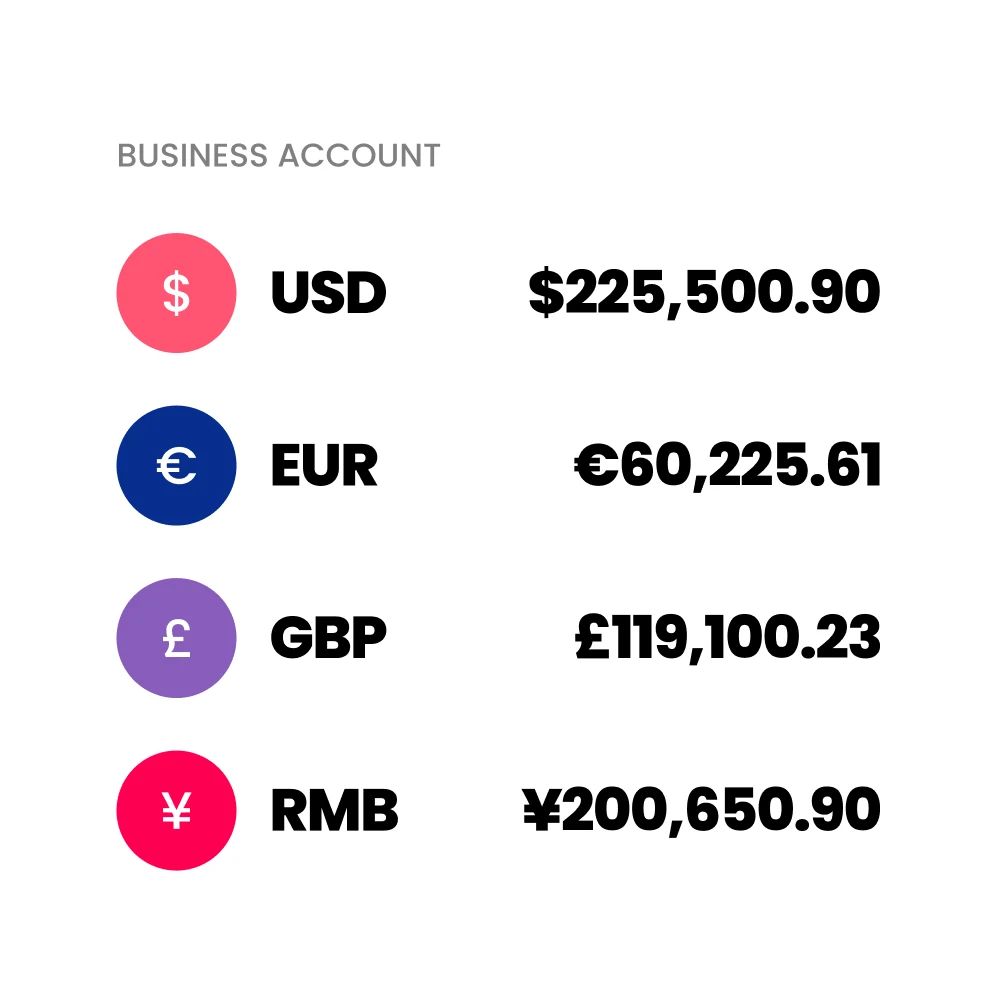
  • Local receiving accounts in 15+ currencies: including USD, GBP, EUR, CAD, AUD and JPY, which means you can receive marketplace payouts or customer payments without an automatic conversion
  • Holding balances in 20+ currencies: so you can keep funds in the currency you’ll need next, rather than converting into sterling and back again when your next supplier payment falls due
  • Sending to 100+ currencies: with WorldFirst noting that most payments land instantly and roughly 95% clear within hours
  • Transparent currency conversion pricing: up to 0.50% standard, dropping to 0.3% for new customers, which gives you a clearer view of the FX margin than a headline “no fee” transfer often hides
  • Payment fees: local payments in GBP, EUR or USD cost £0.30, international payments cost £4.00, and cross-currency payments above £5,000 are free
  • No ongoing account costs: the World Account is free to open, has no ongoing fees and no minimum balance requirement

One point worth stating plainly, because it’s a genuine trade-off rather than a technicality: funds held with WorldFirst are safeguarded, not FSCS-protected. WorldFirst explains that ‘your funds are safeguarded according to local financial regulations, and our operations are monitored by the appropriate authorities in each market,’ and Finder’s review confirms that electronic money institutions carry ‘no protection under the Financial Services Compensation Scheme (FSCS).’

That’s different from a bank deposit, which can be covered up to the current FSCS statutory limit. Safeguarding still means your funds are held separately from WorldFirst’s own operating money, but it isn’t the same legal protection as a bank deposit, and you should weigh that honestly against the FX and workflow benefits before deciding how much to hold there.

Business bank account vs multi-currency account: what’s the difference?

The core difference is scope: a business bank account is built for domestic banking and legal compliance, while a multi-currency account is built for cross-border payments and FX control.

Here’s how they compare directly.

Feature Business bank account Multi-currency account (e.g. World Account)
Legal requirement Required for limited companies and LLPs Not a legal requirement; used alongside a business bank account
Fund protection Can carry FSCS protection up to the statutory limit Funds safeguarded, not FSCS-protected
Currency support Typically sterling-focused Receive 15+, hold 20+, send 100+ currencies
FX margin visibility Often bundled into an unclear exchange rate Published conversion fee, from 0.3% for new customers
Payment speed Domestic rails, generally fast within the UK Most international payments land within hours
Marketplace collections Not typically built for this Collect from 130+ marketplaces and payment gateways
Monthly account fees Typically £5 to £15 Free to open, no ongoing fees

Neither account replaces the other for a UK importer with a limited company structure. You need the business bank account to meet your legal obligations and manage domestic operations.

How to choose the right setup as a new UK importer

Start with your legal structure, then layer on cross-border tools once you know what your supplier payments actually look like. If you’ve registered as a limited company, opening a business bank account isn’t optional, so treat that as step one rather than something to shop around on indefinitely.

Once that’s in place, look honestly at how you’ll be paying suppliers. If you’re sourcing from overseas and expect to pay in US dollars, euros, or other foreign currencies regularly, a multi-currency account becomes worth setting up before your first large deposit payment, not after you’ve already lost margin to an unfavourable exchange rate on a rushed transfer.

If you’re already banking with a UK provider and considering a switch, the free Current Account Switching Service covers business current accounts where your annual turnover is under £6.5 million, both banks participate in the scheme, and your business has fewer than 50 employees.

That’s a genuinely useful safety net if your existing account isn’t serving your growing import volumes, since it moves your direct debits, standing orders and incoming payments automatically rather than leaving you to chase them manually.

For most new importers, the practical sequence is straightforward: open your business bank account to satisfy legal requirements and handle domestic banking, then open a multi-currency account once you’re ready to pay your first overseas supplier.

Open a World Account to manage overseas supplier payments alongside your UK business bank account.

FAQs

1. Are my funds protected if I use a multi-currency account?

Funds held with WorldFirst are safeguarded in segregated accounts according to local financial regulations, but they aren’t covered by the Financial Services Compensation Scheme the way bank deposits can be.

2. Do sole traders need a business bank account?

Not legally. Sole traders aren’t required to have a separate business bank account, but most advisers recommend one because it simplifies bookkeeping and avoids conflicts with personal account terms.

3. Can I use a personal bank account for my business?

You can, if you’re a sole trader, but you should check your bank’s terms first. Many personal accounts explicitly restrict or prohibit business transactions, which can put your account at risk if you use it for trading.

4. How long does it take to open a World Account?

Registration typically takes minutes, and verification is usually completed within hours to a couple of business days once your documents are submitted, based on WorldFirst’s standard onboarding process for UK businesses.

Sources:

  1. https://www.business.gov.uk/support/accounting-tax-cashflow/getting-a-business-bank-account/
  2. https://www.money.co.uk/business/bank-accounts/do-you-need-a-business-bank-account
  3. https://www.finder.com/uk/business-banking/worldfirst-business-review
  4. https://www.currentaccountswitch.co.uk/common-questions-business/
  5. https://realbusiness.co.uk/do-i-need-business-bank-account/
Read more

The simpler way to pay and get paid

Save money, time, and have peace of mind when expanding your global business.

Scan the QR code to download the app.
Scan with your phone
扫描二维码下载WorldFirst app
打开手机扫一扫

It looks like you're sending money to family or friends — that's a personal transfer, which is best handled through our app.

Sending money to family or friends? Download our app for the best experience.

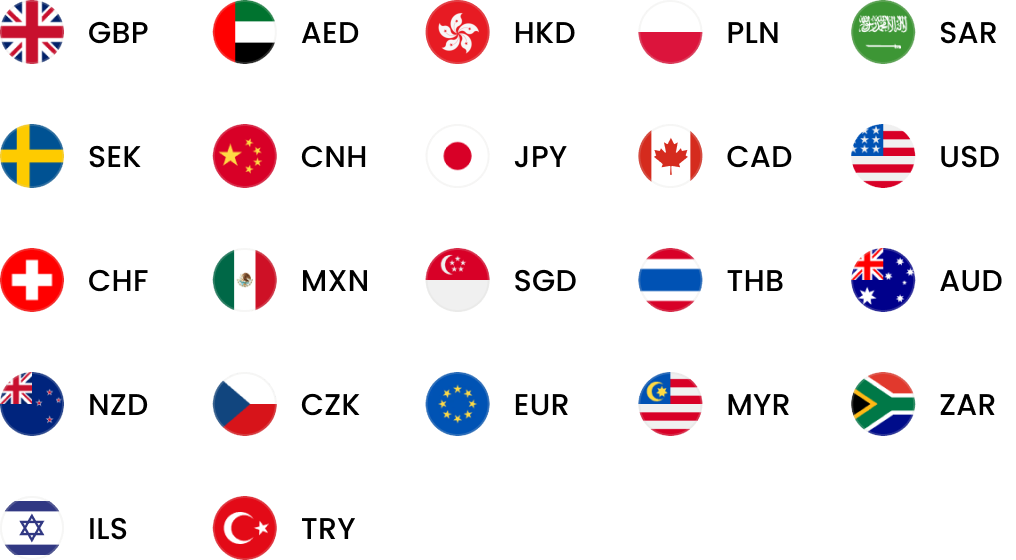
Pay in 15 currencies with World Card, no FX fees

Enjoy zero FX fees when paying in the following 15 currencies with World Card.

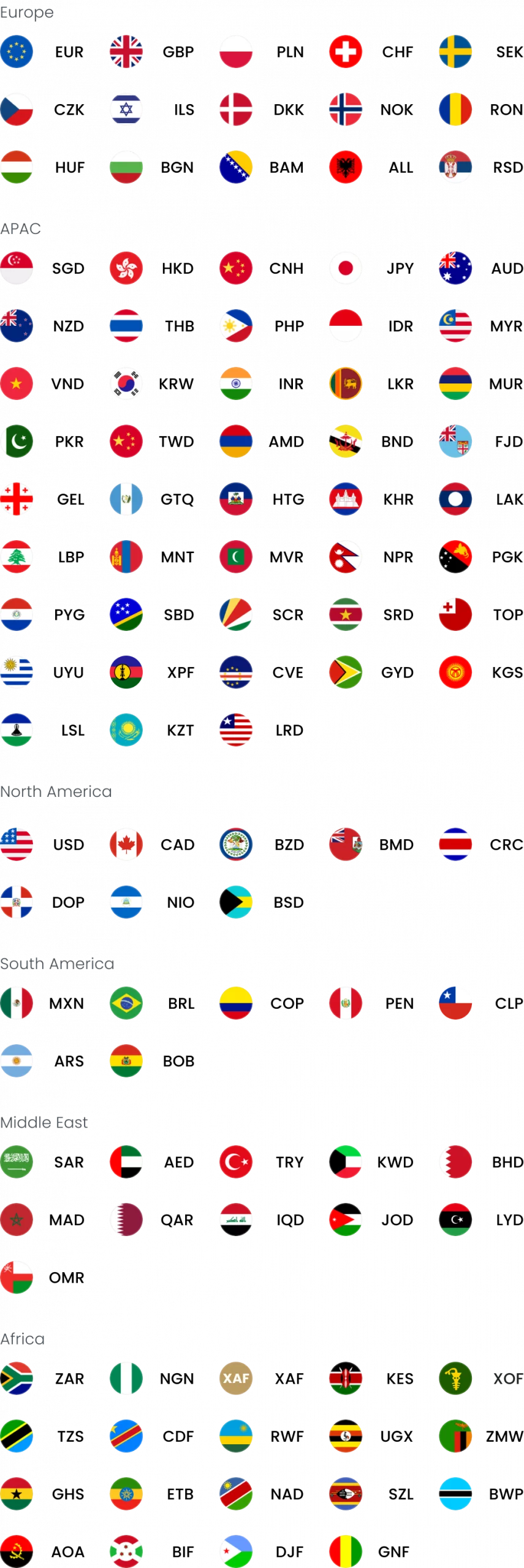
Send money in 100+ currencies

You can send money in your WorldFirst account to any of the currencies we support.

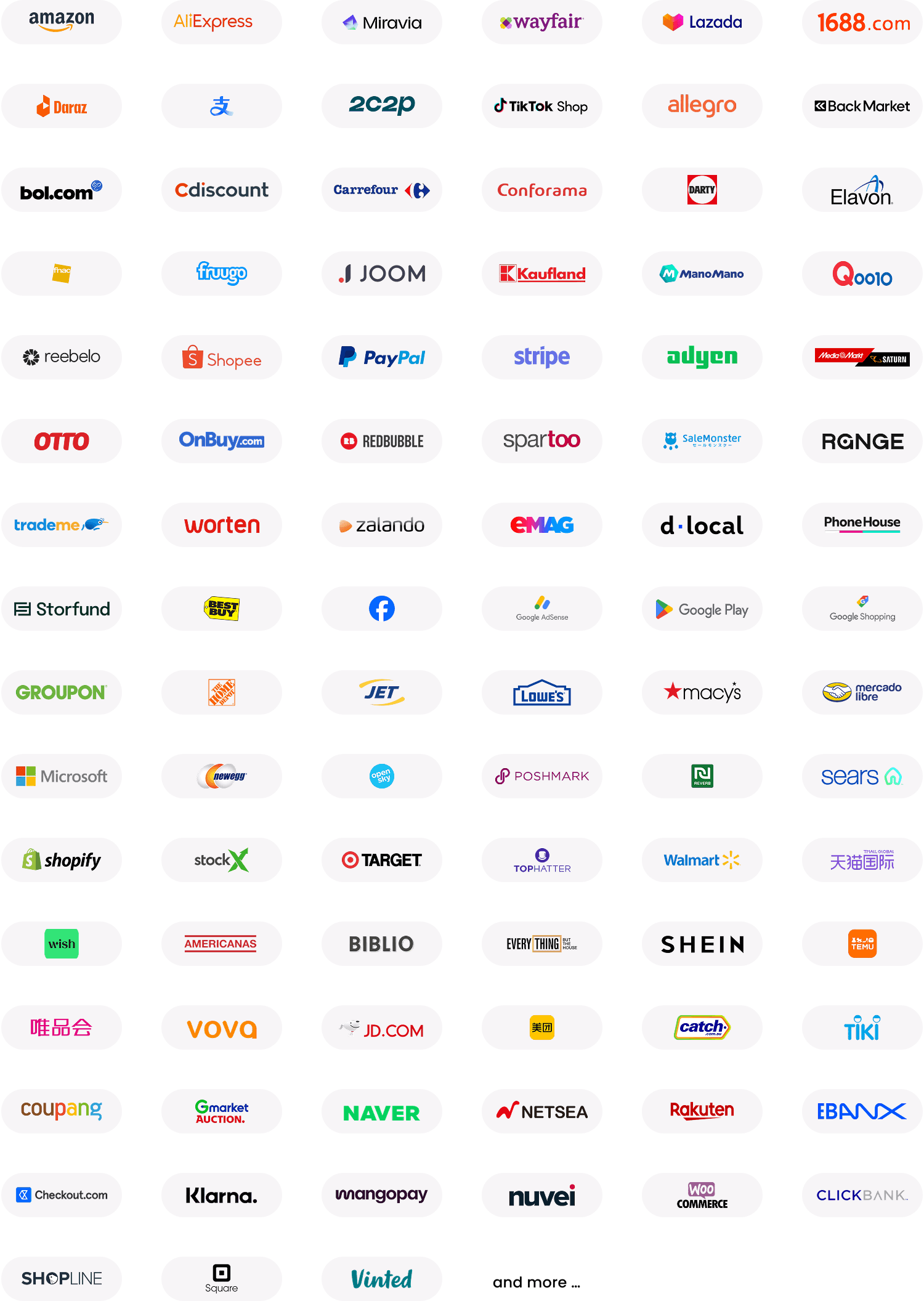
Get Paid by 130+ marketplaces

Seamlessly get paid by 130+ marketplaces and pay your suppliers anywhere.

Collect money in 20+ currencies

You can collect money in 20+ currencies. It only takes a few minutes to open an account in the currency you need.