We provide coverage in South Asia and Middle East: servicing 210+ countries and territories.

WorldFirst Home > blog > Global Business Tips > Nationwide business account review: fees, features and alternatives
You’ve probably noticed the letters landing on your doormat or the banners on your online banking app: Nationwide now owns Virgin Money, and business customers are being nudged towards accounts that didn’t exist under the Nationwide name a few years ago.
If you’re comparing providers because your current bank’s fees have crept up, your branch has closed, or you’re tired of paying £20 or more every time you send money to a supplier abroad, you need a straight answer on what Nationwide actually offers and where it falls short.
The numbers explain why this matters. Around 43% of UK microbusinesses primarily use personal current accounts rather than a proper business account, and nearly a fifth of those who do have one feel let down by branch closures and fee increases.
This review breaks down exactly what Nationwide offers business customers today and where a nationwide business account review needs to flag a genuine gap for anyone trading internationally.
Open a World Account to see how multi-currency collections and supplier payments compare to your current bank’s international transfer fees.
Yes, but not directly from Nationwide itself.
Since Nationwide’s acquisition of Virgin Money completed in October 2024, business current accounts are provided under the Virgin Money brand rather than as a Nationwide product.
Nationwide’s own business page is explicit about this: ‘With Nationwide acquiring Virgin Money, you have access to 2 of their award-winning business current accounts,’ referring customers to the M Account for Business and Business Current Account.
The two brands remain operationally separate for now. Virgin Money’s business book is due to transfer legally onto Nationwide Building Society’s banking licence (Firm Reference Number 106078, PRA-authorised) on 2 April 2026..
What Nationwide does offer under its own name is savings, not current accounts. Business Savings accounts are aimed at companies with turnover under £10 million, require a minimum deposit of £5,000, and are still operated by post, fax or email rather than online or via app, according to Finder’s Nationwide business account guide.
More significantly, Nationwide’s Business Savings product is currently closed to new applications as of September 2025, which narrows Nationwide’s direct business offer to Corporate Savings for larger firms with turnover above £10 million.
Deposit protection follows the building society structure rather than e-money safeguarding rules. Combined eligible deposits across Nationwide and Virgin Money are covered by the Financial Services Compensation Scheme up to £120,000 per eligible person per institution, as confirmed on Nationwide’s business savings pages. That’s a meaningful protection for cash sitting in a savings account, but it has no bearing on the exchange rate margin you pay when moving money internationally, which is a separate cost entirely.
The practical choice for anyone opening a day-to-day account through Nationwide comes down to two Virgin Money products, split mainly by turnover and fee structure:
The M Account for Business is aimed at sole traders, limited companies, LLPs and partnerships with turnover under £1 million.
It carries no monthly fee, offers free day-to-day online and app banking, and pays 0.25% uncapped cashback on debit card spending. It holds a Five-Star Moneyfacts rating and integrates with Xero, Sage, Shopify, Apple Pay and Google Pay, according to Virgin Money’s M Account page. It’s not available in Northern Ireland, the Channel Islands or the Isle of Man, and clubs, charities and societies are excluded.
The tariff guide reveals where costs creep in outside everyday card spending. Manual debits and credits processed in branch or at the Post Office cost £0.95 each; cash paid in or out costs £0.90 per £100; a cheque remitted through a branch costs £0.55 (free via the app). International SWIFT payments cost £17.50 online or £25.00 in branch, and CHAPS payments carry the same fee structure.
Inward foreign payments over £100 equivalent attract a £7.00 charge. Debit card foreign purchases cost 2.75% (minimum £1.50) and foreign cash withdrawals cost 3.75% (minimum £1.50), per the M Account tariff guide. The daily cash limit sits at £700, and international card purchases are capped at £10,000 per day.
For businesses with turnover up to £6.5 million, or new companies within their first 12 months of trading, the Business Current Account (Explore) offers 25 months of fee-free banking, after which it settles to £6.50 a month. Cashback runs at 0.35%, capped at £500 a year, and once the free period ends, transaction charges apply at £0.30 per debit or credit.
Cash handling costs £0.65 per £100 paid in or out, and manual debits or credits cost £0.70 each. International SWIFT, CHAPS and debit card foreign transaction fees mirror the M Account structure. The annual cash transaction limit is £250,000, and it integrates with Xero, Sage and QuickBooks.
Two further tiers exist beyond this: the Business Choice Account for turnover above £6.5 million, which carries the same £6.50 monthly fee alongside base-rate-linked credit interest and more advanced digital tools, and the Professional Firms Client Account for businesses holding client money, which has no monthly fee for designated client accounts. All Virgin Money business current accounts currently include six months of free Xero access.
Virgin Money’s 25-month fee-free period is competitive, but the picture changes once you compare ongoing fees, international payment costs and accounting integrations.
The table below shows how its business accounts compare with other major UK providers:
| Provider | Monthly fee | Free period | UK transactions | International payment fee | FX margin | Accounting integrations |
| Virgin Money M Account | £0 | Permanent | Free | £17.50–£25.00 SWIFT | Undisclosed | Xero, Sage, Shopify |
| Virgin Money Business Current Account | £6.50 after free period | 25 months | £0.30/item after free period | £17.50–£25.00 SWIFT | Undisclosed | Xero, Sage, QuickBooks |
| Starling | £0 | Permanent | Free, unlimited | Routed via Wise | Near mid-market | Xero, QuickBooks, FreeAgent |
| Tide | £0 (free tier) | Permanent | 20p/transfer after 5 free | 0.5% | 0.5% | Xero, QuickBooks, FreeAgent, Sage |
| Monzo | £0 (Lite) / £9 (Pro) | Permanent | Free, unlimited | 1% FX fee | 1% | Available via Pro |
| Revolut | £10 (Basic) / £35 (Grow) | Permanent | Included in plan | Included | Interbank rates (weekdays) | Xero, QuickBooks |
| Barclays | £8.50 after free period | 12 months | Charged per plan | £25 + FX margin | 2–3.5% | Various |
| NatWest | Free under £2m turnover | 24 months | Charged per plan | £20 + FX margin | 2–3.5% | Free FreeAgent |
Comparison built from Virgin Money tariff guides, BusinessExpert’s fee breakdown and Funding Circle’s small business bank account guide, checked against current published pricing.
Read more:
Virgin Money’s business accounts, and by extension Nationwide’s current offer, are built for domestic banking rather than cross-border trade. That’s not a criticism, it’s simply what the product was designed to do, but it leaves real costs on the table for any SME with international suppliers or customers.

A SWIFT international payment through Virgin Money costs £17.50 online or £25.00 in branch, and that fee sits on top of an FX margin that isn’t separately disclosed on the tariff guide, per the M Account tariff guide.
Industry-wide, traditional banks typically embed an FX margin of 2–4% into the exchange rate itself rather than showing it as a line-item fee. On a recurring payment of £5,000 a month to a European supplier, that can mean fees and margin costing up to £175 per transfer, or over £2,000 a year on a single supplier relationship.
Debit card use abroad compounds this. Virgin Money charges 2.75% on foreign purchases and 3.75% on foreign cash withdrawals, both with a £1.50 minimum. SWIFT transfers themselves aren’t instant either; because they typically route through a chain of correspondent banks, international payments can take three to six business days to arrive, which is a real problem if a supplier is waiting on a deposit before dispatching goods.
There’s also no facility to hold or receive money in foreign currencies with dedicated local account details. If a US marketplace pays you in dollars, or a client in the EU pays you in euros, a standard Virgin Money or Nationwide-backed account converts that automatically, at a rate and margin you don’t control, rather than letting you hold the balance until the rate suits you or pay it straight out to another supplier in the same currency.
None of this makes Virgin Money or Nationwide a poor choice for domestic banking. It simply means the international side of your business needs a different tool, used alongside your main account rather than instead of it.
Read more: How to compare business bank account features
Every business bank account, Nationwide’s Virgin Money-backed products included, comes with trade-offs that are easy to underestimate until they start eating into cash flow:
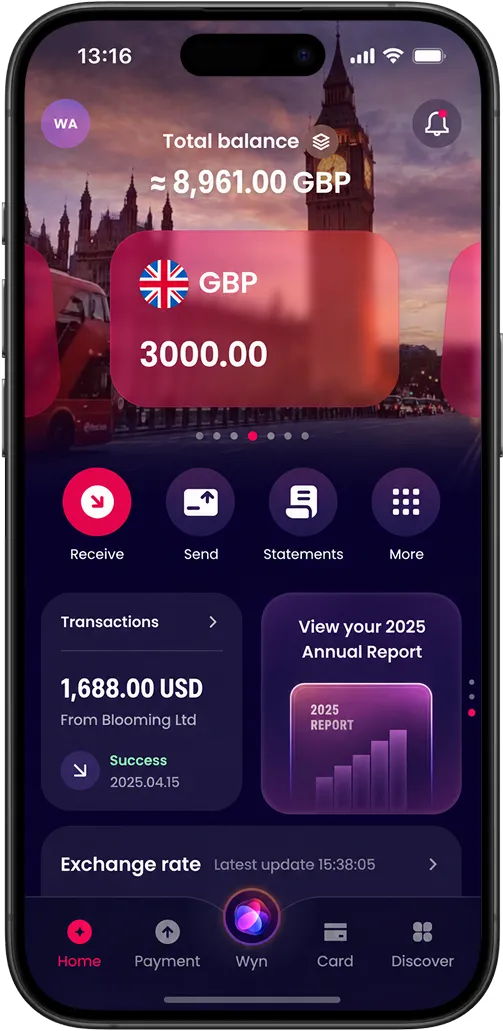
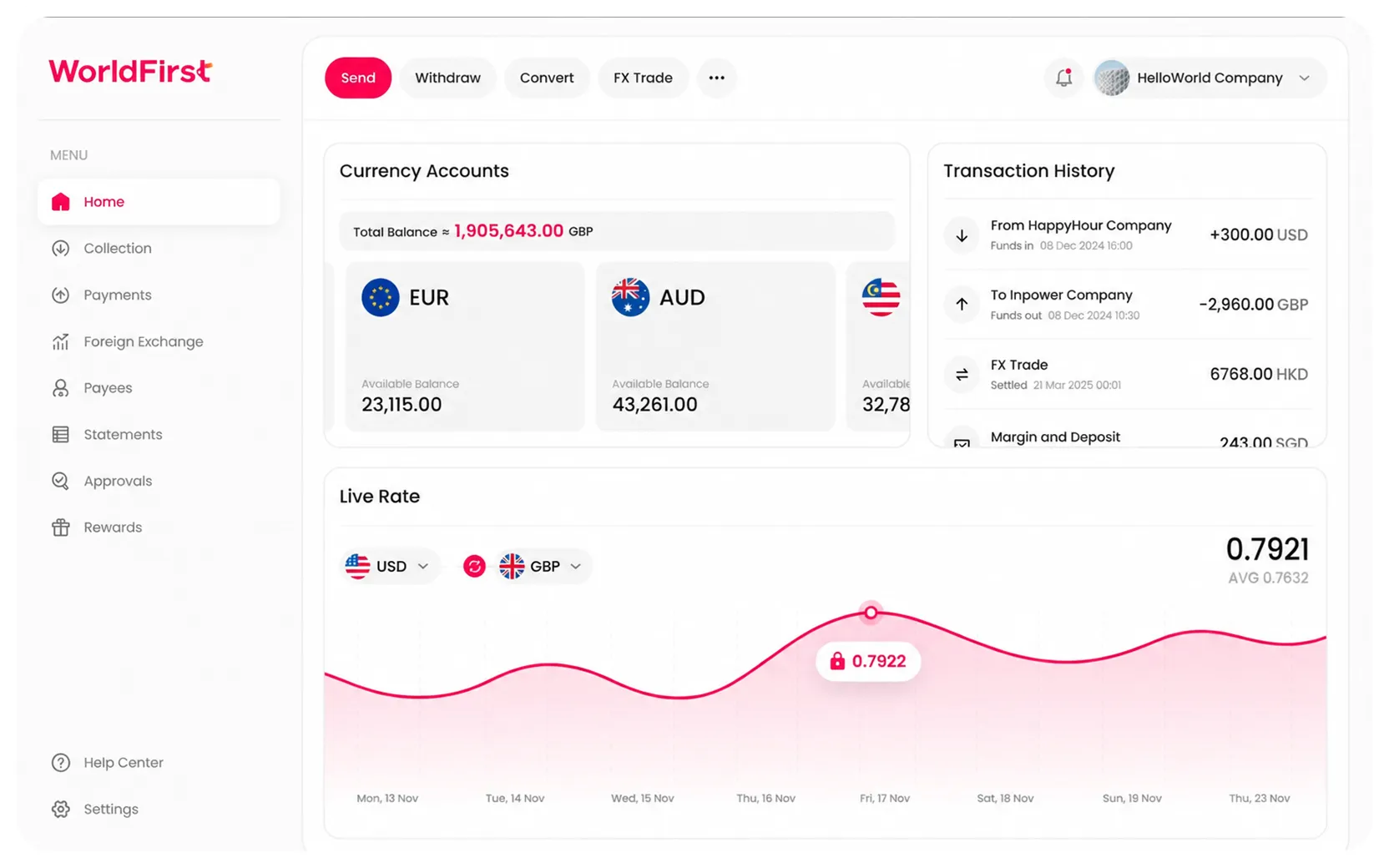
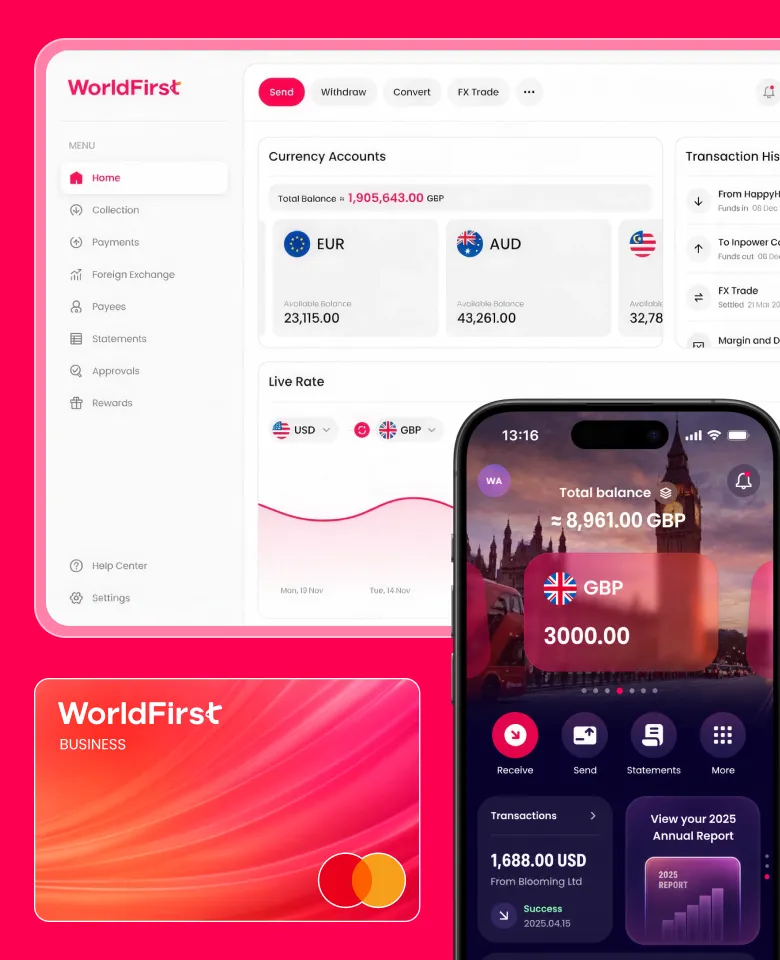
A dedicated multi-currency account addresses several of these directly. WorldFirst shows the exchange rate applied to every transaction, holds 20+ currencies so conversion timing is your decision rather than the bank’s, and connects to accounting platforms to reduce reconciliation work across your domestic and international payment flows.
There’s no single best UK business bank account; the right choice depends on your transaction volume, cash handling needs and how much international activity your business does.
If you’re digital-first with low cash handling, Starling, Monzo or Tide typically offer the lowest ongoing costs, with free tiers and straightforward app-based banking. If you want the longest free-banking runway on the high street, Virgin Money’s Business Current Account at 25 months is currently hard to beat, though it settles to £6.50 a month afterwards.
If you need lending, overdraft facilities or a relationship manager as your business scales, Barclays or NatWest bring more traditional banking infrastructure, with NatWest’s free FreeAgent bundle a genuine perk for turnover under £2 million. If international payments or multi-currency holding are central to your business, Revolut offers interbank FX rates on weekdays across 29 currencies, while WorldFirst specialises specifically in supplier payments, marketplace collections and FX management for cross-border trade.
For businesses under £1 million turnover with straightforward domestic banking needs, Virgin Money’s M Account for Business, Starling, or Tide are the strongest starting points, each offering permanently free banking with no monthly charge.
The right pick among them depends on transaction volume and cash handling: Starling suits businesses wanting unlimited free UK transactions and Wise-routed international payments, Tide suits those comfortable with a small per-transfer fee after the first five free transactions each month, and the M Account suits businesses wanting cashback on card spend plus integration with Xero, Sage or Shopify.
Where small businesses most often get caught out is international activity. If you’re a small importer or a marketplace seller receiving payments from overseas buyers, layering WorldFirst’s World Account alongside any of these free domestic accounts gives you the multi-currency and marketplace collection functionality none of them include natively, without paying a monthly fee for the privilege.
Read more: Best business bank accounts for foreign transactions
The most practical approach for a UK SME comparing providers isn’t necessarily to abandon Nationwide or Virgin Money altogether. It’s to keep the domestic account for day-to-day GBP banking, cash deposits and any overdraft facility, and layer a specialist multi-currency account on top for anything crossing a border.
That’s the gap WorldFirst’s World Account is built to fill. It lets you hold 20+ currencies in one account, collect payouts in 12 currencies including USD, EUR, AUD, JPY and CNH directly from over 130 marketplaces and payment gateways such as Amazon, Shopify and PayPal, and send payments to 200+ countries in 100+ currencies. Around 80% of payments arrive the same day via local payment rails rather than the multi-day correspondent banking chain that SWIFT relies on.
WorldFirst’s pricing is lower and more transparent for international payments, with FX margins of 0.3% to 0.5% and payment fees of £0.30 to £4.00. The table below compares the main costs and cross-border features with Virgin Money:
| Aspect | Virgin Money (SWIFT) | WorldFirst (World Account) |
| Transfer fee | £17.50–£25.00 | £0.30–£4.00 |
| FX margin | 2–4% (undisclosed on tariff) | 0.3–0.5% |
| Typical arrival time | 3–6 business days | Same day (80% of payments) |
| Multi-currency holding | Not available | 20+ currencies |
| Marketplace collections | Not available | 130+ platforms |
Picture a Manchester-based homeware importer paying a supplier in China a 30% deposit and 70% balance on a shipment. Through a Virgin Money business account, that’s two SWIFT payments at £17.50–£25.00 each plus an undisclosed FX margin, with each payment taking several days to clear before the supplier will confirm dispatch.
Through a World Account, the same two payments carry a 0.3% exchange fee and a fee of a few pounds each, arriving the same day in most cases, which shortens the whole production and shipping timeline as well as the cost.
WorldFirst isn’t a bank; it’s authorised and regulated by the FCA as an electronic money institution (Firm Reference Number 900508), and client funds are safeguarded in segregated accounts with tier-1 partner banks rather than covered by the FSCS.
Open a World Account to add multi-currency collections and international supplier payments alongside your existing business account.
Yes, but Nationwide doesn’t offer its own branded business current account. Business banking is provided through Virgin Money, which Nationwide acquired in October 2024, giving you access to the M Account for Business and the Business Current Account (Explore). Nationwide’s own products are limited to Business Savings, currently closed to new applications, and Corporate Savings for businesses with turnover above £10 million.
It depends on your priorities. Digital challengers like Starling, Monzo and Tide suit low-cost, app-based domestic banking; Virgin Money offers the longest fee-free period on the high street at 25 months; Barclays and NatWest suit businesses that need lending or a relationship manager; and Revolut or WorldFirst suit businesses with significant international payment or multi-currency needs. There’s no universal best option, only the best fit for your transaction pattern.
For turnover under £1 million, Virgin Money’s M Account for Business, Starling and Tide all offer permanently free banking, making them strong candidates for small businesses with modest transaction volumes. The best choice depends on whether you prioritise cashback and accounting integrations, unlimited free UK transfers, or low-cost international payments, so it’s worth comparing transaction fees against your typical monthly activity before committing.
The main disadvantages are monthly and per-transaction fees, minimum balance requirements, application paperwork, transaction limits, slow and costly international transfers, hidden FX margins, limited multi-currency support, added reconciliation work across accounts, and account reviews that can temporarily delay access to funds. Many of these can be reduced by pairing a low-cost domestic account with a specialist multi-currency provider for international payments.
Sources:
Choose a product or service to find out more
Save money, time, and have peace of mind when expanding your global business.
It looks like you're sending money to family or friends — that's a personal transfer, which is best handled through our app.
Sending money to family or friends? Download our app for the best experience.