



























A SWIFT transfer works by sending a secure payment instruction between banks through the SWIFT network. The money itself moves separately through bank accounts, often with correspondent or intermediary banks involved.
Most SWIFT transfers arrive within one to five business days, but the route can affect timing and cost. FX conversion, compliance checks, cut-off times and receiving-bank processes can all slow the payment down.
For UK businesses, that makes SWIFT useful but not always predictable. A payment may pass through several banks, incur fees along the way and only become available after the recipient’s bank completes its final checks.
In this guide, we’ll explain how SWIFT transfers work, how long they take, where fees come from and how to make international payments faster and easier to plan.
Key takeaways:
- SWIFT handles payment instructions while banks move the funds: Banks use SWIFT to exchange messages that tell other banks how to process a payment. The actual money moves separately through bank accounts across different institutions
- Most SWIFT transfers take one to five business days: Major currency routes can be faster, but timing depends on the destination, currency, intermediary banks, cut-off times and local processing
- Intermediary banks add time, fees and complexity: Payments often pass through several banks before reaching the recipient. Every additional bank introduces processing steps, potential delays and deductions
- FX conversion can account for a large share of total costs: Banks apply their own exchange rates during the transfer. These margins can reduce the final amount more than the visible transfer fees
- Accurate details and timing improve results: Small errors or missed cut-offs can delay payments by days. Clean payment data and early submission help avoid unnecessary issues
- The right setup gives you more control over outcomes: Using a multi-currency solution like the World Account from WorldFirst helps you reduce reliance on intermediary banks, manage FX timing and achieve faster, more predictable international payments
Open a World Account to reduce delays, fees and uncertainty in international transfers.
What is a SWIFT transfer?
A SWIFT transfer is an international bank payment where banks use the SWIFT network to send secure instructions across countries.
SWIFT provides the messaging system banks use to exchange payment instructions, including the sender, recipient, currency, amount and routing details.
With a network of more than 11,500 financial institutions across 200+ countries, SWIFT gives banks a standardised way to send payments almost anywhere in the world.
When a UK business sends an international payment, the sending bank usually creates a SWIFT message, often an MT103, which tells the banks in the chain how to process the transfer. The actual fund movement happens through accounts banks hold with each other, often called correspondent or nostro accounts.
How do SWIFT transfers work step by step
A SWIFT transfer moves through a clear sequence of steps:
1. You create the payment instruction
The process starts when you set up the transfer with your bank or payment provider.
You enter the recipient’s details, including name, address, account number or IBAN and the SWIFT/BIC code of the receiving bank. You also choose the currency and amount.
Your bank validates the details and runs compliance checks, including sanctions screening and fraud controls. Errors or missing information can stop the payment at this stage, which often leads to delays before the transfer even begins.
2. Your bank prepares and sends the SWIFT message
After approval, your bank creates a SWIFT message (typically MT103).
The message includes:
- Sender and recipient details
- Payment amount and currency
- Routing instructions
- Fee structure (who covers which charges)
Your bank sends the message through the SWIFT network to the next bank in the chain. The message moves first, while funds settle between banks that hold accounts with each other.
3. Correspondent and intermediary banks handle the transfer
When your bank does not hold a direct account with the recipient’s bank, the payment moves through one or more intermediary banks.
Banks along the payment route hold accounts with one another, allowing them to pass funds forward in stages.
At this stage:
- Banks debit and credit their internal accounts
- Intermediary banks may deduct processing fees
- Additional compliance checks may take place
More banks in the transfer route mean more steps, longer processing time and a greater chance the final amount will be reduced by fees.
4. Currency conversion takes place within the chain
When the payment involves multiple currencies, conversion occurs at a single point in the process.
Conversion may take place:
- At the sending bank
- At an intermediary bank
- At the receiving bank
The location of conversion determines the exchange rate applied. Banks set their own FX margins, so the rate used during the transfer can differ from the one you saw when you created the payment.
FX conversion can be one of the largest less visible costs in a SWIFT transfer.
As a broader benchmark, the World Bank’s Remittance Prices Worldwide database shows that cross-border transfer costs can include both visible fees and exchange-rate margins. For business SWIFT payments, the exact cost depends on the banks, route, currency and fee option used.
5. The receiving bank processes and credits the funds
Once the payment reaches the recipient’s bank, final checks take place before funds are credited.
The receiving bank may:
- Deduct incoming transfer fees
- Run final compliance checks
- Confirm account details
After processing, the recipient receives the funds. The final amount may differ from the amount sent due to intermediary fees and FX margins applied earlier in the process.
Payment details and requirements
To make a SWIFT transfer, you’ll need:
- Recipient’s full name and address
- Recipient bank’s name, branch address and SWIFT/BIC code: The SWIFT code identifies the exact bank
- Recipient account number/IBAN: In Europe and many countries, you must provide an IBAN
- Currency and amount: Specify the sending currency (and amount), then confirm the desired receiving currency
- Payment reference/purpose: Many banks require a payment reference or purpose (often an invoice number or description)
- Any required documents: For large sums or in certain countries, banks may require invoices or contracts to comply with foreign-exchange controls
Why a SWIFT message can move faster than the money
A SWIFT payment does not move in one single step. It has two timelines:
- The message timeline: The payment instruction reaches the next bank, correspondent bank or beneficiary bank
- The money timeline: Funds may take longer to arrive. Banks still need to process the payment, run checks, apply any required FX conversion, account for intermediary deductions and release the money to the recipient
That’s why a payment can show as sent before your supplier can actually use the money. The instruction may already be with the beneficiary bank, but final crediting can still depend on local processing times, bank cut-off times, currency conversion and account checks.
For SMEs, that difference matters. A supplier may ask where the money is even after the payment has left your account, so it helps to track both the SWIFT message status and the final credited amount.
How long do SWIFT transfers typically take?
A SWIFT transfer from the UK usually reaches the beneficiary within one to five business days. Some payments arrive the same day or next day, especially on major currency routes. More complex routes can take longer.
The important point is that SWIFT transfer time has two parts:
- Message speed: How quickly the payment instruction reaches the beneficiary bank
- Settlement and crediting speed: How long banks take to process, check and credit the funds
SWIFT’s 2025 speed data shows that 75% of payments travelling over its network reach beneficiary banks within 10 minutes. The same report points to the “last mile” as the main source of delay, meaning the stage after the payment reaches the beneficiary bank but before the recipient can use the funds.
That’s why a payment can show as sent or even received by the beneficiary bank, before the supplier can actually access the money.
SWIFT transfer times from the UK
The table below shows how SWIFT transfer timelines typically look for UK businesses:
| Corridor | Typical SWIFT time |
|---|---|
| UK to EU in EUR | Same day to one business day via SEPA or one to three business days via SWIFT |
| UK to US in USD | Often one to two business days |
| UK to China in CNY | Often two to five business days |
| UK to less common routes | Three or more business days |
Why SWIFT transfers can be slow or unpredictable
Even correctly formatted SWIFT payments can be delayed. Main causes include:
1. Intermediary banks
If your bank doesn’t have a direct relationship with the recipient’s bank, the payment may pass through one or more intermediary banks.
Each bank can add processing time. A payment may also miss the next bank’s cut-off window, which can push delivery into the next business day.
2. Currency conversion
FX can slow a payment down, especially when conversion happens during the transfer.
If you send GBP but the supplier needs USD, EUR or another currency, a bank may need to apply an exchange rate before the funds can move on. On some routes, conversion can happen at the sending bank, through an intermediary or at the receiving bank.
Holding the payment currency before you send can reduce that extra step.
3. Cut-off times and processing windows
Banks don’t process every international payment continuously.
If you send after your bank’s cut-off time, the payment may not start moving until the next business day. On multi-bank routes, one missed window can affect the whole chain.
Weekends, public holidays and time zone differences can add more delay.
4. Compliance and fraud checks
Banks screen international payments for sanctions, fraud and anti-money-laundering risk. A payment may be delayed if something needs manual review.
Common triggers include:
- A name that doesn’t match the account record
- Missing address details
- An incorrect IBAN, account number or SWIFT/BIC code
- A payment value or route that looks unusual
5. Local processing at the receiving bank
Some delays happen after the payment has already reached the beneficiary bank.
In practical terms, the supplier’s bank may still need to complete checks, apply local rules, process FX or release the payment in a scheduled batch before making the funds available.
6. Incorrect or incomplete payment details
Even a small typo (a misspelled name or an incorrect IBAN digit) can suspend the payment. A SWIFT message with incorrect details may require manual intervention at a correspondent bank for two or more business days.
To prevent this, double-check all details or better, copy-paste the bank and account info exactly as given by the beneficiary. For new payees, consider doing a small test transfer first.
SWIFT fees and cost breakdown
SWIFT transfer costs build up across multiple banks, with different charges applied at each stage of the payment:
| Cost component | Who charges it | Typical cost range | How it affects the payment |
|---|---|---|---|
| Sender’s bank fee | Sending bank (UK bank) | £10–£25 per transfer | Charged upfront when you initiate the payment |
| Intermediary bank fees | Correspondent banks | US$15–$50 per bank (1–3 banks common) | Deducted during routing, reducing the final amount received |
| Recipient’s bank fee | Receiving bank | Varies (often applied to business accounts) | Deducted before funds are credited to the recipient |
| FX conversion (exchange margin) | Sending, intermediary or receiving bank | Often 2–4% of transaction value (varies) | Applied during currency conversion, often the largest cost |
| Total cost (combined) | Multiple banks | Typically 1–4% of transfer amount | Depends on route, currencies and number of intermediaries |
How to make SWIFT transfers faster and more predictable
SWIFT payments don’t have to be slow or unpredictable. A few simple changes can reduce delays, lower costs and improve visibility.
- Reduce the number of intermediary banks where possible: Payments that pass through fewer banks usually face fewer checks, fewer handoffs and fewer potential deductions. Use providers with strong banking networks or direct routes for the currencies and countries you pay most often
- Send in the recipient’s currency when possible: Paying a supplier in the currency they expect can remove an extra FX step from the transfer. For example, sending EUR to a European supplier instead of GBP may help avoid conversion during the payment journey
- Submit payments before cut-off: Banks process international payments within set operating windows. Sending early in the business day gives the payment a better chance of moving through the first stage before the next cut-off
- Check every recipient detail: Confirm the beneficiary name, account number or IBAN, SWIFT/BIC code, bank name, bank address and payment reference before you send. Even a small mismatch can trigger manual review or return the payment
- Prepare supporting documents in advance: Some countries, currencies or high-value transfers may require invoices, contracts or payment-purpose information. Having those documents ready can help banks complete checks faster
- Confirm country-specific requirements: Payment formats vary by market. Some destinations may need branch codes, routing numbers, purpose-of-payment codes or intermediary bank details. Ask the recipient to confirm the exact format before sending
- Use OUR when the exact recipient amount matters: The OUR fee option means the sender covers the fees, so the recipient is more likely to receive the intended amount. It can cost more upfront, but it reduces uncertainty for supplier payments, deposits or time-sensitive invoices
- Request proof of payment or MT103 confirmation: An MT103 gives you a formal SWIFT payment record. It can help your bank trace the payment, confirm routing details and resolve disputes faster if the recipient hasn’t received the funds
- Use local routes where available: Local payment rails such as SEPA for EUR payments or domestic clearing systems in supported markets can reduce reliance on correspondent banking chains. Fewer intermediaries often means faster delivery and clearer costs
- Use a provider with clearer payment visibility: Choose a provider that shows payment status, estimated delivery times, FX rates and fees before you send. Better visibility helps you plan supplier payments, manage cash flow and respond quickly if something needs attention
WorldFirst World Account: more control over international payments
SWIFT remains a core part of global payments, but it often introduces delays, layered fees and limited visibility. Businesses that rely on it alone have less control over how payments move and what the recipient receives.
The World Account from WorldFirst gives UK businesses greater flexibility in sending and managing international payments.
WorldFirst isn’t a bank. It’s an international payments platform that helps businesses collect, hold, convert and send money internationally.
Key advantages include:
Use local rails where available
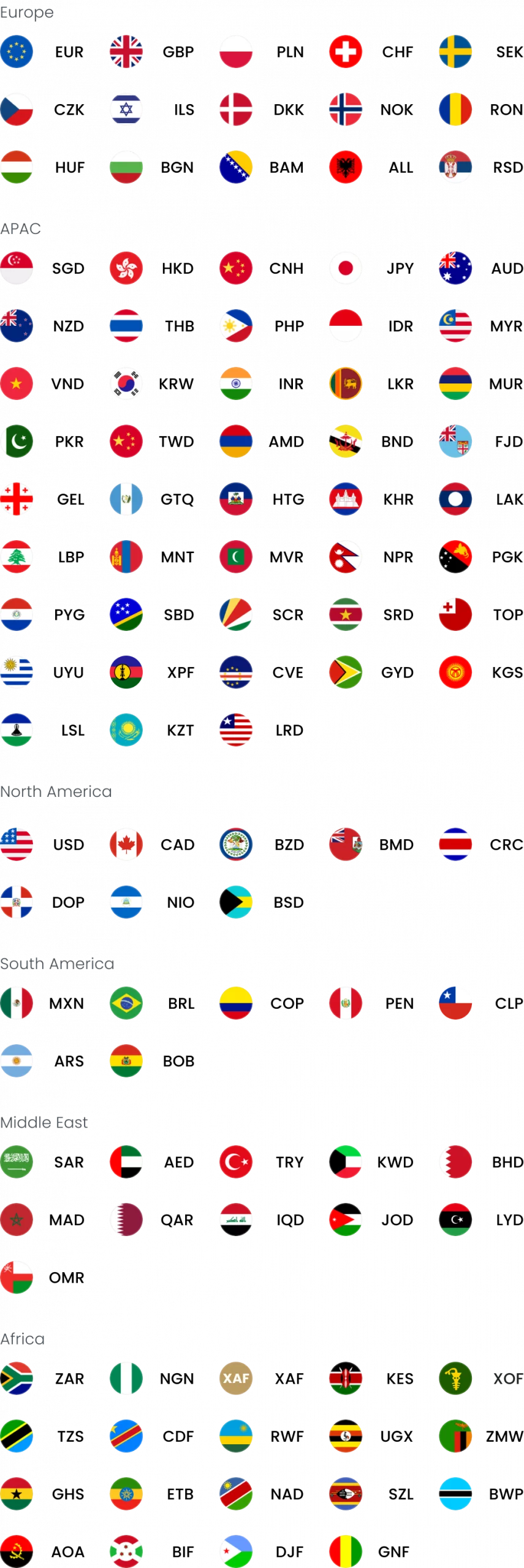
With access to local account details in 20+ currencies, including GBP, EUR, USD, CNH, SGD and JPY, you can pay suppliers using domestic payment systems rather than SWIFT.
Fewer intermediary banks mean fewer handoffs and faster processing. Many payments arrive the same day or the next working day, depending on the route.
Reduce delays caused by FX conversion
Holding balances in multiple currencies lets you convert in advance, instead of during the transfer.
Removing in-flight conversion reduces delays and avoids extra processing at intermediary or receiving banks. Payments move directly in the required currency.
Route payments more efficiently
WorldFirst supports payments to 210+ countries in 100+ currencies, with around 80% of transfers arriving the same day.
Payments move through a combination of global banking partners and local clearing systems, helping reduce unnecessary steps and improve delivery speed.
Pay instantly where possible
Some payments don’t need to go through traditional bank transfer routes:
- You can send transfers between World Accounts instantly and for free
- You can create up to 25 virtual cards for operational spend
Manage payments with full visibility
A World Account brings all international payments into a single dashboard, making it easier to track balances, control FX and monitor payment status.
Clear visibility helps businesses plan payments more effectively and avoid unnecessary delays.
Open a World Account today to simplify international payments and gain more control over your global transactions.
FAQ
1. Can I track a SWIFT transfer?
Yes. Your bank can track a SWIFT payment using a UETR (Unique End-to-End Transaction Reference). You can ask your bank to check the status and confirm where the payment is. Some providers also give you direct tracking tools.
2. Can I cancel a SWIFT transfer after I send it?
You can request a cancellation through your bank. The bank can stop the payment if it has not reached the next stage. Once other banks process it, cancellation becomes difficult and may fail. Banks usually charge a recall fee.
3. What is SWIFT gpi and how does it work?
SWIFT gpi improves speed and tracking for international payments. Banks use it to process payments faster and track them in real time. You can see where the payment is and what fees apply along the way. Not every bank fully supports SWIFT gpi, so results can vary.
Sources:
- https://www.swift.com/news-events/news/year-shared-progress-5-highlights-2025
- https://www.swift.com/news-events/press-releases/swift-accelerates-transformation-consumer-payments-banks-roll-out-new-framework-retail-transactions
- https://remittanceprices.worldbank.org/#:~:text=This%20website%20provides%20data%20on,2025%20report%20for%20further%20details.
- https://www.swift.com/sites/default/files/files/ultimate-parties-in-cross-border-payment-messages_with-faq.pdf
- https://www.financialprofessionals.org/about/learn-more/press-releases/Details/survey-79-percent-of-organizations-were-victims-of-attempted-or-actual-payments-fraud-activity-in-2024
- https://www.worldfirst.com/uk/blog/international-transactions/cross-border-payments-challenges/
- https://www.worldfirst.com/uk/