




























Singapore’s total merchandise trade reached SG$1.4 trillion in 2025, according to Enterprise Singapore.
When you run a business across markets, that number becomes part of daily work. It shows up when you pay suppliers, convert currencies, manage fees and try to keep enough cash available for the next order. That is why the OFX vs Airwallex comparison matters.
Both companies have Australian roots, but they now serve different business needs. OFX may work well if you mainly need international transfers and foreign exchange support. Airwallex gives you a wider platform if you also need accounts, cards, approvals and spend controls.
In this guide, we compare OFX and Airwallex across fees, FX, supplier payments, cards, integrations and use cases.
We also show where WorldFirst fits if you want a multi-currency account designed for cross-border trade.
OFX vs Airwallex: an overview
OFX and Airwallex both help Singapore businesses move money across borders, but they solve different payment problems.
1. OFX
OFX is headquartered in Sydney and has helped businesses move money internationally for more than 25 years.
You may consider OFX if you mainly need to pay overseas suppliers, contractors or partners. The service focuses on international transfers and foreign exchange, so it can work well when the payment itself matters more than the wider finance workflow.
Key features:
- International business transfers: OFX supports payments to over 170 countries in 50+ currencies, which can help when you need to pay overseas suppliers, contractors or partners
- FX support: OFX keeps currency conversion close to the centre of its service, with online transfers and access to currency specialists if you want guidance before sending funds
- Mass payments: OFX Multipay lets you send payments to up to 500 recipients at once, which may help if you manage supplier, contractor or staff payment batches
- Transfer timing tools: OFX lists options such as spot transfers, limit orders and regular payments, giving you more choice around how and when you send money
Read more: OFX alternatives
2. Airwallex
Airwallex launched in Melbourne in 2015 and now has global headquarters in Singapore and San Francisco. Reuters describes the company as a fintech that helps customers issue and pay international invoices and bills through its payments platform.
You may consider Airwallex if cross-border payments form part of a larger finance workflow. That can help if you sell through marketplaces, work with overseas suppliers or manage teams that spend across markets.
Key features:
- Global accounts: Airwallex lets you collect and hold funds in 20+ currencies, which can help when customers, platforms or partners pay you from overseas
- International payments: Airwallex supports local transfers to 120+ countries and SWIFT transfers to 200+ countries, giving you different routes for supplier and vendor payments
- Cards and spend controls: Airwallex includes company cards, spend requests, expense management and reimbursements, so you can manage supplier payments and company spending on a single platform
- Finance integrations: Airwallex connects bank feeds, expenses and bills to Xero, QuickBooks and NetSuite, helping your finance team reduce manual reconciliation as payment volume grows
Read more:
OFX vs Airwallex: accounts
Your account setup shapes how you receive customer funds, hold foreign currency and keep money ready for supplier payments.
1. OFX accounts
OFX does not currently offer its Global Currency Account to new business and e-commerce clients globally.
You can still register a business profile with OFX and use its platform for international money movement. But if you need local account details, incoming marketplace payouts or multi-currency balances, OFX may not give you the account setup you need.
Account options:
- OFX business account/profile: A registered business setup for using OFX’s international money transfer and FX services
- OFX Global Currency Account: A multi-currency account product that OFX no longer offers to new business and e-commerce clients globally
- GBP or EUR local currency account enquiry: A contact-led option for businesses selling overseas that need local account details in GBP or EUR
2. Airwallex accounts
Airwallex offers a more extensive account setup if you need to receive and hold money across currencies.
You can open local currency accounts in 20+ countries, receive funds in 20+ currencies and collect funds from 70+ countries. That can help when customers, marketplaces or partners pay you from outside Singapore.
Account options:
- Airwallex Business Account: A global business account that lets your company hold and manage balances across multiple currencies
- Airwallex Global Accounts: Local account details in selected markets, so customers, platforms and partners can pay your business through local routes
- Airwallex multi-currency wallet: A central wallet that lets your business hold received funds in different currencies before converting or paying them out.
What this means for your business:
- Choose OFX if you mainly need a business profile for international money movement and do not need a full multi-currency account setup
- Choose Airwallex if you need to receive and hold funds across multiple currencies with local account details in selected markets
OFX vs Airwallex: fees
Fees can change how much each payment really costs, especially when you pay suppliers often or send smaller amounts.
1. OFX fees
OFX keeps fees simple for Singapore businesses that mainly need international transfers.
Key fees:
- Account fee: Free to open an OFX account
- Transfer fees: No OFX transfer fees for Singapore customers
- Third-party bank fees: Intermediary or recipient banks may deduct charges from the payment amount
- Quote visibility: Your quote and deal confirmation show any applicable OFX transaction fee
2. Airwallex fees
Airwallex uses a plan-based pricing model because the platform covers more than transfers.
Key fees:
- Monthly plan fees: Explore is free, Grow costs SG$79/month and Accelerate starts from SG$399/month
- Local transfer fees: SG$0 for local transfers to 120+ countries
- SWIFT transfer fees: US$20-US$35 per transfer to 200+ countries
- Extra usage fees: Transaction fees and spend-user fees may apply depending on how your team uses the platform
What this means for your business:
- Choose OFX if you want a simpler fee setup for international transfers
- Choose Airwallex if you want a wider platform and can justify the monthly plan fees for account, payment and spend management features
OFX vs Airwallex: FX rates
Singapore is one of the world’s busiest FX hubs, with MAS reporting US$1.485 trillion in average daily FX trading volume in April 2025.
But when you run an SME, the number that matters most is much smaller: the rate you get when you convert supplier payments, overseas revenue or marketplace payouts.
1. OFX FX
OFX uses a quote-based FX model.
That means you do not get one fixed public markup across every currency pair. Your rate can change based on the currencies, amount, timing and market conditions.
FX rate points:
- Customer rate: OFX gives you a quoted rate when you start a transfer
- Built-in margin: OFX includes its margin in the exchange rate
- Reference rates: OFX public rate pages show market rates for reference, not your final customer rate
2. Airwallex FX
Airwallex uses a more published FX pricing model.
That can make FX costs easier to forecast if you convert money often. It can also help when your team needs to compare the cost of holding a foreign currency balance with the cost of converting it before a supplier payment.
FX rate points:
- Interbank-based rates: Airwallex prices conversions against interbank FX rates
- Published margin: Airwallex applies 0.4% above interbank for major currencies and 0.6% for other currencies
- Clearer forecasting: A published margin can make regular currency conversion costs easier to estimate
What this means for your business:
- Choose OFX if you prefer to review a fresh FX quote for each payment before sending money
- Choose Airwallex if you want a published FX margin that makes conversion costs easier to forecast
OFX vs Airwallex: cards
Cards matter when your team pays for software, ads, travel or supplier-related expenses in different currencies. The right card setup can help you control spending, reduce personal reimbursements and keep company purchases easier to track.
1. OFX cards
OFX does not clearly position cards as a standard Singapore business product. If cards matter to your payment workflow, check availability directly before comparing OFX with card-led platforms.
2. Airwallex cards
Airwallex gives cards a much more central role in its Singapore offer.
You can create multi-currency Visa corporate cards, issue cards to employees, set spend limits and track purchases from one dashboard. That can help if your team pays for tools, travel, ads or overseas business expenses across currencies.
Card options:
- Airwallex Corporate Cards: Multi-currency Visa cards for local and international business spending
- Company cards: Shared virtual cards for team purchases such as subscriptions, marketing spend and supplier-related expenses
- Employee cards: Virtual or physical cards for individual team members, with spend limits and real-time tracking
- Card controls: Tools to create, freeze or cancel cards, set limits and review card activity from one dashboard
What this means for your business:
- Choose OFX if cards are not central to your payment workflow and you mainly need international money movement
- Choose Airwallex if your team needs corporate cards, spend controls and multi-currency card spending as part of the same finance setup
OFX vs Airwallex: business features and integrations
Business features matter when payments start creating extra admin. If your team needs approvals, batch payments, accounting sync or API access, the platform around the payment can matter as much as the payment itself.
1. OFX features
OFX keeps its business tools close to international payments.
You get useful support for bulk payouts, accounting sync and API-led payment workflows, but the setup feels more payment-focused than finance-workflow-led.
Business features and integrations:
- Multipay: Send bulk payments to up to 500 recipients, which can help when you pay suppliers, vendors, contractors, staff or customer refunds in batches
- Xero integration: Eligible OFX Global Currency Account users can sync transactions with Xero, but new business and e-commerce clients should check availability first
- Payments API: Use OFX’s API if your business wants to connect international payment capabilities to an existing platform or internal system
2. Airwallex features
Airwallex gives you a broader financial workspace focused on payments.
It works better if your team needs to manage bills, approvals, expenses and accounting data alongside cross-border money movement.
Business features and integrations:
- Bill Pay: Upload or email supplier invoices, extract bill details with OCR and route invoices through approval workflows before payment
- Spend management: Manage expenses, reimbursements, bills and approval rules from one place, which can help when several team members spend across markets
- Accounting integrations: Connect Airwallex with Xero, QuickBooks and NetSuite to sync transactions, expenses and bills into your finance records
What this means for your business:
- Choose OFX if you mainly need payment-focused tools, bulk payouts and API support around international transfers.
- Choose Airwallex if you need a broader finance workflow that connects bills, approvals, expenses and accounting data.
Which provider is right for your business?
Choose OFX if:
- You mainly need to send international payments to suppliers, contractors or partners
- You prefer a transfer-focused provider with a long history in FX
- You want to review each FX quote before confirming a payment
- You make a smaller number of larger overseas payments each month
- You do not need a full multi-currency account setup for new e-commerce or trading activity
- Cards, spend management and finance integrations do not play a major role in your workflow
Choose Airwallex if:
- You need to receive, hold and manage funds across multiple currencies
- You collect revenue from overseas customers, platforms or marketplaces
- You want local account details in selected markets
- You need company cards, employee cards and spend controls
- You want payments, expenses, bills and approvals in one platform
- You need integrations with tools such as Xero, QuickBooks or NetSuite
Where OFX and Airwallex may fall short
OFX and Airwallex can both help with cross-border payments, but neither offers the same trade-focused fit for every Singapore business:
- Both need careful FX review: OFX uses quote-based pricing, while Airwallex publishes FX margins. In both cases, compare the rate before you convert supplier payments or overseas revenue
- Both may still leave you using a bank: You may still need a bank for lending, trade finance, cheques or other traditional banking services
- Both can add complexity as your workflow grows: OFX may feel too narrow if you need accounts, collections and spend tools. Airwallex may feel too broad if you mainly want currency accounts and supplier payments
How World Account supports supplier payments, FX and collections
If your marketplace revenue arrives in USD but your next supplier invoice is due in CNH, every extra conversion and platform handoff can eat into margin. You may collect money in one place, convert it elsewhere and then prepare the supplier payment using a third tool. That creates more admin and less control over timing.
WorldFirst gives you a more payment-focused route. World Account helps you collect revenue, hold currency balances, convert funds and pay suppliers from one place, so your team can manage the full cross-border payment flow with fewer handoffs.
WorldFirst operates as a licensed payments provider in Singapore, not a bank. In Singapore, WorldFirst operates as a Major Payment Institution under MAS, with regulated activities covering account issuance, domestic money transfers, cross-border money transfers and e-money issuance.
How World Account helps your payment flow:
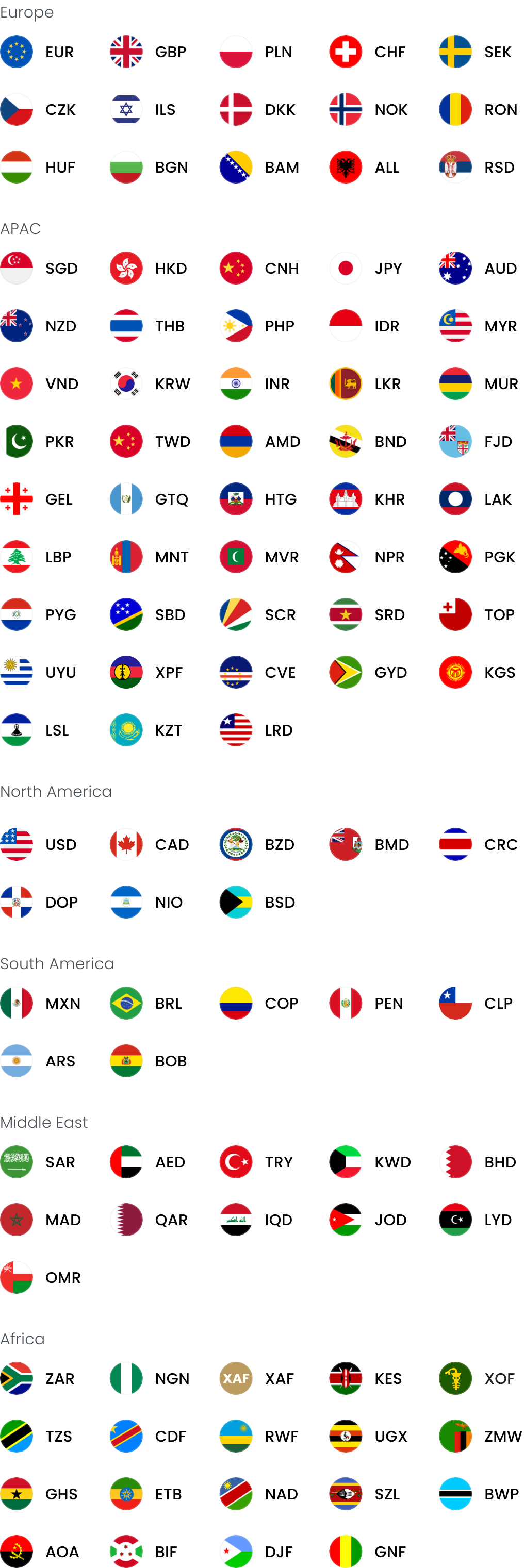
- Collect revenue in 20+ currencies: Receive customer payments, marketplace payouts and overseas revenue in major currencies
- Pay suppliers in 100+ currencies: Send supplier, partner and staff payments to 210+ countries and territories
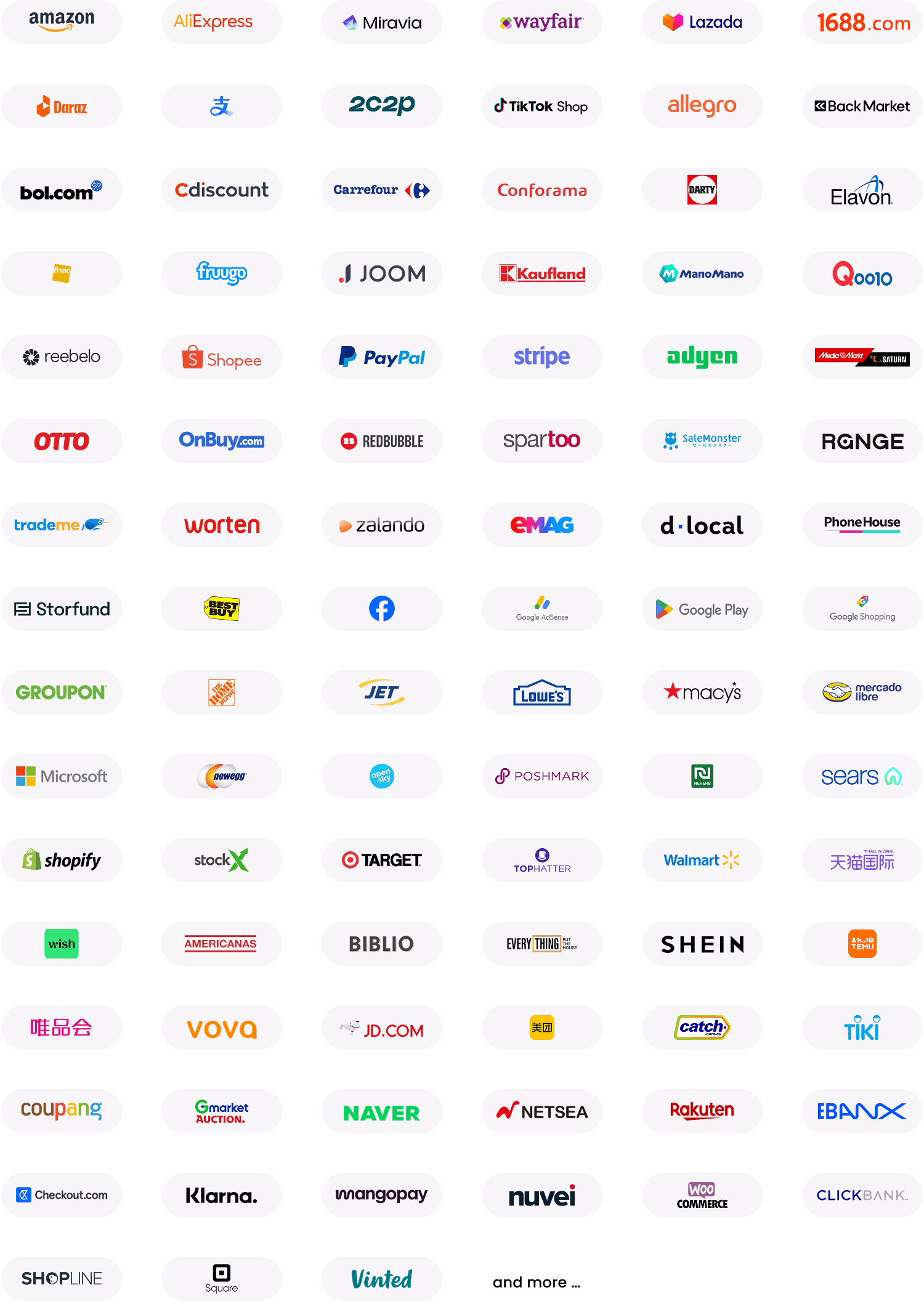
- Connect marketplace payouts: Link with 130+ marketplaces and payment gateways, including Amazon, Shopee, Shopify and PayPal
- Hold before converting: Keep supported foreign currency balances and convert when the timing works for your supplier payment, cash flow or margin
- Check costs before you pay: Review transfer fees before sending money, with currency conversion pricing up to 0.6% for major currencies
- Keep payment admin clearer: Track payments, manage user permissions and connect payment data with Xero or NetSuite
Quick comparison: OFX vs Airwallex vs World Account
| Feature | OFX | Airwallex | World Account |
|---|---|---|---|
| Main role | Transfers and FX support | Accounts, cards and spend tools | Collections, FX and supplier payments |
| Receiving money | Limited for new ecommerce account needs | Multi-currency collections | Receive in 20+ currencies |
| Marketplace support | Limited | Supports global collections | 130+ marketplaces and payment gateways |
| Supplier payments | 170+ countries, 50+ currencies | Local transfers to 120+ countries and SWIFT to 200+ countries | 210+ countries and territories, 100+ currencies |
| FX | Quote-based pricing | Published FX margins | Upfront fees and conversion pricing up to 0.6% |
| Best for | Transfer-focused businesses | Wider finance workflows | Payment control across revenue and suppliers |
Choose World Account if you:
- Pay overseas suppliers regularly
- Receive revenue in several currencies
- Sell through international marketplaces
- Want more control over when you convert currency
- Need clearer visibility over FX costs and payment status
- Prefer one place to receive, hold, convert and send money globally
Open a World Account today to manage collections, FX and supplier payments with more control over currency timing, payment costs and international supplier relationships.
FAQ
1. Is OFX or Airwallex better for Singapore businesses that pay suppliers in China?
Airwallex may work better if you need China-related accounts, local payout options and wider payment workflows. OFX may be a good fit if you mainly want to send larger supplier payments and review each FX quote before sending money.
2. How long do OFX and Airwallex international payments usually take?
Payment speed depends on the currency, route, recipient bank and compliance checks. OFX says major currency payments usually go out on the same or next business day after it receives funds, while local routes through modern payment providers can often move faster than SWIFT.
3. Do OFX and Airwallex protect customer funds in Singapore?
Yes, both operate in Singapore as MAS-licensed Major Payment Institutions, which means they must follow customer money protection requirements. They are not banks, so businesses should still review how each provider safeguards funds before holding larger balances.
Sources:
- https://www.enterprisesg.gov.sg/resources/media-centre/media-releases/2026/february/mr00626_review-of-2025-trade-performance
- https://matrixbcg.com/blogs/brief-history/ofx?_pos=3&_sid=c61f35d78&_ss=r
- https://www.reuters.com/business/finance/fintech-airwallex-valued-over-6-billion-latest-funding-round-2025-05-21/
- https://www.mas.gov.sg/news/media-releases/2025/singapore-strengthens-position-as-third-largest-global-fx-centre
- https://www.ofx.com/en-sg/
- https://www.airwallex.com/sg
- https://www.worldfirst.com/sg/


![Revolut Business Card review Singapore [2027]: Features, fees & more](https://mdn.marmot-cloud.com/worldfirst/sites/9/2026/09/20261001002258848-300x200.webp)