





























Sending money from Singapore to Thailand shouldn’t be expensive – but for many businesses, it ends up that way.
According to World Bank remittance pricing data, the average total cost of sending money from Singapore to Thailand was about 4.47% of the transfer value in the first quarter of 2025, including both fees and exchange rate margins.
Thai banking requirements and regulatory checks also influence how funds are received and how long settlement takes, shaping cash flow and supplier relationships over time.
Thankfully, there are cheaper ways to send money to Thailand. In this article, we’ll break down how to transfer money from Singapore to Thailand, explain where the hidden costs typically appear and show how you can reduce them.
We’ll also explore how at WorldFirst, we offer a more cost-effective way to pay in Thai baht (and 100+ other currencies).
It’s also free to sign up for a multi-currency World Account and hold 20+ currencies – so you can bypass international transaction fees and FX fees when spending in those currencies.
We’ll cover:
- How WorldFirst lets you transfer money to Thailand at better rates
- Where sending money to Thailand gets expensive – and how to reduce it
- 3 common methods for sending money to Thailand and how they compare in price
Want a more affordable way to send money to Thailand? Open a World Account for free today.
How WorldFirst lets you transfer money to Thailand at better rates from Singapore
WorldFirst is a digital payments platform that has helped over 1.5 million businesses send money globally at a lower cost.
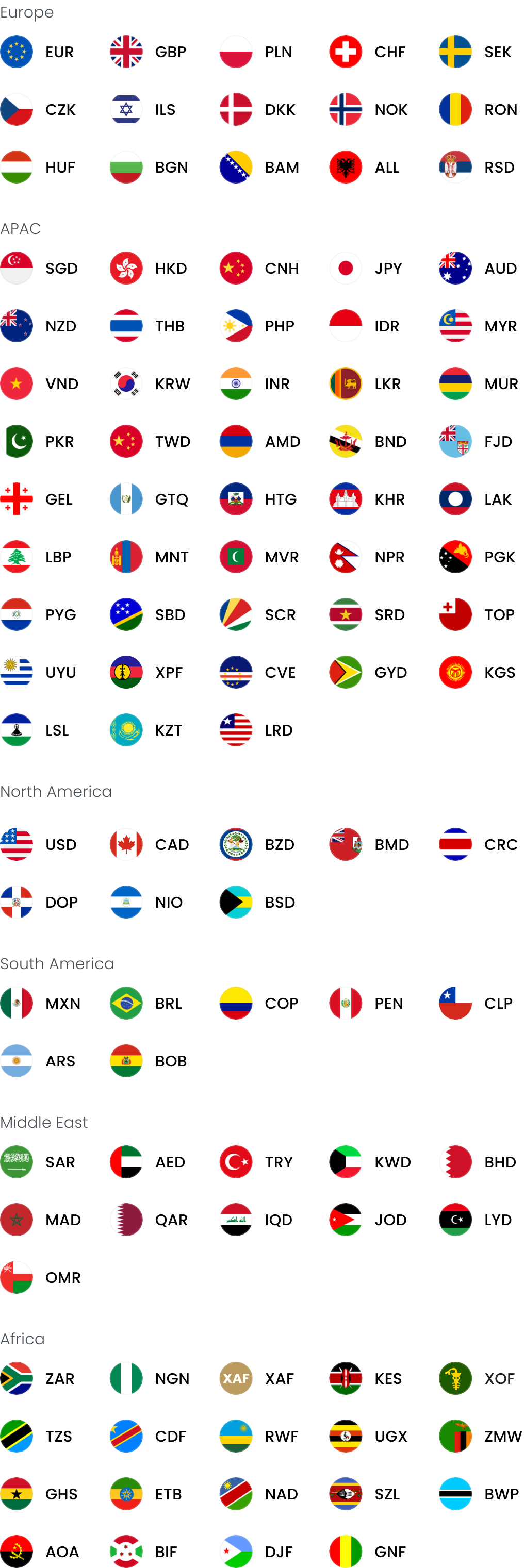
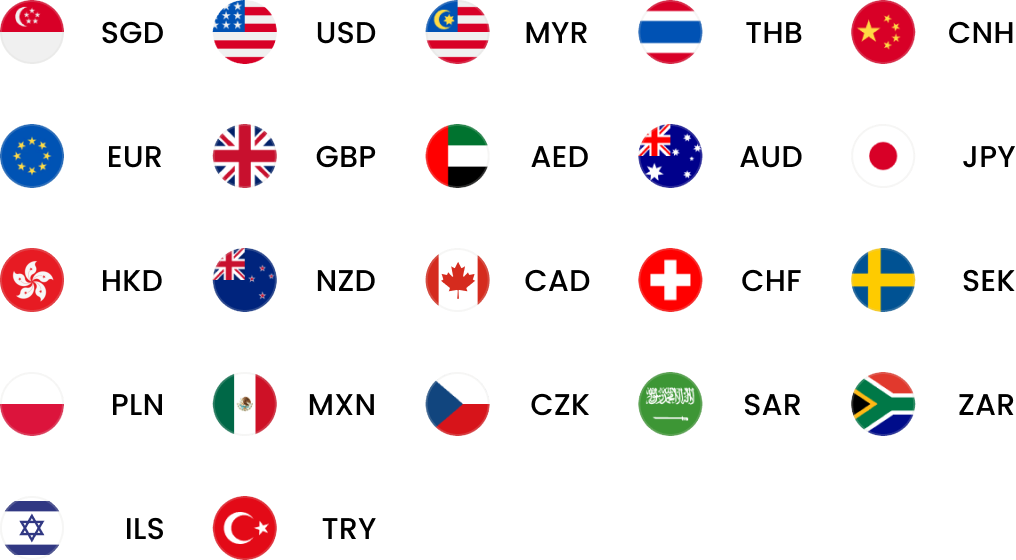
With a World Account, you can receive, hold and pay in 20+ currencies, including Thai baht.
Most traditional Singapore banks charge SG$20–50 per transfer (plus a 1–3% FX markup). But with WorldFirst, you’ll pay no bank wire fees, no intermediary bank charges and no FX fees when you spend from an existing balance in the same currency.
It’s also free to open an account, with no monthly maintenance fees and no minimum balance requirements – so you’re not paying just to hold the account.
Here’s how you save when you sign up for a World Account:
Send money like a local in THB and 20+ currencies, bypassing intermediary bank fees
Using traditional international bank transfers usually means slow settlement times and high fees. With a World Account, you can often avoid that route entirely.
When you sign up, you receive local account details in 20+ currencies (including THB and SGD), which function just like a domestic account in those countries. You’ll get account details local to each currency, meaning that your money is sent as if it were a domestic payment. That means you’ll pay no intermediary bank deductions, and 90% of payments arrive in less than 48 hours.
With local currency accounts, you can also receive, hold and pay from those currency balances without converting them. So if you’re paid in THB, you don’t have to convert it back to SGD. You can keep the baht in your account and use it later to pay a supplier in Thailand – without paying an extra exchange fee or markup.
Read more: How to open a bank account in Thailand as a Singaporean business: A guide
Convert with low markups, and choose when to exchange
If you need to convert currency to Thai baht, WorldFirst offers a low, capped markup on the mid-market rate. That’s compared to the 3–4% fees charged by many traditional Thai banks.Alongside lower conversion fees, a World Account also gives you FX tools to manage the risk of exchange rate fluctuations, so you’re not forced to accept whatever rate is available when you pay.
For instance, with a forward contract, you can lock in today’s exchange rate for transfers up to 24 months in the future. That gives you certainty when budgeting for supplier payments in Thailand and protects you if the market moves against you.
You can also set up a firm order, which automatically converts your funds when your chosen target rate is reached. That way, you can take advantage of favourable Singapore dollar to Thai baht rates without constantly watching the market.
Read more: FX international payments: How to affordably send money abroad
Zero fees for account setup and maintenance
Unlike many providers that charge setup costs, monthly subscription fees or require minimum deposits, a World Account is free to open.
There are no setup fees when you create currency accounts and no monthly maintenance fees – no matter how many currencies you hold.
You can also receive payments from 130+ integrated marketplaces and payment platforms with zero receiving fees.
And if you’re transferring currencies to another World Account, it’s fast and free – so funds can be accessed almost immediately.
Explore WorldFirst’s clear, competitive pricing.
Why Singapore-to-Thailand payments differ from domestic payments
Many Singapore businesses pay Thai suppliers and partners in Thai baht rather than Singapore dollars. Thai suppliers typically expect that and so they invoice in that currency.
However, sending payments in THB can make payments more complex for Singaporean businesses.
Exchange rates, conversion timing and intermediary banks can all affect the final amount your supplier receives. When businesses address these details late in the process, they often discover that the cost and settlement time differ from what they initially expected.
Payment routes into Thailand often involve additional checks, especially for larger or recurring commercial transfers. Planning currency and payment method choices early helps businesses avoid delays and unexpected complications later on.
Where sending money to Thailand gets expensive – and how to reduce those costs
When sending money to Thailand, many SMEs are caught off guard by unexpected fees and added charges.
Here are the many (often hidden) fees businesses pay when sending money overseas – and how to avoid paying more than necessary.
1. Bank transfer (SWIFT) fees
SWIFT is the traditional way banks send money internationally. If you send SGD from a Singapore bank to a Thai bank using SWIFT, charges can apply at multiple points in the journey.
As these deductions happen at different stages, you often won’t know the final THB amount until the payment arrives.
True costs of SWIFT transfers:
- Outgoing wire fee (Singapore bank): Local banks typically charge a flat fee of SG$20–50 per transfer just to send the payment
- Intermediary bank fees: The transfer may pass through one or more correspondent banks, each deducting SG$15–50, which means your Thai recipient could receive less than expected
- Receiving bank fee (Thailand): Thai banks can deduct up to ฿500 when processing inbound international transfers. This is usually taken from the amount received
How to reduce these fees:
- Look at other specialist payment providers instead of relying only on high-street banks
- Find providers that pay out through local Thai payment rails, instead of always relying on SWIFT transfers
2. Fluctuating currency exchange rates
When converting SGD to THB, the rate at which you transfer is usually based on the mid-market rate. But that rate moves constantly. If your transfer takes time to settle – especially through SWIFT – the exchange rate can shift before the funds arrive.
True costs of fluctuating exchange rates:
- If the rate is 1 SGD = 24.1513 THB, converting SG$10,000 gives you ฿241,513
- If the rate drops to 80 before the transfer settles, you’ll receive ฿238,000 instead
- That’s ฿3,513 less, simply because the exchange rate moved while the payment was processing
How to reduce these fees:
- Look for faster transfer methods that shorten the settlement window
- Find solutions that offer risk management tools
- Look for providers that offer low or transparent fees when converting SGD to THB
3. Exchange rate markups
When converting SGD to THB, most banks add a hidden markup above the mid-market rate. Because it’s built into the exchange rate, the true cost isn’t always clear. Over time, those small margins can add up to far more than you expect.
True costs of exchange rate markups:
- Banks often add a 1–3% markup above the mid-market rate
- On SG$10,000, a 2% markup costs you SG$200
- On SG$100,000, that same 2% becomes SG$2,000
How to reduce these costs:
- Choose providers with transparent FX pricing
- Look for a fair, clearly stated markup on the mid-market rate
- Look for providers who may offer no-fee exchanges on certain currencies
3 common methods for sending money to Thailand and how they compare in price
WorldFirst offers a fast, low-cost way to send payments to Thailand. However, if you’d like to compare other methods, here are three common options – and the typical fees you can expect with each.
| Method | Common transfer fees | FX markup | Hidden / extra fees | Fee transparency |
|---|---|---|---|---|
| Bank wire (SWIFT) | SG$20–50 per transfer | 1–3% above mid-market | Intermediary bank deductions + receiving bank fees | Low |
| Cash-based services (Western Union, MoneyGram) | Often 1–5% of transfer amount | 1–5%+ above mid-market | FX margin often embedded in rate | Low to Moderate |
| Online transfer platforms (Wise, Remitly) | Low fee or % of transfer | 0.4–1.5% (sometimes up to 2%) | Generally fewer hidden fees | High |
1. Bank wire transfers
Traditional bank transfers use the global SWIFT network to move money between banks. Your payment may pass through multiple intermediary banks before reaching the recipient in Thailand.
To reduce fraud risk, many Thai banks also impose daily caps on certain online transactions. In some cases, transfers may be limited to ฿50,000 per day, which can slow down larger payments.
Important considerations:
- Transfers typically take 3–6 working days
- Intermediary banks may deduct additional fees
- The final arrival time and amount can be unpredictable
- There’s limited transparency around total costs and settlement timing
Typical costs include:
- An upfront wire fee of around SG$20–50 per transfer
- Intermediary bank deductions of around SG$15–50
- An exchange rate markup of 1–3% above the mid-market rate
2. Remittance services (e.g., Western Union or MoneyGram)
Remittance providers primarily handle cash-based transfers through global agent networks. Recipients can collect cash from local branches, making them useful in underbanked or remote areas. Many also offer same-day access to funds.
Important considerations:
- In-person cash pickup is usually required
- Not designed for formal business-to-business payments
- Limited reporting and reconciliation tools
- Higher fraud and scam risk compared to banks or regulated digital platforms
Typical costs include:
- Higher upfront transfer fees, often with a 1–5% (or more) markup above the mid-market rate
- Exchange rate margins and fees that aren’t always clearly disclosed, making the true cost harder to calculate
3. Online money transfer platforms (e.g., Wise, Remitly, XE)
Online transfer platforms are usually cheaper than traditional banks. They use the mid-market rate with a low, transparent markup, and fees are shown upfront before you confirm the transfer. The entire process can be completed online or through an app. Payments typically arrive within 1–2 business days – sometimes the same day.
Important considerations:
- Many platforms are built primarily for personal use, with lower transfer limits
- Daily or per-transaction caps may require splitting larger supplier payments
- Limited multi-currency holding options may require immediate conversion, reducing control over timing and rates
Typical costs include:
- Fees generally range from 0.4–1.5% (sometimes up to 2%), depending on currency and payment method
- Use of the mid-market rate with a visible markup
- Lower costs than many traditional banks, especially for smaller transfers
Set up a World Account for free
For a simple, inexpensive way to send money to Thailand, open a free World Account for business. The application process is entirely online and only takes a few minutes to complete. Once approved, you can immediately start making payments.
To sign up:
- Go to the online portal, enter your account details and verify your identity using a passport or driving licence
- Upload your business documents, including shareholder ID, ownership records and proof of address (such as a utility bill)
- Submit your application and receive a confirmation email (usually in under two days)
Want to reduce the cost of sending money to Thailand? Open a WorldFirst account for free.
FAQS
Is it safe to send large amounts of money to Thailand online?
Regulated digital payment platforms and licensed financial institutions use compliance checks, encryption and fraud monitoring. However, cash-based international money transfer services may carry higher fraud risk and are generally not designed for formal business-to-business payments.
What details do I need to send an international bank transfer to Thailand?
Each bank has a unique SWIFT code – also known as a BIC (Business Identifier Code) – which ensures the payment is routed to the correct financial institution. In most countries, you would also need the recipient’s IBAN (International Bank Account Number). However, Thailand does not use the IBAN system.
To send money to a bank in Thailand, you’ll usually need:
- The recipient’s full name or company name
- The recipient’s bank account number (typically a 10-digit number)
- The bank’s SWIFT/BIC code
- The name and sometimes the address of the recipient’s bank
- The currency you want to send (e.g., THB)
- The destination country (Thailand)
Providing accurate details is essential to avoid delays, rejected payments or additional processing fees.
Can I use a credit card or debit card to send money to Thailand?
Yes, some providers let you fund transfers with a credit or debit card. This can speed up the transfer, but it may not be one of the cheapest options since it often comes with higher processing fees.
WorldFirst offers the World Card, which lets you pay in 150+ currencies. If you spend from an existing balance in the same currency, there are zero foreign exchange fees. If a conversion is needed, an FX fee applies depending on the currency.
What are common Singapore-to-Thailand business payment scenarios?
Singapore companies typically transfer funds to Thailand for a few predominant reasons:
- Paying manufacturers and sourcing partners for goods
- Settling invoices from Thai service providers or contractors
- Funding Thai branches or regional offices
- Managing payroll for Thailand-based teams or freelancers
Each use case brings different priorities. Supplier payments often focus on reliability and predictable settlement times. Payroll requires consistency and cost control. Service invoices demand clarity on FX charges and documentation.
Sources:
- https://www.kasikornbank.com/en/kbiz/apply/pages/index.aspx#tab-02
- https://www.kasikornbank.com/en/kbiz/help/pages/index.aspx#general
- https://www.bangkokbank.com/en/Business-Banking/Manage-My-Business/Operating-Accounts/THB-Account-for-Companies-Registered-Overseas
- https://www.cimbthai.com/en/business/products/deposits/cimb-biz-account.html
- https://www.scb.co.th/en/personal-banking/deposits/savings-account/savings-account
- https://www.scb.co.th/getmedia/4b9b60bd-1301-4c15-84eb-acbdbfd61a5b/normal-savings-account-en.pdf
- https://www.krungsri.com/en/personal/deposit/savings-account/krungsri-thai-savings-account#section2
- https://www.krungsri.com/getmedia/5ccb81b3-357a-48a5-ae8b-cc54c78a8415/deposit-rates-29122025-en
- https://www.ttbbank.com/en/personal/deposits/transactional-account/ttb-current


![Revolut Business Card review Singapore [2027]: Features, fees & more](https://mdn.marmot-cloud.com/worldfirst/sites/9/2026/09/20261001002258848-300x200.webp)