




























If you’re looking for alternatives to bank payments, chances are you’ve run into some of the common frustrations that come with traditional banks:
- High and unclear fees: Banks often charge maintenance fees or have minimum balance requirements, while wire transfer charges can reach as much as SG$60. The costs of international transfers are higher still, adding up to 3% or more.
- Slow transfers: When sending money overseas, SWIFT payments can take up to six business days, with early daily cut-off times often adding to that delay.
- Limited visibility: Once a payment is sent, tracking and status updates are often unclear, making it difficult to know exactly where funds are or when they will arrive.
- Compliance checks or frozen transfers: While SMEs value security, strict AML/CFT checks on cross-border payments can sometimes lead to delays or requests for additional documentation – particularly when sending money to China.
It’s for these reasons that many Singapore SMEs look for safe alternatives that offer better visibility, easier payment processing, faster settlement and clearer pricing.
In this guide, we’ll break down the main alternatives to traditional bank payments, so you can compare them and choose the right fit for your business.
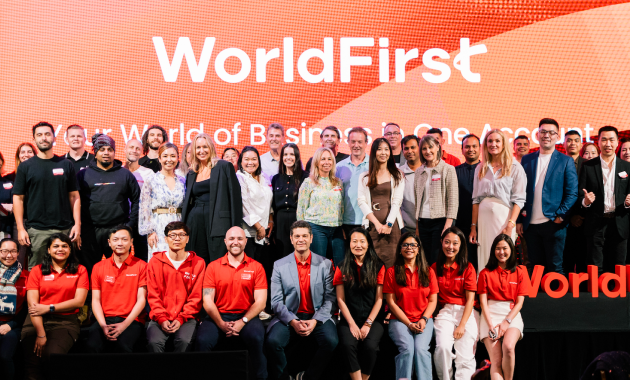
We’ll begin by sharing what we do at WorldFirst. We’re a digital banking platform designed to simplify global payments for growing businesses.
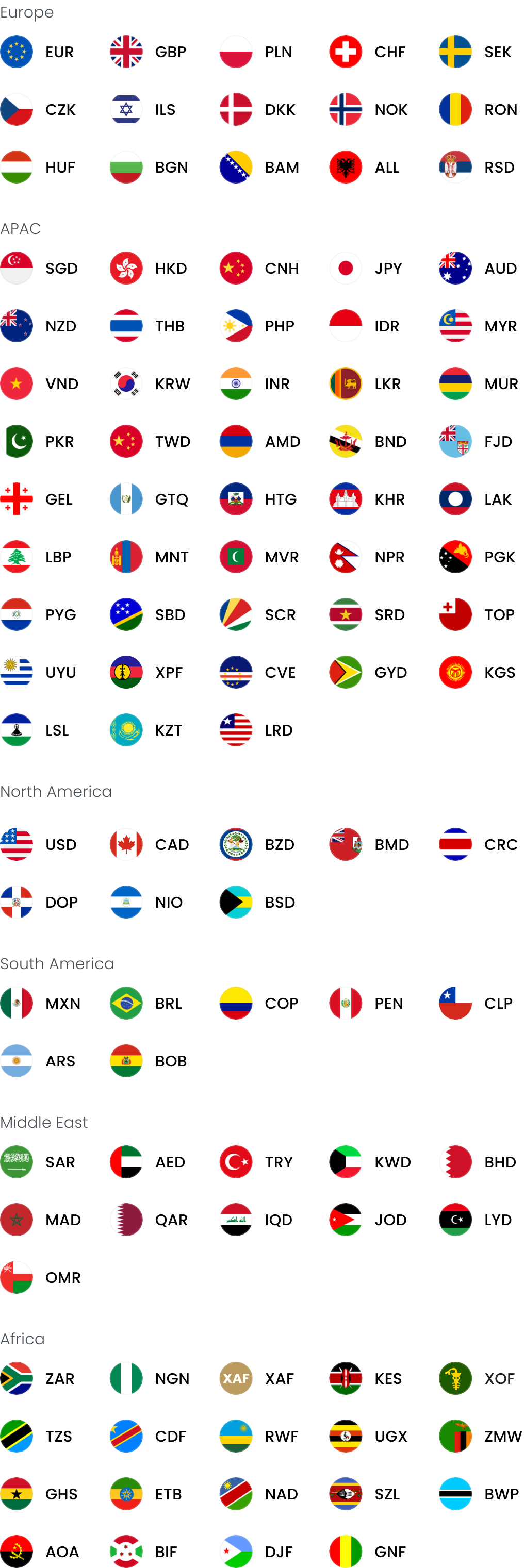
With our multi-currency World Account, SMEs can make payments in 100+ currencies worldwide. Thanks to our links with local infrastructure across the world, 90% of payments arrive by the next day.
In this guide, we’ll explore:
- WorldFirst: a multi-currency payment alternative for traditional bank payments
- Five other bank payment alternatives (and who they’re best for)
- What Singapore SMEs should look for in bank payment alternatives
For fast, affordable payments, open your World Account for free today.
Why WorldFirst is the best alternative to traditional banks for international payments
WorldFirst is a digital payments platform built to solve many of the common frustrations businesses face when making traditional bank payments.
For more than 20 years, WorldFirst has helped over 1.5 million businesses save time and money on domestic and international transfers. As a result, we’re experts in making international payments simpler, faster and more affordable.
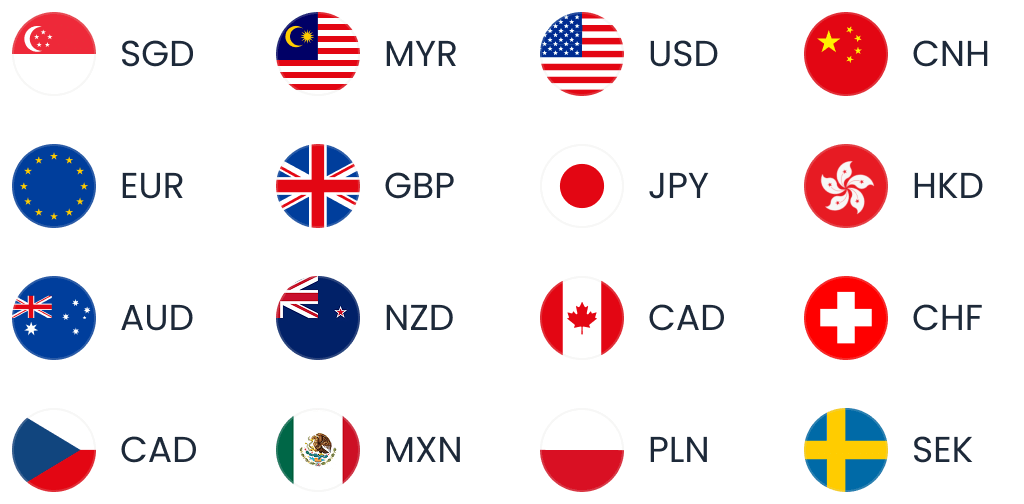
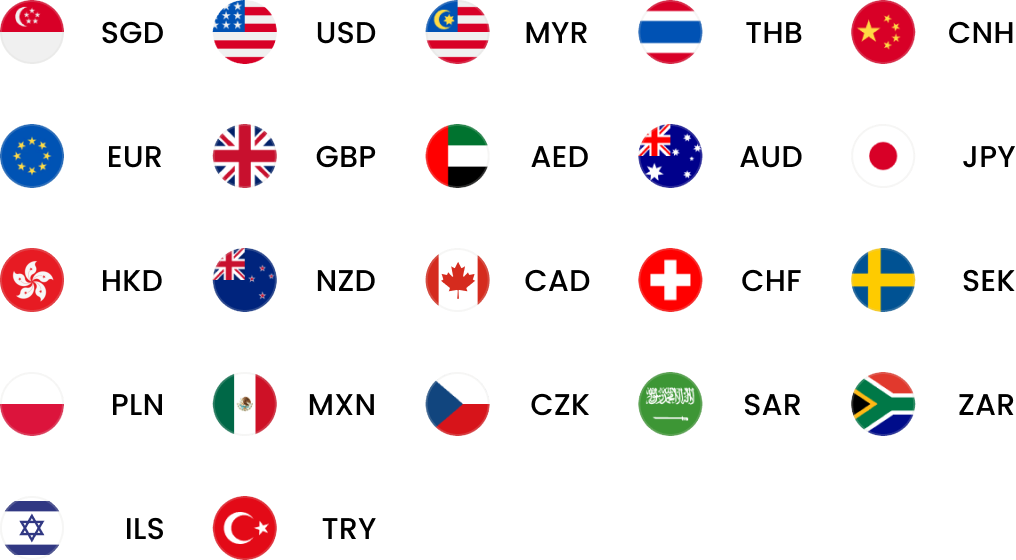
To get started, simply set up your World Account in a matter of minutes (without ever setting foot in a branch office). In your single account, you can hold 20+ currencies, including USD, SGD, MYR, EUR and more – so you can send and receive money like a local.
Here’s how WorldFirst stacks up against traditional banks.
Set up an account for free in under 15 minutes, without in-person meetings or extensive documentation
As you may know already, opening a traditional corporate bank account in Singapore can be complex and time-consuming. Then, you’ll often face high minimum balances or deposits (sometimes up to SG$30,000 to open an account), ongoing fees and slow transfer speeds.
As an alternative, the World Account is completely online and setup is fast and easy – and completely free. It takes 10–15 minutes to set up an account, and you’re usually approved in 1–2 days (sometimes in hours with Singpass).
Once approved, just add funds from your bank account or receive payments into your holding accounts. Then, when you need to, you can easily transfer those funds into your suppliers’ bank accounts. If they have a World Account, transfers are instant and fee-free.
Unlike traditional bank accounts, we don’t charge monthly fees just to keep your account open. It’s also completely free to hold the 20+ currencies you need.
Settle 90% of global payments by the next day
International payments sent through traditional banks often move through multiple intermediary banks and compliance checks. This often means that they can take as long as 3–6 working days to arrive.
WorldFirst speeds things up by using local banking infrastructure wherever possible. Instead of routing payments through a chain of correspondent banks, your funds are delivered using local networks and arrive much faster.
When paying across corridors such as Singapore–China, Singapore–US and Singapore–Europe, payments typically land the same day.
As an example, Mayer Marketing, a SG$45M Singapore brand, has significantly reduced payment delays with WorldFirst.
Before switching, they struggled to receive payments in certain currencies and often faced delays when paying suppliers. Now, 90% of their supplier payments arrive within one business day, significantly improving customer relationships.
Read the full case study here: Mayer experienced growth with next-day payments
Hold 20+ currencies all in one account
As well as supporting faster payments across the world, WorldFirst enables you to hold 20+ currencies in your World Account (including SGD, MYR, GBP, USD and AUD).
Each account comes with local bank details – such as IBANs, sort codes or local account numbers – allowing businesses to send and receive payments as if they had a business account in each country.
These local accounts let businesses send international payments without intermediary bank fees. And if you send money in the same currency you hold, there’s no currency conversion – so no FX fee either.
If you do make payments outside of those accounts, we’re transparent with our pricing and fees. WorldFirst uses the mid-market rate to calculate currency conversions, plus a small, transparent markup of 0.6% for major currencies.
Read more: Cross-border payment fees in Singapore: What you need to know
Safely send global payments with fraud protection and real-time tracking
Of course, security is just as important as speed when making international payments.
Traditional banks have long relied on systems for encryption, fraud monitoring and regulatory oversight to protect transactions. Now, fintech providers such as WorldFirst offer the same level of protection while offering the benefits of more convenient payment.
WorldFirst includes several layers of protection to keep your funds secure:
- Regulated and licensed: WorldFirst is fully regulated by the Monetary Authority of Singapore (MAS), ensuring it meets recognised financial standards.
- Two-factor authentication (2FA): A one-time code (sent via SMS or an authenticator app) is required to login and approve payments, ensuring only authorised users can access or move funds.
- Strong encryption: 256-bit encryption protects sensitive data and transactions – the same level of security used by major financial institutions worldwide.
- Real-time fraud monitoring: Advanced systems continuously monitor transactions to detect and prevent suspicious activity.
Businesses can also track payments in real time through the “Transaction Management” or “Payment History” sections of their WorldFirst dashboard, providing full visibility as funds move from sender to recipient.
5 other bank payment alternatives (and who they’re best for)
WorldFirst’s multi-currency account is a simple, cost-effective alternative to traditional bank payments. If you still want to compare other options, here are five alternatives.
1. Regional real-time payment linkages
Cross-border payment links, such as PayNow–DuitNow (Singapore–Malaysia) and PayNow–UPI (Singapore–India), allow individuals and businesses to send money internationally in seconds.
Payments can be made at any time of day using simple identifiers, like a mobile number or virtual payment ID, rather than full bank details.
These connections make cross-border transfers faster and cheaper. However, they’re currently limited to specific country partnerships, mainly within ASEAN and India.
Best for: Individuals sending small cross-border transfers between linked countries.
Strengths:
- Payments are completed instantly
- Transaction fees are typically low compared to traditional bank transfers
Limitations:
- They’re corridor-specific, only working between countries that have a direct payment link
- Small transaction limits, usually around SG$1,000 per day
- Primarily designed for retail and small-value remittances
- Not built for complex business payments, such as invoice functionality, batch payments or larger transactions
- Only available for participating banks
Read more: Digital payments in Singapore: Trends, providers and 2026 guide
2. Digital wallets
Digital wallets (like PayPal) are online payment platforms that allow you to send and receive money using an email address, mobile number or account ID instead of traditional bank details.
They function like a digital version of your wallet – letting you store funds, pay suppliers, accept payments and send money internationally through an app or website. These e-wallets can be topped up by debit cards, credit cards, bank accounts and cash.
Best for: E-commerce and online sellers, marketplace transactions, and paying freelancers or small vendors
Strengths:
- Accounts can usually be created in minutes with minimal paperwork
- Convenient for sending and receiving international payments
- They’re widely accepted
- Many wallets allow you to hold balances and make payments in multiple currencies
Limitations:
- Currency conversion markups are high, often 3–4% or more
- Both incoming and outgoing payments may incur charges
- Cross-border transactions often include an additional fee of around 1.5%
- Fees can become expensive when sending larger supplier payments
- High fees and FX markups make large transactions more costly
Read more: What’s the cheapest international money transfer method?
3. International money transfer platforms
These fintech platforms use digital systems to provide banking or payment services online. Instead of relying on traditional bank branches and legacy infrastructure, fintech platforms use modern technology to make services, like international payments and currency exchange, faster and less expensive.
Best for: SMEs who need to pay suppliers, contractors or vendors – or for individuals sending large transfers internationally.
Strengths:
- Accounts can be set up fully online with a quick onboarding process
- Fees are often lower than traditional banks in certain payment corridors
- Transfers are typically faster than SWIFT, often arriving within 1–3 days
- Exchange rates are usually transparent, with markups around 0.5–1% of the transfer amount
Limitations:
- Transfer limits may be lower than traditional banking options
- FX risk management tools are often limited or unavailable
- Integrations with accounting or business systems can be limited
- Platforms are not always designed for high-volume or complex payment workflows
- Some require you to pay for a membership or subscription plan
4. Corporate FX brokers
Corporate FX brokers specialise in foreign exchange services for businesses. Rather than focusing on everyday payments, they help companies convert large amounts of currency at competitive rates and manage exposure to exchange rate fluctuations.
Best for: SMEs moving large international volumes or businesses that need to manage currency risk over time. These services are generally better suited to FX management than day-to-day operational payments.
Strengths:
- Competitive FX rates may be available for larger transfers, typically with markups around 0.4–1.5%
- Businesses can access FX tools, allowing them to manage exchange rates for future transactions
- Many brokers provide dedicated support for guidance on trades and market movements
Limitations:
- Trades often need to be executed by phone or manual confirmation rather than fully online
- Platforms may be less automated than modern digital payment systems
- Integrations with accounting or payment software are often limited
- Some brokers do not offer multi-currency accounts or local payment networks for everyday transfers
Read more: FX international payments: How to affordably send money abroad
5. Digital banks
While digital banks are technically banks, they are fully online and operate without physical branches. Everything – from account opening to payments – is done through an app or website, offering a more modern banking experience with faster onboarding and simpler interfaces.
Best for: SMEs that want a fully digital banking experience and lower domestic banking fees.
Strengths:
- Account opening is usually faster and simpler than with traditional banks
- Fees are often lower due to lower overhead costs
- Modern dashboards make accounts easier to manage and navigate
Limitations:
- Some do not offer cards or accounting tools
- FX margins may still be built into the exchange rate
- Some put a minimum on the transfer amount
- Most local digital banks support SGD and only a few other major currencies
Read more: 5 best digital banks in Singapore 2026: Top picks compared
What Singapore SMEs should look for in bank payment alternatives
- Ensure you get support for the countries and currencies your business needs. Some services seem competitive at first, but become expensive or slow when sending to less common destinations. Others, such as PayNow–DuitNow or PayNow–UPI, only work between specific countries, which can limit where you can send money.
It’s also important to understand how payments are routed. While SWIFT is commonly used for global transfers, check whether the provider offers local payment options for certain currencies, which can help avoid intermediary bank fees and delays. - Look at fees beyond what’s just advertised. Don’t just focus on the headline fee. Ask about the exchange rate markup, intermediary bank deductions and any additional transaction, subscription or setup fees.
Even a 1% difference in FX rates can have a significant impact on large transfers. In many cases, the real cost of a payment is hidden in the exchange rate rather than the flat transfer fee. - Look for a provider that is properly regulated and required to safeguard client funds. Regulators, such as the Monetary Authority of Singapore (MAS), and global initiatives are pushing for greater fee transparency and faster settlements. However, it’s still important to check that the provider has strong compliance controls, fraud protection and clear approval processes.
You should also look for real-time tracking and full payment visibility, so you always know where your money is and when it is expected to arrive. - Prioritise speed. Keep an eye out for providers that can move money quickly, with transfers often arriving within one to two business days.
You should also look for fast, digital onboarding, where applications can get reviewed and approved in just a few days.
Read more: How can a foreign company open a bank account in Singapore?
Start making payments with your World Account
For Singapore SMEs with global businesses, international payments shouldn’t slow you down. The World Account is built to simplify cross-border transactions, helping you avoid layered bank fees, reduce delays and gain full visibility into your payments.
Opening a World Account is straightforward:
- Visit the WorldFirst sign-up page
- Enter your personal and business details
- Upload your verification documents (to meet MAS requirements)
- Set up your payment and currency preferences
- Start making international transfers
Open your World Account and start making payments in just a few days. If you need assistance at any stage, visit our user guides to get step-by-step guidance.
FAQs
What is the easiest way for SMEs to send money overseas from Singapore?
Many SMEs choose digital payment platforms or multi-currency business accounts because they’re easy to open online, offer transparent pricing, automate recurring payments and often move money faster than traditional banks.
How long do international transfers take?
Traditional bank transfers usually take 3–6 business days, depending on the destination and intermediary banks involved. Fintech payment platforms or local payment networks can often deliver funds on the same day or within 1–2 business days.
Are there other ways to send money internationally besides banks?
Yes. Businesses can also use fintech payment platforms, digital wallets, international money transfer services, cryptocurrency and FX brokers – many of which offer faster payments or simpler pricing for cross-border payments.
Can I use a virtual card as an alternative payment method?
Virtual card transactions are often a preferred payment method when paying international suppliers, subscriptions and platforms that accept card details and prefer a contactless checkout. They’re especially helpful for e-commerce businesses looking to streamline cash flow in one connected ecosystem and expand their global reach.
However, card payments are not a complete replacement. If a supplier only accepts direct bank transfers, you’ll still need to send funds to their bank account.
With WorldFirst, you can use both. You can pay by virtual debit card where it’s accepted, and switch to bank transfers when needed. Use the World Card anywhere Mastercard is accepted, and pay zero FX fees on 15 major currencies. Soon, Apple Pay and Google Pay (via Google Wallet) will also be available, so you can easily add your card and pay online or in-store.
Can I accept payments from international customers without a local bank account?
Yes. You can accept payments from international customers without opening a local account by using a multi-currency solution. This makes it easier to expand into new markets while keeping your payment processing simple and low cost, while also improving the overall customer experience.


![Revolut Business Card review Singapore [2027]: Features, fees & more](https://mdn.marmot-cloud.com/worldfirst/sites/9/2026/09/20261001002258848-300x200.webp)