Home > blog > International Transactions > How to find trusted suppliers in China [Step-by-step guide]
For businesses in Singapore, a “trusted” supplier usually means three things: the company is legally registered, it can reliably produce to your standards and you can pay for goods without unnecessary FX losses or fraud risk.
Trade volumes show why this matters. In 2025, Singapore’s total merchandise trade reached SG$1,397.7 billion. Mainland China remained one of its largest trading partners, with SG$162.9 billion in total trade. With that level of cross-border activity, sourcing or payment mistakes can quickly become costly.
The opportunity is clear, but the challenge is just as real. Choosing the wrong supplier can trigger production delays, quality failures, unexpected compliance issues, cash flow pressure from rework or replacement orders and, in serious cases, outright fraud.
This guide explains how to find suppliers in China and verify, inspect, negotiate and pay them safely from Singapore while protecting margins and cash flow.
Key takeaways:
- Define specifications before contacting suppliers: Without clear documentation on materials, tolerances, compliance standards and Incoterms, you’re more likely to get pricing disputes or production errors, and quotes are harder to compare
- Verify suppliers with hard evidence: Confirm legal registration using the Chinese company name and Unified Social Credit Code. Determine whether you’re dealing with a factory or a trading company, and use independent audits for higher-value orders
- Lock in quality before mass production: Order and test samples, then approve a golden sample as your production benchmark. A fixed reference standard protects you if quality issues arise later
- Use contracts and payment terms to manage risk: Staggered payment terms, such as a 30% deposit and 70% due before shipment, reduce exposure. Always verify bank detail changes independently and include clear inspection and compliance clauses in your agreement
- Control FX to protect your margin: Currency choice directly affects your total landed cost. A World Account from WorldFirst lets you hold 20+ currencies and pay suppliers globally with clearer FX pricing and stronger cash flow control
Open a World Account and manage China supplier payments with more control over FX and cash flow.
Why China remains a key sourcing hub for Singapore businesses
China has long been an important sourcing market for Singaporean businesses across multiple industries.
In 2024, Singapore imported around US$56.7 billion in goods from China. Electrical and electronic equipment alone accounted for about US$22.4 billion of that total, making it the largest category by a wide margin. Machinery followed at roughly US$10.8 billion, with mineral fuels contributing about US$5.1 billion. These figures confirm that China remains central to Singapore’s technology, industrial and consumer supply chains.
Trade flows are also strongly two-way. Monthly data from 2025 shows Singapore’s exports to China reached around US$6.07 billion in December 2025, nearly matching imports from China during the same period. This level of reciprocal trade highlights how deeply connected production, distribution and re-export networks have become between the two markets.
China continues to support Singapore’s role as a regional coordination hub. Companies often manage procurement, financing and distribution from Singapore while relying on Chinese factories for large-scale manufacturing. Components produced in Chinese industrial centres frequently feed into broader ASEAN production models before reaching final markets.
For Singapore businesses, this combination of sector depth, manufacturing capacity and established trade links makes China central to long-term sourcing plans.
What makes Chinese suppliers competitive
Chinese suppliers remain competitive for several reasons:
- Manufacturing clusters and specialisation: Entire cities and regions focus on specific product categories, from electronics to textiles and hardware. This creates deep expertise, reliable networks and efficient access to components
- Fast production cycles: Integrated domestic supply chains and ready access to raw materials allow factories to move quickly from order to production, helping buyers manage shorter lead times
- Price competitiveness: Large production runs, strong supplier competition and export experience help keep unit costs competitive, particularly for standardised or high-volume goods
- Established infrastructure and logistics: Major ports, developed freight routes and established export processes support predictable shipping to Singapore, making inventory planning easier
How to find suppliers in China: a step-by-step framework
Successful sourcing from China requires structure, documentation, discipline and payment control at every stage:
Step 1: Define requirements before approaching suppliers
Sourcing failures usually begin with unclear documentation rather than unreliable factories. When specifications are vague, suppliers make assumptions. And assumptions can create pricing disputes, rejected shipments or missed deadlines.
Document technical specifications properly
A complete specification file should include:
- Exact materials and component grades
- Measurements with defined tolerances
- Performance requirements
- Packaging configuration
- Labelling format and language
- Applicable compliance standards
For goods entering Singapore, confirm safety rules, certification requirements and labelling obligations before production begins. If goods will be re-exported to the US or EU, verify that the factory can meet those regulatory standards. Post-production compliance corrections are costly and slow.
Define commercial parameters early
Quotations become comparable only when you fix commercial terms in advance. Confirm:
- Target unit cost range
- Minimum order quantity
- Forecast annual volume
- Preferred Incoterms such as FOB, CIF or EXW
Factories calculate pricing based on volume, payment timing and risk allocation under each Incoterm. Without defined parameters, two offers may appear similar while covering very different responsibilities.

Power your global growth with one account
Get local currency accounts, fast payments and competitive FX – all in one place.
Step 2: Where to find suppliers in China
Don’t rely on search results alone; you may need to explore different sourcing channel depending on your product complexity, order size and risk tolerance.
B2B marketplaces
Common starting points include:
- Alibaba.com: Large global platform connecting buyers with Chinese manufacturers and trading companies across a wide range of product categories
- Made-in-China: Strong presence in industrial and manufacturing sectors, commonly used for machinery, components and technical goods
- Global Sources: Export-focused platform with close links to major trade fairs and established suppliers
- 1688.com: Domestic Chinese wholesale platform that’s part of Alibaba Group
These platforms allow you to:
- Map supplier availability
- Benchmark price ranges
- Build an initial shortlist
Marketplace status badges don’t replace verification. Many listings represent trading companies rather than manufacturers. That structure may suit certain buyers, but it affects pricing transparency and production control.
Trade fairs
To build long-term relationships, you’ll want to consider in-person evaluation. Trade fairs provide:
- Direct engagement with management
- Physical inspection of product quality
- Comparison across competing factories
- Faster alignment with specifications
Face-to-face meetings often reveal operational depth, organisational quality and production seriousness more effectively than email exchanges.

Sourcing agents
China-based agents may assist with:
- Factory identification
- Site visits
- Price negotiation
- Inspection coordination
Using a local agent can help you get products to market faster, as they’ll help coordinate suppliers, inspections and logistics. However, you should review their compensation structure carefully. Commission-based arrangements tied to order value may influence who they select as a supplier.


Step 3: Verify suppliers with evidence
Initial contact is only the first step – proper verification is needed to confirm a supplier’s legitimacy and production capacity.
Confirm legal registration
Ask the supplier for their legal registration details upfront and match them to the entity you plan to pay and contract with.
Request:
- Full company name in Chinese (not only the English trading name)
- Unified Social Credit Code (统一社会信用代码)
- Registered address
- Legal representative
Use the Chinese name and credit code to cross-check records in official registries or use a reputable third-party verification service if your team can’t easily access Chinese-language databases. Match the registered company name to the name shown on quotations, contracts and bank account details.
Be wary of slow responses, excuses or reluctance to share basic registration information. Don’t proceed until the supplier provides verifiable documentation.
Identify production structure
Clarify the supplier’s operational structure at the outset. Confirm whether you’re engaging with:
- A direct manufacturer
- A trading company
- A hybrid model combining both
The distinction affects pricing, communication flow and production control. Direct manufacturers oversee their own facilities and production lines, which typically allows tighter quality control and clearer accountability.
Trading companies source from multiple factories and can offer wider product coverage, but they add margin and create distance from the production floor.
Move beyond generic claims and ask operationally specific questions:
- Where exactly is the factory located?
- How many production lines does the factory dedicate to this product?
- What is the approximate workforce size?
- Can an on-site visit or virtual factory tour be arranged?
Precise, consistent answers usually indicate operational depth. Vague or shifting responses often suggest an intermediary.
Conduct an independent audit
For higher-value or recurring orders, independent verification becomes essential. Arrange:
- An on-site factory inspection
- A review of the quality management system
- A basic financial or credit assessment
An audit should confirm:
- Actual production capacity relative to your order volume
- Condition and age of machinery
- Workforce size and supervision structure
- Documented quality control procedures
Inspection fees are modest compared with the cost of rejected shipments, delayed launches or contract disputes. Structured verification at this stage will protect both your margin and delivery timelines.
Step 4: Control quality before mass production
Product images, edited photos and online catalogues often differ from the final product, making physical verification essential before committing to a full order.
Before approving mass manufacturing:
- Order paid pre-production samples
- Test performance under realistic conditions
- Check durability, finish and material consistency
- Confirm packaging specifications and labelling accuracy
Evaluate samples against your written specifications, not against expectations. Any deviation at this stage will multiply once production scales.
Once the sample meets the agreed standards, formally approve it as the “golden sample”. Reference it in your purchase agreement as the quality benchmark for bulk production.
A documented reference sample creates an objective comparison. If defects arise later, both parties can measure output against a fixed standard rather than relying on interpretation or memory.
Step 5: Negotiate terms that protect margin and reduce exposure
Unit pricing attracts attention, but payment structure and contract clarity determine the real risk. Weak terms can erase any savings achieved during negotiation.
Standard payment structures
A common arrangement in China sourcing involves:
- 30% deposit before production
- 70% balance before shipment
This structure allocates risk between both parties. You pay a deposit to secure raw materials and reserve production capacity, then release the remaining balance after the supplier completes production and meets agreed conditions.
Proceed with caution if a supplier requests:
- 100% advance payment
- Transfers to personal or unrelated third-party accounts
- Sudden changes to beneficiary bank details
Independent verification of any changes to bank details should be part of your payment controls. For higher-value transactions, letters of credit can add structured protection by tying payment release to document compliance.
Draft enforceable agreements
Verbal understandings don’t protect commercial interests. A properly drafted purchase agreement should include:
- Detailed product specifications linked to the approved sample
- Clear inspection standards and acceptance criteria
- Defined delivery timelines
- Packaging and labelling requirements
- Remedies for delays, defects or non-conformity
- Governing law and agreed dispute resolution mechanism
Precise terms and specs leave little room for interpretation. Clear contractual terms strengthen enforceability and improve your position if performance falls short.
Step 6: Manage payments to Chinese suppliers with control
Selecting a supplier is only part of the process. The payment structure directly impacts margins, GST exposure and cash flow predictability.
Many Singapore businesses still rely on standard bank transfers. This often means:
- Banks often build wide FX spreads into the exchange rate.
- Intermediary bank deductions
- Limited transparency over the final landed cost
Two risks often go unnoticed. Singapore’s 2025 scams brief highlights cases where fraudsters impersonate suppliers and request changes to fake bank details, leading buyers to send funds to the wrong account. Payment controls must include strict verification of bank detail changes through independent channels.
At the same time, higher FX costs push up the invoice value in SGD, which increases the GST calculated on the CIF value plus duties and related charges. A weaker exchange rate not only affects supplier pricing. It can increase your taxable import base.
Understanding RMB, CNY and CNH
When suppliers quote pricing in RMB, they may be referring to CNY or CNH. These terms are related but not identical.
- RMB (renminbi) is the official name of China’s currency
- CNY refers to the onshore renminbi traded within mainland China
- CNH refers to offshore renminbi traded outside mainland China, including in financial centres such as Hong Kong and Singapore
Exchange rates between CNY and CNH can differ slightly depending on market conditions and liquidity. For Singapore businesses, offshore CNH settlement may offer more flexibility, while some mainland suppliers prefer onshore CNY accounts.
Choosing the right payment currency
Chinese suppliers commonly request payment in:
- USD
- CNY (onshore Renminbi)
- CNH (offshore Renminbi)
Currency choice affects total cost. If your revenue is largely in USD, paying in USD may reduce unnecessary conversions. If a supplier offers stronger pricing in RMB, direct settlement in CNY or CNH can reduce overall cost, provided you manage the exchange rate carefully.
The objective is to control currency exposure, verify beneficiary details and structure payments in a way that protects margin while maintaining clear visibility over cash flow.
How the World Account supports China supplier payments and reconciliation
Once you’ve verified a supplier and agreed on commercial terms, payments become the final layer in your sourcing process. Currency structure, settlement speed and reconciliation visibility directly influence landed cost and working capital.
WorldFirst built the multi-currency World Account to support cross-border trade. While it’s not a bank, it operates as a licensed Major Payment Institution under the Payment Services Act and provides regulated payment services for businesses.
Through the World Account, Singapore businesses can:
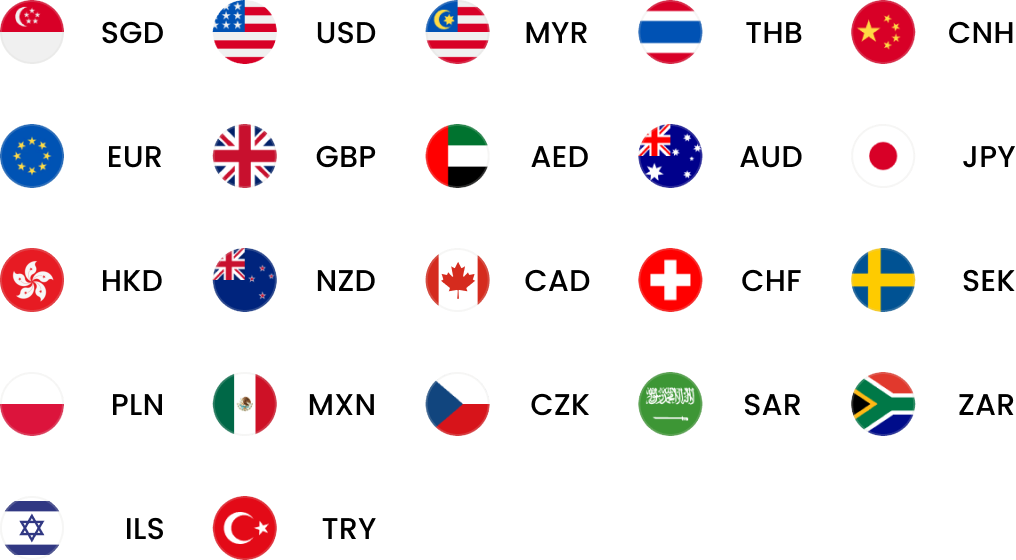
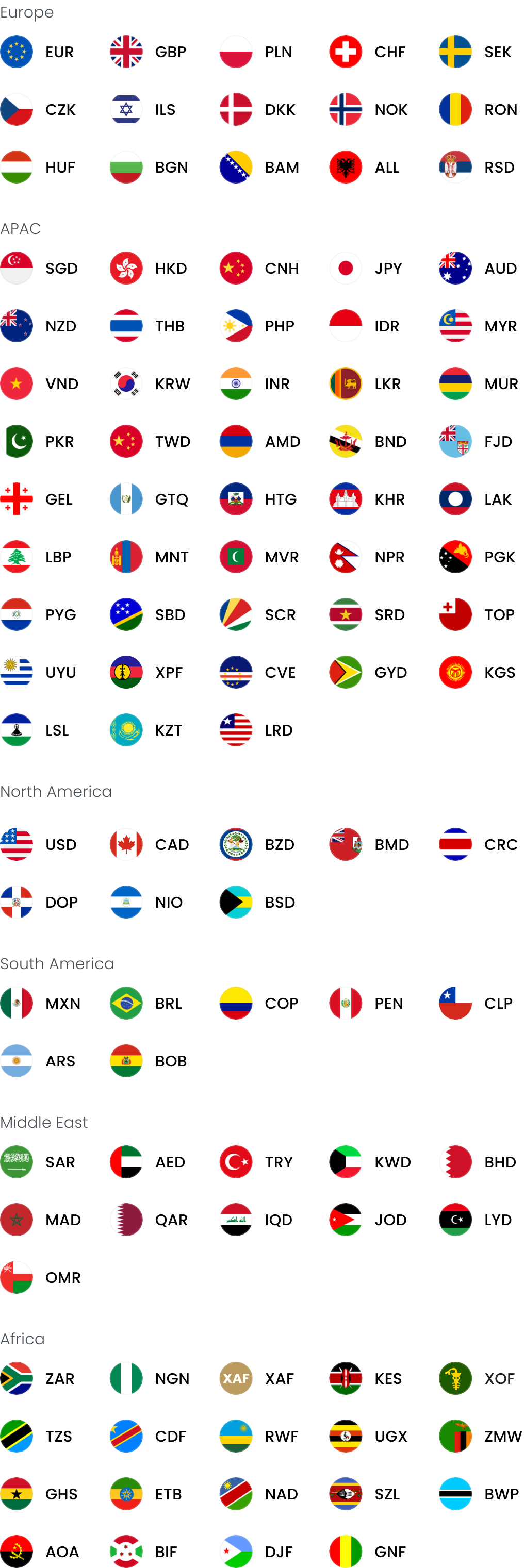
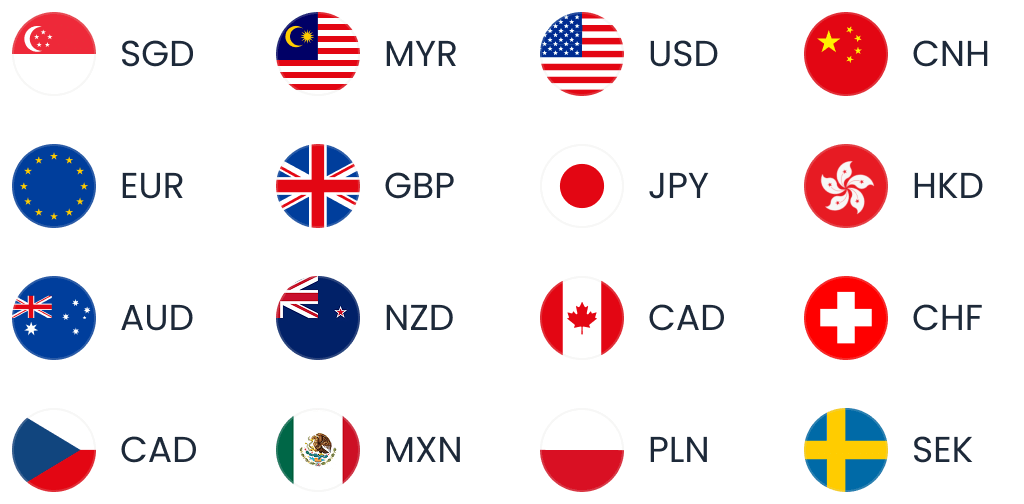
- Open local receiving accounts in 20+ currencies, including SGD, USD, EUR and CNH
- Make international payments in 100+ currencies to 200+ countries and territories
- Hold multi-currency balances to avoid forced conversions
- Access competitive FX rates with transparent pricing
- Track payments and manage internal approval controls in one dashboard
If you collect USD from overseas customers, you can hold USD, convert strategically into CNH when rates are favourable and pay your supplier directly. That reduces hidden FX spreads that traditional banks often embed into conversions.
With WorldFirst, you can send payments directly in USD or RMB, quickly and with full visibility. Most transfers arrive the same day and if your supplier is one of the 150,000+ businesses already using WorldFirst, the payment is instant and free.
How to Pay Your Chinese Suppliers Using WorldFirst
Paying suppliers on 1688.com
For businesses sourcing through 1688.com, China’s largest domestic B2B wholesale marketplace, payment has historically been a source of friction, since many suppliers only accept domestic payments.
But now, WorldFirst has integrated directly with 1688, allowing Singapore businesses to:
- Pay suppliers in CNH without opening a Chinese bank account
- Convert seamlessly into CNH from their World Account
- Complete payments quickly through the integrated World Pay solution
That structure eliminates the need for intermediaries, mainland payment agents or informal workarounds and reduces double conversions between USD and renminbi.
For Singapore importers sourcing directly from factories on 1688.com, that structure provides access to domestic pricing while maintaining payment control and compliance.
In this video, we break down the real differences between 1688 and Alibaba and show you how to source products directly from factories on 1688:
Alibaba vs 1688: The Ultimate Sourcing Guide for 2026
By combining multi-currency balances, regulated payment services, RMB settlement capability and integration with platforms such as 1688, the World Account supports the final stage of your China sourcing framework: paying verified suppliers securely, controlling FX exposure and reconciling transactions with clarity.
Open a World Account for free today and manage China supplier payments with stronger FX control and clearer cash flow visibility.
Sources:
- https://www.singstat.gov.sg/modules/infographics/economy
- https://www.singstat.gov.sg/find-data/search-by-theme/trade-and-investment/merchandise-trade/latest-data
- https://tradingeconomics.com/singapore/imports/china
- https://oec.world/en/profile/bilateral-country/chn/partner/sgp
- https://asean.org/
- https://www.scamshield.gov.sg/files/Scams%20and%20Cybercrime%20Briefs/2025_annual_scams_and_cybercrime_brief.pdf
- https://www.worldfirst.com/sg/blog/international-transactions/cross-border-payment-fees-singapore/
- https://www.worldfirst.com/sg/blog/doing-business-with-china/importing-from-china-to-singapore/
- https://www.worldfirst.com/sg/blog/doing-business-with-china/sourcing-products-from-china/
- https://www.worldfirst.com/sg/
Joan Poon leads marketing across Southeast Asia at WorldFirst, driving growth and brand leadership in key markets including Singapore, Malaysia and the Philippines.
Joan Poon
Author
Head of Marketing SEA, WorldFirst Singapore
Continue reading
Subscribe
The Weekly Dispatch
Get the latest news and event invites. Signup for our weekly update from the worlds of fashion, design, and tech.
Open a World Account for free
Get local currency accounts, fast payments and competitive FX – all in one place.
You might also like
Choose a product or service to find out more
Customer Stories
Latest Happenings
e-Commerce & Online Sellers
Doing business with China
International Transactions
Foreign Currency Exchange
Doing business with China
The simpler way to pay and get paid
Save money, time, and have peace of mind when expanding your global business.