





























If you’re a Singapore business hiring or managing employees overseas, you’re probably asking some of these questions:
- Can I pay international employees in their currency?
- Can I send payment without getting hit by intermediary bank charges and high FX markups?
- How do I ensure international employees get paid on time?
- How do I manage employee payouts and receive funds in one place?
In this guide, we’ll walk through the answers to these questions and share the most common ways businesses handle international payroll.
We’ll start with WorldFirst, a global payments provider that empowers businesses to send payments in 100+ currencies to 210+ countries.
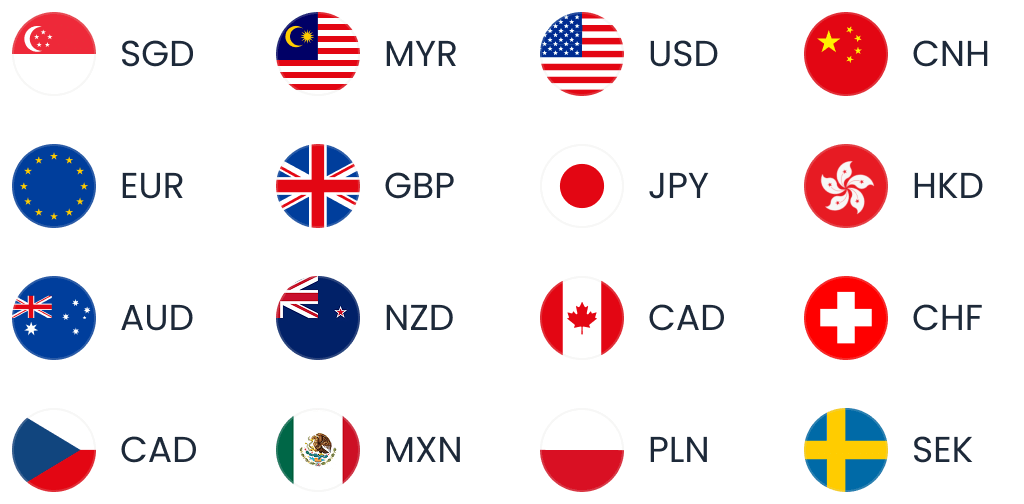
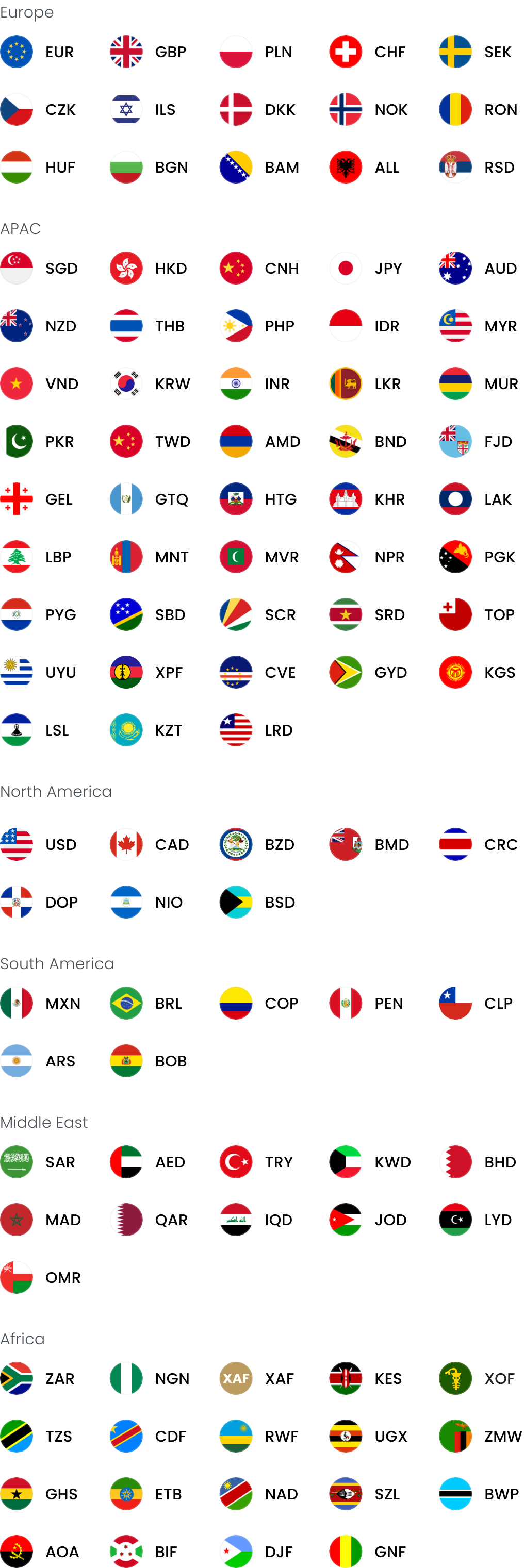
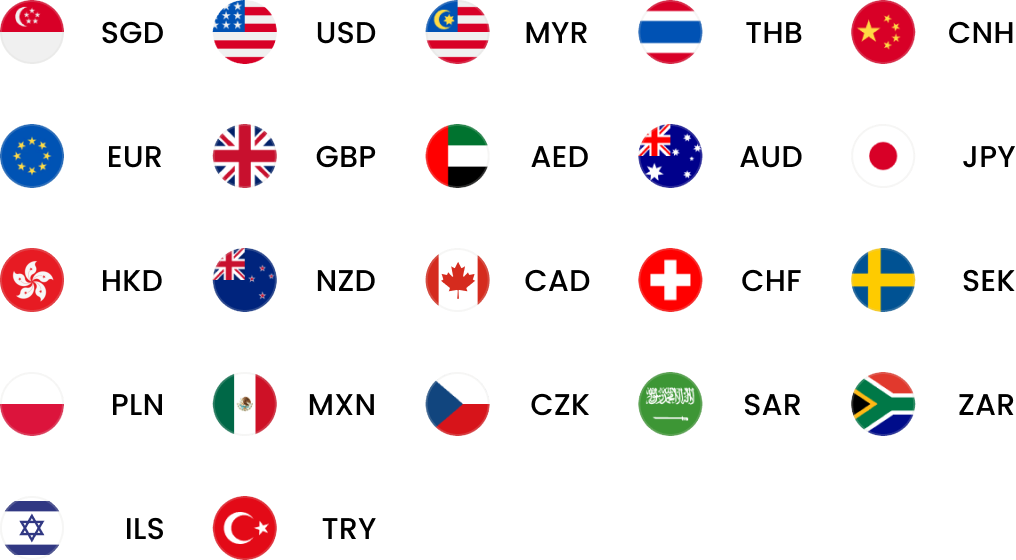
With a World Account, you can hold 20+ currencies in the same place, including SGD, USD, MYR and more. By holding multiple currencies, you can quickly pay employees without unnecessary FX fees.
We’ll cover:
- WorldFirst: The fast, easy way to pay overseas employees
- 4 alternative ways to pay international employees
- 6 common challenges when paying international employees (and some best practices)
- Before you pay: key legal and tax considerations
For a fast, low-cost way to pay international employees, sign up for a World Account today.
WorldFirst: The fast, easy way to pay overseas employees
WorldFirst has been helping businesses pay international employees, suppliers and contractors for over 20 years.
Regulated by the Monetary Authority of Singapore (MAS), WorldFirst allows you to open 20+ local currency accounts so you can pay employees directly from the currencies you hold, as if you were a local.
Since you’re sending money from the currencies you hold, you don’t have to pay FX fees – and 90% of payments arrive within one business day.
It’s also free to open an account, with registration taking just minutes and full setup typically completed within two days.
Here are a few ways you can pay your international employees with a World Account:
Hold funds 20+ currencies and easily pay employees in their own currency
Most countries require employees to be paid in their local currency. That sounds simple, but in practice, it can get complicated. Many businesses either have to:
- Open bank accounts in multiple countries, or
- Constantly convert from SGD into each employee’s currency
WorldFirst offers a simpler, less expensive option.
When you open a World Account, you get access to 20+ local currency accounts – including SGD, CNH, JPY, and GBP. Each one comes with local account details, so you can pay employees through domestic payment rails, as if you were operating in their country.
Here’s how it works: simply transfer money to an employee’s account using local account details (like routing numbers or sort codes).
Not only does this save you from setting up a local bank account, but you also skip intermediary bank fees, conversion fees and FX markups.
You can also track payments in real time and receive instant notifications when funds arrive so when an employee asks, you have a clear, confident answer.
Read more: What’s the cheapest international money transfer method?
Lock in an exchange rate for up to two years, so you know exactly what you’ll pay your employees
When you do need to pay employees using the SWIFT network, WorldFirst offers competitive pricing.
Currency conversions are based on the mid-market rate with a low FX markup of 0.6% on major currencies. That means you’ll always know exactly what you’re paying.
When sending money internationally, even small fluctuations can change your costs from one pay cycle to the next.
For example, if the USD to SGD exchange rate is around 0.79, a US$2,000 payment would cost about S$2,532. If that rate drops to 0.76 the following month, the same payment rises to S$2,632 – an extra S$100 per employee.
Over time, that kind of additional cost adds up.
To take control of this currency risk, WorldFirst offers risk management tools like forward contracts, which let you lock in an exchange rate for up to 24 months.
With just a 5–10% commitment upfront, you can secure a fixed rate and protect your payroll from currency swings.
So instead of reacting to the market each month, you can plan ahead and take control of what you’ll pay.
Batch 200 payments at once and see your total payroll spend in one dashboard
Paying a distributed team often means juggling multiple currencies, timelines and payment statuses – all across different systems.
With WorldFirst, everything lives on one platform. You can send payments to employees in different countries and track them from a single dashboard – giving you a clear, real-time view of what’s been paid, what’s in progress and what’s coming next.
And when it’s time to run payroll, you don’t have to process each payment one by one.
WorldFirst supports batch payments, so you can send up to 200 payouts at once. Upload your payment details, review everything in one place and process the entire run in just a few clicks.
Not only is this easier, but it saves you a ton of time when you’re processing payments bi-weekly or at the end of the month.
4 alternative ways to pay international employees
The right way to pay your international employees depends on your business size, stage of expansion and long-term goals. Here are a few international payment methods that businesses choose:
1. Employer of Record (EOR)
An Employer of Record (EOR) enables you to hire and pay employees in a foreign country without setting up a local entity. The EOR becomes the legal employer on paper and handles compliance, while you manage the employee’s day-to-day work.
In most cases, an EOR supports key employment functions, including tax filing, international payroll, locally compliant contracts, onboarding and offboarding, and benefits such as health insurance and pensions.
Pros: This model makes international hiring faster and more compliant, removes the need to establish a local entity and helps reduce legal risk when operating in unfamiliar markets.
Cons: These benefits often come with higher ongoing costs and less direct control over employee payments, including timing and visibility into when funds will arrive.Expected fees: Monthly service fees often start as low as $179–$200¹ and can exceed $1,000 for complex countries.²
2. Bank wire transfers (SWIFT)
Bank wire transfers, such as SWIFT payments, are a traditional way to pay employees overseas directly from your business bank account to theirs.
While widely used, this method can be slower and less predictable. Payments often pass through multiple intermediary banks before reaching the employee, which can lead to delays and additional fees.
Pros: SWIFT transfers are familiar and widely accepted, work with most banks globally and don’t require setting up a separate platform.
Cons: They often come with slower processing times, limited transparency around total fees and less control over when payments arrive. Costs can also add up quickly due to FX markups and intermediary bank charges.
Expected fees: Transfer fees typically range from S$10–S$30 per payment, but the bigger cost is often hidden in the exchange rate, with FX markups commonly around 2–5%. On top of that, intermediary banks may charge additional fees you end up paying more just to pay an employee, which cuts into your business margins.
3. Online payment service providers
Online payment service providers (like WorldFirst) simplify cross-border payroll by enabling businesses to pay international employees and contractors directly in their local currency from a single platform.
You can pay employees in their local currency, often at better exchange rates, with fewer hidden fees and quicker delivery times. Many also offer multi-currency accounts, batch payments and tools to manage currency exchange rate risk, helping you control costs and run payroll more efficiently as your team grows globally.
Pros: Payments are fast, with same-day transfers available (cut-off times apply). You also benefit from transparent FX markups and the ability to pay employees in their local currency – so you’re not losing extra just to complete a payment.
Cons: These platforms are not typically full payroll or HR systems, and they don’t handle responsibilities like tax filings, employment compliance, payslips or statutory reporting.
Expected fees: Depending on the provider and platform used, you could see S$20–S$100 per employee per month for subscription or platform fees. Some providers may also charge per transfer, though FX markups are generally lower than traditional bank transfers.
4. Setting up local legal entities
Setting up a local legal entity means establishing your own subsidiary or branch in another country so you can hire and pay employees directly as a local employer.
This approach gives you full ownership over hiring, payroll and operations, but also requires you to handle all local compliance, tax obligations and administrative responsibilities. This option is best suited for companies planning a significant, long-term presence with multiple employees in a specific country.
Pros: Setting up a local entity gives you full control over HR and payroll, allows you to hire employees as a local employer and provides greater long-term stability in the market.
Cons: It is often costly to set up and maintain, requires in-depth legal, tax, and HR expertise and can involve long setup timelines (sometimes taking months or even years) along with ongoing administrative overhead.
Expected fees:
Setup costs can range from S$13,000–S$135,000, with ongoing annual maintenance, compliance and staffing costs that can run significantly higher depending on the country and scale.³
6 common challenges when paying international employees (and some best practices)
When businesses start paying international employees, they often run into a familiar set of challenges. Here are some of the most common challenges, and some best practices to help you avoid them.
1. Currency volatility and FX costs
Exchange rates fluctuate, and hidden markups (often 3–4%) can increase payroll costs. If you’re converting currency every time you pay employees, those costs compound quickly and can make forecasting difficult.
Best practice: Find a solution that lets you send from currencies you already hold so you’re not converting every payment. Focus on the exchange rate, not just transfer fees, and find tools that let you control the rate you convert at.
2. Payment delays and intermediary fees
International wires can take several days and often pass through intermediary banks, which may deduct fees along the way. This can result in employees receiving less than expected or being paid late.
Best practice: Use local payment rails where possible to reduce the number of banks involved, speed up delivery and improve predictability.
3. Scaling from 1–2 employees to a global team
What works for a couple of international hires (manual wires, ad hoc processes) breaks quickly as you grow since more payments and more currencies equals more room for error.
Best practice: Set up scalable processes early: batch payments, standardise workflows and use a platform like WorldFirst that can handle volume without adding complexity.
4. Payroll timing vs FX timing misalignment
Payroll is fixed, but FX markets move constantly. Converting at the moment you run payroll can expose you to unnecessary volatility.
Best practice: Instead of being at the whim of the exchange rate fluctuations, use risk management tools to lock in your rate ahead of time. This keeps your costs predictable, so you know exactly what you’ll spend each time you send an employee payment.
5. Fragmented systems and manual processes
Payroll often sits in one system and payments in another – with spreadsheets filling the gaps. This leads to repetitive manual work, a higher risk of errors and inefficiencies every pay cycle.
Best practice: Find solutions that give you more than just payments. Look for providers that let you receive and hold multiple currencies, pay from those currencies and track everything in one place (plus give you management tools – like risk management or tailored payment authorisations for team members).
6. Lack of visibility and control
When systems are fragmented, it’s difficult to track total payroll spend, FX exposure and payment status in real time. This makes it harder to manage costs as you scale.
Best practice: Use a centralised solution that gives you visibility into payments and overall cash flow so you can confidently make decisions as your team grows.
Before you pay: Key legal and tax considerations
Before you finalise how you’ll pay international employees, it’s worth pausing to check the basics on compliance. When you hire across borders, you’re often dealing with multiple sets of rules, and getting this right protects your business from unnecessary risk.
At a high level, here are a few things to be aware of:
- Employee vs contractor classification: Rules vary by country, and misclassifying someone can lead to penalties or backdated taxes. It’s important to understand how each country defines employees vs contractors before you hire.
- Permanent establishment risk: Hiring directly in another country could create a taxable presence there, meaning your business may need to register and pay corporate taxes locally. This is why some Singapore businesses choose to use an Employer of Record (EOR) to stay compliant without setting up a local entity.
- Tax withholding and treaties: You may have obligations in both Singapore and your employee’s country, depending on how they’re engaged. Double taxation agreements can help prevent being taxed twice, but the rules vary.
- Local employment and tax requirements: This can include working hours, paid leave and whether taxes need to be withheld and reported locally.
Here’s an example of how this could look: If you’re a Singapore-based company hiring a developer in Australia, you can’t assume the same rules apply. Australia has strict definitions around employee vs contractor status, mandatory superannuation (pension) contributions and specific termination requirements. If you hire them as a contractor but they meet the criteria of an employee, you could face backdated taxes and penalties.
Do some initial research, and if anything is unclear, speak with a qualified advisor or check directly with the Inland Revenue Authority of Singapore. It’s much easier to get this right up front than to fix it later.
Start paying international employees with WorldFirst
Paying overseas employees doesn’t have to be complicated or expensive. When you choose the right payment method, you can easily cut unnecessary costs, simplify your payments and avoid overdue payments.
When you sign up for a free World Account, here are just some of the benefits you’ll find:
- Send payments in 100+ currencies to 200+ countries and regions
- Access transparent FX markups at a low 0.6% on major currencies
- Make payments in 20+ currencies with zero FX fees
- Pay multiple employees at one time with up to 200 batch payments
- Access local payment rails so 90% of payments arrive in one day
Find an easier, faster way to pay your international employees with WorldFirst.
FAQs
How can I reduce FX costs when paying foreign employees?
To reduce FX costs in your payroll process, limit how often you convert currency and avoid hidden markups. Holding balances in the currencies you need – and using providers with transparent, low FX fees – can help you save over time, especially as you scale your team of foreign employees or independent contractors.
How long does global payroll take?
It depends on how your payroll system is set up and how payments are sent. SWIFT transfers typically take 3–6 business days due to intermediaries and processing times. Payments sent through local rails are much faster (often same-day), with most arriving by the next business day.
How much does it cost to pay a global workforce?
Costs vary based on your setup, including FX markups, transfer fees, and service charges. EOR services can range from around $179 to over $1,000 per employee per month, while bank transfers may include hidden fees. Look for transparent pricing, which helps you better predict and control spend when paying international employees, international contractors and dealing with global employment overall.
What should I know about employment laws and employment contracts when hiring foreign employees?
Employment and labor laws vary by country and can affect everything from working hours and paid leave to termination requirements. In many cases, you’ll also need locally compliant employment contracts that reflect these rules. Before hiring international remote workers, take time to research local regulations or consult an expert to ensure you’re fully compliant.
What should I know about tax regulations and employee benefits when hiring international employees?
Tax regulations and local tax laws vary by country and can directly impact payroll, withholding and reporting requirements. Employers may also need to account for statutory employee benefits and contributions tied to local labor laws. Understanding these requirements upfront helps ensure compliance and avoids unexpected costs when hiring internationally.
Sources:
- https://hirewithcolumbus.com/pricing/
- https://www.remofirst.com/post/employer-of-record-cost
- https://workmotion.com/cost-of-setting-up-legal-entity/


![Revolut Business Card review Singapore [2027]: Features, fees & more](https://mdn.marmot-cloud.com/worldfirst/sites/9/2026/09/20261001002258848-300x200.webp)