





























To protect your business from currency risk in Singapore, you need to control when you convert currencies, match foreign currency income with expenses and use tools such as forward contracts or multi-currency accounts to limit exposure to exchange rate movements.
Singapore is the third-largest FX centre globally, with average daily foreign exchange trading volume reaching US$1.485 trillion in April 2025.
Currency risk shows up in everyday payments. A supplier invoice can cost more by the time you pay it, and overseas revenue can lose value before it reaches your account. Over time, that affects your margins, pricing, and cash flow.
You manage this by deciding when to convert funds, what currencies to hold, and how to structure payments so costs stay more predictable.
This guide explains how to hedge currency risk, with clear steps you can apply to protect your margins and manage cross-border payments more effectively.
Key takeaways:
- Currency risk directly affects your margins and cash flow: Exchange rate movements change the real cost of supplier payments and the value of overseas revenue. Even small shifts can add up and impact your profitability over time
- Singapore businesses face constant FX exposure: Strong reliance on global trade and currencies like USD, RMB and EUR means exchange rate movements are part of daily operations, not occasional events
- Hedging is about control, not eliminating risk: You reduce uncertainty by deciding when to convert, what currencies to hold and how to structure payments
- Use a mix of strategies based on your cash flow: Natural hedging, forward contracts, options and smart timing all serve different purposes. The right approach depends on how predictable your payments are and how much flexibility you need
- A multi-currency account makes hedging practical day to day: Holding and managing funds in different currencies helps you avoid unnecessary conversions and control timing
Open a World Account to hedge currency risk and take control of your international payments today.
What is currency risk?
Currency risk is the possibility that exchange rate movements change the value of a transaction between the time you agree to it and the time you complete it, affecting the final cost or revenue in your base currency.
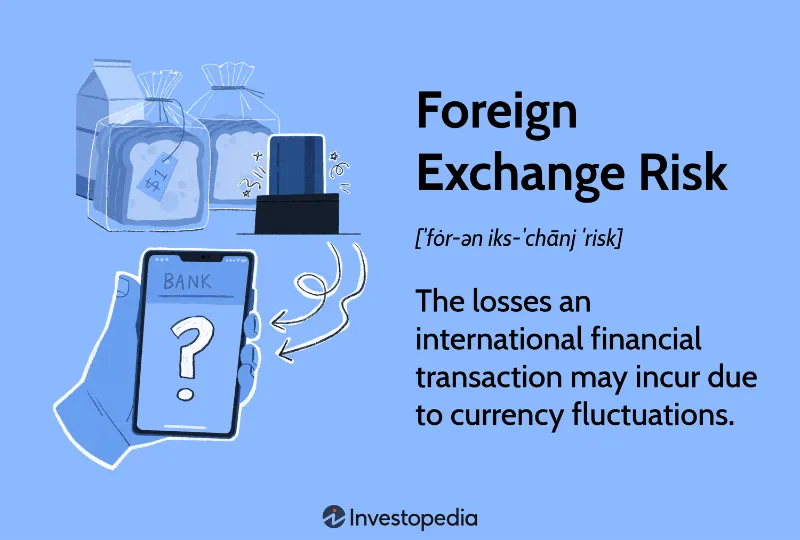
It occurs when your business earns, pays or holds money in different currencies. A company that invoices in US dollars but operates in Singapore dollars or pays suppliers in Chinese yuan while receiving revenue in SGD, relies on the exchange rate at the point of settlement, not at the point of agreement.
Even small rate movements can reduce profit or increase costs. The longer the time between agreeing on a price and completing payment, the more exposure builds into the transaction.
If your business in Singapore trades across borders, managing currency risk is essential to keeping margins stable and cash flow predictable.
Why Singapore businesses face currency risk
Singapore businesses face currency risk because the country’s economy relies heavily on international trade, which exposes companies to ongoing exchange rate movements across major global markets.
In 2024, Singapore’s exports to China and the United States reached about US$70.7 billion and US$44.0 billion, with Europe also accounting for significant trade volumes. These flows reflect how closely local businesses connect with overseas markets, suppliers and customers every day.
Even though the Singapore dollar (SGD) is managed within a policy band by the Monetary Authority of Singapore, it’s not immune to shifts. MAS focuses on stability and has made clear it stands ready to curb excessive volatility when needed.
The USD/SGD exchange rate rose to 1.2824 on 20 March 2026, up 0.37% from the previous session, highlighting how frequently the currency adjusts in response to market conditions. The policy framework helps, but even modest currency moves can still affect your margins.
Global conditions continue to drive those movements. Interest rate changes, trade developments and geopolitical events can shift currency markets quickly, often without warning.
For Singapore businesses operating across borders, these changes translate into real financial impact that needs active management.
How to hedge currency risk
Hedging currency risk means managing how exchange rate movements affect your costs, revenue and cash flow so your results stay predictable.
For many businesses, that’s already standard practice. Around 81% of companies globally hedge their FX exposure, while three-quarters of those that don’t hedge report losses from currency movements. Leaving currency exposure unmanaged often leads to avoidable costs.
For Singapore businesses, the need is even more immediate. The USD/SGD pair accounts for about 63% of cross-currency flows in local transactions, which means many companies face direct exposure to movements in one of the most traded currency pairs.
Common strategies include:
1. Natural hedging
Natural hedging works by structuring your cash flow so that currency exposure offsets itself as much as possible.
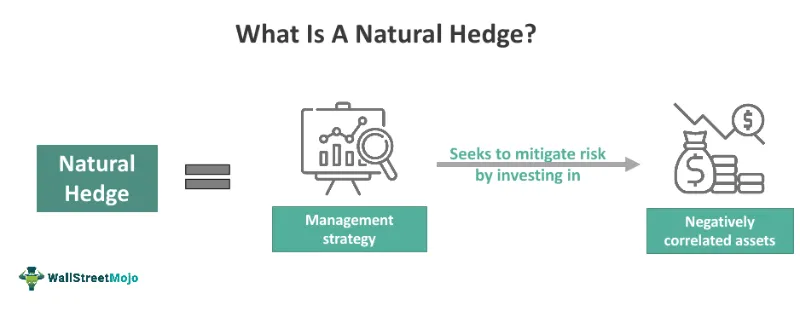
You match the currency you earn with the currency you spend. If you invoice customers in USD and incur USD costs, you can use those funds directly instead of converting them back and forth between SGD.
Some businesses also negotiate contracts in SGD or a shared currency, such as USD, to reduce the need for currency conversion.
Why it works:
- Removes unnecessary conversions and their associated costs
- Reduces sensitivity to exchange rate movements
- Simplifies how you manage cross-border cash flow
How to apply it:
- Map your revenue by currency, not just by market
- Break down supplier payments by currency
- Align receivables and payables in the same currency where possible
Using your own cash flow as a hedge makes this one of the most cost-effective approaches available. The main limitation is practical.
Customers and suppliers may insist on their own currency, which means full alignment isn’t always possible. Even partial matching still reduces exposure and improves control.
2. Forward contracts
Forward contracts address one specific risk: uncertainty around known future payments or receipts.
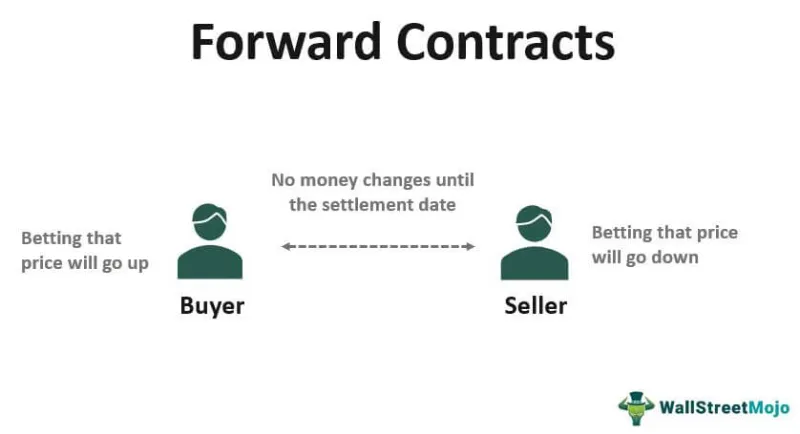
They let you lock in an exchange rate today for a future transaction, so you know exactly what you’ll pay or receive in SGD, regardless of market movements.
Best used when:
- You have confirmed invoices or contracts
- Payment amounts and dates are predictable
- Margins are sensitive to currency movements
How businesses use them:
- Secure rates for large supplier payments
- Protect margins on agreed sales contracts
- Build reliable cost forecasts
For example, a business importing goods can lock in a rate for EUR or USD payments months in advance, ensuring that planned costs don’t increase if the market moves.
The key advantage is price certainty. Forward contracts typically don’t require an upfront premium, apart from a small margin built into the rate.
You fix both the amount and the timing, so you lose flexibility once you lock the contract. During volatile periods, that trade-off helps protect your budget and avoid unexpected cost increases.
3. Currency options
Currency options give you the right, but not the obligation, to exchange currency at a specified rate.
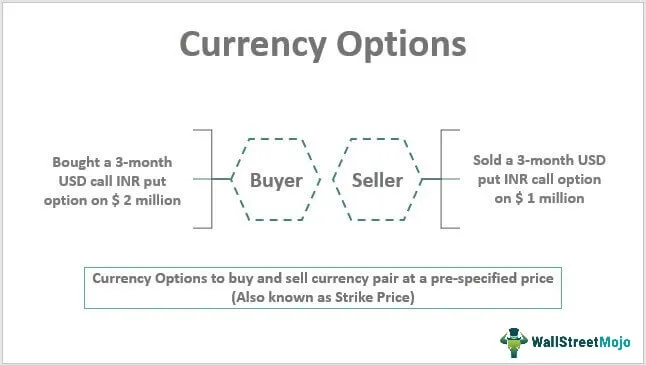
You pay an upfront premium for that flexibility. If the market moves against you, you use the agreed rate. If it moves in your favour, you can use the better market rate instead.
Best used when:
- Payment timing is uncertain
- Amounts may vary
- Markets are volatile
These options work best when you want protection without locking yourself into a fixed rate. For example, if you’re not sure when or how much you’ll need to pay, you can use an option to limit how much the cost can rise while still benefiting if the rate moves in your favour.
4. Spot conversions with a strategy
Spot conversions are the most common way to exchange currency, but many businesses handle them reactively.
Converting funds only when a payment is due leaves you exposed to whatever rate is available at that moment. A more structured approach improves outcomes without adding complexity.
What to change:
- Convert in stages instead of all at once
- Track rate trends and set target levels
- Avoid last-minute conversions under pressure
Managing timing helps you avoid consistently converting at unfavourable rates. You may not always get the best rate, but you avoid locking in the worst one.
5. Multi-currency accounts as a practical hedge
A multi-currency account gives you direct control over how and when you manage foreign currency.
Instead of converting funds immediately, you can receive, hold and spend money in multiple currencies, deciding when conversion makes sense.
Why this matters:
- Removes the need for forced, time-sensitive conversions
- Allows you to wait for more favourable rates
- Supports natural hedging across your cash flow
For example, a Singapore business can collect USD from overseas customers, hold those funds and use them to pay suppliers or convert when rates are more favourable. That approach avoids repeated conversions and reduces exposure to short-term market swings.
Control over timing is what makes this approach powerful. It also prevents the double-conversion problem, where funds move through multiple currencies before reaching their destination, thereby increasing costs at each step.
Choosing a hedging strategy: step-by-step guide
There is no single solution that fits every business, so the goal is to choose the right mix based on how predictable your cash flow is and how much flexibility you need.
A simple way to think about it:
- If your payments are predictable, lock in certainty
- If timing or amounts are unclear, keep flexibility
- If you want control without commitment, manage funds in the right currency
Follow these steps to choose the right hedging approach for your business:
Step 1: Assess your exposure
Start by listing your foreign currency inflows and outflows. Look at where money comes in, where it goes out and in which currencies.
For example, a Singapore importer may have regular USD payments for suppliers and steady USD revenue from overseas customers. That creates a clear view of where currency risk sits in the business.
Step 2: Check how predictable your cash flow is
When you know the amounts and timing, forward contracts give you certainty. You lock in a rate and protect your costs from market movements.
Less predictable cash flow requires greater flexibility. Options or holding funds in foreign currency let you stay flexible while still limiting downside risk.
Step 3: Set your target rates
Define what exchange rate works for your business. That gives you a clear benchmark for when to act.
For example, you might lock in a rate when SGD reaches a level that protects your margin. Having a target rate helps you act with discipline rather than react to short-term movements.
Step 4: Balance cost and flexibility
Each method comes with a trade-off.
Forward contracts give you certainty but limit flexibility. Options offer flexibility but come with a cost. Holding funds in a multi-currency account gives you control over timing without locking anything in.
Choose based on what matters most for each transaction. Some payments need certainty, while others benefit from flexibility.
Step 5: Combine methods where needed
Most businesses don’t rely on a single approach. A more practical setup looks like this:
- Use forward contracts for large, fixed payments
- Hold foreign currency for ongoing or uncertain needs
- Apply options where timing or amounts are unclear
Combining strategies helps you manage risk without overcomplicating your process. It also ensures you don’t lock in decisions too early or take on unnecessary exposure.
How WorldFirst helps Singapore businesses hedge currency risk
Currency risk is becoming harder to ignore. More than 60% of companies plan to increase or extend their currency hedging in response to rising geopolitical and market uncertainty. For Singapore businesses trading across borders, managing FX exposure now plays a direct role in protecting margins and keeping cash flow predictable.
WorldFirst helps you manage that risk through a World Account designed for international business. WorldFirst is not a bank, but a regulated payment service provider focused on helping businesses move, manage and control money globally.
With a World Account, you can:
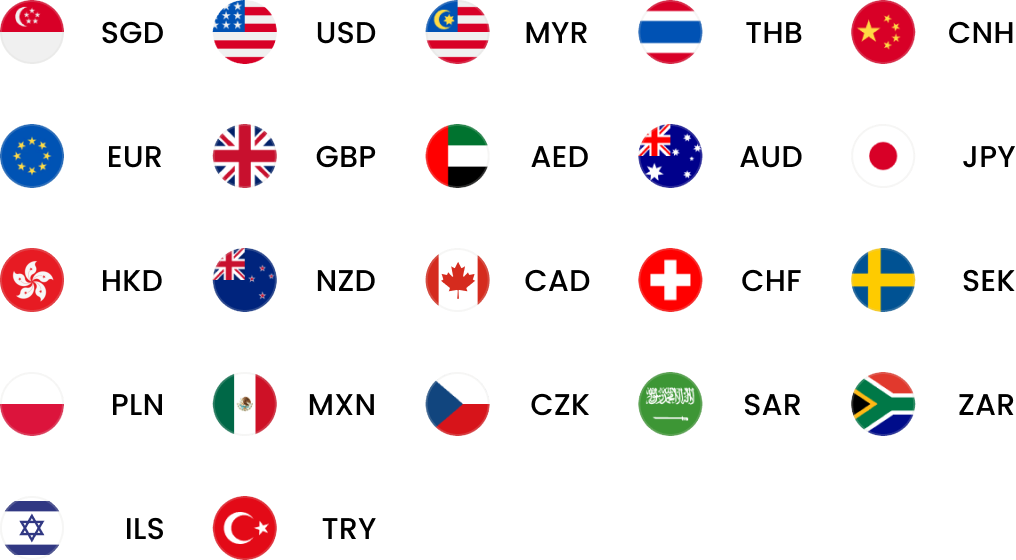
- Use local account details to receive funds in 20+ currencies with zero fees
- Hold balances in multiple currencies and convert when rates work for your business
- Send payments in 100+ currencies to 210+ countries and territories, with funds typically arriving within hours
- Get paid directly from 130+ marketplaces and manage all your marketplace earnings in one account
- Support natural hedging by matching incoming and outgoing currency flows
- Lock in exchange rates with forward contracts to secure future payments, protect margins and plan costs with certainty
- Integrate with Xero and NetSuite to streamline accounting, reconciliation and financial management
That gives you more control over timing, better visibility across currencies and less reliance on manual work or disconnected tools.
Real businesses in Singapore already use this approach to reduce costs and improve efficiency:
- OSG (wholesale retail) moved to WorldFirst and gained multi-currency accounts in USD and CNY, enabling faster supplier payments. They reduced FX fees by around 40%, saving over SGD 30,000 per year, while also speeding up transactions by 35%
- KeaBabies (e-commerce) uses WorldFirst receiving accounts to collect payments in 20+ currencies with local details, removing multiple bank fees and helping them retain more revenue while simplifying reconciliation
- Dreamcore (PC retailer) highlighted WorldFirst’s competitive fees and transparent rates, which enabled faster international payments and greater confidence in managing global trade
The impacts are clear: better FX control, lower costs and a more predictable way to manage international payments.
Open a World Account and hedge currency risk with more control, lower costs and a smarter way to manage global payments.
FAQ
1. Should I hedge every transaction?
Not always. Smaller or short-term transactions may not justify the cost. Hedging works best for larger, predictable payments or during periods of higher volatility.
2. What are the most common mistakes businesses make when managing currency risk?
Many businesses wait until the last minute and convert at whatever rate is available. Others convert everything too early, losing flexibility. Relying only on spot conversions also increases exposure. A better approach is to plan and stay in control of when you convert.
3. What currencies should I focus on?
Start with the currencies you use most in your business. Singapore companies often deal heavily in USD, RMB and EUR, depending on their suppliers and customers. Since your accounts are usually in SGD, focus on pairs like USD/SGD or CNY/SGD, where exchange rate movements can affect your margins.
Sources:
- https://www.mas.gov.sg/news/media-releases/2025/singapore-strengthens-position-as-third-largest-global-fx-centre
- https://tradingeconomics.com/singapore/exports-by-country
- https://english.news.cn/asiapacific/20250403/38d3a255f5af4d379a735c96ec3d4908/c.html
- https://tradingeconomics.com/singapore/currency
- https://www.reuters.com/markets/currencies/geopolitical-angst-prompts-over-60-companies-hedge-fx-longer-survey-shows-2025-03-28/
- https://www.businesstimes.com.sg/companies-markets/middle-east-conflict-rages-dbs-urges-smes-hedge-least-half-their-fx-exposure-not-time-market
- https://www.worldfirst.com/sg/


![Revolut Business Card review Singapore [2027]: Features, fees & more](https://mdn.marmot-cloud.com/worldfirst/sites/9/2026/09/20261001002258848-300x200.webp)