





























The main disadvantages of a business bank account are fees, minimum balance requirements, extra paperwork, transaction limits, FX costs, slower international payments and account reviews that can temporarily delay access to funds.
A business bank account can make it easier for Singapore companies to separate business and personal money, track expenses and manage everyday payments. But not every account aligns with how your business actually operates.
For SMEs in Singapore, those details matter. SMEs make up 99% of Singapore businesses and employ 71% of the workforce, so even small account fees, payment delays and FX costs can put pressure on day-to-day cash flow.
In this guide, we’ll explain the main disadvantages of a business bank account, what to check before you apply and how a multi-currency account can help reduce common cross-border payment issues.
Key takeaways
- Business bank accounts can cost more than expected because fees, minimum balance rules, transfer charges and FX margins can add up quickly
- Minimum balances can limit cash flow by keeping money tied up when your business may need it for stock, payroll, suppliers or growth
- International payments can be slower and more expensive when transfers involve bank fees, intermediary charges, FX costs or longer processing times
- FX costs can reduce margins if your business imports goods, pays overseas suppliers or receives revenue in foreign currencies
- WorldFirst can help reduce cross-border payment friction by giving Singapore businesses one platform to collect, hold, convert and send money across currencies
Open a World Account today to manage international payments with more control and fewer avoidable costs.
What is a business bank account and why is it important?
A business bank account is a dedicated account for managing a company’s money, including customer payments, supplier bills, payroll, expenses and business records.
It gives your business a cleaner way to handle money. Instead of mixing personal and company spending, everything stays in one place, making it easier to see what came in, what went out and how much cash you have available.
The disadvantages of a business bank account are easiest to see when a business in Singapore moves beyond simple local payments.
A company that mainly trades locally may only need low account fees, simple transfers and clear expense tracking. But if you buy from overseas suppliers, sell through marketplaces or receive payments in different currencies, you’ll need to look more closely at FX costs, transfer speeds and cross-border payment support.
That’s why the right account should match how your business actually works, not just meet a basic banking requirement.
9 disadvantages of a business bank account in Singapore
A business bank account can help manage company money, but the wrong account can also create extra costs, delays and limits.
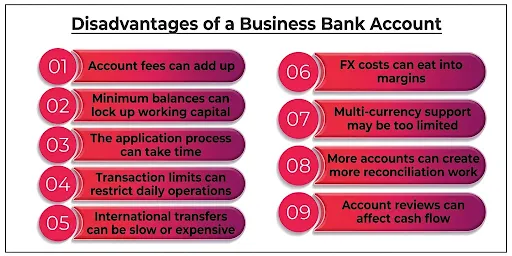
The disadvantages become clearer when your business handles foreign currencies, overseas suppliers, marketplace payouts or higher payment volumes.
1. Account fees can add up
Business bank accounts can include more charges than personal accounts. Common fees include:
- Monthly or annual account fees
- Fall-below fees
- Cheque and branch transaction fees
- International transfer charges
- Foreign currency conversion costs
A low monthly fee doesn’t always mean the account is cheap. Transaction charges, FX margins, overseas payment fees and minimum balance rules can make the total cost much higher than expected.
For businesses with frequent payments, small account charges can quickly become a regular drain on cash flow.
2. Minimum balances can lock up working capital
Some business accounts require a minimum balance. If the balance drops below that level, the account may trigger a fall-below fee.
That can be difficult for SMEs with uneven cash flow. Money kept in the account to avoid fees can’t be used for stock, payroll, supplier deposits, marketing or equipment.
A high minimum balance can make the account feel restrictive, especially when cash is needed elsewhere in the business.
3. The application process can take time
Opening a business account usually involves more checks than opening a personal account. Providers may ask for:
- ACRA records
- Director and shareholder details
- Beneficial ownership information
- Invoices, contracts or website details
- Expected transaction volumes
That can slow down account opening, especially if the business has multiple owners, overseas shareholders or cross-border trading.
For newer companies, the process can feel heavier than expected because the provider may need more evidence before approving the account.
4. Transaction limits can restrict daily operations
Business accounts may include daily transfer limits, approval rules, free transaction allowances, bulk payment limits and manual processing fees.
Those limits can become frustrating as payment volume grows. MAS stated that over 300,000 businesses in Singapore are registered to use PayNow to make and receive payments, which shows how common fast local payments have become for Singapore businesses.
A business that pays many suppliers, contractors or marketplace partners may face additional charges, approval delays or manual work to process routine payments.
5. International transfers can be slow or expensive
A standard business account may work well for local SGD payments, but cross-border payments can create more friction.
Cross-border transfers may involve:
- Telegraphic transfer fees
- Intermediary bank charges
- Recipient bank charges
- FX costs
- Longer settlement times
That matters in a trade-heavy market. Enterprise Singapore reported that Singapore’s total merchandise trade reached SG$1.3 trillion in 2024, up 6.6% from 2023.
For importers, exporters and suppliers, slower overseas transfers, bank charges and unclear payment timing can create real cash flow pressure.
6. FX costs can eat into margins
FX costs are easy to miss because providers don’t always show them as a separate fee. The transfer fee may look small, but the exchange rate margin can have a bigger impact on the final amount.
That matters in Singapore, where currency movement plays a major role in business payments. MAS reported that Singapore’s average daily FX trading volume reached US$1.485 trillion in April 2025, up 60% from April 2022, which shows why FX costs aren’t just a small side issue for businesses that trade across borders.
FX costs can affect businesses that import stock, pay overseas contractors, collect foreign-currency revenue or sell through international marketplaces.
Automatic conversions can also add cost. If your account converts foreign-currency revenue into SGD right away, you lose control over timing. If you later need to pay a supplier in that same currency, you may pay for another conversion.
7. Multi-currency support may be too limited
Some business accounts support international transfers, but don’t offer enough flexibility for companies that trade across markets.
A business may be able to send foreign currency, but not hold it. It may be able to hold a few currencies, but not receive local account details.
Some accounts only support major currencies, which can be limiting for importers, exporters and marketplace sellers.
8. More accounts can create more reconciliation work
Some businesses end up using one account for SGD, another for USD, another for marketplace payouts, plus separate tools for cards, FX and supplier payments.
That setup can create extra admin. Your team may need to review more statements, log in to more platforms and match more transactions manually.
As payment flows grow, reconciliation can take longer and mistakes can become harder to spot.
9. Account reviews can affect cash flow
Banks and payment providers may review unusual transactions, large transfers, new payment routes or activity that doesn’t match the expected business profile.
Those checks can lead to document requests, payment delays or temporary account restrictions.
Even when the business is legitimate, reviews can disrupt cash flow if a supplier payment, customer receipt or marketplace payout gets held up at the wrong time.
How to reduce the disadvantages of a business bank account
You can reduce the disadvantages of a business bank account by comparing the full cost, matching the account to your payment flow, checking currency support early and using the right payment tool for local and international transactions.
1. Compare the full fee structure
To reduce account costs, compare the full fee structure, not just the monthly account fee.
Look at the charges that match how your business actually uses the account:
- Monthly and annual account fees
- Minimum balance and fall-below fees
- Local transfer fees
- International transfer fees
- Intermediary bank fees
- FX margins
- Card fees
- Account closure fees
- Branch or manual processing fees
A small fee can become expensive when it applies every month or across many payments.
2. Match the account to your payment flow
The right business account should align with how money flows through your company.
A local services company may only need simple collections, payroll, tax records and clear expense tracking. An importer may need to pay suppliers in China, the US or Europe. An e-commerce seller may need marketplace collections, local-currency account details and stronger FX control.
Before choosing an account, map your payment flow:
- Where do customers pay from?
- Which currencies do you receive?
- Which currencies do you pay?
- How often do you convert funds?
- How many suppliers do you pay each month?
- Do you sell on marketplaces?
- Do you need team approvals?
3. Check currency support before you need it
Currency support can become important faster than expected, especially if your business starts selling overseas, sourcing from a new supplier or receiving marketplace payouts.
A business may start with SGD payments, then add a US supplier, a China sourcing partner, a European customer or a new sales channel. If the account can’t support those flows properly, you may experience additional conversions, higher FX costs or slower payments.
Before opening an account, check:
- Which currencies can you receive
- Which currencies can you hold
- Which currencies can you pay in
- What local account details are available
- What FX margin applies
- How easily can you withdraw funds to your bank account
If your business already trades internationally, currency features shouldn’t be an afterthought. They directly affect cost, timing and cash flow.
How WorldFirst helps reduce the disadvantages of a business bank account
A local business bank account may still handle everyday banking needs in Singapore.
But if your business sells internationally, sources products overseas or receives marketplace payouts, WorldFirst can help reduce some of the costs and admin linked to cross-border payments.
WorldFirst isn’t a bank. In Singapore, WorldFirst (Singapore) Merchant Services Pte. Ltd. is licensed as a Major Payment Institution under the Payment Services Act 2019 by the Monetary Authority of Singapore, with permissions covering account issuance, domestic and cross-border money transfer and e-money issuance.
World Account advantages for Singapore businesses:
- Lower account admin from day one: WorldFirst lists no set-up fees, no subscription fees, no monthly charges and no minimum balance requirement
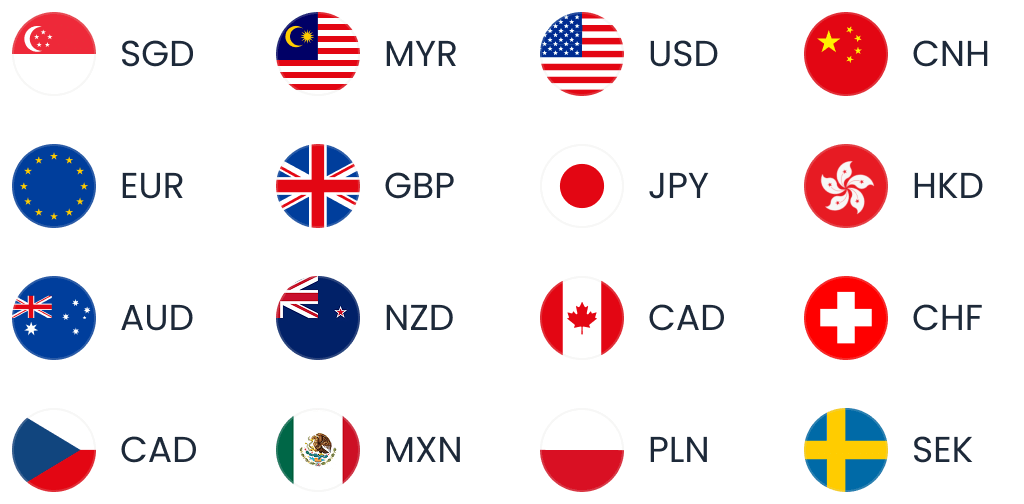
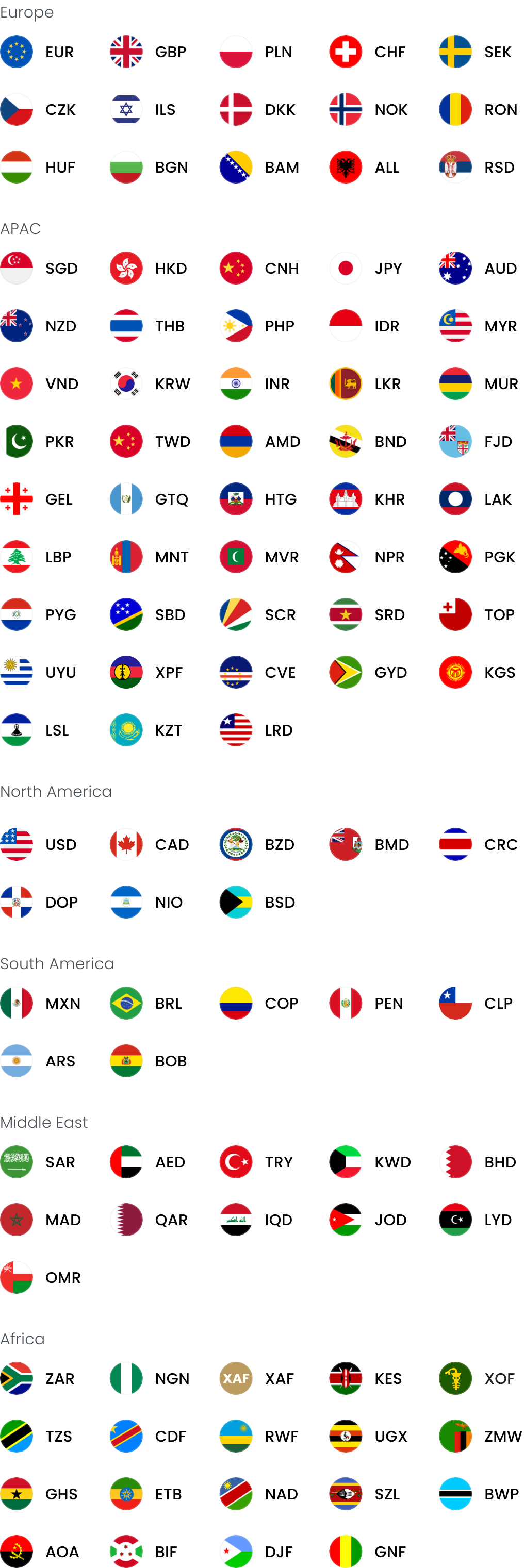
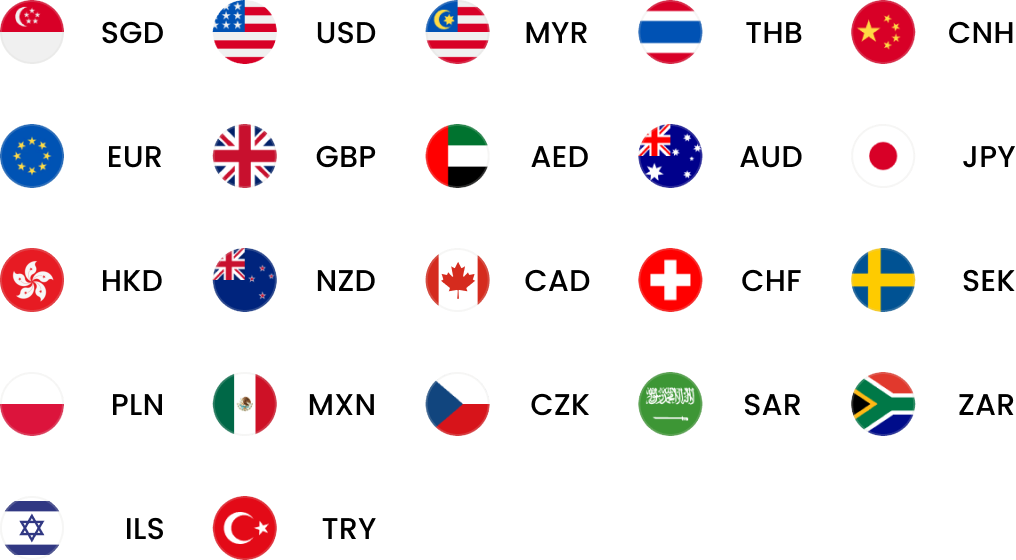
- More control over incoming international payments: Businesses can get local account details in 20+ currencies, including SGD, MYR, THB, USD, CNH, EUR, GBP, AED, AUD and HKD
- Less pressure to convert money straight away: The World Account lets businesses hold 10 currencies in a single multi-currency account based in Singapore. That can help you manage FX timing instead of converting every foreign-currency receipt into SGD as soon as it arrives
- Clearer payment costs before you send money: You’ll see transfer fees upfront when using your WorldFirst Account. Its Singapore pricing page also lists free SGD local transfers, US$1 local transfers for selected currencies, SWIFT transfers from USD5 and currency conversion rates up to 0.6% for major currencies
- Support for supplier payments across currencies: Businesses can hold funds in multiple currencies and send payments in 100+ currencies when they’re ready to make a withdrawal or payment
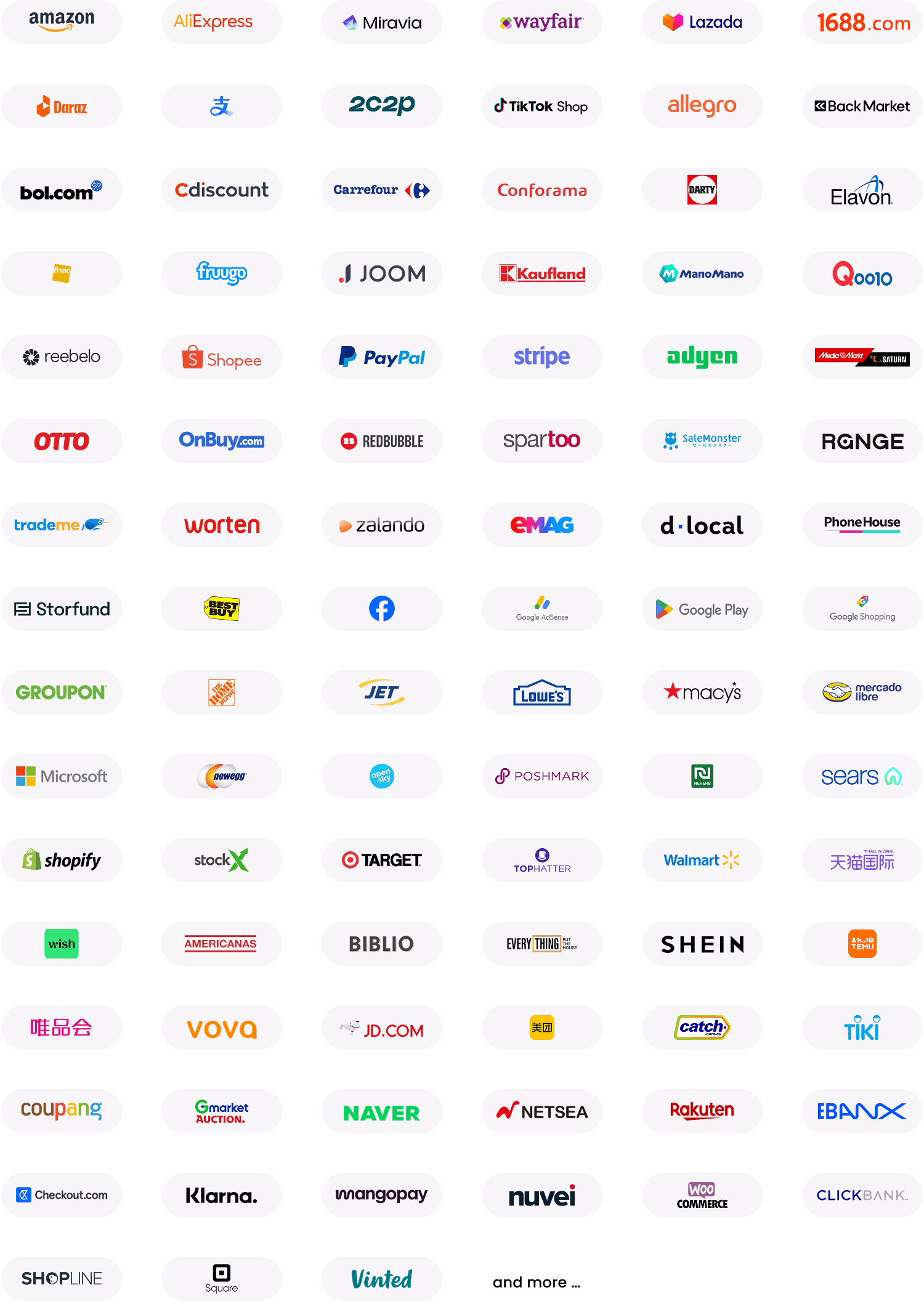
- Simpler marketplace collections: WorldFirst supports payouts from 100+ marketplaces and 30+ payment gateways in one multi-currency account, including Amazon, AliExpress, Shopee and PayPal
- Less reconciliation work: WorldFirst supports accounting integration with Xero and NetSuite, as well as access and permissions for multiple team members. That can help finance teams, founders and accountants keep better control as payment flows grow
WorldFirst can help reduce some of the disadvantages of a business bank account while keeping the advantages that matter most: clearer control, easier tracking and smoother day-to-day cash flow.
Open a World Account today to pay overseas suppliers, manage currencies and receive international funds from one platform.
FAQ
1. Do I need a business bank account in Singapore?
You don’t always need one by law, but a business bank account is usually the cleaner option. It helps separate personal and company money, track payments, manage expenses and keep better records for accounting and tax.
2. Can I use my personal bank account for business in Singapore?
You can in some cases, but it can create problems as your business grows. Mixing personal and business money makes bookkeeping harder, can look less professional and may violate your bank’s account terms if you use it heavily for business.
3. What is the difference between a business bank account and a multi-currency account?
A business bank account usually handles everyday company banking, such as local payments, expenses and payroll. A multi-currency account helps you receive, hold, convert and send money in different currencies, which is useful if you pay overseas suppliers or receive foreign-currency revenue.
4. When should I change my business bank account?
You should review your business bank account when fees rise, payment limits become restrictive, international transfers cost too much, FX costs reduce margins or the account no longer matches how your business receives and sends money.
5. What are the advantages of a business bank account?
The main advantages of a business bank account are cleaner records, easier expense tracking, better separation between personal and business money and more professional payment management.
Sources:
- https://www.mti.gov.sg/newsroom/speech-by-mos-alvin-tan-at-spirit-of-enterprise-awards-2025-/
- https://www.mas.gov.sg/news/parliamentary-replies/2025/written-reply-on-paynow-surcharges
- https://cp.enterprisesg.gov.sg/-/media/esg/files/media-centre/media-releases/2025/february/mr00425_review-of-2024-trade-performance.pdf
- https://www.mas.gov.sg/news/media-releases/2025/singapore-strengthens-position-as-third-largest-global-fx-centre
- https://eservices.mas.gov.sg/fid/institution/detail/219756-WORLDFIRST-SINGAPORE-MERCHANT-SERVICES-PTE-LTD
- https://www.worldfirst.com/sg/
- https://www.worldfirst.com/sg/blog/international-transactions/multi-currency-account-singapore/


![Revolut Business Card review Singapore [2027]: Features, fees & more](https://mdn.marmot-cloud.com/worldfirst/sites/9/2026/09/20261001002258848-300x200.webp)