




























When your Singapore business pays suppliers, collects overseas revenue or holds foreign currency, your bank can quickly become a margin and admin issue. FX timing, transfer speed and reconciliation all affect what your team manages after each transaction.
Singapore’s total merchandise trade increased by 8.7% to S$1.4 trillion in 2025, according to Enterprise Singapore. For you, that can mean USD invoices, CNH supplier payments, marketplace payouts, telegraphic transfers and tighter cash flow planning.
DBS and HSBC both serve Singapore businesses with international needs, but which is better?
In this DBS vs HSBC guide, we compare fees, FX, supplier payments, cards, integrations and use cases.
We also show where WorldFirst fits if you want a multi-currency account designed for cross-border trade.
DBS vs HSBC: an overview
Here’s a quick look at how each bank approaches international business banking before we compare the details:
DBS overview
DBS started in 1968 as the Development Bank of Singapore. Today, it is one of Singapore’s main banks for businesses that want local account access, SGD payments, overseas transfers, cards, financing and trade services in one place.
If most of your payment work still starts in Singapore, DBS can feel familiar and practical. You can manage local payments, hold major foreign currencies, send overseas transfers and use DBS IDEAL for payments, approvals and account activity.
Choose DBS if you want a Singapore-first bank for local operations, SGD transactions and everyday business banking.
Key features:
- Business banking range: Accounts, local payments, overseas transfers, cards, lending and trade services
- Multi-currency account: Holds SGD and selected foreign currencies for common international payment needs
- DBS IDEAL: Helps you manage payments, approvals, account information and trade activity online
- SME financing: Offers working capital, business loans and trade finance options
- Local payment convenience: Helpful if you rely heavily on Singapore banking rails and SGD transactions
HSBC overview
HSBC is a global bank with a long presence in Singapore. It first opened an office in Singapore in 1877 and now serves local businesses through commercial, corporate and international banking services.
You may find HSBC more useful once your business works across several markets. Its value lies less in local familiarity and more in access to foreign currency services, international payments, HSBCnet, trade finance and relationship-led support.
HSBC fits businesses that need international banking support, trade services and foreign currency tools across multiple markets.
Key features:
- Global banking reach: Helpful if you work with customers, suppliers or entities across several markets
- Foreign currency services: Supports receiving, holding and paying in different currencies
- HSBCnet: Helps you manage accounts, payments, trade and cash flow online
- Trade finance: Supports importers, exporters and businesses managing supplier payment risk
- Relationship support: More relevant if your business has complex international banking or financing needs
DBS vs HSBC accounts
The choice of account comes down to control. Do you need one practical setup for local banking and selected foreign currency balances or a broader banking relationship across markets?
DBS accounts
DBS centres its SME account range on the Business Multi-Currency Account.
Instead of separating SGD banking and foreign currency activity into different products, it gives you one main account for local payments, overseas transfers and selected currency balances.
You can hold SGD and 12 foreign currencies in the same account, including USD, EUR, GBP, JPY, HKD, AUD, CAD, CHF, CNH, NOK, NZD and SEK. That makes the setup practical if you want one account structure for Singapore operations and regular international payments.
Account options:
- DBS Business Multi-Currency Account: A business account for holding SGD and selected foreign currencies, sending local and overseas payments and managing daily banking through DBS IDEAL
- DBS Business Multi-Currency Account Starter Bundle: A startup-focused version with unlimited free FAST and GIRO payments via DBS IDEAL and no monthly service charge
- DBS account opening for foreign-owned companies: Guided account opening support for companies with foreign ownership or foreign directors setting up in Singapore
HSBC accounts
HSBC takes a more global banking approach.
Rather than leading with one simple SME account bundle, HSBC’s account setup is broader. It connects business banking with foreign currency services, HSBCnet, trade finance and international cash management.
For your business, that can be useful if you already work across several markets and need more than local SGD banking. HSBC Global Wallet can also help you hold multiple currencies and make local-style payments in selected currencies and destinations.
Account options:
- HSBC business account: A Singapore business account setup connected to HSBCnet, payments, cash management and international banking services
- HSBC foreign currency accounts: Accounts for businesses that need to receive, hold or pay in major foreign currencies without converting every payment back to SGD
- HSBC Global Wallet: A multi-currency wallet for holding funds and making local-style payments in selected currencies and markets
What this means for your business:
- DBS is the more obvious choice if you want one Singapore-first account setup for SGD banking, selected foreign currency balances, local payments and regular overseas transfers
- HSBC makes more sense if you need global banking support, foreign currency accounts, trade services and a relationship-led setup across multiple markets
DBS vs HSBC: fees and costs
Fees matter most when small recurring charges start adding up across account maintenance, local transfers, digital banking access and overseas payment fees.
DBS fees and costs
DBS makes fees easier to compare because its SME pricing centres on the Business Multi-Currency Account.
Important fees:
- Account fees: Starter Bundle costs SG$10 per month. The standard account has an SG$50 annual fee
- Monthly service charge: No monthly service charge on the Starter Bundle. The standard account charges SG$40 per month, waived with at least SG$10,000 average daily balance
- Local transfers: Unlimited free FAST and GIRO payments on the Starter Bundle via DBS IDEAL. The standard account includes 50 free FAST and GIRO payments
- International transfers: SG$30 flat fee for outward telegraphic transfers, excluding agent bank fees
HSBC fees and costs
HSBC pricing is more tariff-led, so the cost depends on the account, channel, payment type and digital banking setup.
Important fees:
- Minimum balance fees: Monthly fall-below fees may apply to SGD and USD accounts
- Local transfers: Electronic GIRO and FAST/PayNow via FAST are charged per item
- HSBCnet access: Monthly fees vary by access package
- International transfers: Electronic telegraphic transfers use percentage-based pricing, with minimum and maximum fees, plus cable costs
- Inward remittances: Incoming overseas payments may include a handling fee
What this means for your business:
- DBS is easier to plan around if you want published SME account fees, bundled local payments and a flat outward telegraphic transfer fee
- HSBC may work better if account fees are part of a wider commercial banking relationship with trade finance, digital banking and support across markets
DBS vs HSBC: FX rates
Exchange rates can affect your margin more than transfer fees when your business converts larger supplier payments or overseas revenue.
DBS FX rates
DBS gives SMEs several ways to manage currency conversion through its business banking tools.
FX details:
- Bank-set rates: DBS uses its prevailing exchange rate when your business converts currency
- DBS FX Online: Book FX transactions online across over 40 currency pairs
- DBS SecureFX: Lock in preferred rates for five key currency pairs up to one month ahead
- Currency holding: Hold SGD and selected foreign currencies before converting
- Rate visibility: DBS does not publish one fixed markup for every business conversion, so check the final quoted rate before confirming
HSBC FX rates
HSBC connects FX with its wider international banking, treasury and cash management services.
FX details:
- Bank-set rates: HSBC applies its own exchange rates when your business converts currency
- HSBC Global Wallet: Hold multiple currencies and make payments in selected markets
- Foreign currency accounts: Receive and hold foreign currency before converting to SGD
- Risk management: Use FX and treasury support to manage currency exposure across markets
- Rate visibility: HSBC pricing can depend on the currency, account, channel and transaction type, so review the final quoted rate before confirming
What this means for your business:
- DBS is easier to compare if you want online FX booking, selected rate-locking and more control over when you convert currencies
- HSBC may work better if your business needs FX support as part of a wider international banking relationship, especially when currency exposure connects with trade finance and treasury support
DBS vs HSBC: cards
Cards led Singapore’s payments market in 2025, accounting for 44% of e-commerce spend and 40% of POS spend, according to the Global Payments Report.
For your business, that makes card controls, spending visibility and reporting important across travel, software, supplier costs and recurring bills.
DBS cards
DBS offers a broader range of SME cards, with debit and credit options for everyday expenses, travel, rewards and cash flow.
Card options:
- DBS Business Advance+ Card: A debit card linked to a multi-currency account, with no annual fee, cashback on selected business spend and controls through DBS IDEAL
- DBS Business Advance Debit Card: A debit card for everyday business expenses
- DBS Platinum Business Card: A credit card for recurring payments, expense tracking and credit terms
- DBS World Business Card: A credit card for travel, rewards and higher-value business spending
HSBC cards
HSBC takes a more commercial card-led approach, with options for corporate spending, procurement and supplier payments.
Card options:
- HSBC World Corporate Mastercard: A corporate card for travel, entertainment, working capital and business expense management
- HSBC Corporate Card for Purchases: A purchasing card for employee and supplier spending on day-to-day business expenses
- HSBC Virtual Card: A virtual card for large-value, repeat or high-volume supplier payments, with transaction-level controls and reporting
What this means for your business:
- DBS is a good choice if you want a familiar SME card range with debit and credit options for daily spending, travel and expense tracking
- HSBC may be a better fit if your business needs commercial card controls for procurement, supplier payments and corporate expense management
DBS vs HSBC: business features and integrations
The real test is what happens after a customer pays. If your team still has to match orders, invoices and bank records by hand, the banking tool is only doing half the job.
DBS business features and integrations
DBS is more useful if your Singapore business needs merchant collection tools and accounting connections for everyday sales activity.
Business tools:
- DBS MAX: Accept customer payments through QR payments, POS terminals, online checkout, payment links and recurring payments
- DBS MAX Portal: View merchant transactions, settlement details and sales activity from one portal
- Accounting software integration: Connect account data with tools such as Xero, QuickBooks and Financio to support daily bank feeds and bookkeeping
- Workflow integration: Connect banking activity with ERP systems or internal workflows through host-to-host setup or APIs
HSBC business features and integrations
HSBC is stronger on collection infrastructure for businesses that need customer payment journeys, reporting and API connectivity across digital channels.
Business tools:
- HSBC Omni Collect: Accept payments across in-store, e-commerce, mobile commerce and invoice payment channels
- Payment options: Collect through PayNow, cards and selected e-wallets from one collection setup
- API connectivity: Connect payment requests, notifications and transaction status inquiries with your business systems
- Real-time collection support: Receive PayNow QR funds through Singapore’s real-time payment infrastructure
What this means for your business:
- Choose DBS if your priority is local merchant collections, payment links, accounting feeds and daily sales admin
- Choose HSBC if you need collection infrastructure, API connectivity and reporting across more complex customer payment journeys
Which bank is right for your business?
Choose DBS if:
- You want a Singapore-first bank for local operations and SGD payments
- You prefer a clearer SME account structure
- You make frequent FAST and GIRO payments
- You want online FX booking and selected rate-locking
- You need SME cards, merchant collections and accounting connections
Choose HSBC if:
- You want a global bank with a long presence in Singapore
- You need banking support across several markets
- You use foreign currency accounts, treasury support or trade services
- You need commercial cards for procurement or corporate spending
- You want collection tools, APIs and reporting for more complex payment flows
Where DBS and HSBC may feel limited for global payments:
- FX rates need close review: Both banks use their own exchange rates, so the final quoted rate matters before each conversion
- Overseas payment costs can vary: Telegraphic transfers may include agent or intermediary bank charges, depending on the route
- Payment visibility can be harder: SWIFT payments may involve extra steps, which can affect tracking and delivery timing
- Currency workflows can become fragmented: Your team may need to move between accounts, portals and approval steps
- Marketplace and supplier payments need control: Importers, exporters and online sellers often need clearer visibility over balances, FX timing and payout records
How World Account can simplify international business payments
DBS and HSBC can both support full-service business banking, but cross-border payment work can still become heavy when your team has to manage currencies, supplier payouts, marketplace collections and FX timing across different tools.
WorldFirst isn’t a bank. In Singapore, WorldFirst operates under MAS licences covering account issuance, domestic and cross-border money transfers and e-money issuance.
Take a concrete example. Say you pay CNY 700,000 to a Chinese supplier each month, roughly SG$134,000 at current rates. With DBS or HSBC at typical bank FX margins on business CNH conversions (illustratively around 1.5%), that’s roughly SG$2,000 in FX cost on a single payment. With a World Account at the 0.6% conversion cap on major currencies, the same payment runs about SG$800 in FX cost. Across 12 supplier payments a year, that compounds into roughly SG$15,000 in FX cost avoided. Not because you’ve negotiated a lower per-transaction fee, but because you stop converting through two layers of bank-set rates every time money moves.
The World Account also works alongside DBS or HSBC, rather than replacing them. Your bank can still handle core banking, while the World Account gives you a more focused way to pay suppliers in CNH, collect overseas revenue and hold balances across currencies in one workflow.
How World Account supports cross-border payments:
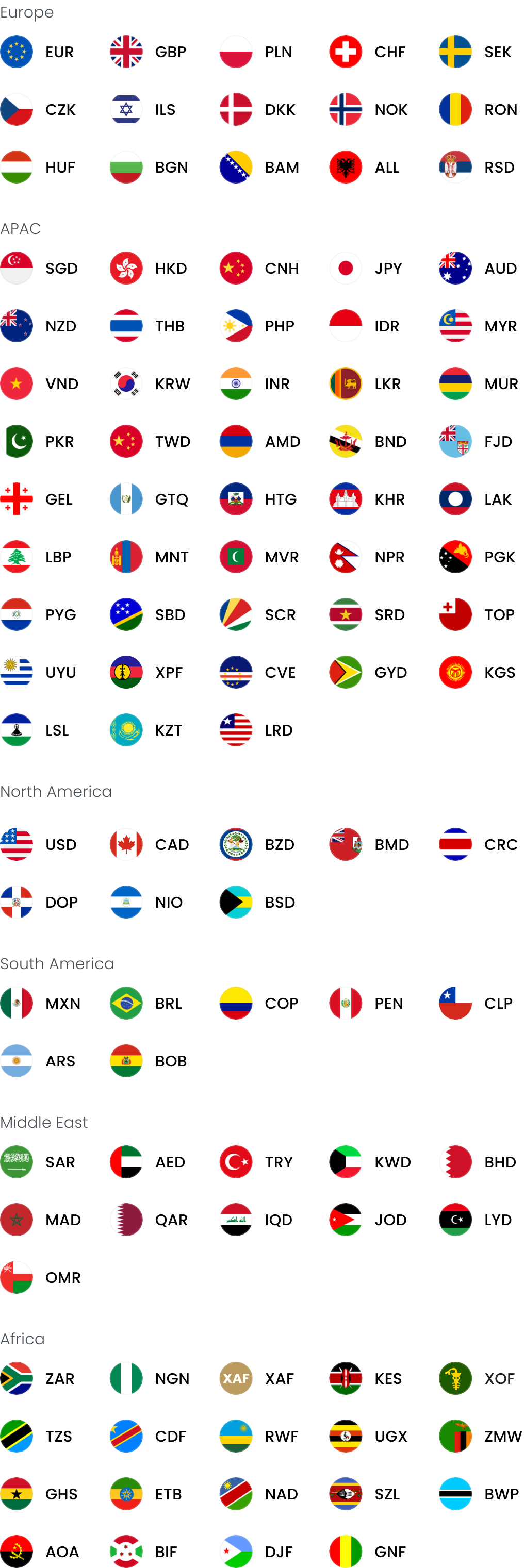
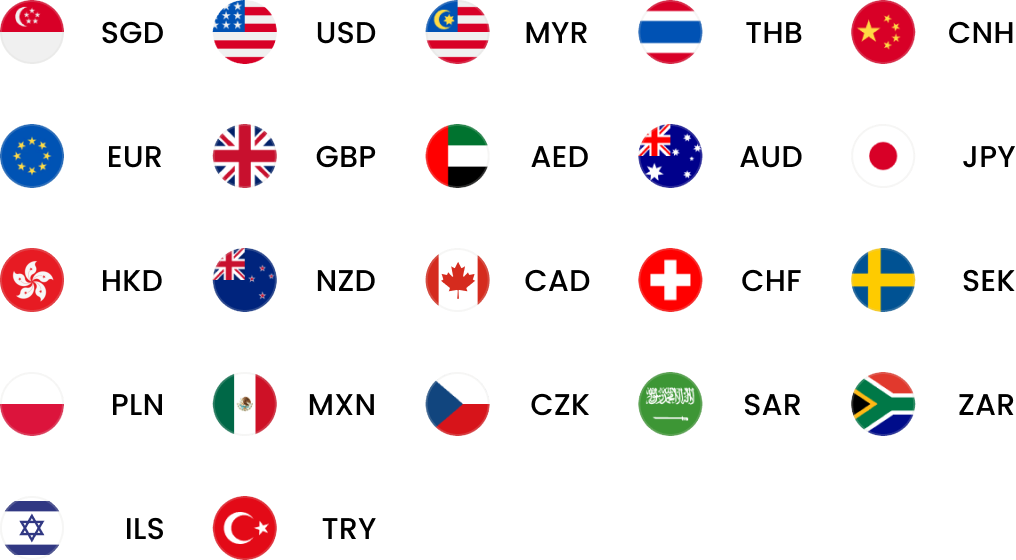
- Receive in 20+ currencies: Collect overseas revenue and marketplace payouts in one account
- Pay in 100+ currencies: Send supplier payments to 200+ countries and territories
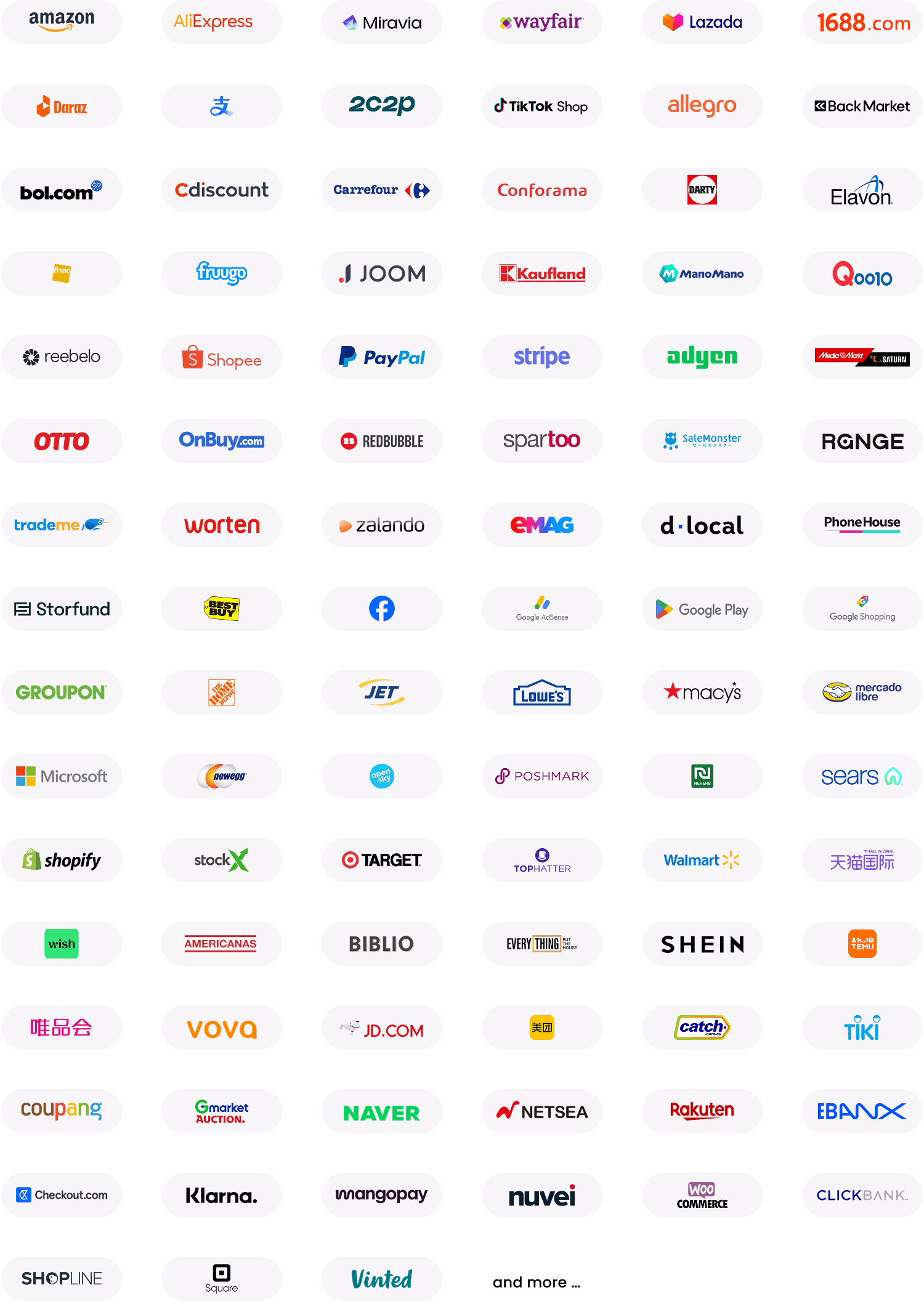
- Connect marketplace revenue: Link with 130+ marketplaces and payment gateways, including Amazon, Shopee, Shopify and PayPal
- Hold before converting: Keep balances in foreign currencies and convert when the timing works for your business
- See costs upfront: Review transfer fees before you pay, with FX markups capped at 0.6% on major currencies
- Manage payment admin: Track payments, assign permissions and connect payment data with accounting tools
Quick comparison: DBS vs HSBC vs World Account
| Feature | DBS | HSBC | World Account |
|---|---|---|---|
| Main role | Singapore-first business banking | Global commercial banking | Cross-border payments |
| Currency use | SGD and selected foreign currencies | Foreign currency banking and treasury support | Receive, hold, convert and pay across currencies |
| Overseas payments | Bank transfer routes | International banking network | Payments to 200+ countries and territories |
| FX | Bank-set rates | Bank-set rates and treasury support | Upfront fees and published conversion pricing |
| Marketplace support | Limited | Limited | 130+ marketplaces and payment gateways |
| Best for | Local banking, SME tools and financing | Global banking, trade and relationship support | Suppliers, payouts and global payment control |
Choose World Account if you:
- Pay overseas suppliers regularly
- Receive revenue in several currencies
- Sell through international marketplaces
- Want more control over when you convert currency
- Need clearer visibility over FX costs and payment status
- Prefer one place to receive, hold, convert and send money globally
Open a World Account to manage cross-border payments with more control over currency, payment timing and international supplier costs.
FAQ
1. What documents do I need to open a business account in Singapore?
You usually need company registration details, director or authorised person identification and supporting information about your business, ownership and source of funds.
2. How long does it take to open a DBS or HSBC business account?
Timing depends on your company structure, documents and bank review. Simple Singapore-owned companies may move faster, while foreign-owned companies or more complex ownership structures usually take longer.
3. When does it make sense to add a multi-currency platform alongside your bank vs switch entirely?
Adding alongside makes sense if your bank handles SGD operations, payroll, trade finance or local cards well, and the friction is mainly in cross-border collections, FX and supplier payments. Switching entirely is rare, because most SMEs end up keeping a bank account for local needs and using a multi-currency platform for international flows.
Sources:
- https://www.enterprisesg.gov.sg/resources/media-centre/media-releases/2026/february/mr00626_review-of-2025-trade-performance
- https://matrixbcg.com/blogs/brief-history/dbs?_pos=3&_sid=73a04f450&_ss=r
- https://banksinsg.com/banks/hsbc-singapore/
- https://sbr.com.sg/cards-payments/news/card-payments-projected-generate-1582b-in-2025
- https://www.dbs.com.sg/index/default.page
- https://www.hsbc.com.sg/
- https://www.worldfirst.com/sg/