



























UK businesses are more global than ever and B2B cross-border payments are now central to their success. A Sheffield manufacturer importing components from China or a Manchester e-commerce business receiving US dollar payouts both rely on fast and reliable cross-border payments to remain competitive.
The problem is that traditional banking is slow and costly, with delays, hidden foreign exchange costs and high fees. New standards, such as ISO 20022 and SWIFT gpi, are changing that, making payments faster, more transparent and more predictable.
In this article, we examine the leading solutions and trends in B2B cross-border payments for 2026, highlighting how UK firms can adapt, minimise friction and gain a competitive edge in the global marketplace.
Key takeaways:
- Cross-border payments need to be faster and more precise: Traditional banking adds delays, hidden foreign exchange costs and fees. New standards, such as ISO 20022 and SWIFT gpi, raise the bar on speed, transparency and predictability
- Hidden costs and delays remain a fundamental problem: Cross-border payments often come with opaque FX fees, intermediary bank charges and long settlement times. These issues lock up working capital and make it harder for SMEs to plan ahead
- In 2026, payments are becoming instant and integrated: Projects such as Nexus and the EU’s Instant Payments Regulation are pushing cross-border transactions closer to real-time. Combined with APIs and ISO 20022 data, businesses can expect faster settlements, richer insights and fewer manual processes
- Solve the pain with one platform: If you want fewer fees and better control of B2B cross-border payments, open a World Account with WorldFirst. Receive and hold multiple currencies, convert when it suits you, pay suppliers in over 100 currencies and manage everything from a single dashboard
What are B2B cross-border payments?
B2B cross-border payments are transfers between businesses in different countries and currencies.
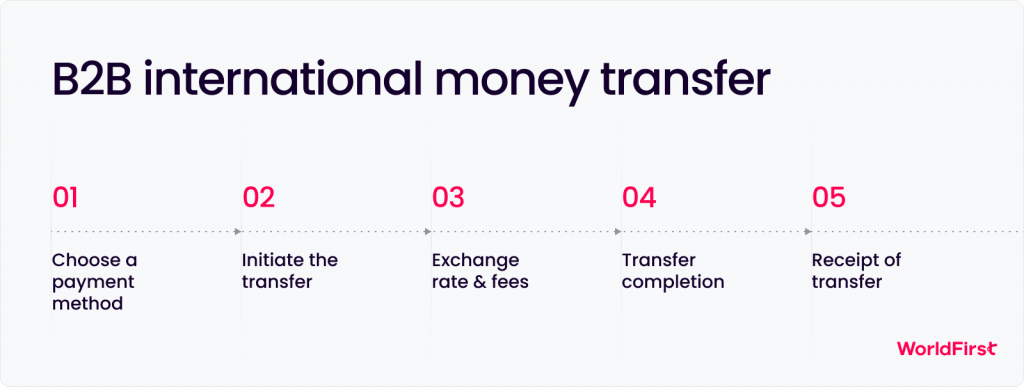
Common scenarios include paying overseas suppliers, receiving marketplace payouts from abroad, transferring funds between international subsidiaries and reconciling multi-currency invoices in financial systems
Why cross-border payments matter for UK businesses
The UK continues to play a central role in global finance and trade, which gives British firms a substantial advantage when operating internationally.
London remains the preeminent foreign exchange hub, accounting for 37.8% of global FX turnover in April 2025, equivalent to approximately $4,745 billion per day. Such deep liquidity means markets are efficient and pricing is transparent, making it easier for UK firms to hedge exposures, access currency markets and transact at competitive spreads across borders.
Meanwhile, trade flows reinforce the importance of international payments and cash movement. UK businesses integrate deeply into global supply chains, as shown by the United States remaining one of the UK’s top trading partners for both imports and exports.
Domestically, expectations are also evolving. In 2024, the UK’s Faster Payment System (FPS) processed 5.09 billion transactions worth £4.2 trillion. FPS supports payments up to £1 million and individual banks set their own limits.
The biggest challenges in B2B cross-border payments today
The UK’s Payment Systems Regulator (PSR) has warned that a lack of competition in cross-border card fees is costing businesses between £150 million and £200 million each year. In early 2025, it opened a consultation on introducing EU-style caps to reduce these charges.
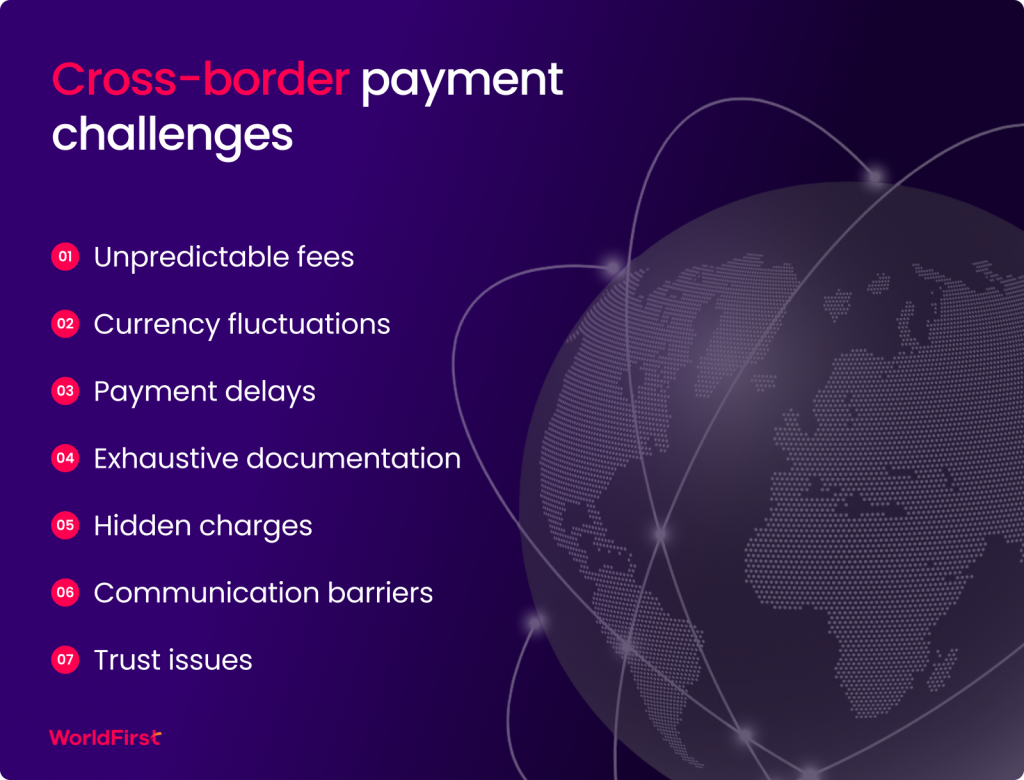
Here are the crucial challenges that UK businesses face today when sending and receiving payments across borders:
1. Hidden and unpredictable costs
International transfers often involve multiple layers of charges that can be difficult to anticipate. Banks and payment providers may not disclose the complete breakdown of foreign exchange spreads, intermediary bank fees and routing charges upfront.
The result is that businesses only discover the actual cost of the transaction once funds arrive, which erodes margins and complicates pricing strategies.
2. Slow settlement times
Despite advances in infrastructure, many international payments still take multiple working days to clear. This is especially common when funds pass through several correspondent banks.
The delay locks up working capital and forces companies to hold extra liquidity buffers, which is particularly challenging for SMEs that rely on fast-moving cash cycles.
3. Fragmented visibility
Once a payment leaves the originator’s bank, visibility becomes limited.
Intermediary banks rarely provide real-time tracking, leaving companies in the dark until the funds finally appear in the recipient’s account. This lack of transparency creates tension with suppliers and makes it harder to manage operational risk.
4. Limited multi-currency capability
Many business accounts still only operate in a single base currency, such as GBP.
This structure forces every foreign transaction into a conversion, even when businesses would prefer to hold balances in USD, EUR or RMB. These unnecessary conversions increase costs and expose companies to avoidable exchange rate fluctuations.
5. Compliance overhead
Each international transfer must pass through multiple layers of checks, including anti-money laundering, know-your-customer and sanctions screening.
While these are essential safeguards, they add delays and create extra administrative work. For firms trading across several regions, the differences in local compliance rules multiply the complexity.
6. Reconciliation difficulties
Finance teams often spend hours manually matching invoices and payouts across currencies, systems and marketplaces. Exchange rate fluctuations and hidden fees deepen the challenge.
Without automation, reconciliation becomes error-prone and time-consuming, which delays reporting and hinders gaining a clear view of financial health.
Solutions reshaping B2B cross-border payments in 2026
As the cross-border payments landscape evolves, businesses that adopt more advanced tools and architectures will gain real advantages.
The solutions below are among those shaping how international businesses operate in 2026:
1. Multi-currency business accounts
Let your business hold, receive and pay in the currencies you trade in, not just your home currency. That avoids forced conversions at times that do not suit the business, gives you control over currency timing and simplifies reconciliation.
How WorldFirst helps:
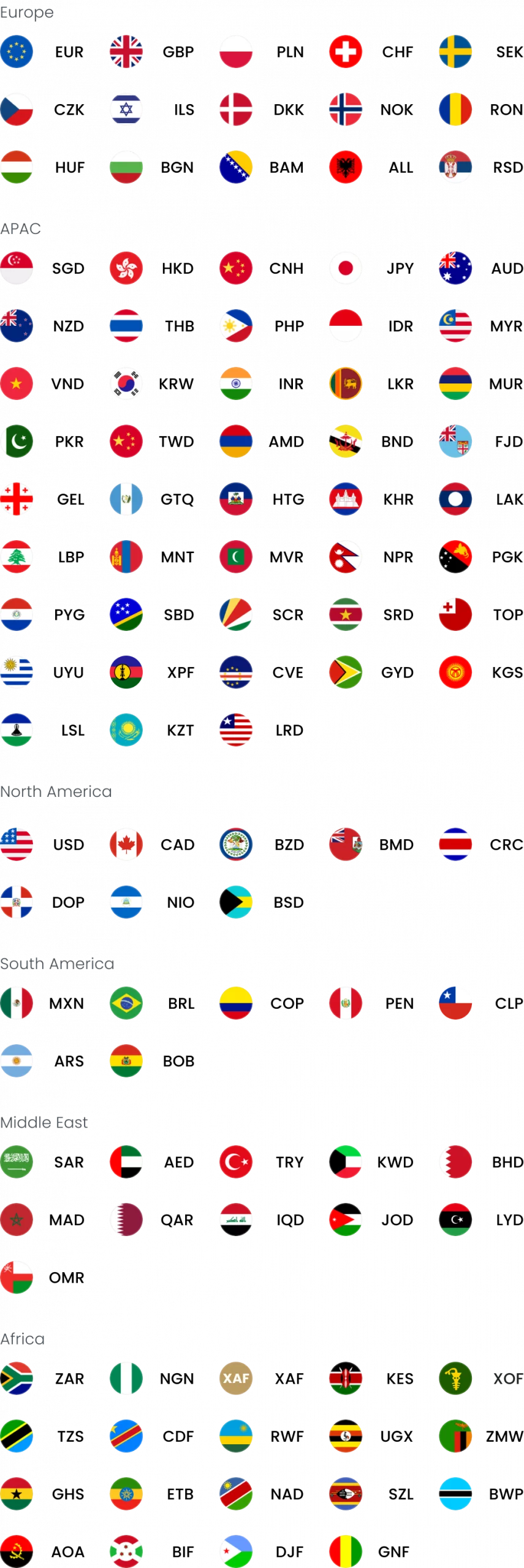
- Pay suppliers, vendors and partners in 100+ currencies
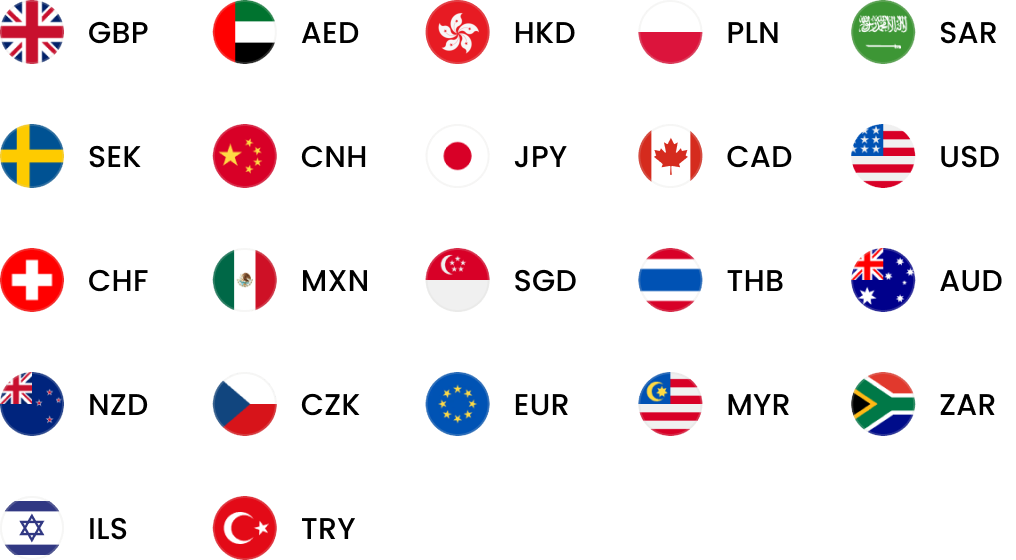
- Receive and hold funds in 20+ currencies
- Convert between currencies and withdraw to your bank at any time
- Manage everything from a single platform that improves cost control and cash flow visibility
2. Smarter FX management
Today’s best practices go well beyond simple spot conversions. Forward contracts, hedging and target-rate conversions are now mainstream tools. The global FX market recently reached $9.6 trillion per day (as of April 2025); liquidity is deep and hedging markets are active.
By giving real transparency into FX costs and allowing you to schedule or automate conversions, you can protect your margins and budget with confidence.
Illustrative example:
A UK importer owes US$250,000 in 60 days for a shipment. The current rate is GBP/USD 1.25. By locking in a forward contract at 1.25, the sterling cost becomes £200,000, insulating your business from adverse movements in the pound in that timeframe.
3. Faster, trackable payment rails
New standards, such as SWIFT gpi and the UETR (Unique End-to-End Transaction Reference), enable parcel-style tracking across the correspondent banking chain. Each step can report status, so payments no longer disappear into the “black box”.
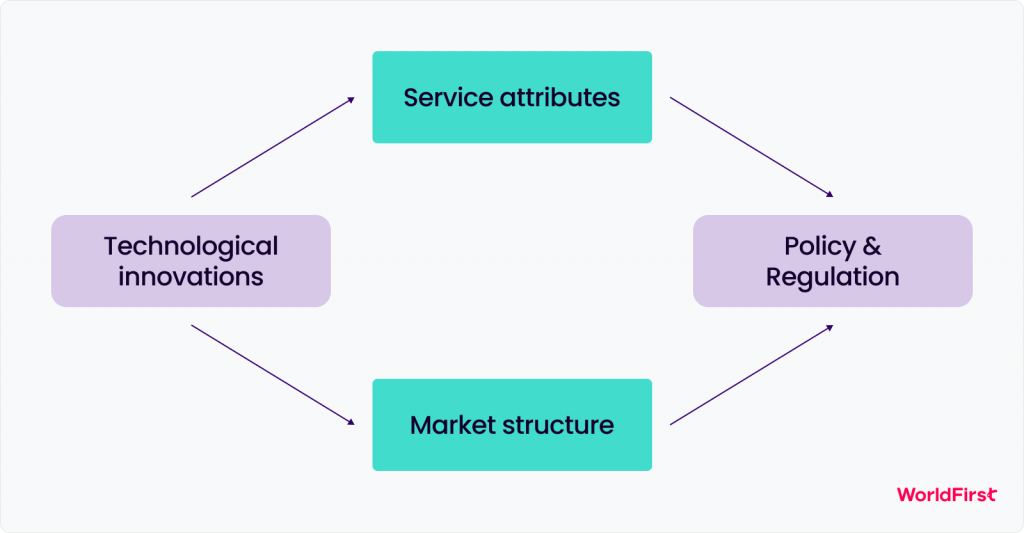
Domestically, the UK’s Faster Payment Service (FPS) and Europe’s push for instant payments via the Instant Payments Regulation are setting customer expectations high. Businesses now expect a similar level of speed, transparency and certainty across borders.
4. Richer data via ISO 20022
Structured, high-fidelity data embedded in payment messages can significantly reduce errors, expedite investigations and improve compliance screening. Banks around the world are moving to a new global payments standard called ISO 20022, which allows richer, more structured data in every transaction. SWIFT’s cross-border migration to this standard is set to be completed by November 2025.
For treasurers and finance teams, this means faster reconciliation, better automation, fewer errors and a more consistent data structure across regions.
5. Marketplace and platform integrations
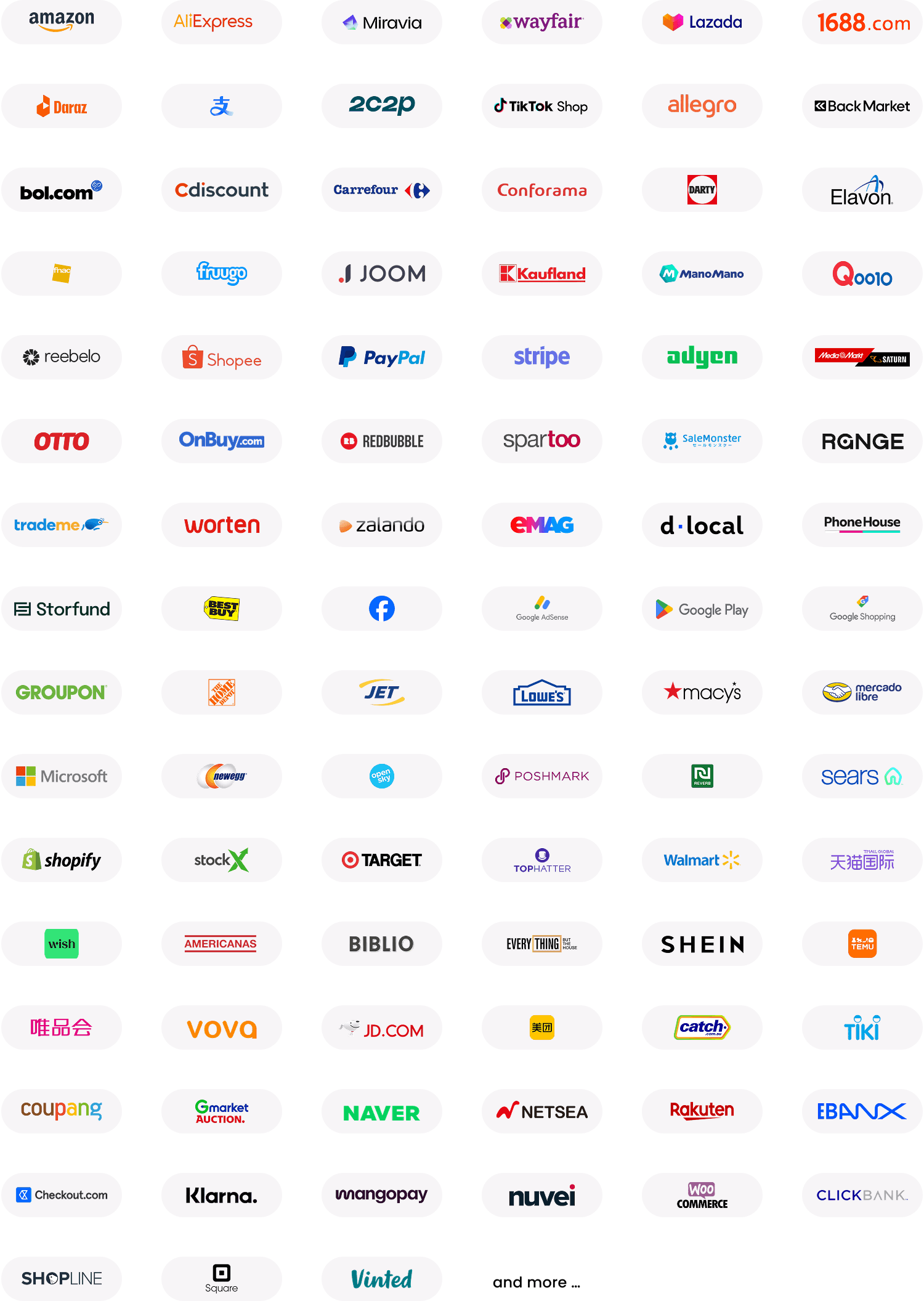
For e-commerce businesses, SaaS providers and digital platforms, payments often arrive via platforms such as Amazon, Shopify, Stripe, PayPal and others.
The ideal solution connects these payouts directly to your multi-currency balance, allowing you to convert or distribute funds from a single location. A unified account reduces reconciliation friction across markets, providing you with visibility and control over where funds are and when you transfer them.
6. Compliance embedded in processes
Every business must comply with requirements such as sanctions screening, KYC/AML checks and transaction monitoring.
The best systems embed these checks seamlessly as background services, allowing legitimate payments to flow, while only unusual cases require manual review.
Key trends in B2B cross-border payments to watch in 2026
Cross-border payments are changing faster than ever. New regulations, advances in technology and growing pressure from businesses are pushing the system toward transfers that are quicker, more affordable and easier to track.
The six trends below shape international payments in 2026 and show businesses how to prepare:
1. Real-time cross-border payments move from pilot to reality
Project Nexus is linking domestic instant payment systems, allowing cross-border credits to arrive within approximately 60 seconds, 24/7.
The BIS, MAS and regional central banks have already published technical blueprints, with Asia leading on live pathways and Europe exploring TARGET Instant Payment Settlement (TIPS) connections.
What it means: Instant domestic experiences are becoming the benchmark for cross-border. Businesses should expect shorter settlement windows and better transparency in priority corridors.
Action to take:
- Map your most important trade corridors
- Ask providers if they support Nexus-ready rails
- Use faster corridors to improve cash flow and supplier confidence
2. The EU goes “instant by default” for euros
The EU’s Instant Payments Regulation (March 2024) requires all PSPs to support euro instant credit transfers within 10 seconds, with full reachability.
What it means: Euro payments will no longer tolerate multi-day settlement. For UK firms trading with EU partners, speed and certainty in EUR transfers will become the default expectation.
Action to take:
- Test your provider’s instant SEPA capabilities
- Update cash-flow forecasts for same-day euro settlement
- Align supplier and customer payment terms with instant capabilities
3. Transparency becomes the norm
Tools like SWIFT gpi and UETR offer parcel-style payment tracking, while regulators in the UK are pushing to cap cross-border card interchange fees, which cost merchants up to £200 million annually.
What it means: End-to-end visibility and fairer pricing are moving from optional to mandatory. Hidden costs will face increasing scrutiny.
Action to take:
- Request complete fee breakdowns from providers
- Integrate payment tracking into treasury dashboards
- Benchmark FX spreads and charges against market averages
4. Embedded finance and APIs
APIs now connect multi-currency accounts directly into ERPs, accounting systems and platforms. Businesses can initiate collections and payouts within the software they already use.
What it means: Cross-border finance stops being a side process and becomes part of core operations. Manual work falls away, improving efficiency.
Action to take:
- Check if your ERP or marketplace offers treasury API integrations
- Automate recurring payouts and supplier payments
- Reduce manual reconciliation by syncing accounts directly with back-office systems
5. Data-rich payments with ISO 20022
The migration to ISO 20022 is underway, with coexistence – when banks can still use both the old and new formats – will end on 22 November 2025. Richer data means fewer errors, smoother investigations and cleaner compliance checks.
What it means: Payment messages become machine-readable, making reconciliation and reporting faster and more accurate. Exceptions will fall significantly.
Action to take:
- Upgrade accounting and treasury systems to support ISO 20022
- Ensure your bank or provider passes structured remittance information
- Automate reconciliation using structured data fields
6. A resilient FX backdrop
Even in uncertain markets, foreign exchange remains robust. For UK companies, this means access to competitive rates and reliable tools to manage currency risk.
What it means: By managing exposure across both major and emerging currencies, companies can stabilise cash flows and reduce the risk of sudden budget shocks.
Action to take:
- Establish clear FX risk management policies tailored to your trade flows
- Use forwards, target rate orders and other tools to plan your conversions
- Match your FX decisions to revenue and payment cycles to protect margin
7. Multi-currency business accounts go mainstream
Multi-currency accounts are no longer niche products. They’re becoming essential for companies that buy, sell and receive in multiple currencies.
Instead of relying on costly forced conversions, businesses can now hold balances in the currencies they trade in, pay suppliers directly in local currencies and choose when to convert based on favourable rates.
What it means: Multi-currency accounts simplify reconciliation, reduce FX exposure and improve cash-flow visibility across borders. They enable businesses to operate more like locals in each market, thereby strengthening their competitiveness.
Action to take:
- Open accounts that let you hold and receive in major currencies
- Pay overseas suppliers directly from foreign currency balances
- Consolidate marketplace payouts into a single multi-currency platform for easier reconciliation
How WorldFirst helps UK businesses operate globally
WorldFirst’s World Account is a multi-currency business account designed to streamline B2B cross-border payments, making them faster, simpler and more cost-effective. From SMEs expanding into new markets to established multinationals, it helps companies manage international transactions with greater control and visibility.
Many UK businesses choose WorldFirst because it delivers what international businesses demand: efficient cross-border payments, transparent pricing and financial infrastructure built for global growth.
Here’s what UK businesses can do with the World Account:
- Receive funds in 20+ currencies using local account details, with no fees for receiving or holding funds
- Hold balances in multiple currencies to avoid forced conversions and reduce FX exposure
- Convert between currencies when the market rate helps you hold onto more of your margin, using tools like forward contracts and firm orders
- Pay suppliers and partners in 100+ currencies, often via local payment rails for faster settlement – 80% arrive on the same day
- Withdraw funds to UK bank accounts whenever required, all from a single dashboard
Ready to simplify your global operations?
Open a World Account with WorldFirst today and take control of your B2B cross-border payments.