



























Importing from China to the UK can be a smart way to source products, but the real cost of an order goes far beyond the supplier’s quoted price.
You need to account for customs, import duty, VAT, shipping, documentation, and currency conversion before you know what your goods will actually cost. Get any one of these wrong and a seemingly good deal can become much more expensive.
In this guide, you’ll learn how to import from China to the UK step by step, including what you need to prepare, how to handle customs, duty and VAT, arrange shipping and calculate your total landed cost, as well as how to pay Chinese suppliers from the UK.
Key Takeaways
- Importing from China to the UK involves more than shipping goods: You also need to consider customs, import requirements, duty, VAT, documentation, and product compliance.
- Your supplier’s price is not the full cost: Shipping, insurance, customs charges, taxes, and currency conversion can all increase the final landed cost.
- Product classification matters: The correct commodity code can affect the duty rate and other requirements that apply to your goods.
- Planning ahead can help avoid delays and unexpected costs: Check requirements, prepare your documents, and understand who is responsible for shipping and customs clearance.
- WorldFirst can help simplify supplier payments: UK businesses can use WorldFirst to pay Chinese suppliers and manage multiple currencies through a World Account.

What Do You Need to Import From China to the UK?
Before placing an order, make sure you have the key requirements, documents, and costs covered. Having these ready can help you avoid delays and unexpected charges later:
- EORI number: A number used to identify your business when importing goods through UK customs.
- Suitable Chinese supplier: A supplier that can meet your product specifications, quality requirements, and order volume.
- Correct commodity code: Used to classify your goods and determine applicable customs duty and other import requirements.
- Import and product compliance information: Check whether your goods require specific licences, certificates or approvals.
- Shipping arrangements: Decide how your goods will reach the UK and who will handle transport and customs clearance.
- Commercial and transport documents: These may include the commercial invoice, packing list and bill of lading or air waybill.
- Customs declaration: Prepare the information needed to declare your goods to UK customs.
- Funds for import costs: Budget for applicable duty, VAT, shipping, customs clearance, and other charges.
How to Import From China to the UK: Step-by-Step
Importing from China involves checking your goods, preparing the right documents, arranging shipping and customs, and calculating the full cost of your shipment. Here’s how to import from China to the UK, step by step.
Step 1: Check Whether You Can Import the Goods
Before you import from China, check that your goods can legally enter the UK and whether any additional requirements apply.
- Check for restrictions: Make sure the products are not prohibited or subject to import restrictions.
- Check licences and approvals: Find out whether your goods require specific licences, certificates or approvals.
- Check the applicable UK rules: Different requirements may apply to Great Britain and Northern Ireland.
- Check product compliance: Confirm any product-specific safety, labelling or compliance requirements before placing your order.
Step 2: Get an EORI Number
An EORI number is used to identify businesses when they import or export goods through UK customs. If your business imports goods into Great Britain, you’ll generally need a GB EORI number.
If you’re importing goods into Northern Ireland, the requirements can differ. Check which EORI number applies to your business and the movement of your goods before importing.
Apply for the relevant EORI number before your shipment arrives to avoid delays with customs declarations.
Step 3: Find and Check a Chinese Supplier
For businesses importing from China to the UK, choosing the right Chinese supplier is an important part of the process. Look beyond price and check whether the supplier can meet your quality, quantity, and delivery requirements.
- Find potential suppliers: Use established B2B marketplaces, trade shows or supplier directories to build a shortlist.
- Verify supplier details: Check the supplier’s business information, trading history, and export capability.
- Request samples: Order samples before placing a large order to check product quality and specifications.
- Confirm production capacity: Make sure the supplier can meet your required order volume and delivery schedule.
- Agree pricing and minimum order quantities: Confirm the unit price, minimum order quantity, and any additional supplier charges.
- Agree payment terms: Confirm the payment currency, payment schedule, and terms before placing the order.
Learn more: How to find reliable China wholesale suppliers
Step 4: Find the Correct Commodity Code
A commodity code is a number used to classify the goods you’re importing into the UK. The correct code helps determine the import duty rate and whether any additional customs requirements apply.
To identify the right commodity code and understand the requirements for your goods, check the following:
- Classify your goods accurately: Choose the commodity code that best matches the specific product you’re importing.
- Check the import duty: The commodity code determines the customs duty rate that may apply to your goods.
- Check other requirements: Your classification can also affect import licences, restrictions or other requirements.
- Use the UK Trade Tariff: Search the official UK Trade Tariff to find the relevant commodity code and check the applicable duty and import requirements.
- Have product details ready: You may need information such as the product’s material, composition, function, intended use, and how it is manufactured to identify the correct code.
Step 5: Check Import Duty and VAT
Once you know the correct commodity code, check the duty and VAT that may apply to your goods. These are separate charges and can affect the total cost of your import.
To understand what you may need to pay, check the following:
- Check the applicable import duty rate: Use the commodity code to find the duty rate that applies to your goods. This helps you work out how much import duty you may need to pay.
- Determine whether import VAT applies: Check whether import VAT is due on your goods and understand how it is calculated.
- Understand what affects the amount payable: The amount of duty and VAT can depend on factors such as the type and value of your goods and the applicable tariff treatment.
- Check for specific tariff treatment: Find out whether any tariff preferences, measures or other arrangements apply to your goods, as these can affect the amount you pay.
- Budget for duty and VAT: Factor these costs into your import budget so you can estimate the total cost of bringing your goods into the UK.
- Understand the difference between China VAT and UK import VAT: China VAT and UK import VAT are separate charges. China VAT can affect the price you pay your Chinese supplier, while UK import VAT relates to bringing the goods into the UK.
Step 6: Arrange Shipping and Customs
Once your goods are ready to leave China, arrange how they will be transported to the UK and decide who will handle the customs process. When arranging shipping from China to the UK, consider the following:
- Choose a suitable shipping method: Select sea freight, air freight, courier or rail freight based on your shipment size, budget and delivery requirements. For more detail on the available options and considerations, see our guide to How to ship from China to the UK.
- Decide whether to use a freight forwarder: A freight forwarder can help arrange transport, documentation and other parts of the shipping process.
- Agree the Incoterm with your supplier: Understand which costs, risks and responsibilities fall to you and your supplier under the agreed Incoterm.
- Decide who will arrange customs clearance: Confirm whether you, your supplier, or a freight forwarder will handle the customs clearance process.
- Consider insurance and other shipping costs: Factor in insurance, handling, storage, clearance, and other charges when estimating your total import cost.
Step 7: Prepare Your Import Documents
Before your shipment arrives, make sure you have the documents and information needed for the import process. The exact requirements can vary depending on the goods and shipment. For businesses importing from China to the UK, these may include:
- Commercial invoice: Provides details about the seller, buyer, goods, quantity, and value of the shipment.
- Packing list: Shows how the goods are packed and helps identify the contents of the shipment.
- Bill of lading or air waybill: Provides details about the shipment and transport arrangements.
- EORI details: Include the relevant EORI information for the customs process.
- Customs declaration information: Prepare the information needed to declare the goods to UK customs.
- Import licences or certificates: Provide any licences or certificates required for the specific goods.
- Proof of origin: Include evidence of where the goods originate when relevant to the import requirements or tariff treatment.
- Product compliance documentation: Keep any required certificates, test reports or other documents showing that the goods meet applicable UK requirements.
Step 8: Clear Your Goods Through UK Customs
Once your shipment reaches the UK, it needs to be cleared through customs before it can enter the country. Make sure the declaration includes accurate information and that any applicable charges are paid. To complete the customs process, you may need to:
- Submit the customs declaration: Provide the required information about your goods and shipment to UK customs.
- Provide the commodity code and customs value: Use the correct commodity code and declare the appropriate customs value for your goods.
- Provide supporting information: Include any documents or information required for the customs declaration.
- Pay applicable import duty and VAT: Pay any import duty and import VAT due based on your goods and customs declaration.
- Work with a customs agent where appropriate: A customs agent can submit declarations and handle customs formalities on your behalf.
- Wait for customs clearance: Once the declaration has been accepted and any required checks or payments are completed, the goods can be released from customs and continue to their destination.
Step 9: Keep Your Import Records
Once your goods have cleared UK customs, keep a complete record of the import. These records help you track the shipment, verify the value and costs of your goods, and support your customs and tax records. Keep records of the following:
- Commercial invoices: Keep invoices showing the goods purchased, their value, and supplier details.
- Customs declarations: Retain copies of the declarations submitted for your imports.
- Import duty and VAT records: Keep records of any duty and VAT paid on your shipments.
- Shipping documents: Retain bills of lading, air waybills and other transport documents.
- Supplier documentation: Keep purchase orders, contracts and other relevant supplier documents.
- Payment records: Keep records of payments made to your Chinese suppliers and other import-related payments.
Maintaining complete and accurate records makes it easier to track your import costs, resolve queries, and meet any applicable record-keeping requirements.
Step 10: Calculate Your Total Landed Cost
The supplier’s price is only part of what you’ll actually spend. Your total landed cost includes the costs of getting the goods from your Chinese supplier to their final destination in the UK. To calculate your total landed cost, add the following:
- Product purchase price: The price you agree to pay your Chinese supplier for the goods.
- International shipping: The cost of transporting the goods from China to the UK.
- Insurance: Include any insurance costs for covering the shipment during transit.
- Import duty: Add any customs duty payable based on your goods and applicable tariff treatment.
- Import VAT: Include any import VAT that applies to the shipment.
- Customs and clearance charges: Account for customs agents, clearance and other related charges where applicable.
- Storage or handling charges: Include additional storage, handling or port charges that may apply.
- Currency conversion and payment costs: Factor in the cost of converting GBP into CNY and making payments to your supplier.
Example of a China-to-UK Import Cost
For example, suppose a UK business orders £10,000 worth of goods from a Chinese supplier. Its total landed cost could include the purchase price, shipping, insurance, import duty, import VAT and customs-related charges.
| Cost | Illustrative amount |
| Product purchase price | £10,000 |
| International shipping | £800 |
| Insurance | £100 |
| Import duty | £500 |
| Import VAT | £2,280 |
| Customs and clearance | £200 |
| Illustrative landed cost | £13,880 |
This is a simplified illustration only. Actual duty, VAT and other charges depend on the goods, their customs value, applicable tariff treatment and the specific shipment. VAT-registered businesses can usually reclaim import VAT. Currency conversion and payment costs may also vary depending on the transaction.
How Long Does It Take to Import From China to the UK?
The time it takes to import goods from China to the UK depends on several stages of the process. Your overall timeline can include supplier preparation and production, freight transit, customs processing, and final delivery. The main stages are:
- Supplier preparation and production: Your supplier needs to manufacture, prepare, and package the goods before they are shipped.
- Freight transit: The shipment then travels from China to the UK, with the duration depending on the transport method and route.
- Customs processing: Your goods must go through the UK customs process, which can add time depending on the shipment and whether any checks are required.
- Final delivery: Once cleared, the goods are transported from the port, airport, or other entry point to their final destination.
The shipping method you choose can also affect how quickly your goods reach the UK:
- Sea freight: Generally takes longer than air freight or courier services, but can be suitable for larger shipments.
- Air freight: Usually offers a faster transport option for businesses that need their goods sooner.
- Courier: Can be convenient for smaller shipments and may offer faster delivery with a simpler process.
There is no single delivery timeframe for every China-to-UK shipment. Production schedules, shipping routes, customs processing, shipment size, and other circumstances can all affect how long your goods take to arrive.
How to Pay Chinese Suppliers From the UK
Once you’ve chosen a supplier and agreed on the price, you’ll need to decide how to make the payment. The right option can depend on the payment method, currency, fees, and exchange rate. Before making a payment to Chinese suppliers, consider the following:
- Choose a payment method: Common options for paying Chinese suppliers include bank wire transfers, letters of credit, online transfer services such as Wise and WorldFirst, and remittance services such as Western Union and MoneyGram. Compare the fees, exchange rates, supported currencies, and payment requirements before choosing an option.
- Confirm the payment currency: Ask your supplier whether they accept GBP, CNY, or another currency, and agree on the currency before making the payment.
- Check exchange rates and conversion costs: If you need to convert GBP into CNY, compare the exchange rate offered and any additional conversion charges.
- Understand transfer fees: Check for payment fees and any intermediary or receiving-bank charges that could affect the amount your supplier receives.
- Verify your supplier’s payment details: Confirm the beneficiary name, account details, and payment instructions through a trusted channel before sending funds.
- Agree on payment terms: Establish whether your supplier requires a deposit, payment before shipment, or another agreed payment schedule.
Common Mistakes When Importing From China to the UK
Importing from China to the UK involves more than getting the goods shipped. A small oversight can affect your costs, delay your shipment, or create customs problems. Here are some mistakes to avoid:
- Choosing a supplier based only on price: A low quote does not always mean lower overall costs. Check product quality, supplier reliability, order requirements, and payment terms.
- Using the wrong commodity code: An incorrect classification can lead to the wrong duty rate or other customs issues.
- Underestimating the total import cost: Consider shipping, insurance, duty, VAT, customs clearance, handling and currency conversion when calculating your landed cost.
- Overlooking import requirements: Check whether your goods need licences, certificates, approvals or other product-specific requirements before placing an order.
- Using unclear Incoterms: Make sure you understand which costs, risks and responsibilities you and your supplier are taking on.
- Preparing incomplete documents: Missing or inaccurate invoices, shipping documents, or customs information can delay the clearance process.
- Ignoring payment and currency costs: If your supplier requires payment in CNY, consider the exchange rate and payment costs when calculating the true cost of your order.
Why Choose WorldFirst to Pay Chinese Suppliers From the UK?
Chinese suppliers may request payment in CNY, while UK businesses may need to convert GBP before making the payment. Exchange-rate movements can also affect the final cost of an order. For businesses that regularly pay overseas suppliers, having a convenient way to manage international payments and currencies can make the process easier. WorldFirst provides a way for UK businesses to manage these supplier payments and currency needs through one platform:
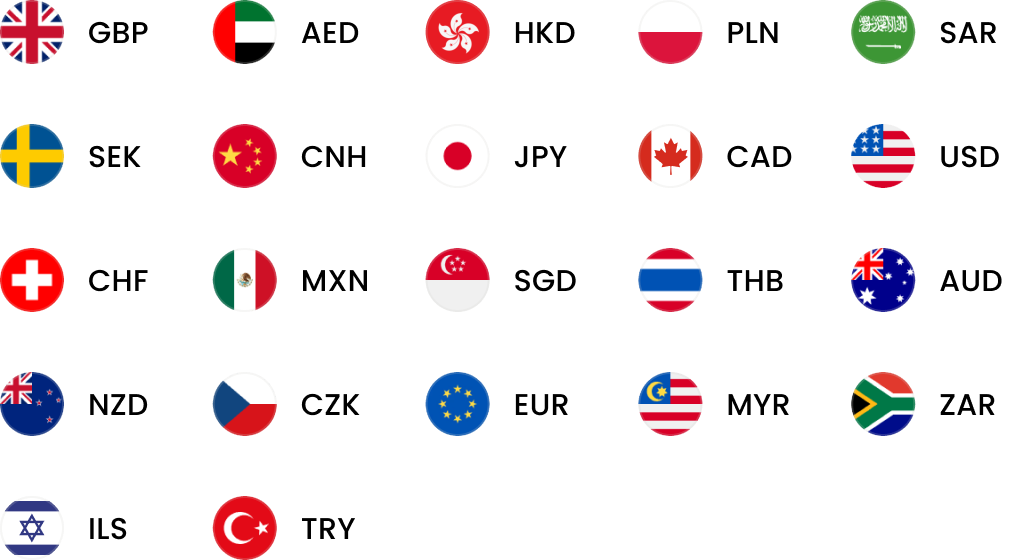
- Hold and manage multiple currencies: A World Account lets businesses hold and manage balances in 20+ currencies, including GBP, CNY, CNH and USD.
- Transfer between WorldFirst accounts: If your Chinese supplier also uses WorldFirst, eligible WorldFirst-to-WorldFirst transfers can be made instantly without a transfer fee.
- Pay 1688 suppliers without a Chinese bank account: Use 1688 World Pay to pay suppliers directly from your World Account balance, without needing a Chinese bank account or sourcing agent.
- Manage marketplace payouts and supplier payments: WorldFirst supports 130+ marketplace integrations, allowing businesses to collect payouts in supported local currencies and use their balances as part of their international payment workflow.
- Use FX tools to manage currency risk: WorldFirst offers FX tools including spot transactions, forward contracts, and firm orders, giving businesses different ways to manage currency conversion when paying overseas suppliers. A forward contract fixes your rate for a future payment, so you won’t gain if rates move in your favour, and it usually needs a deposit.
- Use the World Card for business spending: Earn up to 1.2% uncapped cashback on eligible spending, with no annual card fee. Pay in eligible currencies, including GBP and CNH, from your World Account without FX fees.
Open a World Account to pay Chinese suppliers, manage multiple currencies and handle your international business payments in one place.
FAQs
1. How do I import from China to the UK?
To import from China to the UK, check whether your goods can be imported, get the appropriate EORI number, choose a supplier, find the correct commodity code, check duty and VAT, arrange shipping and customs, prepare the required documents and calculate your total landed cost.
2. Do I need an EORI number to import from China to the UK?
Businesses importing goods into Great Britain will generally need a GB EORI number. Different requirements can apply when importing into Northern Ireland, so check which EORI number applies to your business.
3. Do you pay import duty and VAT when importing from China to the UK?
The amount of import duty depends on factors such as the goods being imported, their commodity code, customs value and any applicable tariff treatment. Import VAT may also apply, with the amount depending on the goods and their value. Check the UK Trade Tariff for the duty rate and applicable import VAT rules for your shipment.
4. How do I pay a Chinese supplier from the UK?
You can pay Chinese suppliers through bank transfers, letters of credit, online transfer services or remittance services. WorldFirst lets UK businesses send payments to China, with 90% of funds settling same-day, subject to payment cut-off times and beneficiary banks.. Transfers between WorldFirst accounts can arrive instantly and without a transfer fee.
Sources:
- https://www.gov.uk/eori
- https://www.gov.uk/import-goods-into-uk
- https://www.gov.uk/trade-tariff
- https://www.worldfirst.com/uk/pricing/
- https://www.worldfirst.com/uk/product/pay/pay-chinese-suppliers/
- https://www.worldfirst.com/uk/product/pay/1688-world-pay/
- https://www.worldfirst.com/uk/product/collect/get-paid-by-marketplaces/
- https://www.worldfirst.com/uk/product/pay/world-card/
- https://www.worldfirst.com/uk/spot-contracts/
- https://www.worldfirst.com/uk/forward-contracts/
- https://www.worldfirst.com/uk/firm-orders/