



























If you’re looking for international payment solutions for businesses, you’re likely hoping to:
- Save on transaction fees and FX costs when sending and receiving money across borders
- Hold funds in foreign currencies so you’re not constantly paying conversion fees or being forced to move money back to your home account
- Send money abroad more quickly (and avoid the delays associated with SWIFT)
- Easily manage all your currencies and international spending
Too often, cross-border businesses are stuck juggling multiple expensive business accounts in different countries. That’s why, in this guide, we share five payment solutions designed to make it easier for businesses to operate across borders.
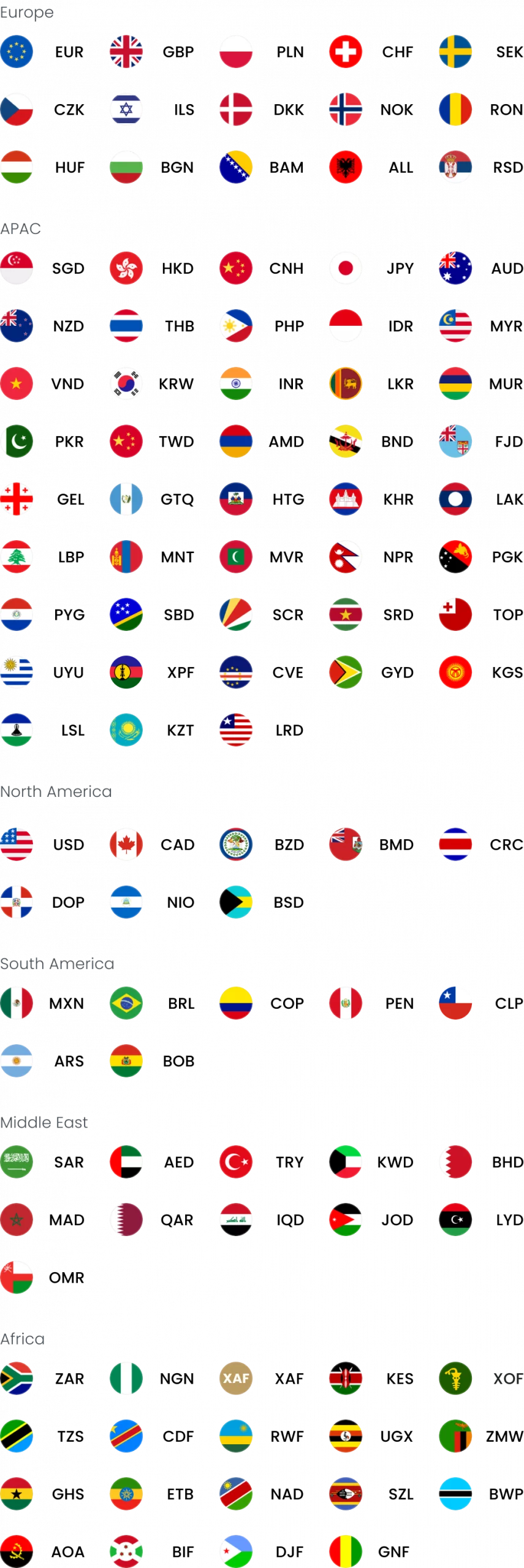
We’ll start with WorldFirst, a payments solution that simplifies international payments for SMEs – so they can pay in 100+ currencies across 210+ destinations, with 90% of major currency transfers arriving within one business day.
It’s also completely free to open a World Account, and there are no FX fees when sending from 20+ major currency accounts in the same currency.
We’ll cover:
- WorldFirst: The multi-currency payment solution for cross-border businesses
- Four alternative international business payment options
- Top features to look for in an international payments solution
To start making fast international payments from one account, open a World Account for free.
WorldFirst: The multi-currency payment solution for cross-border businesses
Since 2004, WorldFirst has been trusted by 1.5 million international businesses to transfer over $500 billion globally using our multi-currency World Account.
We partner with major financial institutions, such as J.P. Morgan and Barclays, to help businesses safely pay in and send 100+ currencies across the globe.
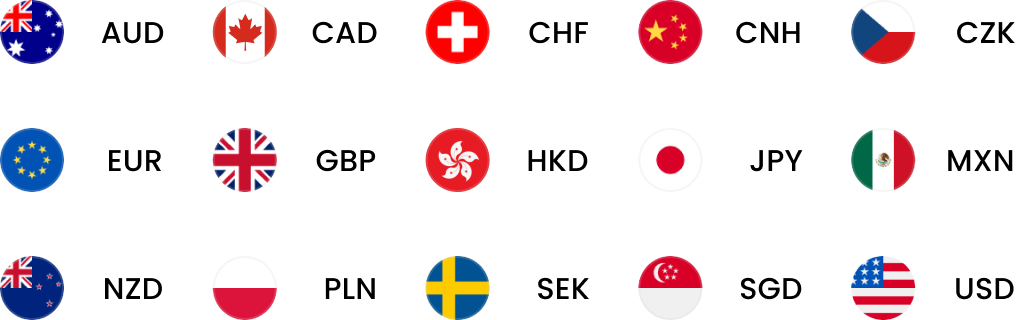
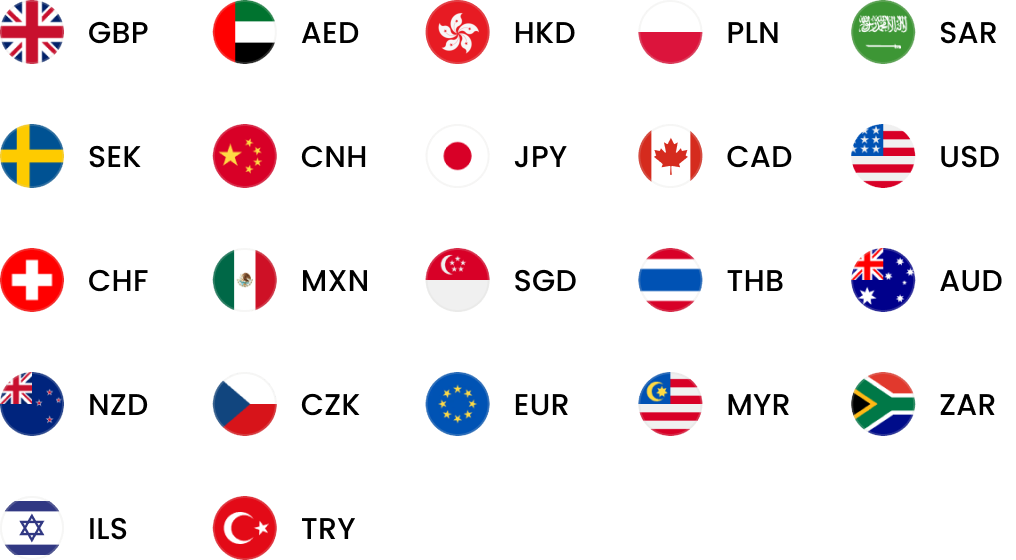
With a World Account, you can receive and hold 20+ currencies – and send funds in 100+ currencies. For each currency you hold, you receive local account details, meaning you can manage your money like a local. You’ll be able to skip the long transfer times and avoid the high FX fees associated with international transfers.
All your currencies and funds can be managed in one place, so you can pay businesses around the world without jumping between platforms. Plus, you get access to tools that make day-to-day operations smoother, like connecting your accounting software, tracking payments in real time and setting roles and permissions for your team.
Here are some additional ways WorldFirst supports SMEs making international payments.
Send money in 100+ currencies, with 90% of payments arriving by the next day
Unlike traditional SWIFT transfers, which can take 3–6 working days, 90% of major currency payments sent through a World Account arrive by the next day.
With 20+ multi-currency accounts tied to major currencies like GBP, EUR, USD and SGD, you’re sending payments as if you’re operating locally – not routing funds through multiple intermediary banks.
You can send high-volume payments at the same speed too. Instead of sending them one by one, you can batch and automate up to 200 payments, saving hours of time and frustrating payment delays.
Read more: How to make same-day international money transfers as a cross-border business
Pay a low 0.5% FX markup and gain control over the currency rate
When you do need to send international payments (outside the local payment networks), you’ll get the mid-market exchange rate with a low, clearly stated markup of 0.5% for major currencies – and up to 0.75% for others.
To help you manage the volatility of doing business in multiple currencies, we offer risk management tools so you can take control of the exchange rate you pay. For example, WorldFirst’s forward contracts let you lock in exchange rates up to 24 months so you can decide the currency conversion fees you pay – now and in the future.
And if you don’t have time to monitor the market, firm orders offer a more hands-off approach. Simply set your target rate, amount and timeframe, and your trade will be executed automatically when the market reaches your desired level.
Read more: Foreign exchange risk management: How to make international business more affordable
Monitor when payments arrive and set custom spending parameters – all from one platform
A World Account is more than just a place to receive and send international payments. It’s a single place to manage how your business moves money day to day.
We use SWIFT gpi tracking so you can always keep an eye on your transactions. This way, you’ll get full visibility as your money moves and you’ll get notified as soon as your funds arrive.
You can connect directly with accounting tools like Xero or NetSuite to streamline reconciliation and reporting and reduce admin time.
Plus, you can also control how your team manages payments – choosing who can approve or send funds, setting limits on how much can be spent and getting notified as soon as payments are authorised or completed.
Connect to 130+ marketplace platforms and accept payments for free
If you sell on marketplaces like Amazon or TikTok Shop, you’re probably used to payouts being automatically converted into your home currency.
With a World Account, you can connect to 130+ global marketplaces and receive payouts directly into one of your local currency accounts for free. Plus, these payouts often arrive the same day, giving you faster access and more control.
From there, you can hold your currency or use it to pay businesses in that currency’s country. That means fewer conversions, lower fees and a smoother way to manage your day-to-day cash flow.
Read more: E-commerce payments: What you really need to accept payment online
4 alternative international payment options for businesses
WorldFirst is one way to simplify international payments for SMEs, but if you’d like to weigh your options, here are a few common alternatives.
| Method | Speed | Cost | Best for | Key limitations |
|---|---|---|---|---|
| WorldFirst multi-currency account | 24–48 hours (major currencies) | 0.5% FX markup, and no FX fees on major currencies | Growing businesses managing global payments in one place | Requires account setup and verification |
| Digital cross-border payment platforms | Same day to 1–2 business days (often faster via local rails) | ~0.5–1% FX markup, typically transparent with no hidden fees | Businesses or individuals looking for a faster, more flexible way to send, receive and hold multiple currencies | Often less tailored FX support for complex hedging strategies |
| FX brokers (currency specialists) | 1–3 business days | Lower FX markup (0.2–1.5%), often negotiable for large volumes | Businesses making large or planned transfers and managing FX risk | More complex, requires booking trades |
| Payment gateways & processors | Instant (payments), 2–4 days payout | ~2.9% + fixed fee + additional FX/international fees | Online businesses accepting global customer payments | Fees add up quickly, not designed for sending or holding funds |
| Remittance services | Minutes to same day (sometimes 1–3 days) | High fees plus 1–5% FX markup | Urgent, one-off transfers | Not designed for business use or scaling |
1. Digital cross-border payment platforms
These are digital platforms that let you send, receive and hold multiple currencies in one place, often using local payment networks to move money more efficiently than traditional banks.
Payment providers like WorldFirst, Airwallex and Payoneer are common examples, though coverage, speed and flexibility can vary depending on where you’re sending money.
Fees: They’re typically lower and more transparent than banks. Many use the mid-market rate with a clear fee (around 0.5%–1%), though pricing varies by currency and route.
Speed: Payments can often land the same day or in 1–2 working days (especially if they’re tied to local accounts). However, timing can vary depending on the destination and payment method.
Security: They’re generally regulated across multiple jurisdictions with built-in compliance and safeguards to protect funds.
Simplicity: Normally, business transactions (from opening your account and adding recipients to holding and converting currencies, sending payments and tracking transfers) are managed through a single online dashboard, making the process easy to navigate.
Best for: These platforms are often designed for simpler use cases and may lack the features needed for more complex or high-volume payment flows. They work well for freelancers or small to medium-sized businesses making international payments, or for businesses that need a simple way to manage multiple currencies without complex FX requirements.
2. FX brokers (currency exchange specialists)
These are providers who focus specifically on foreign exchange. Companies like Currencies Direct and FXPro help businesses move money internationally while managing currency risk, and offer tools like forward contracts, rate alerts and one-on-one guidance on when to convert.
Fees: Fees are typically lower than banks, with most brokers charging a 0.2–1.5% markup on the mid-market rate. Pricing is often negotiable based on volume or relationship.
Speed: Transfers usually take 1–3 working days, as the focus is on securing a favourable exchange rate rather than delivering the fastest payment.
Security: Most FX brokers are regulated and provide a dedicated account manager, offering more hands-on support and oversight.
Simplicity: The process is more involved than fintech platforms, as payments require booking a trade either online or through a broker.
Limitations: These services are less flexible for day-to-day payments, since you typically can’t hold multiple currencies in the same way. The process is also more manual and better suited for planned transfers than frequent operational payments.
Best for: This option is best for businesses making large, scheduled or strategic international payments, especially those looking to manage currency risk or lock in exchange rates.
3. Payment gateways and processors
Payment processors like Stripe and PayPal integrate with website or e-commerce platforms to handle card payments, digital wallets and local payment methods.
While they do offer international payout capabilities, they’re primarily designed for collecting payments and may not be the most cost-effective or flexible for international payments.
Fees: Fees are typically around 2.9% per transaction plus a small fixed fee, with additional charges for international cards, currency conversions and disputes – which can add up quickly as volume grows¹.
Speed: Payments are processed instantly or within seconds, but payouts to your bank account usually take 2–4 days, depending on the provider and setup.
Security: These platforms are built for handling customer payments, with built-in fraud protection, encryption and compliance with global payment standards.
Simplicity: Most integrate directly with e-commerce platforms, making it straightforward to start accepting payments without a complex setup.
Limitations: These tools are mainly designed for collecting payments rather than managing or sending them. They often automatically convert received funds into your home currency, limiting control and increasing FX costs.
Best for: This option is best for businesses selling products or services online to an international customer base, especially those that need a reliable, scalable way to accept payments in multiple currencies.
4. Remittance services
These are fast-transfer services originally built for personal payments, but sometimes used by businesses for quick, one-off international transfers when speed is the priority.
Popular providers like Western Union and MoneyGram make it easy to send funds quickly across borders, though they’re typically better suited for urgent or occasional payments rather than ongoing business use.
Fees: Fees are often higher than other options, with exchange rate markups typically ranging from 1% to 5%, and much of the true cost built into the FX rate².
Speed: Transfers can take 1–3 days, but are often completed the same day or even instantly – especially when the recipient collects cash or when you’re sending between commonly used routes.
Security: These services are generally reliable, but not designed for business use, and lack the controls, tracking and compliance features most businesses need.
Simplicity: Sending money is quick and requires minimal setup, but the experience isn’t built for managing ongoing payments or scaling with your business.
Limitations: Functionality is limited, with little visibility, few integrations and no ability to manage multiple currencies or payment flows in a structured way.
Best for: This option is best for urgent, one-off transfers where speed matters most, but it’s not suitable for regular business payments or larger, recurring transfers.
Features to consider to find the right international payments solution
As you compare your options, focus on the features that will make the biggest difference day to day. Here’s what to look for:
Transparent FX rates and no-cost setup. On top of transfer fees, FX fees are the single biggest cost that you’ll face. But you should also be wary of exchange rate margins and intermediary bank charges. The right solution should be upfront about pricing, with competitive FX rates and minimal or no setup fees, so you know exactly what you’re paying before you sign up.
Fast payment settlement. Transfer speed can have a big impact on your business relationships. If you need to pay an invoice by tomorrow, you need a fast option. But if a payment isn’t due for a few weeks, you may care more about getting a better FX rate. The right solution gives you both, so you can move quickly when needed and save on fees when timing is flexible.
The ability to hold and manage multiple currencies. If you’re constantly converting money back to your home currency, you’re paying more in fees than you need to. Look for solutions that let you receive, hold and pay in multiple currencies, so you can move money only when it makes the most sense. Even better, find local currency accounts that let you convert major currencies for free.
Visibility and control over your payments. You should always know where your money is and when it will arrive. Features like real-time tracking, payment updates and integrations with your accounting software can make a big difference in how smoothly your business runs.
Secure and protected payments. Look for solutions that are fully compliant with financial regulations and use strong security measures (like two-factor authentication) and fraud protection – so you can trust your money will arrive safely.
Simplify your international payments with a World Account
At WorldFirst, we make international payments simple so businesses can pay and get paid internationally without the hassle of fees, long transfer times or complicated systems.
A World Account is simple and free to open. To get started:
- Visit the World Account sign-up page and enter your personal details
- Complete your account setup and verify your identity using a passport or driving licence
- Upload your business documents, including shareholder IDs, ownership details and proof of address
- Submit your application, and get approved within 48 hours
There are no sign-up costs to open an account, and no monthly or annual fees. And if you send payments to other World Account holders, those transactions are also free.
Ready to simplify your international payment strategy? Open a World Account today.
FAQs
What is the best way for SMEs to send international digital payments?
The best option depends on how your business operates, but most SMEs benefit from using a digital cross-border payments platform or a multi-currency account. These solutions are typically faster, more cost-effective and easier to manage than traditional banks, especially if you’re sending payments regularly or working across multiple currencies.
How can I avoid high FX fees when sending money overseas?
Most costs are built into the exchange rate, so choose a provider that offers competitive FX rates with transparent pricing. You can also reduce costs by holding funds in foreign currencies and only converting when rates are favourable, rather than converting every time you receive or send money.
Can I receive payments from international marketplaces without converting currencies?
Yes, some modern payment processing platforms offer local receiving accounts in multiple currencies. This means you can collect funds from international marketplaces and hold them in that currency, instead of automatically converting them into your home currency. From there, you can choose when (or if) to convert, or use those funds to pay suppliers directly.
Sources:
1 https://wise.com/us/blog/stripe-vs-paypal
2 https://www.monito.com/en/wiki/how-much-is-the-western-union-fee#how-much-does-it-cost-to-send-money-western-union