Business
Multi-currency accounts, competitive FX, and global transfers — Everything you need to pay and get paid internationally
Products
Enterprise
Built for faster payments, smarter liquidity, and robust compliance-all powered by our next-gen API toolkit and Al-native architecture.
Products
Resources
About us
Named a Top Global Fintech Company by CNBC & Statista, we’ve supported 1.5M+ businesses since 2004.
About WorldFirst
Europe
Asia
Oceania
Africa

We provide coverage in South Asia and Middle East: servicing 210+ countries and territories.

VAT registration in the UK: a guide for new importers

You’ve just landed your first big shipment from a supplier in Shenzhen, and your accountant has asked one question you weren’t quite ready for: are you VAT registered yet?

For a lot of new importers, this is the moment cross-border sourcing stops being a side hustle and starts looking like a proper business, with proper obligations attached. Getting vat registration in the UK right from the outset affects your cash flow, your pricing, and whether you can reclaim the VAT you pay at the border on every container that lands.

The stakes are real: the current VAT registration threshold sits at £90,000 of rolling 12-month taxable turnover, a figure that keeps an estimated 3.2 million small UK businesses out of the VAT system entirely, at least for now. Miss the point at which you cross it, or misjudge the voluntary registration decision, and you can end up either overpaying HMRC or facing penalties for registering late.

This guide walks you through exactly when you need to register, how the process works step by step, and what registration means specifically for a business that imports goods rather than one that only trades domestically.

Key takeaways:

  • VAT registration depends on your turnover: you must register once taxable turnover passes the current threshold or you expect to exceed it within the next 30 days
  • Voluntary registration can benefit importers: eligible businesses may be able to reclaim VAT on qualifying purchases and import costs before registration becomes compulsory
  • Registration itself is free: HMRC doesn’t charge a fee, although using an accountant can add a separate cost
  • Importers also need an EORI number: VAT registration alone isn’t enough to move goods through UK customs
  • Postponed VAT Accounting can protect cash flow: eligible VAT-registered importers can account for import VAT through the same VAT Return instead of paying it upfront at the border
  • Missing the deadline can become expensive: late registration can mean backdated VAT liabilities and potential penalties
  • WorldFirst can support the payment side after registration: importers can manage supplier payments, multi-currency balances and supported HMRC payments from one World Account

Open a World Account to pay HMRC directly and manage supplier payments alongside your VAT obligations from one place.

What is VAT and why does it matter for importers?

VAT, or value-added tax, is a consumption tax charged on most goods and services sold in the UK, and it applies at the border too, which makes it unavoidable for anyone bringing stock in from abroad.

The standard rate is 20%, covering the majority of goods and services you’ll import and resell, while a reduced rate of 5% applies to items like children’s car seats and home energy, and a zero rate covers most food, children’s clothing, and books.

Here’s the part that catches new importers out: import VAT is charged at the same rate as if the goods had been sold within the UK, regardless of where they were manufactured.

If you’re not VAT registered, you still have to pay that import VAT when your goods clear customs, but you have no mechanism to claim it back. If you’re not VAT registered, import VAT you pay will generally become part of your business cost because you cannot recover it through a VAT Return. Registration is what unlocks the ability to reclaim it, which is why the decision matters well before you’re forced into it by the threshold.

When do you need to register for VAT in the UK?

You must register for VAT once your taxable turnover for the previous 12 months exceeds £90,000, or the moment you expect to exceed it within the next 30 days alone. This is a rolling calculation, not one tied to the tax year or your accounting year end, which means you need to check it every month rather than once annually.

The threshold rose from £85,000 to £90,000 on 1 April 2024, and no further changes were announced in the Autumn 2024 or Autumn 2025 Budgets, according to the House of Commons Library.

At £90,000, the UK’s threshold is among the highest in the OECD, more than double the EU and OECD averages, so plenty of new importers will trade for a while before registration becomes compulsory.

A few scenarios worth understanding before they catch you out:

  • Backward-looking breach: if your turnover for any trailing 12-month period tips over £90,000, you must register within 30 days of the end of the month in which that happened, with your effective registration date being the first day of the second month after you crossed the line
  • Forward-looking breach: if you know a single large order will push you over £90,000 in the next 30 days alone, you must register immediately, with the effective date being the date you realised
  • Deregistration threshold: set deliberately lower at £88,000 from April 2024, so you don’t bounce in and out of the system as turnover fluctuates near the line
  • Temporary breach exception: if you go over £90,000 briefly but expect to fall back below £88,000 within the next 12 months, you can apply to HMRC for a registration exception rather than registering
  • Overseas sellers, no threshold at all: non-established taxable persons, meaning businesses based outside the UK that supply goods or services into it, must register regardless of turnover

Should you register voluntarily before you hit the threshold?

Many new importers choose to register voluntarily well before £90,000, and for a business built around bringing in stock from Asia or elsewhere, the logic is straightforward. Every container you import carries import VAT at the border. If you’re not registered, that VAT is a sunk cost. If you are, you can reclaim it on your next VAT Return, which materially improves your margin on imported goods even while your revenue is still modest. The trade-off is administrative: you’ll need to file returns and keep digital records from the point of registration, whatever your turnover.

How to register for VAT in the UK, step by step

VAT registration is completed online through HMRC’s Government Gateway and there is no HMRC registration fee. You can apply yourself or authorise an accountant or tax agent to do it for you.

Before you start, gather the right business and identity details, then work through the following steps:

1. Check that you need or want to register

Confirm whether you have crossed the compulsory VAT registration threshold or want to register voluntarily before starting the application.

2. Create or sign in to your Government Gateway account

Use your Government Gateway credentials to access HMRC’s VAT registration service. An accountant or tax agent can also complete the application on your behalf.

3. Gather your business information

The documents and details you need depend on your business structure.
For a limited company, prepare:

  • Company registration number
  • Business bank account details
  • Unique Taxpayer Reference (UTR)
  • Annual turnover
  • Estimated taxable turnover for the next 12 months
  • Relevant Self Assessment, Corporation Tax or PAYE details

For a sole trader or partnership, prepare:

  • National Insurance number
  • Passport, driving licence or another accepted identity document
  • Business bank account details
  • UTR
  • Turnover figures
  • Supporting records such as Self Assessment documents, payslips or a P60

4. Complete the online VAT application

Enter your business details, taxable turnover and the date you expect your VAT registration to take effect. Check the information carefully before submitting it to HMRC.

5. Submit the application to HMRC

Send the completed application through Government Gateway. HMRC may contact you if it needs additional information before approving the registration.

6. Receive your VAT registration details

Once approved, HMRC provides:

  • Your nine-digit VAT registration number
  • Your effective date of registration
  • Your first VAT Return deadline
  • Your VAT registration certificate

HMRC aims to issue the registration certificate within 30 days, although some applications can take longer.

7. Set up Making Tax Digital for VAT

VAT-registered businesses are generally automatically enrolled in Making Tax Digital for VAT unless an exemption applies. Set up compatible accounting or bridging software so you can keep digital records and submit VAT Returns correctly.

8. Update your invoicing and accounting process

Once your registration takes effect, make sure your invoices, bookkeeping and VAT records reflect your new VAT status. Importers should also make sure their VAT details are correctly linked to their customs and import records.

VAT registration and importing: what new importers need to know

Registering for VAT is only half the compliance picture for an importer. You also need an EORI number, and the two interact in ways that directly affect how much cash you tie up at the border.

Before you can bring goods into England, Wales, or Scotland, you need an Economic Operators Registration and Identification number starting with GB. If you move goods to or from Northern Ireland, you may separately need one starting with XI. Most businesses importing goods into Great Britain need a GB EORI number to deal with customs processes.

The real cash-flow win for registered importers is Postponed VAT Accounting (PVA). Rather than paying import VAT upfront when your goods arrive and waiting to reclaim it later, PVA lets you declare and recover the same VAT on the same VAT Return, so no money changes hands at the border.

There’s no separate approval process required. You simply need to be VAT registered and ensure your VAT number appears on the import declaration, which usually means giving clear instructions to whoever handles your customs clearance.

A few practical points worth building into your workflow:

  • Not registered means you still pay, but can’t claim: if you’re trading below the threshold and haven’t registered voluntarily, you’ll pay import VAT at the border on every shipment with no way to recover it, which is worth factoring into your landed-cost calculations
  • Your freight forwarder needs explicit instruction: make sure your customs agent knows whether you intend to use postponed VAT accounting and that the import declaration contains the correct VAT and PVA information
  • Reconcile your postponed VAT statements monthly: HMRC issues monthly statements showing the import VAT postponed, and these need to match what you declare on your VAT Return

Read more: UK customs charges from China: what you need to know 

Making Tax Digital for VAT: keeping digital records

MTD requires VAT-registered businesses to keep the required VAT records digitally and submit returns through compatible software. This can include accounting software or bridging software that connects records kept in spreadsheets to HMRC. For an importer, this means your purchase invoices from overseas suppliers, your import VAT statements, and your sales records all need to sit in a system that can generate a compliant quarterly return.

This is where the mechanics of how you actually pay suppliers and settle VAT start to matter for reconciliation. If you’re paying suppliers in CNY or CNH, USD, or EUR from a multi-currency account, and separately settling VAT in sterling, keeping those records aligned for MTD purposes is far easier when your payment platform gives you clear, exportable transaction history rather than scattered bank statements across multiple providers.

Common mistakes to avoid when registering for VAT

Most VAT registration problems for new importers come down to timing and communication rather than genuine confusion about the rules. A few patterns show up repeatedly:

  • Missing the 30-day deadline: registering late means you owe VAT on every sale made since the date you should have registered, plus potential penalties scaled to how much is owed and how late you were
  • Checking turnover annually instead of monthly: because the threshold is a rolling 12-month figure, businesses that only review turnover at their financial year end can breach £90,000 without noticing for months
  • Importing before securing an EORI number: goods simply won’t clear customs without a valid GB EORI number, so this needs sorting before your first shipment, not after it’s stuck at the border
  • Forgetting to instruct customs agents on PVA: Make sure your customs agent knows that you intend to use PVA and that the import declaration contains the correct information, and a freight forwarder who defaults to paying VAT upfront will tie up your cash unnecessarily
  • Not reconciling monthly import VAT statements: failing to match postponed VAT statements against what’s declared on your VAT Return creates discrepancies that HMRC can flag during a compliance check

Paying your VAT bill through a multi-currency account

Once you’re registered, the practical question becomes how you actually settle what you owe HMRC each quarter, and for importers already juggling supplier payments in multiple currencies, doing this from a single account rather than bouncing between a business bank and a separate FX provider is a genuine operational simplification.

With the World Account, you can make direct payments to HMRC or tax agents in the UK and the EEA, provided you have your VAT registration number ready before initiating the payment.

In practice, that means you can hold GBP received from marketplace sales or converted from other currencies, and pay your VAT bill straight from that balance without routing money through a separate domestic bank account first.

For importers whose revenue arrives in different currencies to their costs, this matters more than it might first appear. If you’re collecting Amazon or Shopify payouts in USD or EUR while your

VAT liability sits in GBP, converting through a platform built for cross-border trade rather than a general business bank account can reduce the friction and the FX margin involved. WorldFirst also offers forward exchange rates that let you lock in a rate for a future date, which some importers use to fix the sterling cost of an upcoming VAT payment in advance rather than being exposed to rate movements right up to the deadline.
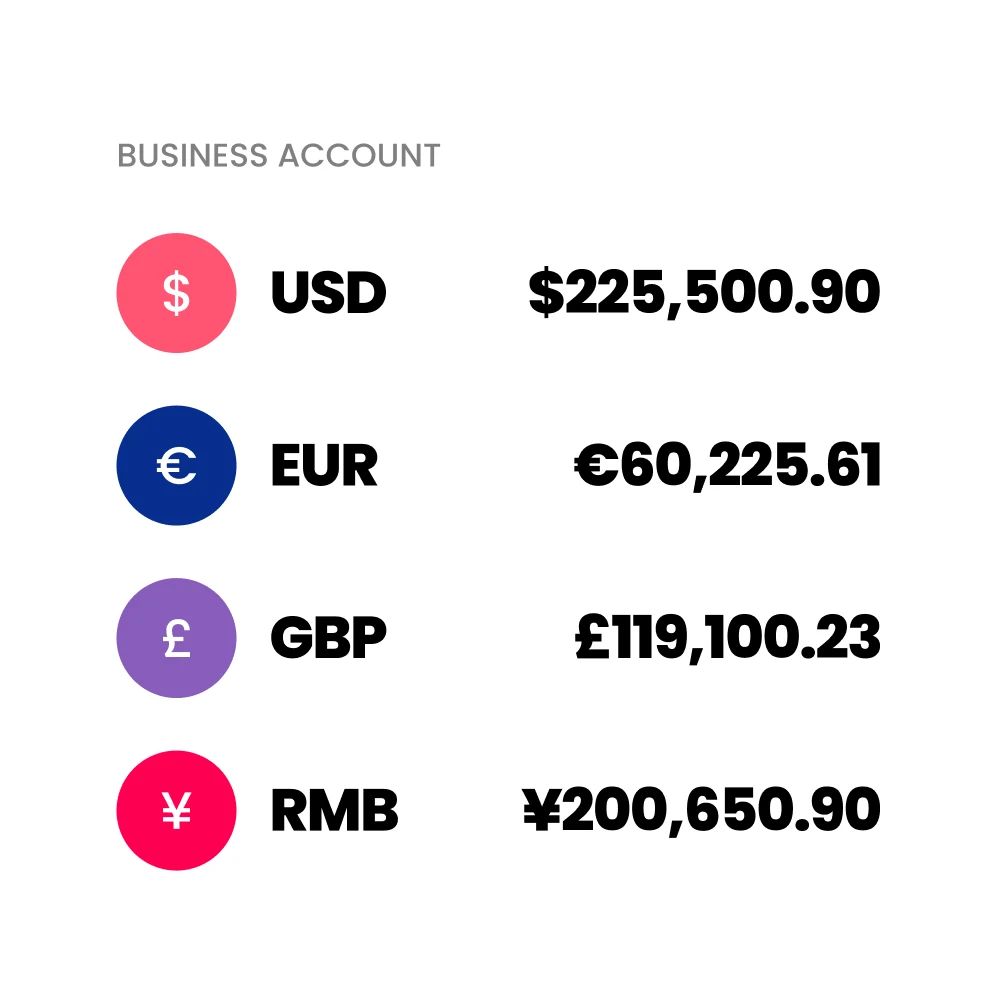
The broader appeal for a new importer is having one place for the full loop: collecting marketplace revenue in 20+ currencies, paying suppliers in 100+ currencies across 210+ regions, and then settling VAT to HMRC, all without switching platforms.

WorldFirst isn’t a bank. It’s authorised and regulated by the FCA as an electronic money institution, and while client funds are safeguarded in segregated accounts, they don’t carry the same FSCS deposit protection that a UK bank account would. For businesses that need lending, payroll, or full domestic banking alongside FX and payments, a World Account complements rather than replaces a bank relationship.

Open a World Account to bring VAT payments, supplier settlements, and multi-currency collections into one place as your import business grows.

FAQs

1. Do I need to register for VAT if my turnover is below £90,000?

Not necessarily. UK businesses generally have to register once taxable turnover exceeds £90,000 over a rolling 12-month period, or if they expect to exceed £90,000 in the next 30 days alone. Businesses below the threshold can also register voluntarily.

2. Can I voluntarily register for VAT below the threshold?

Yes. Voluntary VAT registration can allow eligible businesses to recover VAT on qualifying purchases and import costs, subject to HMRC’s input VAT rules. For importers with significant stock, freight and other VAT-bearing costs, this can make early registration worth considering.

3. Can I reclaim VAT paid before VAT registration?

In some circumstances, yes. HMRC allows businesses to reclaim VAT on certain goods and services purchased before their VAT registration date, provided the relevant conditions and record-keeping requirements are met. The rules and time limits differ for goods and services.

4. Do I still pay import VAT if I’m not VAT registered?

Yes. VAT registration does not determine whether import VAT is due when goods enter the UK. If you are not VAT registered, however, you generally cannot recover that import VAT through a VAT Return, so it becomes part of your business cost.

5. Do I need an EORI number if I’m VAT registered?

VAT registration and EORI registration are separate. Most businesses importing goods into Great Britain need a GB EORI number for customs processes, even if they already have a VAT registration number.

6. How does Postponed VAT Accounting work?

Postponed VAT Accounting allows eligible VAT-registered businesses to account for import VAT through their VAT Return instead of paying it upfront when the goods enter the UK. The import VAT can generally be declared and, where recoverable, reclaimed on the same VAT Return, which can reduce the cash-flow impact of importing.

Sources:

  1. https://www.gov.uk/register-for-vat
  2. https://www.gov.uk/government/publications/vat-increasing-the-registration-and-deregistration-thresholds/increasing-the-vat-registration-threshold
  3. https://www.gov.uk/vat-rates
  4. https://www.gov.uk/guidance/vat-imports-acquisitions-and-purchases-from-abroad
  5. https://commonslibrary.parliament.uk/research-briefings/sn00963/
  6. https://www.gov.uk/government/publications/vat-notice-7001-should-i-be-registered-for-vat
  7. https://www.gov.uk/import-goods-into-uk
  8. https://www.gov.uk/guidance/check-when-you-can-account-for-import-vat-on-your-vat-return
  9. https://www.gov.uk/guidance/vat-imports-acquisitions-and-purchases-from-abroad
  10. https://www.gov.uk/government/collections/vat-detailed-information
Read more

The simpler way to pay and get paid

Save money, time, and have peace of mind when expanding your global business.

Scan the QR code to download the app.
Scan with your phone
扫描二维码下载WorldFirst app
打开手机扫一扫

It looks like you're sending money to family or friends — that's a personal transfer, which is best handled through our app.

Sending money to family or friends? Download our app for the best experience.

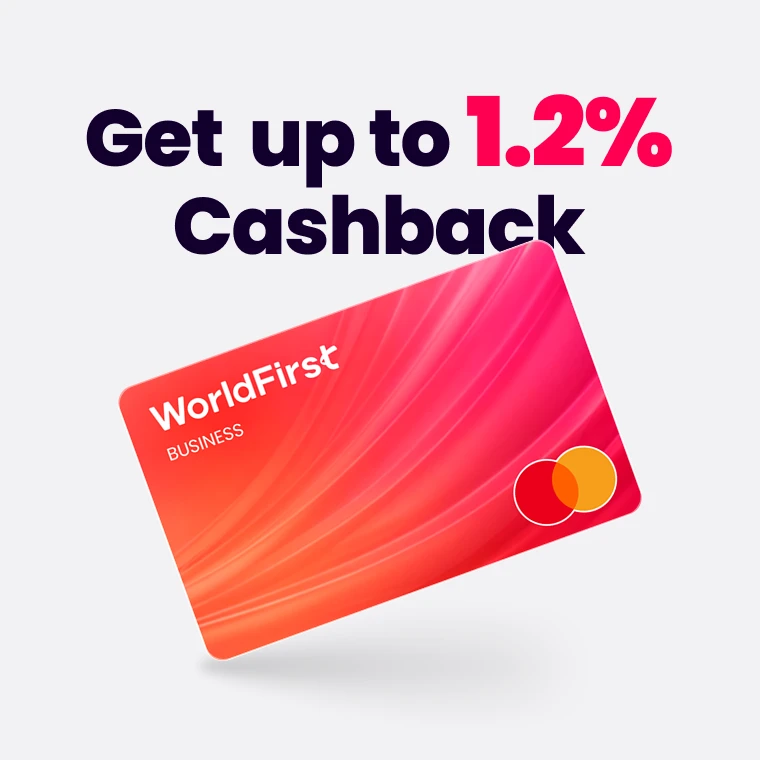
Pay in 15 currencies with World Card, no FX fees

Enjoy zero FX fees when paying in the following 15 currencies with World Card.

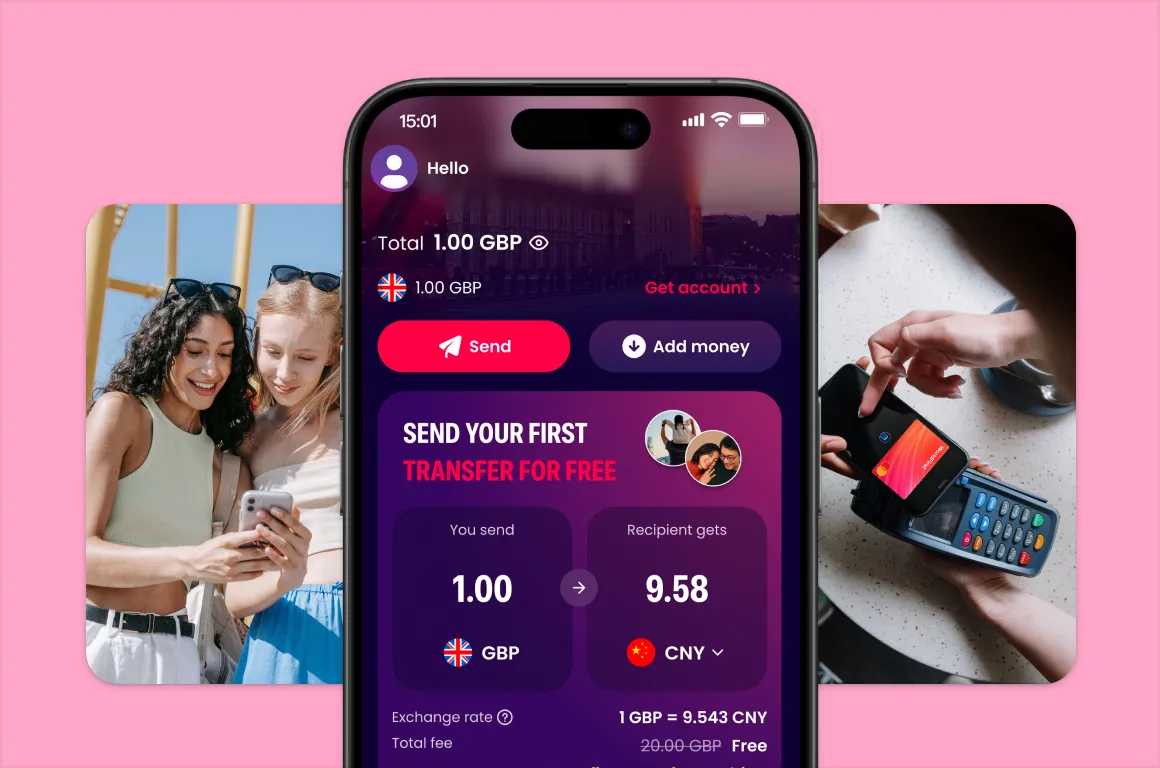
Send money in 100+ currencies

You can send money in your WorldFirst account to any of the currencies we support.

Get Paid by 130+ marketplaces

Seamlessly get paid by 130+ marketplaces and pay your suppliers anywhere.

Collect money in 20+ currencies

You can collect money in 20+ currencies. It only takes a few minutes to open an account in the currency you need.