



























Home > blog > Latest Happenings > How digital payment trends in Singapore support the way you accept payments
How digital payment trends in Singapore support the way you accept payments
Last update:


Singapore has one of the most digitally integrated payment systems in the world. More than 90% of consumers use digital payment methods and businesses process high volumes of real-time and contactless transactions each day.
In 2025, digital payment volumes in Singapore exceeded US$92 billion, with cross-border settlements averaging around US$47 billion per day.
Local transfers clear almost instantly, enabling faster reconciliation and tighter cash flow management. International transactions, however, still involve FX spreads, intermediary fees and settlement timing that directly affect margins.
For Singapore-based companies trading across Asia, Europe or North America, payment decisions now shape cash flow and margins.
This guide outlines the leading digital payment methods in Singapore, examines the most important recent trends and explains how businesses can structure payment operations to support both domestic activity and cross-border trade.
Key takeaways:
- Singapore consumers expect multiple payment options: Customers use cards, bank transfers, wallets and even cash. If you don’t support preferred methods, you risk losing sales to competitors who do
- Each payment method affects your margins differently: Bank transfers lower dispute risk and simplify reconciliation. Cards enable global sales but add layered fees and FX margins. Wallets improve mobile checkout. BNPL can increase order value, but comes at a higher cost
- Cross-border payments create the greatest cost pressure: Currency conversion, FX markups and SWIFT delays directly impact cash flow and profitability
- Your payment setup should match your currency exposure: Review where you earn revenue, which currencies you pay suppliers in and how quickly you need funds. Hidden FX margins and forced conversions erode profits over time
- A multi-currency solution improves control: With a World Account from WorldFirst, you can hold foreign revenue, convert on your terms and pay suppliers globally from one platform
Open a World Account to manage global revenue and supplier payments with operational clarity.
Singapore payment ecosystem: advanced and digital by default
Singapore’s drive to digital payments started years ago.
Nearly every resident has a bank account and a smartphone, and MAS policies (such as the Payment Services Act and Smart Nation initiatives) have fostered trust and adoption. As mentioned, the majority of payments are digital, meaning cash is now rare except in specific contexts (e.g., hawker centres, older customers).
Here’s a breakdown of POS transaction value in 2024 (PwC data):
- ATM withdrawals: SG$55.14 billion (39.18% of POS transaction value)
- Credit cards: SG$54.54 billion (38.76% of POS transaction value)
- Debit cards: SG$28.52 billion (20.27% of POS transaction value)
- E-money (stored-value wallet transactions): SG$2.52 billion (1.79% of POS transaction value)
Singaporeans have rapidly embraced contactless payments. Over 80% of consumers use tap-to-pay cards. The unified QR code (SGQR) is now widespread. Initiated by MAS/IMDA in 2018, SGQR allows any merchant to display a single code that accepts PayNow, e-wallets and cards via a QR code.
In late 2023, MAS piloted an improved “SGQR+” open-loop QR code system to simplify merchant setup. These rails (FAST, PayNow, SGQR) make interbank transfers instant and ubiquitous, so even small shops and hawker stalls can accept digital payments.
On the demand side, Singaporean consumers use a mix of cards, bank transfers and wallets. A 2024 Xero survey highlights how Singapore consumers choose to pay:
- 76% use credit or debit cards
- 55% use PayNow or direct bank transfers
- 22–29% use GrabPay, with adoption higher among Gen Z
Younger consumers are driving much of the behaviour change. Among Gen Z, 68% prefer PayNow and 22% use GrabPay, indicating stronger uptake of account-to-account and wallet-based payments than among older age groups.
Based on this data, businesses targeting Gen Z consumers and online shoppers need to prioritise mobile-friendly payment options to meet customer expectations and remain competitive. Xero notes that 30% of consumers now pay only with a phone, well above the global average (21%).
Although digital adoption continues to rise, cash still plays a meaningful role in Singapore’s payment mix. Around 79% of consumers report using physical currency for transactions, showing that notes and coins remain embedded in everyday spending habits despite ongoing digital growth.
This disconnect means companies risk losing customers if they ignore preferences: 18% of consumers said they would switch to a business that accepted their preferred method.
Major digital payments in Singapore
At this stage of market development, the meaningful differences between payment methods are less about availability and more about balance sheet impact, reconciliation workload and revenue quality.
Power your global growth with one account
Get local currency accounts, fast payments and competitive FX – all in one place.
1. Account-to-account payments (UEN-linked transfers)
For finance teams, direct bank transfers function differently from card-based flows. They’re “push” payments initiated by the payer, which reduces dispute risk and removes chargeback exposure.
Operational implications:
- Finality of funds: Once received, payments are generally irrevocable, reducing write-offs associated with disputes
- Cleaner reconciliation: UEN-linked payments improve automated invoice matching
- Lower processing cost per transaction: Particularly relevant for high-frequency, low-ticket businesses
- No embedded FX conversion: Transactions occur in SGD, avoiding spread leakage
Limitations appear when businesses expand internationally. These rails don’t naturally extend into cross-border collections, so exporters must layer on additional payment infrastructure. From a working capital standpoint, account-to-account payments provide stronger visibility and certainty than card flows.
2. Card payments and revenue structure
Cards operate within a global scheme framework. That global acceptance is their core advantage, but it comes at a structural cost.
Behind a single card transaction sit multiple fee layers:
- Interchange fees (paid to the issuing bank)
- Scheme fees (paid to card networks)
- Acquirer markup
- Cross-border and FX markups where applicable
For businesses selling into overseas markets, FX spreads are often embedded in the acquiring agreement rather than clearly itemised. That makes the total cost of acceptance harder to benchmark.
Financial considerations include:
- Settlement delay: Funds arrive after clearing cycles, affecting short-term liquidity
- Chargeback liability: Merchants must maintain dispute reserves
- Higher compliance burden: PCI requirements and fraud monitoring increase operational oversight
Cards provide scale and international compatibility. But they also introduce volatility in net revenue after fees, especially for cross-border sellers.
3. Wallet-based payments and ecosystem dependence
Wallet transactions depend on underlying funding sources. Some draw directly from linked bank accounts, others from tokenised cards or stored balances.
From a business perspective, wallets influence:
- Checkout efficiency: Reduced friction can improve conversion rates
- Fraud profile: Tokenisation lowers exposure to stolen card data
- Platform reliance: Acceptance depends on integration with specific payment gateways or super-app ecosystems
- Brand visibility: Some wallets bundle loyalty incentives that shift customer behaviour
Wallets don’t necessarily reduce settlement time compared to cards. Their primary effect lies at the front end of the sales funnel rather than in treasury operations.
For consumer-facing brands, wallet support affects competitive positioning more than cost efficiency.
4. Buy Now, Pay Later and margin compression
BNPL sits between payments and consumer finance. It changes purchase timing and perceived affordability.
Merchant-side implications:
- Higher merchant discount rates compared to standard cards
- Immediate payout from the provider, not the customer
- Revenue uplift from higher average order values
- Indirect brand association with credit behaviour
BNPL doesn’ lower the cost of accepting payments. Instead, it shifts the economics of the sale. The merchant pays a higher fee in exchange for the possibility of larger baskets or higher checkout completion.
For retailers operating on tighter margins, the decision comes down to the numbers. Any uplift in conversion or average order value must comfortably exceed the additional fee burden.
BNPL sits outside the core payment rail itself. It adds a short-term financing layer between the customer and the merchant, while the underlying transaction still runs through existing card or wallet infrastructure.
Cross-border payments: bridging the gap
While Singapore’s domestic payment rails are fast and unified, cross-border transfers remain more complex. Many local businesses import goods from countries such as China or the US and export services globally.
Typical challenges include:
- Currency conversion: If a business holds an SGD-only account, it must convert any foreign payment before using the funds. Traditional banks often impose non-transparent FX markups. For example, converting SGD to USD or RMB at a bank may cost an extra 0.5–1.5% above the interbank rate
- Multiple accounts: Companies often juggle several foreign accounts (USD, EUR, CNH) or intermediaries to pay overseas, which adds management overhead
Transfer delays: Standard SWIFT transfers may take three or more business days and cut-off times mean weekends/holidays cause an extra wait
ASEAN linkages
Singapore is actively linking its system with its neighbours. As of 2021, PayNow (SG) was directly connected with PromptPay (Thailand), allowing instant mobile transfers up to SG$1,000/฿25,000.
In 2022, MAS and Bank Negara Malaysia launched the PayNow-DuitNow link for real-time SG-MY transfers.
Singapore and India launched a live linkage between PayNow and India’s UPI, allowing real-time cross-border fund transfers.
These initiatives are built under ASEAN’s strategy (Project Nexus) to create a pan-ASEAN real-time network by 2026. For small remittances, this can cut costs and time.
Nevertheless, large-value B2B payments often still use older channels. According to industry analysis, banks and money services remain slower and more expensive for cross-border payments than domestic rails. Businesses in Singapore frequently report frustration: multiple banks, hidden fees and forced conversions all eat into margins.
Singapore's digital payments trends shaping 2026
Digital payments continue to evolve. Key trends for Singapore businesses include:
1. Real-time, 24/7 everything
Consumer and supplier expectations now demand instant settlement and continuous availability. Any delay in payment processing can stall orders or cash flow. Businesses are investing in APIs and automation so that inbound payments trigger workflows (e.g., inventory or reconciliation) immediately.
The MSP (Singapore Payments Network) initiative aims to make all domestic transfers instant, around the clock. Expect demand for real-time cross-border rail services to grow accordingly.
2. Embedded finance and platforms
Payments are no longer a standalone activity but embedded in software and platforms. E-commerce marketplaces (Shopee, Lazada, Amazon) and B2B portals increasingly handle end-to-end payment flows.
A Singapore seller, for example, can have Amazon settle in USD and auto-convert or send that money via integrated solutions.
Accounting systems (such as Xero and NetSuite) now integrate directly with payment providers, automating invoicing-to-settlement workflows.
3. Regulation and security
MAS is enforcing stricter guardrails: the Payment Services Act (2019) requires providers to have robust AML/CFT measures and authorities are partnering across borders to combat scams.
Instant payments increase the risk of scams (as fraudsters exploit their speed), so companies must use compliant providers.
Data is also more open: Singapore participates in Project Nexus to develop a common fraud-monitoring framework across ASEAN. For businesses, working with MAS-regulated partners (like WorldFirst) adds trust and compliance.
4. Shift to B2B digitisation
Many digital payment innovations began with consumers (mobile wallets, QR codes). The next wave targets business payments. Asia-wide, initiatives like digital invoicing, e-warehouse financing and supplier networks are emerging.
Singapore companies increasingly seek treasury visibility tools: e.g., dashboards showing payables/receivables by currency. As Xero found, 87% of small businesses saw benefits from new payment methods (43% got paid faster, 42% retained more business). This positive impact drives further adoption.
How businesses can choose a payment infrastructure
To manage these dynamics effectively, Singapore businesses should assess their specific needs. Consider:
- Currency flows: Do you receive revenue in USD, EUR, RMB or other currencies? If so, can you hold those balances or must you convert immediately?
- Payment recipients: Are your suppliers local or overseas? In which currencies and countries? Do they prefer bank transfers, local digital methods or cards?
- Transaction volume/size: Are you paying large invoices (risking high FX fees) or many small transactions? High volumes might qualify for tiered rates
- Speed requirements: How fast must payments settle? Does a delay harm the business (e.g., halted shipments, lost discounts)?
- Account complexity: How many bank accounts do you manage? Multiple accounts in different currencies can reduce visibility of your cash position, and complicate reconciliation. A single multi-currency account may simplify treasury
- Fee transparency: Do you know exactly what FX margin or network fee you pay? Lack of visibility often means hidden costs
- Integration: Do you need API integration (for e-commerce, ERP systems) and reconciliation tools?
Here are some questions to guide your decision:
- Do I collect money in more than one currency?
- Am I forced to convert foreign receipts immediately or can I hold foreign currency balances?
- Are FX rates and fees on my current channels transparent?
- How many cross-border transfers do I make per month?
- Do I rely on multiple bank accounts to manage international flows?
- Is payment speed (e.g., for inventory purchases or payroll) critical to my business?
- Can I integrate with my accounting or marketplace systems for automated payouts?
Managing digital payments across borders with WorldFirst
Singapore offers fast, digital-friendly payment rails, but businesses trading overseas still need better control over currencies and global transfers. The choice of payment infrastructure can make or break margins and growth. Traditional banks often lock companies into local currencies, slow down processes and hide FX costs.
In contrast, a World Account is a multi-currency solution from WorldFirst that enables full visibility and flexibility: hold funds in the currency you need, convert on your terms and pay suppliers when you need, without unnecessary delays.
WorldFirst is not a bank, but a licensed payments institution in Singapore, providing cross-border payment and FX services to businesses.
Key capabilities include:
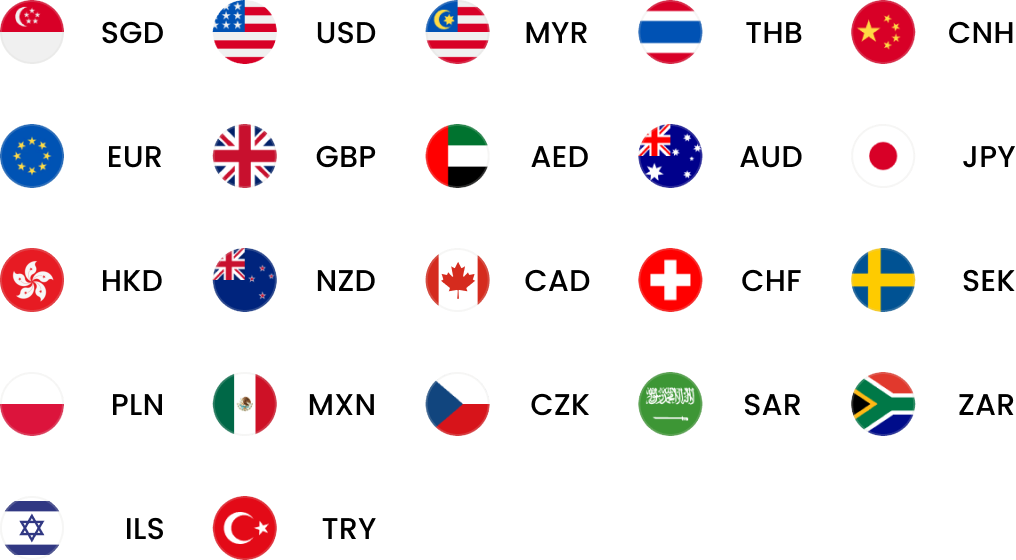
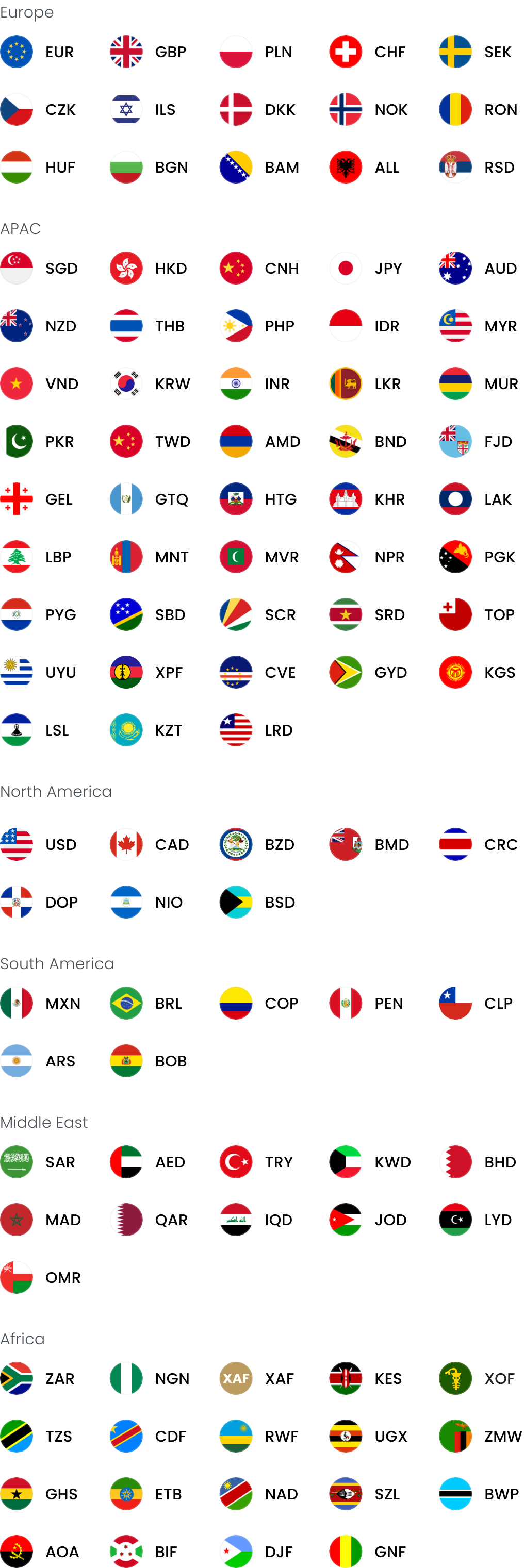
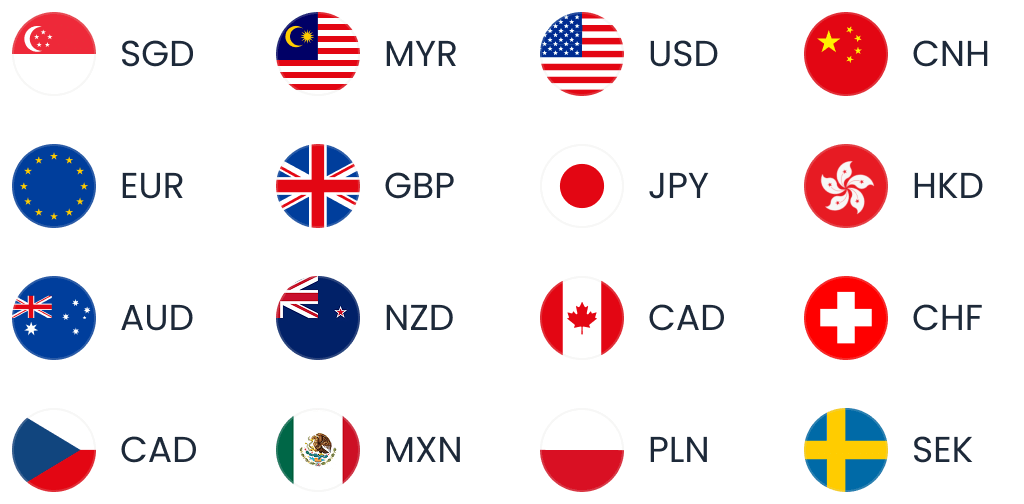
- Receive and hold 20+ currencies: Businesses receive local account details in major currencies, including USD, EUR, GBP, AUD, SGD, HKD and CNH. Funds can be held in the original currency rather than converted immediately
- Pay suppliers in 100+ currencies: Outbound payments can be sent across major and emerging trade corridors, using local clearing routes or SWIFT where appropriate
- Transparent FX execution: Live exchange rates are displayed before conversion, allowing businesses to decide when to convert and how much
- Lock in exchange rates: Target an exchange rate or lock in rates for up to 24 months for budgeting certainty
- Single operational dashboard: Collections, balances, FX and outbound payments are managed in one platform, reducing reliance on multiple banking portals
Customer story: KeaBabies
Singapore-based brand KeaBabies expanded through international marketplaces, particularly targeting customers in the US.
As overseas revenue grew, so did payment complexity. Payouts arrived in foreign currencies, suppliers were based overseas and FX timing began to affect margins. Using traditional banks would have meant automatic conversions and limited visibility over currency costs.
To manage this, KeaBabies adopted the World Account from WorldFirst.
WorldFirst helped KeaBabies:
- Hold overseas revenue in USD instead of converting immediately to SGD
- Pay international suppliers directly in foreign currency
- Access live FX rates before converting
- Manage collections and payments through a single platform
For KeaBabies, the advantage was greater control over currency exposure, timing and cost – supporting international growth without multiple banking relationships.
Is your digital payment strategy in Singapore built for international growth?
Open a World Account to manage cross-border collections and supplier payments with transparent FX pricing, currency flexibility and predictable execution.
Sources:
- https://sumsub.com/blog/apac-payment-methods/
- https://www.pwc.com/sg/en/publications/payments-state-of-play.html
- https://www.xero.com/us/media-releases/digital-payment-trends-singapore-gen-z-leading-shift/
- https://www.aseanbriefing.com/news/malaysia-and-thailand-launch-qr-payment-linkage/
- https://www.worldfirst.com/sg/
- https://iasg.com.sg/growth-of-e-payment-systems-in-singapore-its-effects/
- https://www.mas.gov.sg/monetary-policy
- https://blog.maxthon.com/2026/02/05/the-mobile-payments-revolution/
- https://ctmfile.com/story/gen-z-driving-digital-payments-explosion-in-singapore-industry-roundup-20-august
- https://holbornassets.asia/blog/cross-border-payment-innovations-in-asia/
- https://www.liquidgroup.sg/liquid-group-news/blog/gara-malaysia-launch-a-cross-border-real-time-payment-systems-linkage-between-paynow-and-duitnow
- https://www.mas.gov.sg/news/media-releases/2023/launch-of-real-time-payments-between-singapore-and-india
- https://www.worldfirst.com/sg/blog/latest-happenings/digital-payments-singapore/
Continue reading


Subscribe
The Weekly Dispatch
Get the latest news and event invites. Signup for our weekly update from the worlds of fashion, design, and tech.
Open a World Account for free

Get local currency accounts, fast payments and competitive FX – all in one place.

Joan Poon leads marketing across Southeast Asia at WorldFirst, driving growth and brand leadership in key markets including Singapore, Malaysia and the Philippines.

Joan Poon
Author
Head of Marketing SEA, WorldFirst Singapore
You might also like
Choose a product or service to find out more

Customer Stories


Latest Happenings

e-Commerce & Online Sellers
Doing business with China

International Transactions

Foreign Currency Exchange
Doing business with China
The simpler way to pay and get paid
Save money, time, and have peace of mind when expanding your global business.