



























Learn how sellers on Shopee Singapore can expand into Malaysia, Thailand and the Philippines through the Shopee International Platform, and how to handle payments across multiple currencies
Key takeaways
- Shopee is one of the largest e-commerce marketplaces in Southeast Asia, with 295 million users globally
Sellers on Shopee Singapore pay commission, transaction and (for some programmes) service fees per successful order, with no fee for opening a seller account or creating listings - The Shopee International Platform (SIP) lets Singapore sellers list on Shopee Malaysia, Shopee Thailand and Shopee Philippines from the same seller account, with Shopee handling pricing, logistics, marketing and overseas customer service
- A multi-currency account like the World Account gives sellers local currency accounts across supported currencies, useful for paying suppliers in China and managing operating expenses in multiple currencies
Shopee has become one of the fastest-growing e-commerce platforms in Southeast Asia. Shopee generated USD 9 billion in revenue in 2023, with 295 million users across its regional markets. In 2025, Shopee reported its first profitable full year, marking a milestone for its parent company Sea Limited.
For sellers based in Singapore, Shopee is often the first e-commerce channel to start with because the barrier to entry is low and the marketplace has a large local buyer base.
Expanding beyond Singapore is a natural next step for sellers who want to scale, and Shopee offers a specific programme for that: the Shopee International Platform (SIP). It lets Singapore Shopee sellers reach buyers in Malaysia, Thailand and the Philippines from the same seller account.
This guide covers the basics of selling on Shopee Singapore, how SIP works for expanding cross-border, and how to handle the payments side when your operations start crossing currencies.
Selling on Shopee Singapore: The basics
Here’s everything you need to know before setting up your Shopee store in Singapore
Registering as a seller
New sellers can sign up through the Shopee Seller Centre or the Shopee app. Registration needs a valid phone number, an email address, and identity verification. Individual sellers can register with an NRIC or FIN, while businesses register with an ACRA-registered entity.
Once verified, sellers link a Singapore bank account to receive Shopee escrow payouts, customise their shop name and layout, and start listing products.
Understanding Shopee’s seller fees
Shopee charges Singapore sellers three main types of fees
Commission fees: Charged on the product price and category, with different rates for Shopee Mall sellers and non-Mall sellers
Transaction fees: A per-order handling fee that applies to every successful transaction across all payment methods, including credit cards, debit cards and ShopeePay
Service fees Charged only for sellers enrolled in specific Shopee programmes such as the Promo Xtra Programme (which replaced the Coins Cashback Programme in May 2026). It is charged per successful order.
Shipping fees: Sellers pay based on the logistics channel they use to fulfil orders. Rates vary by delivery option and are published in the Shopee Supported Logistics fee rates.
The exact commission and transaction percentages are set by Shopee and updated periodically. There is no fees for listing orders
Getting the Preferred Seller or Mall badge
Shopee awards two seller badges that signal credibility to buyers:
- The Preferred Seller badge is given to sellers who pass an in-depth document review and meet performance criteria such as fulfilment rate and customer service quality
- The Mall badge is reserved for brand owners or authorised distributors of a brand
Expanding to Malaysia, Thailand and the Philippines with Shopee
The Shopee International Platform (SIP) is the programme that lets Singapore sellers list on Shopee Malaysia, Shopee Thailand and Shopee Philippines without opening separate seller accounts or handling overseas logistics themselves.
Shopee added the Philippines to SIP for Singapore sellers on 1 August 2025, joining Malaysia and Thailand as the three supported cross-border markets.
How SIP works
When you’re accepted into SIP, your Singapore listings are automatically synced to Shopee Malaysia, Shopee Thailand and Shopee Philippines. The username in the overseas market takes your Singapore shop name and appends .my, .th or .ph, unless that name is already taken.
For each overseas order, the process from your end is close to identical to a local order:
- An overseas buyer places an order on the SIP-synced shop
- You’re notified through Seller Centre and ship the item to the Shopee Singapore Warehouse using one of Shopee’s supported logistics providers (J&T, Shopee Express or Ninja Van)
- The Shopee Singapore Warehouse re-labels and processes the parcel and hands it over to Shopee’s overseas logistics partner
- The last-mile delivery is handled by Shopee’s appointed partner in the destination country
For SIP orders, Shopee reviews the shipment and releases the payment to your seller wallet within 15 working days of the delivery being confirmed.
Pricing on overseas Shopee stores
Prices on SIP overseas stores are calculated by Shopee’s internal system based on the item weight, overseas shipping fees and currency conversion rates. Any promotion prices you set on your Singapore store are synced to overseas equivalents. If you want to adjust pricing on the overseas listings, you first adjust the price on the Singapore listing.
Marketing on overseas stores
Shopee handles overseas marketing on your behalf. Flash Deals for SIP overseas stores are set up and covered by Shopee, and advertising costs on overseas markets are borne by Shopee. Vouchers, price teasers and campaigns don’t sync across from your Singapore store to the overseas ones.
If you want to be excluded from Flash Deals or Ads on the overseas stores, you can request this through the SIP team.
Eligibility and joining SIP
SIP onboarding happens monthly, and Singapore sellers can accept the pop-up terms in Seller Centre or submit an onboarding form to be considered. Applications can be rejected for missing fulfilment SLAs, non-compliant products, or prohibited item categories.
Sellers who sign up are enrolled in all three markets (Malaysia, Thailand and Philippines) by default. If you need to opt out of a specific market, you can submit an offboarding form.
Handling payments and multiple currencies
Once you’re selling to buyers in Malaysia, Thailand and the Philippines through SIP, most of the currency management is handled by Shopee. Overseas orders are processed by Shopee, the escrow release lands in your seller wallet, and you don’t need to open bank accounts or seller accounts in each country.
Where currency management becomes relevant for your business is on the operating expenses side.
Most Shopee sellers based in Singapore source products, packaging or fulfilment services from outside Singapore. Many buy from suppliers in China. Some pay for logistics, warehousing or SaaS tools in USD.
Others invoice for services in EUR or GBP. Each of these transactions involves an SGD to foreign currency conversion, and each conversion typically loses some margin to the exchange rate markup and fees applied by a Singapore bank.
Collect Shopee payouts with WorldFirst
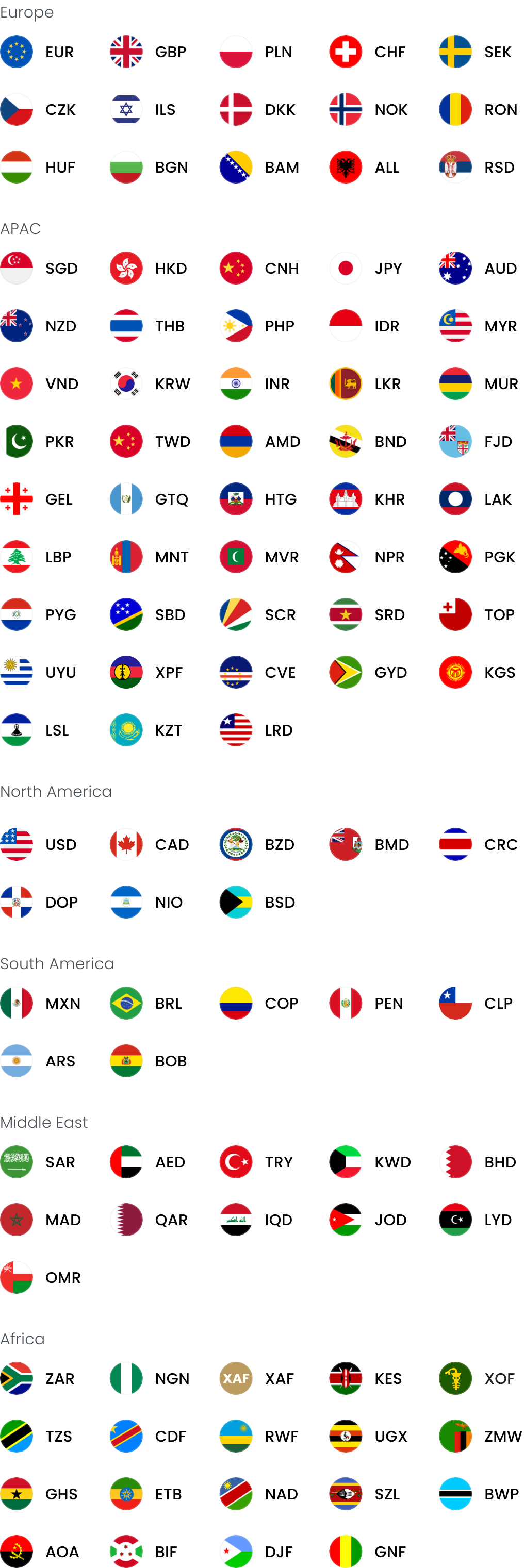
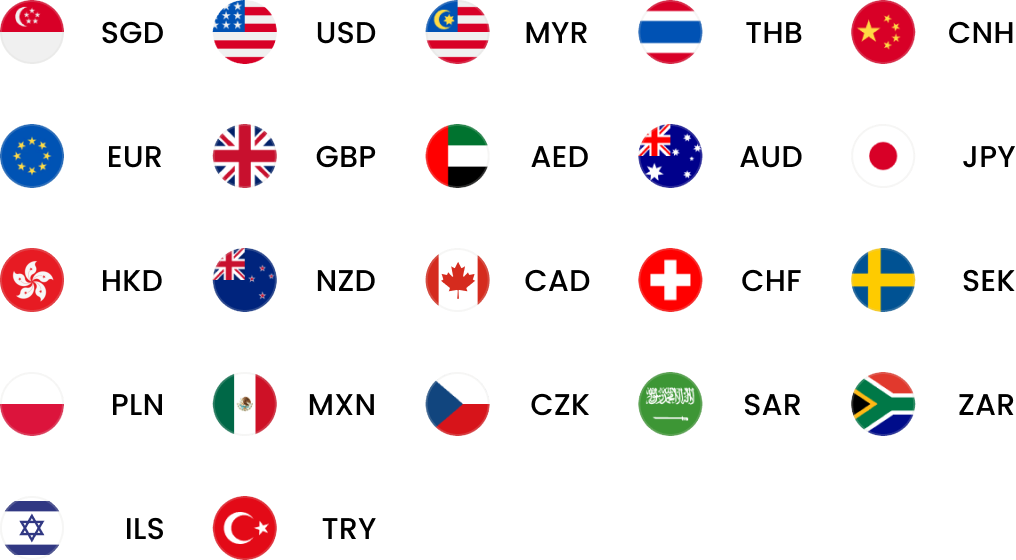
WorldFirst is an international payments provider that helps Singapore businesses manage cross-border payments. The World Account is a multi-currency account that lets Singapore sellers hold and send payments across 20+ currencies including USD, EUR, GBP, CNH, MYR, THB, HKD, JPY and CAD.
For Shopee sellers expanding to overseas markets, the World Account is most useful for:
Paying suppliers in China in CNH: Instead of converting SGD to CNH on every payment, hold CNH in a dedicated CNH Receiving Account and pay suppliers directly. World Pay is the authorised international payment provider for 1688.com, letting Singapore sellers pay 1688 suppliers directly from a CNH balance.
Paying overseas partners and SaaS tools in USD, EUR or GBP: Hold the foreign currency and pay directly from that balance, avoiding conversion on every payment. This is useful for advertising platforms, subscription tools, freelance service providers, and international marketing agencies.
Handling forwards for major supplier commitments: Forward contracts let you lock in an exchange rate on a future payment for supported currencies, which can help protect margins on large or recurring supplier commitments.
Spending from a foreign currency balance via the World Card: For sellers with regular USD spending across ad platforms, SaaS tools or fulfilment providers, a business payment card that draws from a held balance can avoid foreign transaction fees on every purchase.
FAQs
Does Shopee charge sellers to open an account?
No. Opening a seller account and listing products on Shopee Singapore is free. Shopee earns from commission, transaction and shipping-related fees when an order successfully completes.
Can Shopee sellers cancel an order?
Yes, but with restrictions. Sellers can cancel an order under specific conditions (out of stock, incorrect pricing, buyer request), but cancellations affect the seller’s performance metrics. Consistent cancellations can impact eligibility for programmes like the Preferred Seller badge or SIP.
The information contained is general only and largely our views. Before acting on the information you should consider whether it is appropriate for you, in light of your objectives, financial situation or needs. Although information has been obtained from and is based upon multiple sources the author believes to be reliable, we do not guarantee its accuracy and it may be incomplete or condensed. All opinions, estimates, mentioned products/services and referenced material constitute the author’s own judgement as of the date of the briefing and are subject to change without notice. WorldFirst shall not be responsible for any losses or damages arising from your reliance of such information.

![Revolut Business Card review Singapore [2027]: Features, fees & more](https://mdn.marmot-cloud.com/worldfirst/sites/9/2026/09/20261001002258848-300x200.webp)