



























Home > blog > International Transactions > What’s the best way to do an international money transfer?
What’s the best way to do an international money transfer?
Last update:


If you’re searching for the best ways to transfer money internationally, there are some important questions to ask as you compare your options:
- Are the FX rates fair and fees transparent? Many payment services apply FX markups (sometimes as high as 3–4%) that aren’t obvious upfront. Providers that are transparent about costs make it much easier to plan ahead and manage budgets with confidence.
- How quickly do the funds arrive? Payments sent with SWIFT can take up to six days to arrive, which can disrupt your business operations. Providers that deliver payments quickly help keep your supply chain running smoothly and relationships on track.
- Can payments be tracked end-to-end? A payment solution that lets you see every payment clearly – and even notifies you the moment money arrives – gives you peace of mind and saves you from chasing follow-ups.
- How easy is it to set up a transfer? It shouldn’t be complicated to send international payments. Providers that streamline the process – by offering automated payments, for instance – help ensure suppliers or contractors get paid on time, without extra manual steps or last-minute stress. Features such as batch payments also help when you’re making transfers at scale.
- Can it handle larger or more frequent transfers? Payment providers with flexible transfer limits make it easier to send high-value or repeat payments without slowing you down or adding extra hoops to jump through.
In this article, we’ll help you find the best way to transfer money internationally – and show how a multi-currency World Account from WorldFirst addresses these challenges.
At WorldFirst, we offer low, transparent FX fees, with 90% of international transfers arriving within a day. That’s why over 1.5 million businesses trust us with their international payments.
We’ll cover:
- Why WorldFirst is the smarter way to transfer money internationally
- 4 common ways to send money internationally
- How to open a free, multi-currency account with WorldFirst in minutes
Open a World Account for free today and start making simple and secure payments.
Why WorldFirst is the smarter way to transfer money internationally
At WorldFirst, we work with businesses that need a simpler way to send and receive money internationally. Our multi-currency World Account offers exactly that, letting you hold 20+ currencies and send payments in 100+ currencies worldwide, all from one place.
We’re fully regulated by the Monetary Authority of Singapore under the Payment Services Act and we partner with some of the world’s largest banks to keep your money safe. Over the last two decades we’ve securely moved over $500 billion across the globe.
Here are just some of the international money transfer benefits you’ll find with a World Account:
Power your global growth with one account
Get local currency accounts, fast payments and competitive FX – all in one place.
Send payments fast with 90% landing within a day
When you’re moving money across borders at scale, speed really matters. Late payments don’t just slow things down – they can create extra admin and interrupt cash flow.
WorldFirst is built to keep payments moving quickly and reliably, even at high volumes. By routing most payments through local clearing networks instead of slower SWIFT routes, around 90% of payments land within the day.
Speed doesn’t drop off when you’re handling high-volume payments. Rather than processing transfers one by one, you can send multiple payments at once, and automate them so money goes out exactly when it’s meant to. The result is fewer delays and a payment process that runs smoothly in the background.
Read more: How to send money abroad (+ how to avoid hidden costs)
Competitive, transparent fees for payments to 210+ countries
International transfers often end up costing more than you expect. That’s not because of one obvious fee, but due to layered FX markups, conversion charges and intermediary bank deductions that aren’t always clear upfront.
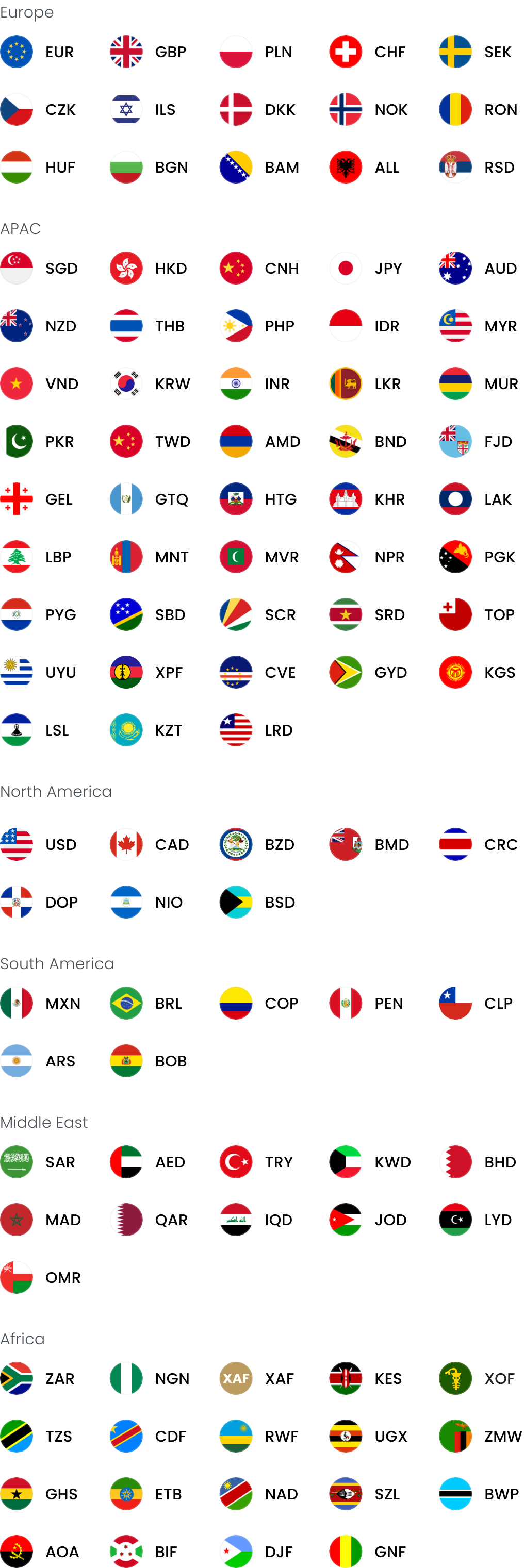
WorldFirst is different, helping SMEs pay in 90+ currencies to more than 210 countries without high or unclear fees getting in the way.
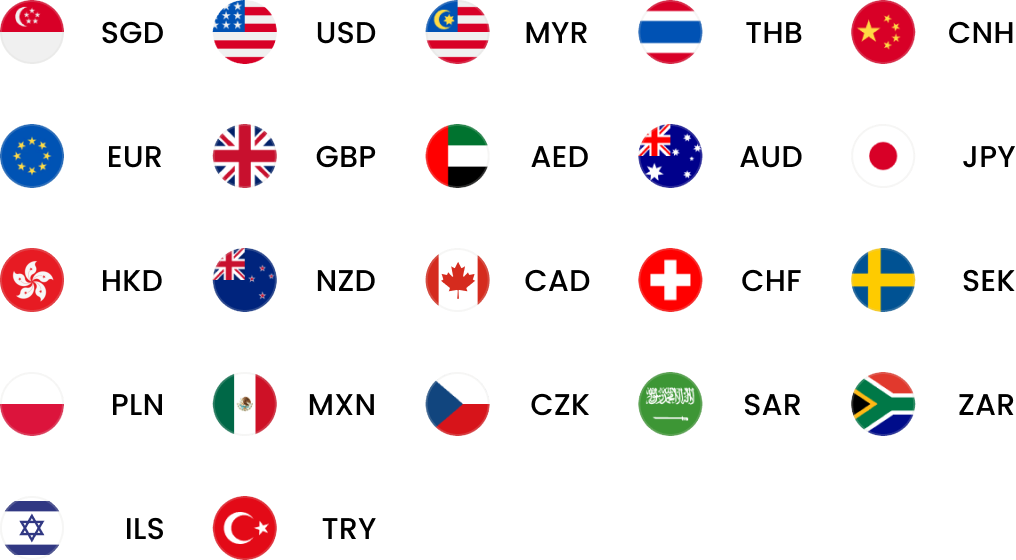
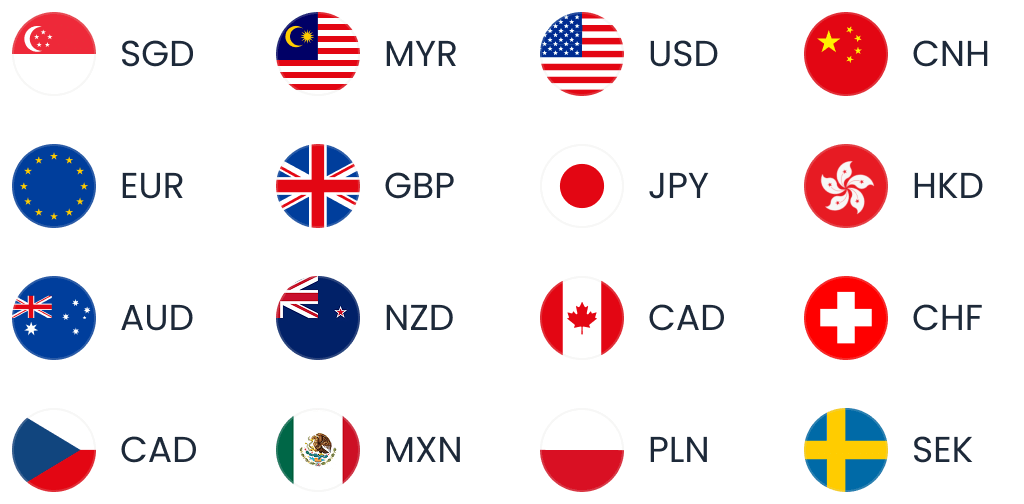
When you sign up for a World Account, you can hold, receive and spend in 20+ currencies – including SGD, USD and EUR – with no transfer fees. So if you earn in US dollars, you can pay straight from your USD balance instead of converting back and forth and racking up unnecessary FX costs.
When you do need to exchange foreign currency, pricing is straightforward. WorldFirst uses the mid-market rate, with a low markup capped at 0.60% – well below the 1–3% many banks charge.
Plus, you have the option to convert funds only when rates are favourable, using tools like firm orders or forward contracts. When you target a specific rate, WorldFirst will monitor the market 24/7 and automatically execute the conversion when your rate is reached.
And unlike providers that limit how much you can send, WorldFirst lets you make high-value international payments directly from your account balance, without restrictions.
One of WorldFirst’s Singapore customers shares their experience:
“International payments used to be really cumbersome and expensive. Cost is always a challenge. For each transaction with WorldFirst, we save about 70%, which overall is about thousands of dollars.”
Read more: What’s the cheapest international money transfer method?
Stay in control of payments as your business scales, with one central dashboard
As payment volumes grow, it’s not just about cost – you also need visibility and control. WorldFirst brings all your transactions into one central dashboard, so you can see where your money is and when it’s arriving.
It means you can know it’s secure – without jumping between systems or chasing updates. Every transaction is automatically recorded, giving you real-time payment tracking and a clear audit trail whenever you need it.
And because WorldFirst integrates with accounting platforms like Xero and NetSuite (and connects via API), reconciliation and reporting become much simpler. The result is less admin, better oversight and a payment process that grows right alongside your business.
Open a World Account for free today and benefit from easier international transfers.
4 common ways to send money internationally
While WorldFirst offers numerous international money transfer benefits, there’s not a single “best” option for every situation. Here’s how the most common transfer methods compare.
1. International bank transfers (SWIFT)
Traditional bank-to-bank transfers (or wire transfers) are sent through the SWIFT network and are still commonly used for international payments.
They’re typically best suited for:
- Large, formal payments
- Businesses with established banking relationships
- Situations where the receiving bank specifically requires SWIFT
However, there are a few important things to be aware of:
- They have high and unpredictable fees. Banks often apply FX markups of 1–3% above the mid-market rate, alongside fixed transfer fees of around S$10–50 per transaction. Receiving banks may also charge their own fees.
- SWIFT transfers often pass through multiple intermediary banks. Each one can take a fee, which means the recipient may receive less than expected, even if you’ve paid all fees upfront.
- Transfer times are often slow. International SWIFT payments typically take 3–6 business days to arrive, which can affect cash flow and delay supplier payments.
- Foreign exchange rates offered by banks are often less favourable than those provided by specialist international payment platforms, with limited transparency around pricing.
Overall, traditional bank transfers can be an expensive way to send money internationally, largely due to layered or hidden fees, intermediary deductions and poor visibility on FX costs.
Read more: FX international payments: How to affordably send money abroad
2. Online money transfer services
Online money transfer services, like Wise, OFX and Remitly, are commonly used for international payments and are typically best suited for:
- Lower-cost international transfers
- Faster delivery for smaller amounts
- Freelancers, solo founders and small businesses
But when considering these options, here’s what you should be aware of:
- Transfer limits may apply. Many platforms cap how much you can send per transaction or per day, which can make it difficult to pay large invoices or suppliers in one go.
- Transfer speed, availability and reliability can differ depending on the destination country, currency and payment method.
- These services are often designed for simpler use cases and may lack the features needed to manage larger or more complex international payment flows.
- In many cases, you’re required to convert funds immediately rather than holding multiple currencies and choosing when to exchange based on favourable rates.
- Transfers can be instant or take 1–2 business days, depending on the provider, currency, country and method used.
These online money transfer services can be a convenient option for smaller, straightforward payments, but they may be limiting for businesses that need flexibility, scale or greater control over international payments.
Read more: How to choose a virtual debit card for international payments
3. Cash transfer networks
Cash transfer networks include services such as Western Union and MoneyGram. They allow recipients to collect funds in cash or receive them digitally and are typically best suited for:
- Recipients without access to bank accounts
- Urgent, cash-based needs
However, here’s what you should know:
- These services often charge higher transfer fees and apply high exchange rates, often adding a 1–5% or higher markup on the mid-market rate.
- Fees and exchange rate markups are not always clearly disclosed upfront, making it harder to understand the true cost of a transfer.
- Cash transfer networks are built for personal remittances rather than business use and generally lack features such as audit trails, reporting or payment controls.
- Transfers typically take 1–5 business days, depending on the country, payout method and local regulations.
Overall, many international money transfer services can be useful in specific situations, but are rarely suitable for businesses that need cost efficiency, transparency and control over international payments.
4. Multi-currency accounts and global payment platforms
Multi-currency accounts and global payment platforms, such as WorldFirst, are designed to help businesses send and manage international payments more efficiently.
They’re typically best suited for:
- Ongoing international payments
- Paying contractors, suppliers and global teams
- Businesses that want lower fees and more control over how money is managed
Here’s what you should know:
- These platforms usually require an initial setup process, including identity verification and compliance checks, before you can start sending payments.
- Compared to traditional banks, multi-currency platforms are far more predictable and cost-effective in the long term, especially as payment volumes grow and operations become more complex.
- Payments can be instant or take 1–2 business days, depending on the currency, country and payment method used.
Overall, multi-currency accounts and international payment platforms are often the best long-term option for growing businesses, offering the flexibility, transparency and control needed to manage global money transfers at scale.
Read more: How to open a foreign currency account: A guide for Singaporean businesses
Open a multi-currency account with WorldFirst in minutes
Sending money internationally doesn’t have to mean high fees, slow transfers or limited visibility.
With WorldFirst’s free, multi-currency account, Singapore SMEs can manage international payments in one platform – with access to customer support in 20+ regions (and in 11+ languages).
If you’re ready for a simpler, more cost-effective way to send money internationally, open a WorldFirst account in minutes.
FAQs
Why are international money transfers so expensive?
Costs often come from multiple sources: FX markups above the mid-market rate, SWIFT transfer amounts, receiving bank fees and intermediary bank deductions. These charges aren’t always shown upfront, which is why transparency matters.
How long do international money transfers take?
Transfer times vary by provider and route. Traditional SWIFT transfers can take up to 5–6 business days, while modern payment platforms using local clearing networks may deliver funds the same day or within 1–2 business days.
With WorldFirst, 90% of transfers arrive by the next day, and some are even instant.
What is the best method to transfer money abroad?
The best method depends on how often you send money, the amounts involved and how much control you need. Traditional banks can be slow and expensive, while basic online transfer services may have limits or fewer business features.
For businesses making regular international payments, a multi-currency account like WorldFirst offers a more flexible, transparent and cost-effective way to send money abroad, especially as your business grows.
Can I transfer money internationally with a credit card?
Yes, many international transfers can be funded with a credit or debit card, and they often arrive within seconds, making them a fast option when timing matters.
With WorldFirst, you also have the option to use the World Card — a business debit card powered by Mastercard. It lets you pay in over 150 currencies, and when you spend in 15 major currencies, you’ll pay zero foreign exchange fees as long as you already hold enough funds in that currency.

Shawn Shen is the Country Manager for Singapore and the Philippines, with over 15 years of experience in commercial leadership across payments, SaaS and fintech.

Shawn Shen
Author
Country Manager, Singapore & Philippines WorldFirst Singapore
Continue reading


Subscribe
The Weekly Dispatch
Get the latest news and event invites. Signup for our weekly update from the worlds of fashion, design, and tech.
Open a World Account for free

Get local currency accounts, fast payments and competitive FX – all in one place.
You might also like
Choose a product or service to find out more

Customer Stories


Latest Happenings

e-Commerce & Online Sellers
Doing business with China

International Transactions

Foreign Currency Exchange
Doing business with China