




























How to make money online starts with matching your skills, time, capital, and customer demand. Sustainable income usually comes from a model you can deliver consistently, rather than copying somebody else’s approach.
This guide focuses on legitimate freelance, ecommerce, and digital-business income. An online side hustle needs a model that fits the resources you can commit and the work customers will pay for.
Key Takeaways
- Freelancing and online tutoring can require less upfront capital than selling products online, which often needs setup, fulfilment, and working capital.
- Audience-led income takes time to build. Affiliate marketing, content creation, and online course creation do not create assured passive income.
- Regular profit-making activity needs compliance checks. Registration, licensing, and tax considerations depend on your activity and operating arrangements.¹²³
- Overseas collections need due diligence. Check payer identity, supported currencies, eligibility, timing, and the foreign-exchange conversion rate before accepting payment.
A suitable payment setup supports your chosen route once you begin serving overseas customers.
Which Online Income Model Fits Your Resources?
Choose between selling expertise, selling products, and building an audience or digital asset according to your time, skills, capital, and tolerance for delayed returns. Service work can produce earlier opportunities, while commerce and audience models often need more preparation before revenue becomes repeatable.
Compare Services, Products and Audience Assets
The table below compares the practical trade-offs, so you can decide what you can sell before committing money or time.
| Model category | Example methods | Startup time | Required skills | Upfront cost | Typical payment trigger | Earning potential and main constraint |
|---|---|---|---|---|---|---|
| Services | Freelancing, online tutoring, virtual assistant work, and social media management through Upwork or Fiverr | Short | Specialist or administrative ability | Low | Approved work, milestone, or session | Depends on demand, rates, and available hours |
| Ecommerce | Ecommerce store, marketplaces, Shopify, print on demand, and assessed dropshipping | Medium | Sourcing, pricing, marketing, and fulfilment | Moderate to high | Completed order under channel terms | Can grow with order volume, but stock, returns, and acquisition costs affect margins |
| Digital products | Sell digital products through Gumroad, self-publish an e-book, and online course creation | Medium | Subject knowledge, production, and promotion | Low to moderate | Product or course sale | Reusable inventory, but demand and visibility remain uncertain |
| Audience assets | YouTube, blog monetisation, and affiliate marketing | Long | Content creation, distribution, and audience research | Low to moderate | Platform, advertising, or referral conditions | Delayed and variable, with reliance on reach and platform rules |
| Task-based work | Online surveys and user testing | Short | Basic digital skills and suitable demographics | Low | Accepted task | Limited availability and little scope to build a business |
Fees checked in September 2026. Pricing, eligibility, and product features may change over time. Always confirm the latest information directly with the provider.
Match the Model to What You Can Sell
Sell expertise when you already solve a customer or business problem. Freelancing, tutoring, virtual assistance, and social media management exchange your time and capability for an agreed outcome.
Sell products when you can source, make, or fulfil them at a workable margin. This may include an ecommerce store, print on demand, or carefully assessed AI dropshipping strategies.
Build an audience or asset when you can package knowledge, intellectual property, or attention. Digital products, an e-book, course creation, blog monetisation, and affiliate marketing can be repeatable, but customers or viewers must still find and value the work.
Use task-based work as a bridge when immediate cash matters more than scalability. Online surveys and user testing can fill limited gaps, but they offer less control over demand, pricing, and future growth.
2. Build a Repeatable Route to Your First Revenue
Repeatable online revenue comes from a validated offer, a reachable buyer, and consistent delivery. A daily-income headline is not a business plan, so translate your target into hours or sales, then test demand, pricing, costs, and capacity.
Set a Realistic Income Target
An SGD 100 daily target could mean two billable hours at SGD 50, five orders contributing SGD 20 each, or 10 sales contributing SGD 10 each. These examples show the volume required, not the result you can expect.
Selling existing items through Carousell or completing limited task work may help with short-term cash needs. Freelancing, ecommerce, and content creation need repeat customers, reliable margins, or sustained audience growth to become more predictable.
High daily-income claims are targets, not forecasts or promises. Demand, conversion rates, costs, and available capacity can change the outcome.
Follow a Six-Step Launch Checklist
This six-step process turns an online side hustle into a controlled commercial test.
- Choose one customer problem. Define the buyer, problem, and outcome in one sentence.
- Validate demand before major spending. Interview prospects, review real enquiries, or test a basic listing.
- Define an offer and price. State the deliverable, deadline, revision limits, and payment terms.
- Select one sales channel. Focus on one marketplace, outreach method, or content channel until you have usable data.
- Set payment and record-keeping processes. Prepare invoices, expense categories, refund terms, and payment evidence.
- Review results and adjust. Compare weekly results with your target, costs, and hours.
Measure progress weekly with a short, consistent checklist:
- Track enquiries.
- Track conversion rate.
- Record revenue.
- Record direct costs and platform charges.
- Record refunds.
- Record time spent.
Earning potential depends on contribution after costs, rather than gross sales alone. Include taxes, refunds, and unpaid acquisition time when deciding whether the model is viable.
3. How Do You Operate Legally and Get Paid Safely?
Legitimate online income requires registration, licensing, tax, scam, and payment checks that match your activity and operating pattern. Current guidance from the relevant authorities helps you assess your position before you trade regularly.¹²³⁴⁵⁶
Complete the Compliance Decision Path
Use this sequence to check the practical requirements for your activity.
- Check whether registration is required. Review the Accounting and Corporate Regulatory Authority’s registration requirements and relevant registration steps.¹³
- Choose an appropriate business structure. Compare business structures based on ownership, liability, administration, and growth needs.²
- Check activity-specific licences and permits. Search GoBusiness Licensing for licences or permits connected with your proposed activity.⁶
- Work out your tax position. Review Inland Revenue Authority of Singapore guidance on online seller taxes and overseas income rules, including GST registration questions.⁴⁵
Keep invoices, platform statements, contracts, and expense records that support your declared position. A qualified adviser can assess facts that general guidance does not resolve.
Check Overseas Payments Before Accepting Work
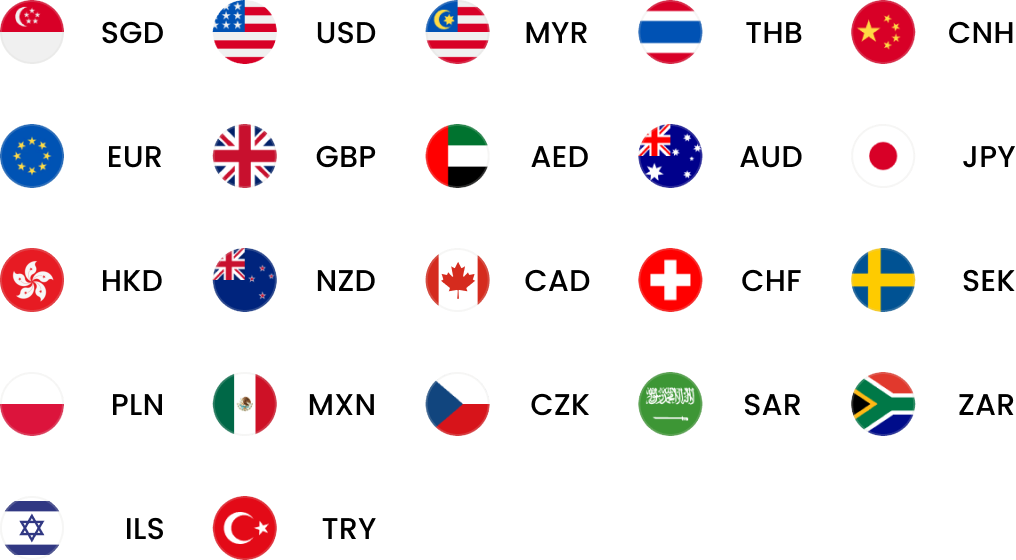
Overseas payments require verification of the payer, commercial terms, account eligibility, and conversion process. Check these points before accepting payment in SGD, MYR, THB, IDR, PHP, or CNH.
- Verify the payer and commercial terms. Confirm the legal identity of the payer, the agreed deliverable, and the invoice details.
- Confirm account eligibility and supported currencies. Check the invoice currency, supported currencies, and beneficiary information.
- Review conversion and timing. Check conversion costs, the foreign-exchange conversion rate, and likely timing before you remit funds.
- Keep payment evidence. Retain contracts, invoices, platform statements, and payment confirmations.
A multi-currency business account can support collections and supplier payments where the account and currencies are eligible. The setup types below differ in their cross-border business fit.
| Setup option | Local currency details | Conversion control | Supplier-payment workflow | Eligibility checks |
|---|---|---|---|---|
| 1. WorldFirst | Eligible local currency accounts | Convert supported currencies, with FX and hedging tools | Local transfers, mass payouts, and eligible supplier payments, including supported 1688 payments | Business verification applies |
| 2. Marketplace-native payout setup | Linked to the marketplace | Follows available platform settings | Usually focused on marketplace payouts | Seller and platform rules apply |
| 3. Conventional business account | Based on the account offering | Uses the provider’s available FX process | Standard business transfer process | Provider onboarding applies |
Fees checked in September 2026. Pricing, eligibility, and product features may change over time. Always confirm the latest information directly with the provider.
WorldFirst is a regulated financial services provider, not a bank. Its global payment solutions include the World Account, local currency accounts, FX conversion, hedging, and eligible supplier-payment workflows.⁷
Screen Platforms and Offers for Scam Signals
Money-making scams can involve upfront fees, pressure, assured-income language, fake payment notices, or requests to bypass platform protections. Verify the payer or company independently before releasing work or goods.
Frequently Asked Questions
What Is a Legitimate Online Income Model?
A legitimate online income model delivers a defined service, product, or audience-based outcome to a real customer. It has clear commercial terms and traceable payments, rather than an upfront demand to unlock earnings. If a provider relationship needs escalation, review the available complaints process.
How Can I Work Towards SGD 100 a Day Online?
You can work towards SGD 100 by calculating the sales or billable hours needed after direct costs. Two SGD 50 billable hours or five sales contributing SGD 20 each illustrate the required volume. Demand, conversion, capacity, refunds, and consistency determine actual results.
What Is the Difference Between Selling Expertise, Products and Audience Assets?
Selling expertise earns revenue from completed work or sessions, while selling products online depends on completed orders and fulfilment. Audience assets, including affiliate marketing, depend on attention and platform conditions. A channel such as TikTok Shop payments also has its own payment process.
How Do I Check If I Need to Register?
Check the Accounting and Corporate Regulatory Authority’s guidance against your activity and operating pattern. Compare ownership, liability, administration, and growth needs before choosing among available company types.¹⁸ Seek professional advice if the appropriate structure remains unclear.
How Do I Work Out My Tax and Licensing Position?
Check Inland Revenue Authority of Singapore guidance for income tax and GST registration questions, then search GoBusiness Licensing for permits linked to your activity. Keep invoices and expense records. A qualified adviser can assess issues that official general guidance does not resolve.⁴⁶
Turn One Viable Model Into a Working Business
Choose one model that fits your skills, capital, and available time. Validate demand, calculate profit after direct costs, meet your obligations, and assess viability before adding channels, product lines, or recurring expenses.
Once you know how to make money online through a viable cross-border business, your payment setup becomes part of the operating model. Eligible businesses that need to collect, convert, or remit supported currencies can assess a WorldFirst Business Account, including its World Account and local currency accounts.
Sources
- https://www.acra.gov.sg/register/business/requirements-eligibility/
- https://www.acra.gov.sg/register/business/choosing-business-structure/
- https://www.acra.gov.sg/register/business/registering-different-business-structures/
- https://www.iras.gov.sg/taxes/individual-income-tax/self-employed-and-partnerships/tax-obligations-by-industry-trade-or-profession/tax-guide-for-online-sellers-and-service-providers
- https://www.iras.gov.sg/taxes/individual-income-tax/basics-of-individual-income-tax/what-is-taxable-what-is-not/income-received-from-overseas
- https://www.gobusiness.gov.sg/licences/
- https://www.worldfirst.com/sg/heres-a-worldfirst
- https://www.acra.gov.sg/register/business/registering-different-business-structures/local-company/choosing-a-company-type/
This article is intended for informational purposes only and does not constitute legal advice or professional advice. This article should not be regarded as constituting an offer or a solicitation to buy or sell any regulated or financial products or services. WorldFirst makes no representations or warranties regarding the accuracy, completeness, or applicability of the content, and readers are encouraged to consult with legal professionals or other professionals for advice tailored to their specific situation. WorldFirst does not guarantee the accuracy and completeness of this article and expressly disclaims any and all liability to any person in respect of the consequences of anything done or omitted to be done wholly or partly in reliance on this article.

![AliExpress dropshipping: How to source and pay suppliers from Singapore [2026]](https://mdn.marmot-cloud.com/worldfirst/sites/9/2026/10/20261021131155864-300x200.webp)

![Trust card review [2027]: Features, fees and more](https://mdn.marmot-cloud.com/worldfirst/sites/9/2026/10/20261020214810193-300x200.webp)
![HSBC business account review [2026] Singapore: Features, fees and more](https://mdn.marmot-cloud.com/worldfirst/sites/9/2026/10/20261020213428771-300x200.webp)