





























A detailed look at Payoneer’s receiving accounts, fees and documentation requirements for Singapore freelancers, marketplace sellers and businesses
Key takeaways
- Payoneer offers local receiving accounts in 13 currencies, including USD, EUR, GBP, JPY and AUD, alongside a Payoneer Card and support for over 100 marketplaces and platforms
- An annual account fee of US$29.95 applies to Payoneer Singapore accounts that receive less than US$6,000 (or equivalent) across 12 consecutive months
- The Payoneer Card is available in four currencies, USD, EUR, GBP and CAD, with each card linked to a single currency balance
- The World Account holds 20+ currencies and receives from 130+ marketplaces and payment gateways, with up to 20 virtual business World Cards issued per business at zero cost
![Payoneer Singapore review [2027]: Features, fees and alternatives](https://mdn.marmot-cloud.com/worldfirst/sites/9/2026/09/20260929145907736.webp)
Payoneer is an international payments provider that offers local receiving accounts, a Mastercard-based Payoneer Card, marketplace integrations and cross-border transfer support across 190+ countries and territories. In Singapore, it is available to registered businesses, marketplace sellers and freelancers.
Receiving into a Payoneer account carries a 1% fee, sending payments can cost up to 3.99% depending on the method,and the Payoneer Card is available in only four currencies (USD, EUR, GBP and CAD) with each card linked to a single currency balance rather than functioning as a true multi-currency card.
This review covers Payoneer’s features, fees and account requirements in detail, along with the World Account by WorldFirst, a multi-currency account for cross-border businesses.
What is Payoneer?
Payoneer is a global digital payment provider serving customers across more than 190+ countries and territories.3 It provides multi-currency accounts for receiving international payments, along with a Mastercard-based Payoneer Card, marketplace integrations and invoicing tools.3
Quick look: Pros and cons of Payoneer Singapore
| Pros | Cons5 |
| Local receiving accounts across 13 currencies, including USD, EUR, GBP, JPY and AUD4 | Receiving via a non-local currency account carries a 1% fee, minimum US$1.00, where the local-currency option isn’t used |
| Support for freelance platform payouts, including Upwork, Fiverr, Toptal and 100+ other platforms6 | Currency conversion is priced across a range of 1.2% to 4%, depending on region and transaction |
| Holding balances across multiple currencies carries zero fee5 | An annual account fee of US$29.95 applies if the account receives less than US$6,000 (or equivalent) across 12 consecutive months |
Payoneer Singapore fees
| Fee* type | Payoneer5 |
| Monthly fee | Zero |
| Account setup | Zero |
| Receiving funds | From Payoneer users: Zero
Local-currency receiving accounts: Zero Non-local-currency receiving accounts: 1%, minimum US$1.00 Credit card: up to 3.99% + US$0.49 |
| Holding funds in multiple currencies | Zero |
| Sending to other Payoneer users | Same country: up to US$4.00 / EUR4.00 / GBP4.00
Different country: up to 1% + up to US$4.00 or equivalent. |
| Sending to other accounts | Credit card: up to 3.99%
US ACH bank transfer: 1% UK/EU bank transfer: 1% PayPal: up to 3.99% + US$0.49 |
| Currency conversion | 0.50% when moving funds between Payoneer balances |
| Payoneer Card | US$29.95 annual fee; purchases without currency conversion up to 1.8%; transactions with currency conversion up to 3.5% |
| Withdrawals to a bank account in Singapore in local currency | US$1.50 |
| Withdrawals to a recipient’s local currency | Without conversion: 1.2%–4%
With conversion: 1.2%–4% |
*Fees checked in September 2026.
Features of Payoneer Singapore
Multi-currency receiving accounts
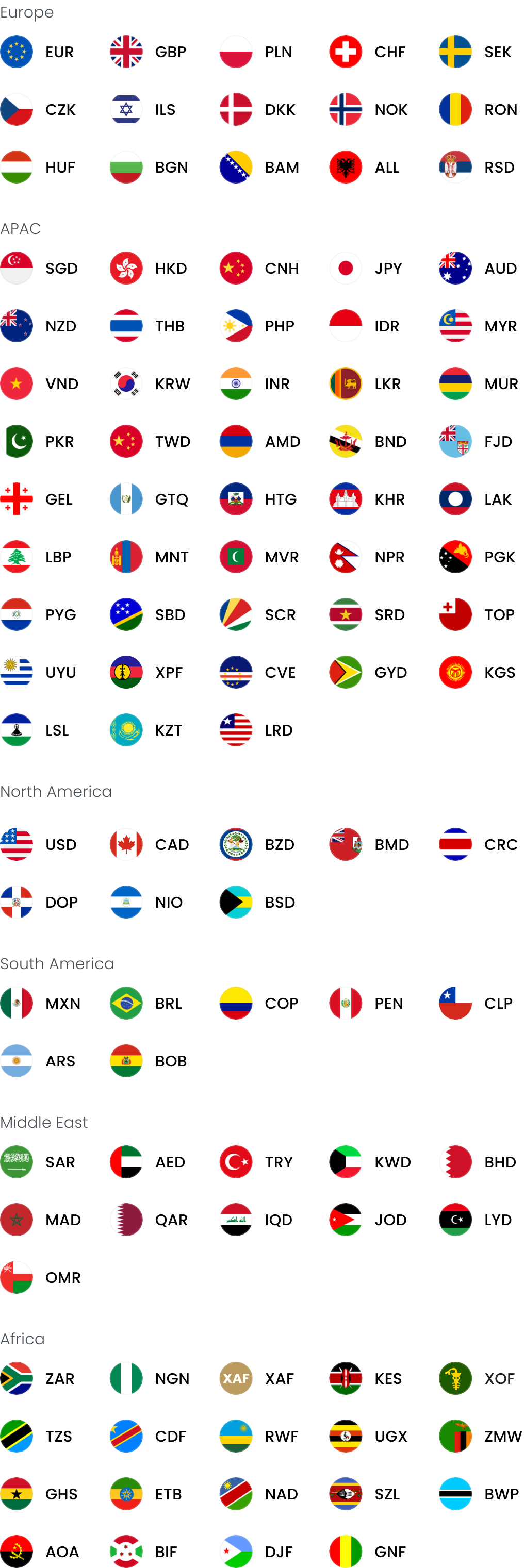
Payoneer currently offers local receiving account details in 13 currencies, including SGD, USD, EUR, GBP, JPY, AUD, CAD, HKD, AED, MXN, BRL, KRW and IDR. Additional currencies can be received through SWIFT, subject to eligibility.4
Payoneer’s local receiving accounts do not currently include MYR or CNH, which may be relevant for Singapore businesses paying Chinese suppliers or Malaysian suppliers, partners or contractors. CNH is supported only for receiving marketplace payouts, such as Amazon.⁷
Marketplace and platform integrations
Payoneer also has broader support for marketplace and freelance-platform payouts, including Amazon, eBay, Shopee, Lazada, Fiverr, Upwork and Toptal, with earnings from 100+ supported platforms payable into the Payoneer account.8
Payoneer Card
The Payoneer Card is a physical or virtual Mastercard based single currency card, linked to a specific currency balance in your Payoneer account. You must hold a Payoneer Account before applying for a Payoneer Card as a Singapore customer.9
Payoneer currently offers cards linked to USD, EUR, GBP and CAD balances. If you have balances in multiple supported currencies, you can have separate cards linked to those currency balances. You can also use the card for purchases in other supported currencies, with currency conversion fees applying where relevant. When you spend in the same currency as your card, you won’t pay a currency conversion fee, although other card transaction fees may apply.
Business tools and API
Payoneer provides payment requests, invoicing and API tools for businesses collecting payments from clients. Its developer platform supports creating payment requests programmatically and generating payment links that can be embedded into business workflows.
Is Payoneer regulated in Singapore?
Payoneer Singapore Private Limited is listed by the Monetary Authority of Singapore (MAS) as a Major Payment Institution, with licences covering account issuance and cross-border money transfer, among other payment services.10
It is important to note that Payoneer is not a bank, and a Payoneer Account is not a bank account.
How to open a Payoneer account in Singapore
Step 1: Register and select an account type
You can choose between individual/freelancer, sole proprietor, partnership or company, based on your Singapore business structure.
Step 2: Verify your identity
Individuals, sole proprietors and authorised representatives can choose Singpass verification. Manual verification is also available and may require a government-issued ID and proof of address.11
Step 3: Submit documentation
If registering a partnership or Pte Ltd company, submit company documentation. The ACRA Business Profile, the Memorandum and Articles of Association, a signed Board Resolution, and business owner information identifying anyone holding 25% or more ownership.11
Step 4: Finish your verification
Complete verification in Payoneer’s Verification Centre, where approval timelines vary by applicant.11
You can start receiving and sending payments once your account is approved.
The World Account: Built for global businesses
WorldFirst is a payments provider offering the World Account, a multi-currency account. The World Account lets you hold and receive funds in multiple currencies, send international payments, and spend through the World Card.
Set up local currency accounts
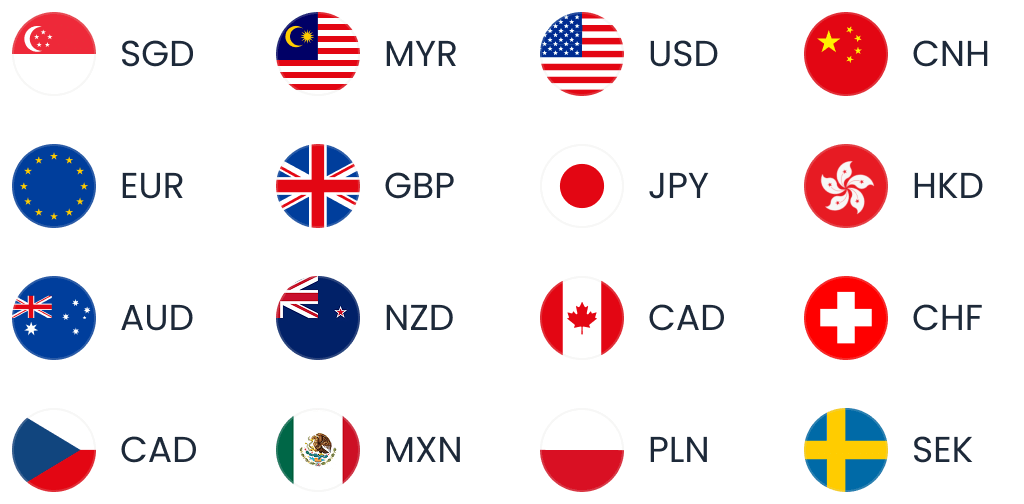
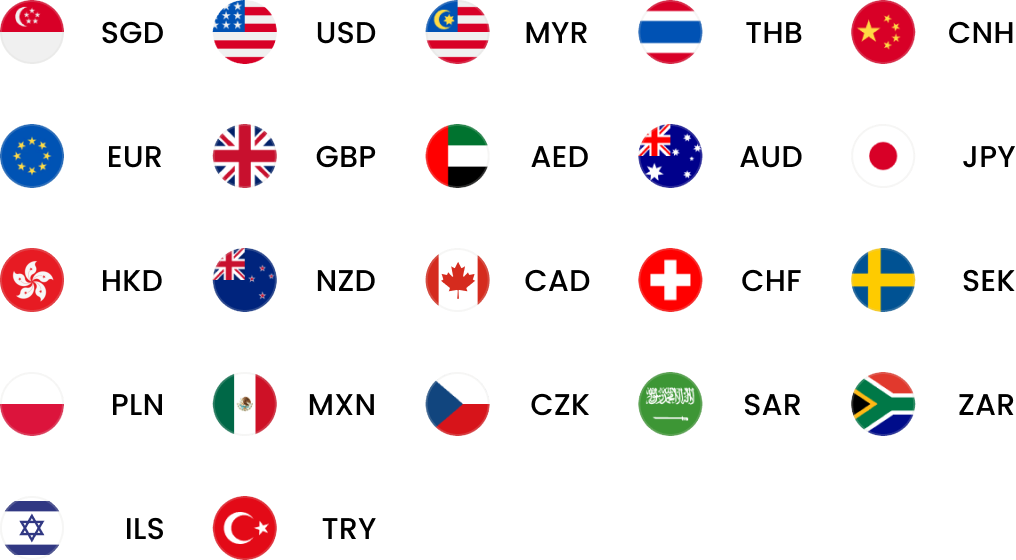
The World Account holds local currency accounts in 20+ currencies, including a USD account, plus 14 other local currency accounts such as SGD, GBP, EUR, CNH, AUD, NZD, JPY and HKD.
Make international payments
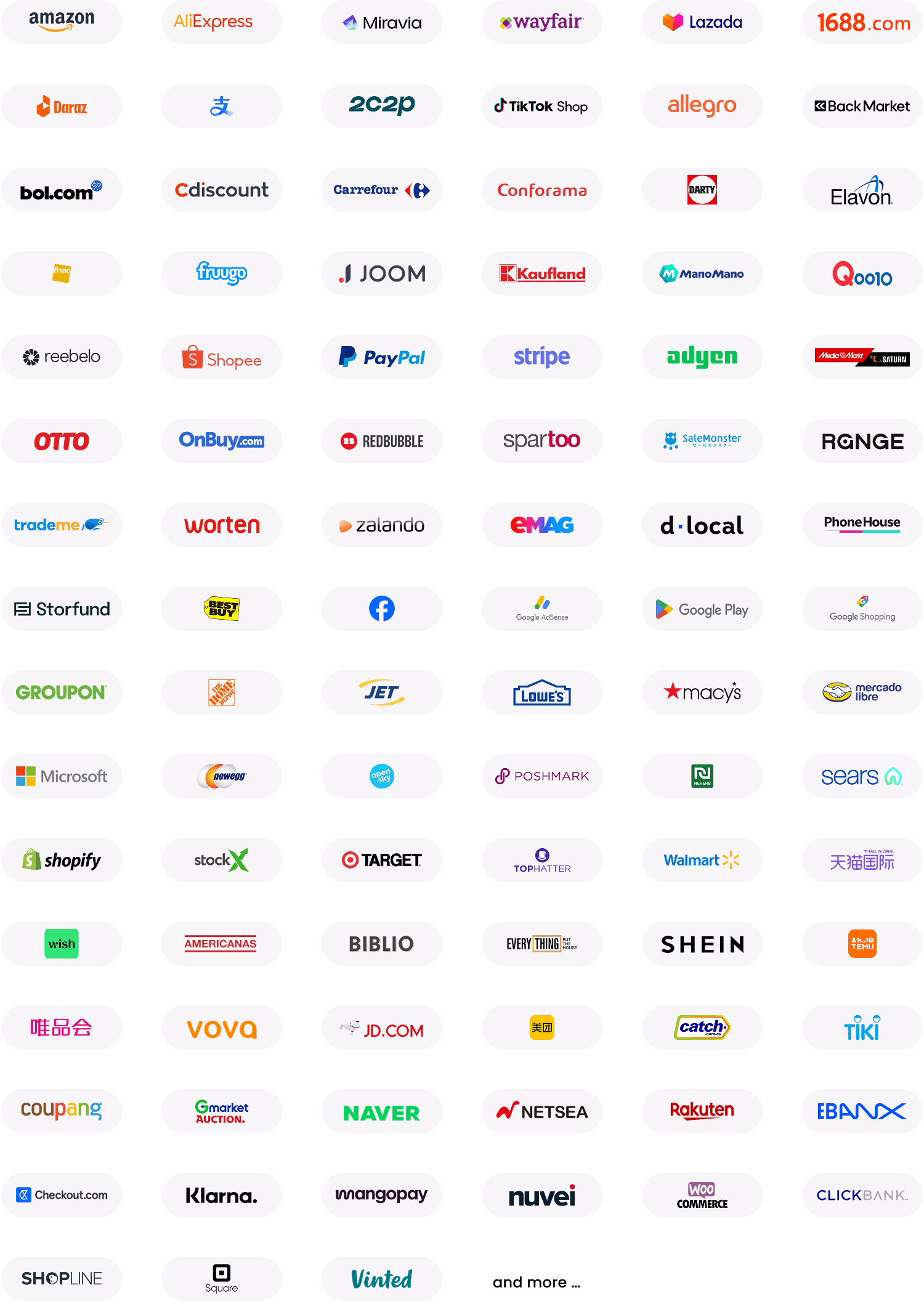
Businesses can send payments in 100+ currencies across 200+ countries and regions, and receive payments from 130+ marketplaces and payment gateways, including Amazon, Shopify, Stripe and Etsy. Transfers between World Account holders are zero-fee and instant.
Spend with the World Card
The World Card is a Mastercard-powered virtual debit card linked to the World Account, supporting payments in 150+ currencies. There are no fees when paying in any of the 15 supported currencies, with sufficient balance held in that currency. Up to 20 virtual cards can be issued per business at zero cost.
Get access to competitive exchange rates
Currency conversion on the World Account is up to 0.6%. Forward contracts are also available for Singapore businesses, allowing an exchange rate to be fixed ahead of a future payment.
Reconcile your accounts
The World Account integrates with Xero and NetSuite for accounting reconciliation.
| Fee* type | World Account |
| Account opening fee | Zero |
| Monthly fee | Zero |
| Fee for sending payments | Local transfers (non-SWIFT): US$1
International transfers (SWIFT): US$5 |
| Fee for receiving payments | Zero |
| Currency conversion | Up to 0.6% |
| Card issuance | Up to 20 virtual cards at zero cost |
*Fees checked in September 2026.
FAQs
1. Is Payoneer available in Singapore?
Yes. Payoneer operates in Singapore through Payoneer Singapore Private Limited, licensed as a Major Payment Institution by MAS, and is available to Singapore-registered businesses, freelancers and individuals.
2. How do I sign up for Payoneer in Singapore?
You register on Payoneer’s website, select an account type suited to your Singapore business structure, and verify your identity using Singpass or manual document submission. If registering a company, you also submit ACRA and ownership documentation before review in Payoneer’s Verification Centre.
3. How do I get a Payoneer debit card in Singapore?
You must hold a Payoneer Account before applying for a Payoneer Card. The card carries an annual fee of US$29.95, with each card linked to a single currency.
4. How do I withdraw from Payoneer to a Singapore bank account?
Payoneer’s Singapore-facing material does not publicly specify a full list of supported local banks or standard withdrawal timelines. Current withdrawal options and any applicable fees are shown directly within your Payoneer account.
Sources:
- https://www.singstat.gov.sg/modules/infographics/-/media/Files/visualising_data/infographics/trade_and_investment/singapore-international-trade
- https://www.singstat.gov.sg/-/media/files/publications/households/hes2023.ashx
- https://www.payoneer.com/about/
- https://www.payoneer.com/resources/how-to-use-payoneer/join-singapores-thriving-ecommerce-market-and-get-paid-in-singapore-dollars/
- https://www.payoneer.com/pricing/
- https://www.payoneer.com/freelancer/
- https://payoneer.custhelp.com/app/answers/detail/a_id/22001/~/receiving-payments-in-cnh—faqs
- https://www.payoneer.com/receive-payments/
- https://pages.payoneer.com/commercial-card/
- https://eservices.mas.gov.sg/fid/institution/detail/412296-PAYONEER-SINGAPORE-PRIVATE-LIMITED
- https://payoneer.custhelp.com/app/answers/detail/a_id/44838/~/singapore-payoneer-account-setup—faq
This article is intended for informational purposes only and does not constitute legal advice or professional advice. This article should not be regarded as constituting an offer or a solicitation to buy or sell any regulated or financial products or services. WorldFirst makes no representations or warranties regarding the accuracy, completeness, or applicability of the content, and readers are encouraged to consult with legal professionals or other professionals for advice tailored to their specific situation. WorldFirst does not guarantee the accuracy and completeness of this article and expressly disclaims any and all liability to any person in respect of the consequences of anything done or omitted to be done wholly or partly in reliance on this article.



![AliExpress dropshipping: How to source and pay suppliers from Singapore [2026]](https://mdn.marmot-cloud.com/worldfirst/sites/9/2026/10/20261021131155864-300x200.webp)

![Trust card review [2027]: Features, fees and more](https://mdn.marmot-cloud.com/worldfirst/sites/9/2026/10/20261020214810193-300x200.webp)