





























Here’s how local and foreign businesses can open a company bank account in Singapore–and how long it takes
Key takeaways
- Setting up a company bank account is a mandatory step for Singapore private limited companies registered with ACRA
- DBS, OCBC and UOB are Singapore’s three largest local banks and handle the majority of corporate accounts in the country
- Digital-first providers and multi-currency account platforms offer business bank account alternatives with fast onboarding and different fee structure
- Businesses handling regular cross-border payments often use a multi-currency account in parallel with their Singapore bank account, keeping domestic and international payment flows in the right infrastructure for each
For any business incorporated in Singapore, a company bank account is one of the first infrastructure decisions to make after ACRA registration.
The choice of bank account affects everything from the fees you pay to the currencies you can hold, the international payment options available, and how easily your accounting software integrates with the account. This guide walks through what to consider when opening a company bank account in Singapore, what the application process looks like, and how long it typically takes.

What is a company bank account?
A company bank account holds the finances of a legal business entity, kept separate from any personal accounts held by the people running the business. In Singapore, a Pte Ltd company’s account sits under the company’s ACRA-registered name and its Unique Entity Number (UEN), with only the directors or officers specifically named in the account opening resolution having the authority to make transactions on it.
Most Singapore banks bundle the current account with related corporate products: business cards, savings accounts, foreign currency accounts, and trade finance facilities, all managed under the same corporate customer profile.
Why you need a company bank account in Singapore
For most Singapore-incorporated businesses, a company bank account is needed for several practical and regulatory reasons:
Legal compliance: Under Singapore’s Companies Act, private limited companies must maintain proper accounting records that separate business finances from personal finances. A dedicated company bank account can help meet this requirement.
Tax reporting to IRAS: Corporate income tax filings and GST returns (for GST registered companies) rely on clean transaction records tied to the business entity. Mixing business and personal transactions in a single account makes tax reporting significantly harder and can trigger scrutiny during audits.
Receiving corporate payments: Larger clients, government agencies and international customers often require payment to a company bank account rather than a personal account, both for their own compliance reasons and for their internal accounting systems.
Applying for business financing: Business loans, trade finance and credit facilities from Singapore banks typically require an existing company bank account with a transaction history, since the account activity forms part of the credit assessment.
Building business credit history: A company’s banking relationship builds over time. Businesses that start with a proper corporate account develop a stronger banking track record, which matters when applying for larger credit facilities down the line.
Factors to consider for company bank accounts in Singapore
Multi-currency support: Businesses that trade internationally, invoice foreign clients, or pay overseas suppliers need account infrastructure that handles multiple currencies. Some banks offer separate foreign currency accounts in specific currencies (USD, EUR, GBP, CNH). Multi-currency accounts from providers like WorldFirst hold multiple currencies within a single account structure.
Fees and minimum balances: Monthly maintenance fees, minimum balance requirements, transaction fees and international payment fees vary significantly between providers. For a business with tight cash flow or one that maintains a small operating balance, minimum balance requirements can trigger monthly fees that add up over time.
Remote or in-person opening: Traditional Singapore banks often require directors to attend an in-person meeting at a branch as part of the KYC process. Digital-first providers and multi-currency accounts typically handle onboarding entirely online. For foreign directors or busy business owners, this can be a significant factor.
Digital banking features: Online banking, mobile app functionality, integration with accounting software (Xero, QuickBooks, MYOB), automated bank feeds and payment scheduling all matter for day-to-day operations. Some Singapore banks have well-developed digital ecosystems; others are more limited.
International payment capabilities: For businesses making regular cross-border payments, the ease and cost of international transfers matters. Traditional banks route through SWIFT with correspondent bank fees.
Can I open a company bank account in Singapore with a foreign corporate entity?
Yes, but the mechanics depend on how the foreign business is structured relative to Singapore.
The core process to open a corporate bank account mirrors that of a fully local company, but what changes is the depth of verification banks apply to the overseas individuals involved. You can expect additional identity documents, address verification from the director’s home country, and in some cases a bank reference to support the application.
For an overseas business that mainly needs SGD banking to trade with Singapore counterparties, a multi-currency account can deliver SGD sending and receiving capability without going through the foreign entity registration process at all.
Process to open a corporate account in Singapore
Step 1: Choose a provider
Compare traditional banks (DBS, OCBC, UOB), digital-first alternatives and multi-currency accounts against the factors covered above. Contact the bank’s business banking team to confirm eligibility for your specific company structure before starting the paperwork.
Step 2: Gather the required documents
For a Singapore-incorporated Pte Ltd, most banks will ask for:
- The company’s ACRA business profile (downloaded from BizFile+)
- The company constitution, or memorandum and articles of association for companies incorporated before the current constitution regime
- A board resolution passing the authority to open the account and naming who can operate it
- Government-issued ID for every director, along with proof of residential address (NRIC for Singapore citizens and PRs, passport for foreigners)
- Identity documentation for anyone holding a beneficial ownership stake of 25% or more in the company
- Documentation confirming the company’s registered business address
- Any regulated industry licences the business needs to operate
Step 3: Submit the application
Some traditional banks accept the initial application online and follow up with in-branch verification. Others require the full package to be submitted at a branch from the start. Digital-first providers usually handle the entire submission online.
Step 4: Complete KYC and AML checks
The provider runs know-your-customer and anti-money laundering checks on the company, its directors and its beneficial owners. Additional documents may be requested during this stage.
Step 5: Complete identity verification
Traditional Singapore banks generally require an in-person branch visit for identity verification and signing of the account opening paperwork. Some digital-first providers replace this with a video verification call. Some may skip this process entirely
Step 6: Fund the account
Once approved, an initial deposit unlocks the account. Minimum deposit amounts vary by bank and account tier.
How WorldFirst supports Singapore businesses managing international payments
The World Account is a multi-currency account from WorldFirst, an international payments provider for cross-border businesses. For Singapore businesses handling international payments alongside their traditional banking, the World Account provides:
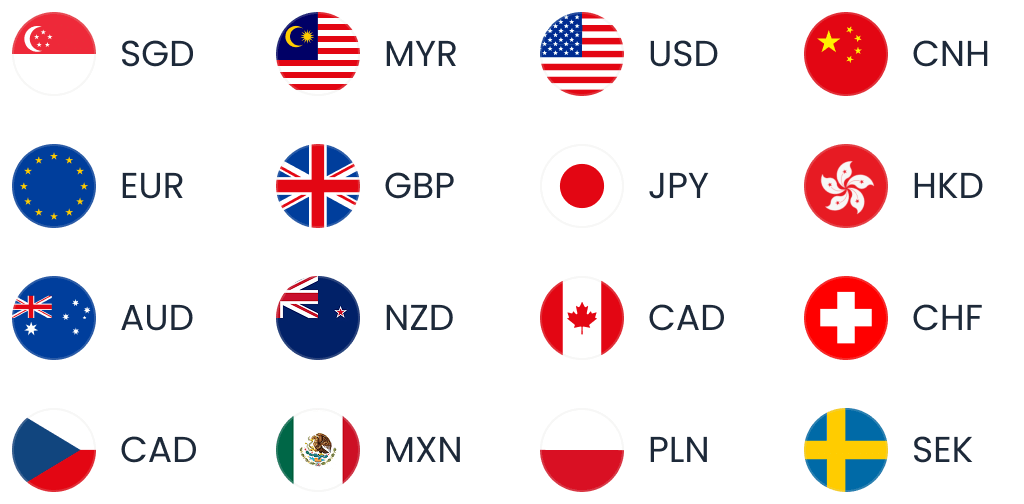
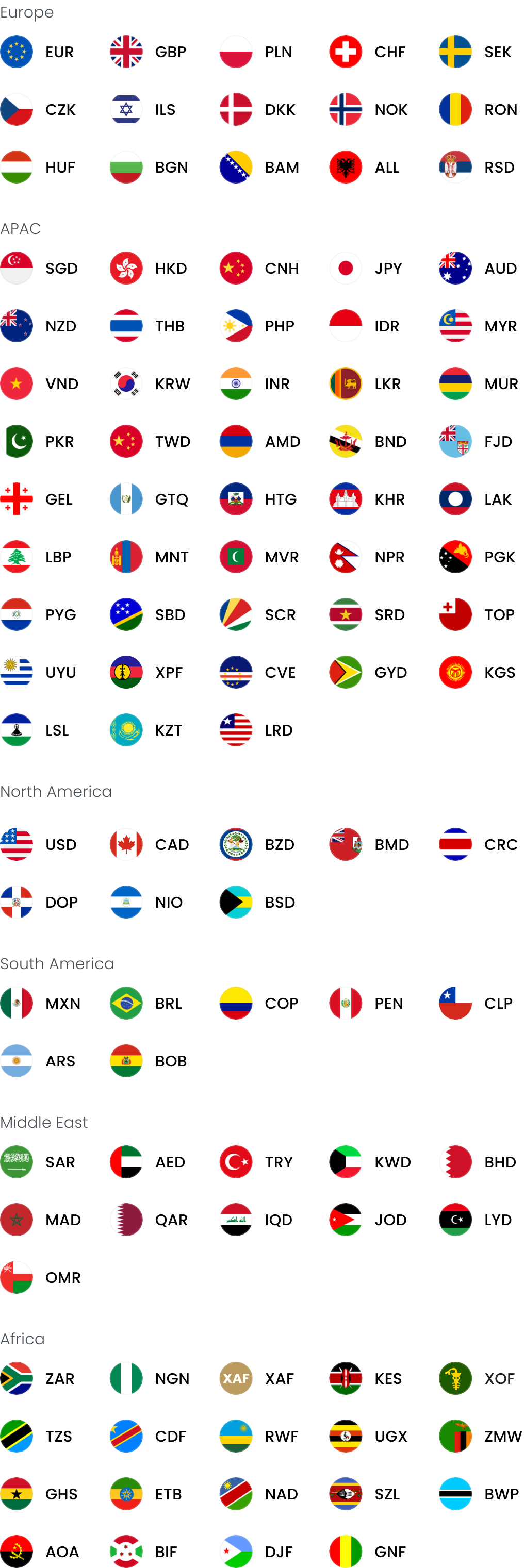
- Multi-currency accounts in 22 currencies, including SGD, USD, GBP, EUR, CNH and others, each with local bank details for receiving payments as if the account were domestic to that currency.
- International payments in 100+ currencies to 200+ countries and regions, for settling supplier invoices, contractor payments and cross-border business expenses.
- Forward contracts for locking in exchange rates on future currency conversions, useful for hedging FX exposure on known upcoming payments.
- Rate Alerts for tracking specific currency pairs and receiving notifications when the market hits a target rate.
- The World Card, a Mastercard-powered business payment card linked to the account, with up to 20 virtual cards at no additional cost. No fees apply when paying in any of the 15 supported currencies (with sufficient balance held in that currency). Cashback is available on eligible spending (Terms and Conditions Apply).
For Singapore businesses whose financial operations extend across borders, the World Account works alongside a traditional company bank account, handling the international side while the local bank handles domestic SGD operations.
FAQs
1. Can I open a Singapore company bank account entirely online?
With traditional Singapore banks, in-person verification is often still required for corporate account openings. Digital-first providers and multi-currency accounts like the World Account typically handle onboarding entirely online.
2. Do I need to be a Singapore resident to open a company bank account?
Not necessarily, but non-residents typically face additional requirements. For a Singapore-incorporated company, foreign directors can be part of the account opening, though banks may request additional identity and address verification documents.
3. Which is the best company bank account for a small business in Singapore?
The best choice depends on the business’s needs. Traditional banks offer broad service ecosystems and integration with other banking products. Digital-first providers and multi-currency accounts typically offer lower fees and faster onboarding, and suit businesses with heavy international payment flows.
This article is intended for informational purposes only and does not constitute legal advice or professional advice. This article should not be regarded as constituting an offer or a solicitation to buy or sell any regulated or financial products or services. WorldFirst makes no representations or warranties regarding the accuracy, completeness, or applicability of the content, and readers are encouraged to consult with legal professionals or other professionals for advice tailored to their specific situation. WorldFirst does not guarantee the accuracy and completeness of this article and expressly disclaims any and all liability to any person in respect of the consequences of anything done or omitted to be done wholly or partly in reliance on this article.
![Revolut Business Card review Singapore [2027]: Features, fees & more](https://mdn.marmot-cloud.com/worldfirst/sites/9/2026/09/20261001002258848-300x200.webp)