



















WorldFirst Home > blog > International Transactions > UOB vs OCBC: business banking features and fees compared
UOB vs OCBC: business banking features and fees compared
UOB is better for regional trade and international business support, while OCBC works well for SMEs that want accessible accounts, digital tools and local banking convenience.

Singapore’s average daily FX trading volume reached US$1.485 trillion in April 2025, up 60% from April 2022, making it the third-largest FX centre globally.
The right choice depends on how your business moves money every day. Local transfers, account fees, minimum balances, FX costs and overseas payment options can all affect how much you pay and how easily your finance team works.
In this guide, we’ll compare UOB vs OCBC across business account fees, payment features, FX support and digital tools.
We’ll also show how WorldFirst can help if your business pays overseas suppliers, receives foreign-currency revenue or sells through international marketplaces.
UOB vs OCBC: an overview
Here’s how UOB and OCBC compare across the most important business banking features for Singapore companies:
UOB overview
UOB is one of Singapore’s major local banks, founded in 1935. It has a strong regional presence across ASEAN and is often a practical fit for businesses that trade, pay suppliers or manage operations across Southeast Asia.
UOB’s business banking offer covers SGD accounts, foreign currency accounts, local transfers, trade finance, working capital and digital banking through UOB Infinity. Its Corporate Global Currency Account supports major currencies including USD, EUR, GBP, JPY, AUD, HKD and CNH.
Key features:
- SGD business accounts: Choose options such as the UOB eBusiness Account or UOB BizTransact Account, depending on transaction needs
- Foreign currency accounts: Manage foreign currency transactions through the Corporate Global Currency Account
- UOB Infinity platform: Manage cash management, trade and financial supply chain activity through one digital banking platform
- Local payments via FAST and GIRO: Send SGD payments through FAST, PayNow FAST and GIRO options
- International payments via telegraphic transfer: Send overseas payments through traditional bank transfer routes using UOB’s SWIFT network
- Trade finance and working capital: Access trade transactions, financing and business support for importers, exporters and regional businesses
- Regional ASEAN support: Useful for companies with suppliers, customers or operations across Southeast Asia
OCBC overview
OCBC is Singapore’s longest-established local bank, formed in 1932 from the merger of three local banks. It supports start-ups, SMEs and established businesses with SGD accounts, foreign currency accounts, digital banking, trade finance and corporate banking services.
OCBC is a strong option for businesses that want accessible day-to-day banking, online account opening, local payment tools and digital banking through OCBC Velocity.
Key features:
- SGD business accounts: Choose accounts such as the Business Growth Account for start-ups and newer businesses or the Business Entrepreneur Account Plus for more established companies
- Multi-Currency Business Account: Hold and transact in 13 major currencies, including USD, EUR, GBP, JPY, AUD, HKD and CNH
- OCBC Velocity platform: Manage accounts, payments, cash flow, operations and trade finance through digital business banking
- Local payments via FAST and GIRO: Business Growth Account includes 80 free FAST and 80 free GIRO transactions per month
- International payments via outward telegraphic transfer: Send overseas transfers in more than 60 currencies through OCBC business online banking
- Business debit card access: OCBC offers a free Business Debit Card with SGD business accounts, such as the Business Growth Account
- Trade finance support: Manage trade finance through OCBC’s business banking platform and wider corporate banking services
UOB vs OCBC accounts
A business account shapes how your company receives money, pays suppliers, manages cash flow, and handles foreign currency.
The right account helps you lower routine fees, move money faster and keep tighter control over daily payments.
UOB accounts
UOB offers several business accounts for companies with different balance, payment and currency needs.
Its range is useful if your business wants more specialised account options for local transactions, USD cash management or foreign currency activity.
Account options:
- UOB eBusiness Account: A digital-first SGD account for start-ups and SMEs that need everyday local payments, collections and online banking access
- UOB BizTransact Account: An SGD account for businesses with higher transaction activity, especially those that process regular local payments, payroll or collections
- UOB Corporate Current Account: A standard SGD current account for businesses that want traditional business banking access and routine account management
- UOB BizGlobal Account: A USD-focused account for companies that manage USD cash flow, trade payments or overseas supplier relationships
- UOB Global Currency Account: A foreign currency account for businesses that transact in major currencies such as USD, GBP, EUR, AUD, CAD, NZD, HKD, CNH, JPY and CHF
OCBC accounts
OCBC’s business account range is simpler and easier to compare.
It works well for start-ups, SMEs and growing businesses that want a practical SGD account first, then add foreign currency support when needed.
Account options:
- OCBC Business Growth Account: A low-entry SGD account for start-ups and newer businesses that need local payments, FAST and GIRO transfers and day-to-day business banking
- OCBC Business Entrepreneur Account Plus: An account for growing or established businesses that need a more mature SGD banking setup for regular operations
- OCBC Multi-Currency Business Account: A foreign currency account for companies that receive, hold or pay in multiple currencies. It supports businesses with overseas customers, suppliers or marketplace income
What this means for your business:
- Choose OCBC if your priority is a simple SGD account with a low starting balance, free monthly FAST and GIRO allowance and an easy path to multi-currency banking
- Choose UOB if your business has higher transaction volumes, larger balances, USD trade activity or more complex regional banking needs
UOB vs OCBC: fees and costs
UOB and OCBC both offer low-cost local payments, but their pricing differs by account type, balance requirements and international transfer route.
UOB fees and costs
UOB’s costs vary more because it has a wider range of accounts.
The eBusiness Account is the lower-entry option, while BizTransact and BizGlobal suit businesses with larger balances or heavier transaction needs.
Important fees:
- Account fees: The UOB eBusiness Account has an annual fee of SG$35, an initial deposit of SG$1,000 and a minimum average daily balance of SG$5,000. A SG$15 monthly fall-below fee applies if the balance drops below SG$5,000
- Higher-balance accounts: UOB BizTransact requires a minimum average daily balance of SG$50,000, with a SG$50 monthly fall-below fee
- Local transfers: FAST, PayNow FAST and GIRO transactions are free on selected accounts such as eBusiness and BizTransact
- International transfers: UOB charges 1/16% commission on standard outward telegraphic transfers, with a minimum fee of SG$10 and a maximum fee of SG$100
- UOBSend: Eligible BizTransact and BizGlobal users can send payments to supported markets with a single flat fee during the promotional period
OCBC fees and costs
OCBC is simpler for smaller businesses because its Business Growth Account has a low starting balance, a fixed monthly fee and includes a local payment allowance.
Important fees:
- Account fees: OCBC Business Growth Account has an initial deposit of SG$1,000, a SG$10 monthly account fee and a SG$20 fall-below fee if the monthly average balance drops below SG$1,000
- Local transfers: The account includes 80 free FAST and 80 free GIRO transactions per month
- International transfers: Online outward telegraphic transfers cost SG$30 per transaction via OCBC Velocity, the OCBC Business app, host-to-host or API channels
- Foreign currency account: OCBC Multi-Currency Business Account has no initial deposit, no set-up fee, no minimum balance and no fall-below fee
What this means for your business:
- OCBC may be easier for start-ups and SMEs that want a low-entry account with predictable local payment costs
- UOB may suit businesses with higher balances, larger transaction volumes or more trade-related banking needs
UOB vs OCBC: FX rates and currency costs
Exchange rates often cost more than transfer fees in international business banking.
UOB and OCBC both use bank-set exchange rates, so the rate shown before you confirm a transfer may include the conversion cost.
UOB FX rates and costs
UOB publishes indicative FX rates and offers digital FX access through UOB Infinity.
FX details:
- Bank-set rates: UOB applies its own exchange rates when currency conversion is needed
- UOB Infinity eFX: Businesses can access online FX tools through UOB’s digital banking platform
- Transfer conversion: FX can apply when sending payments from SGD or foreign currency accounts
- UOBSend: Eligible users can lock in real-time FX rates for supported overseas payments
- Fixed markup: UOB does not publish one standard FX markup for all business transfers
OCBC FX rates and costs
OCBC also uses bank-set rates, with FX tools available through OCBC Velocity and the OCBC Business app.
FX details:
- Bank-set rates: OCBC applies its own exchange rates for business currency conversions
- FX Online: Businesses can convert currencies using live rates across major currencies
- FX contracts: Companies can book rates in advance and use them for future payments
- Multi-currency support: OCBC Multi-Currency Business Account supports 13 currencies
- Fixed markup: OCBC does not publish one standard FX markup for all business transfers
What this means for your business:
- UOB may be a better option if your business needs trade banking support or can use UOBSend for supported payment routes
- OCBC may be easier if your business wants a simpler multi-currency account and online FX tools through one platform
UOB vs OCBC: business features and integrations
Beyond accounts and transfer fees, digital tools affect how easily your team manages payments, approvals, collections and reconciliation.
IMDA reported that 95.1% of Singapore SMEs adopted at least one digital area in 2024, up from 94.5% in 2023. That makes online banking, app access and integrations important when comparing UOB and OCBC.
UOB business features and integrations
UOB focuses on regional banking, trade services and cash management through UOB Infinity, its digital banking platform for cash management, financial supply chain management and trade needs across 10 markets.
Key features:
- UOB Infinity: Manage accounts, payments, approvals, collections and trade services online
- API services: Connect account services, payments, collections and FX services through UOB API Services
- Accounting support: Import UOB bank transaction data into Xero for easier reconciliation
- Bulk payments: Run payroll and supplier payments through UOB’s digital banking tools.
- Trade finance: Manage trade transactions through UOB Infinity
- Cards and controls: Access corporate cards, virtual payment controls and supplier payment options
OCBC business features and integrations
OCBC focuses on accessible digital banking, cash flow tools and payment collection through OCBC Velocity. The platform supports account management, transactions, cash flow, operations and trade finance.
Key features:
- OCBC Velocity: Manage accounts, payments, cash flow, operations and trade finance online
- Business app: View balances, approve transactions and make payments on mobile
- App integrations: Connect tools such as Xero, QuickBooks and Shopify via the OCBC Digital Business Board
- Payment collections: Use OCBC OneCollect to collect QR payments through PayNow and selected wallets
- Business debit card: Access a no-annual-fee debit card for everyday business spend
- Virtual purchasing card: Set usage controls for procurement and supplier payments
What this means for your business:
- UOB may suit businesses that need regional banking, trade finance, API access and stronger supplier payment controls
- OCBC may be better for SMEs that want simpler digital banking, mobile approvals, QR code collections and connections to accounting apps
Which bank is right for your business?
The better choice depends on your payment volume, currency requirements and the level of support your team needs for regional trade.
Choose UOB if:
- You trade often across ASEAN and need strong regional coverage
- You need trade finance, USD cash management or supplier payment support
- You want access to UOBSend for supported overseas payments to more than 45 markets
- You use UOB Infinity to manage payments, approvals, collections and trade services
- You have larger balances or higher transaction volumes and can meet UOB’s account requirements
Choose OCBC if:
- You want a simpler starter account for everyday SGD banking
- You prefer lower balance requirements for a basic business account
- You want 80 free FAST and 80 free GIRO transactions per month on the Business Growth Account
- You need a Multi-Currency Business Account that supports 13 major currencies
- You want online overseas payments in more than 60 currencies with a flat SG$30 outward telegraphic transfer fee
Where UOB and OCBC fall short for global payments
UOB and OCBC both work well for full-service business banking, but traditional bank models can limit flexibility once your business sends money overseas:
- FX pricing needs careful review: Both banks use their own exchange rates, so check the live rate before confirming a transfer
- International transfers can cost more than the headline fee: Telegraphic transfers may include cable, agent or intermediary bank charges depending on the route
- Currency management can become fragmented: Businesses may need separate account setups, currency balances or transfer workflows as payment needs grow
- Speed and visibility can vary by route: SWIFT and correspondent bank routing can affect delivery time, payment tracking and the final beneficiary amount
- Marketplace and supplier payments may require additional tools: If you sell internationally or pay many overseas suppliers, a specialist multi-currency account may give you more control over FX timing, payment routing and currency balances
A better option for global payments: World Account
UOB and OCBC both offer strong Singapore business banking, but international payments can become harder to manage through traditional bank accounts.
WorldFirst isn’t a bank. It’s a regulated payments provider and WorldFirst entities in Singapore hold MAS licenses for services including account issuance, domestic and cross-border money transfers and e-money issuance.
The World Account is a multi-currency account that helps businesses manage cross-border payments, collections and currency balances in one place. It works especially well if you pay overseas suppliers, collect foreign-currency revenue or sell through international marketplaces.
How a World Account supports your business:
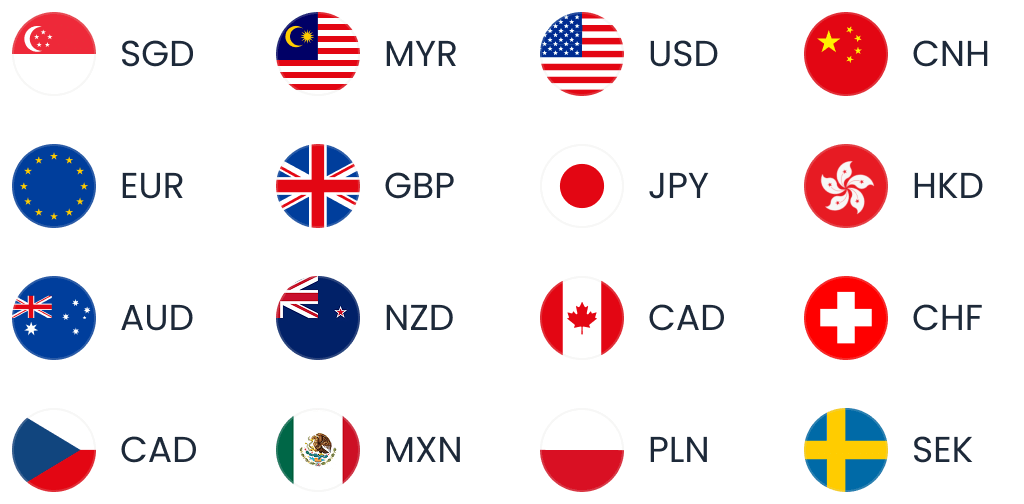
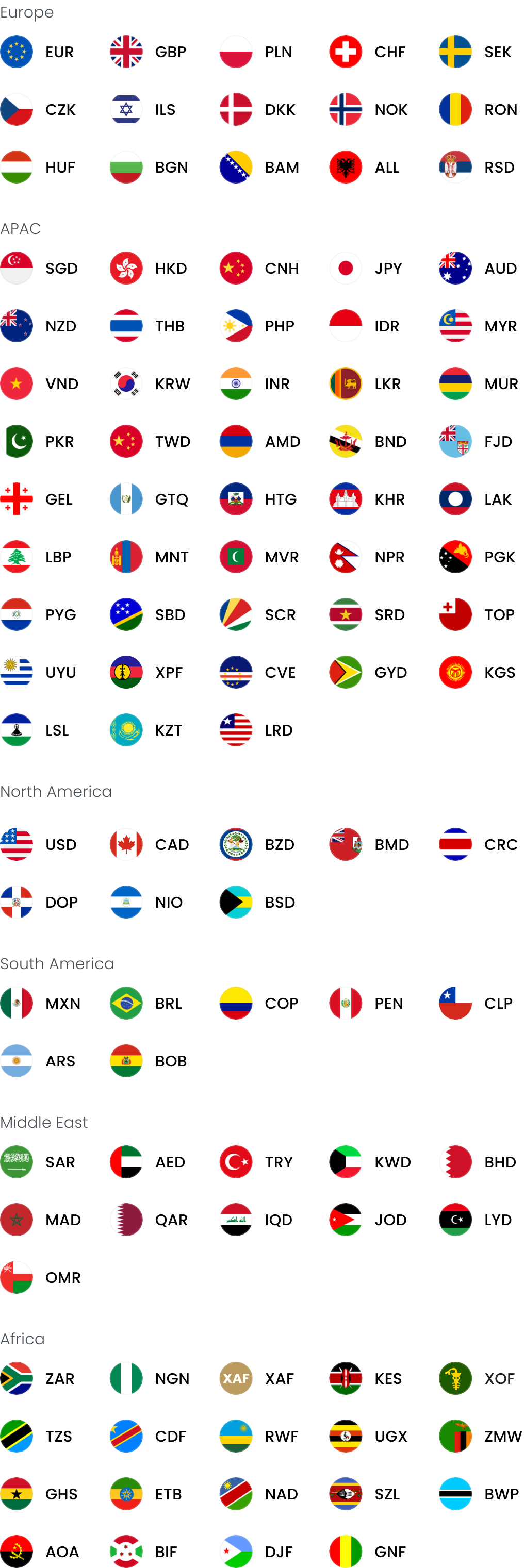
- Hold multiple currencies: Hold funds in 20+ currencies and convert when it suits your business
- Receive like a local: Get local account details in 20+ currencies, so overseas customers and marketplaces can pay you more easily
- Pay globally: Send payments in 100+ currencies to 200+ countries and territories
- Manage marketplace payouts: Connect with 130+ marketplaces and payment gateways, including Amazon, Shopee, Shopify and PayPal
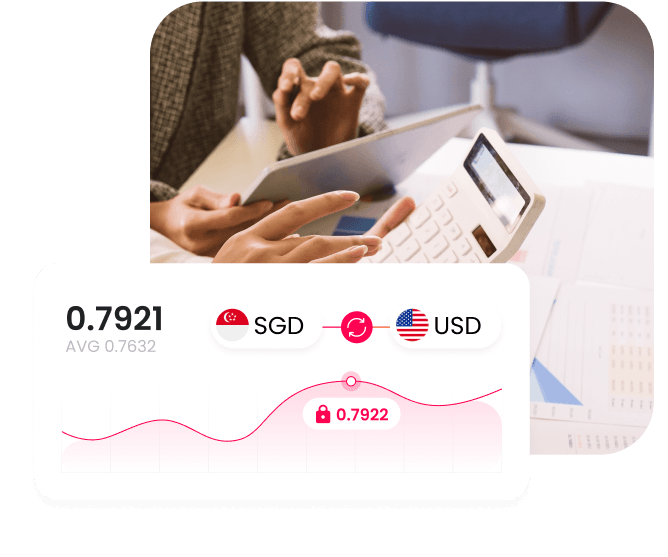
- Control FX timing: Hold balances and convert only when needed, rather than converting every time money enters or leaves your account
- Keep pricing clearer: WorldFirst shows FX margins upfront and caps its currency conversion fee at 0.6% on the Singapore foreign currency account page
Quick comparison: UOB vs OCBC vs World Account
| Feature / capability | UOB | OCBC | World Account |
|---|---|---|---|
| Currencies you can hold | Major foreign currencies through Global Currency Account | 13 major currencies | 20+ currencies |
| Overseas payments | UOBSend to 45+ markets, plus standard bank routes | Over 60 currencies via outward telegraphic transfer | 100+ currencies to 200+ countries and territories |
| FX structure | Bank-set rates | Bank-set rates | Clear FX margins shown upfront |
| FX control | FX tools through UOB Infinity and UOBSend | FX tools through OCBC Velocity and app | Hold, convert and pay from one platform |
| Marketplace support | Limited | Limited | 130+ marketplaces and payment gateways |
| Core strength | Regional trade and banking support | Simple SME banking and multi-currency account setup | Cross-border payment control |
Choose a World Account if you:
- Want more control over when you convert currency
- Pay suppliers in China, the US, Europe or other global markets
- Receive revenue in multiple currencies
- Sell through international marketplaces
- Want clearer FX costs as payment volume grows
- Prefer one platform for holding, converting, receiving and sending money globally
Open a World Account today to manage global payments with more control, clearer FX pricing and fewer unnecessary conversion steps.
Power your global growth with one account
Get local currency accounts, fast payments and competitive FX – all in one place.
FAQ
1. Which is cheaper for a new Singapore SME, UOB or OCBC?
OCBC is usually cheaper for a new SME. Its Business Growth Account has a lower minimum balance requirement and includes 80 free FAST and 80 free GIRO transactions per month. UOB can still work for new SMEs, but its eBusiness Account has a higher minimum average daily balance requirement.
2. Is UOB or OCBC better for local payments?
UOB may suit businesses with higher local payment volumes, especially through accounts like UOB BizTransact. OCBC works well for smaller teams that want a simple account with included FAST and GIRO transactions each month.
3. Which is better for higher local payment volumes?
UOB usually offers more account options for businesses that process frequent supplier payments, payroll and collections. OCBC is easier for moderate local payment needs, but costs may rise once you exceed the included monthly allowance.
Sources:
- https://www.imda.gov.sg/resources/press-releases-factsheets-and-speeches/factsheets/2025/ar-sgde-2025
- https://matrixbcg.com/blogs/brief-history/uobgroup
- https://matrixbcg.com/blogs/brief-history/ocbc
- https://www.mas.gov.sg/news/media-releases/2025/singapore-strengthens-position-as-third-largest-global-fx-centre
- https://www.singstat.gov.sg/find-data/explore-data-themes/industry/enterprises-and-corporate-sector/latest-news-data
- https://www.uob.com.sg/business/index.page
- https://www.ocbc.com/group/gateway
- https://www.worldfirst.com/sg/
Joan Poon leads marketing across Southeast Asia at WorldFirst, driving growth and brand leadership in key markets including Singapore, Malaysia and the Philippines.
Joan Poon
Author
Head of Marketing SEA, WorldFirst Singapore
Continue reading
Open a World Account for free
Get local currency accounts, fast payments and competitive FX – all in one place.
You might also like
Choose a product or service to find out more