



















Products
About WorldFirst
Resources
More brands of Ant International
This country is supported by WorldFirst affiliates, Zyla
We provide coverage in South Asia and Middle East: servicing 210+ countries and territories.

WorldFirst Home > blog > e-Commerce & Online Sellers > What are the best business bank accounts in Australia? A guide for Singapore SMEs
If your Singapore business is operating in Australia, you’re likely considering a local business bank account for a few reasons:
However, opening a business bank account in Australia comes with added complexity. Most banks apply strict compliance requirements, with onboarding timelines of 4–8 weeks. What’s more, in many cases, a mandatory in-person visit will be necessary before activation.
Fortunately, there’s a simpler alternative.
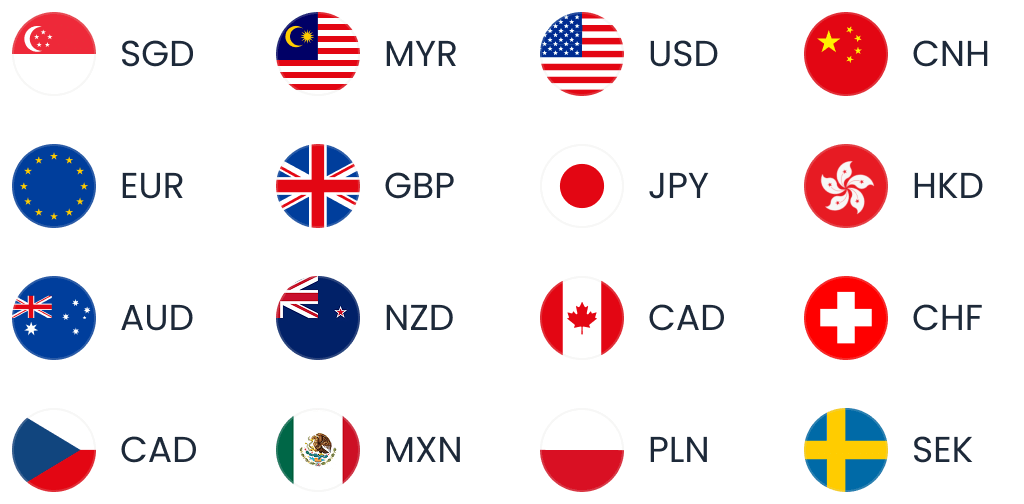
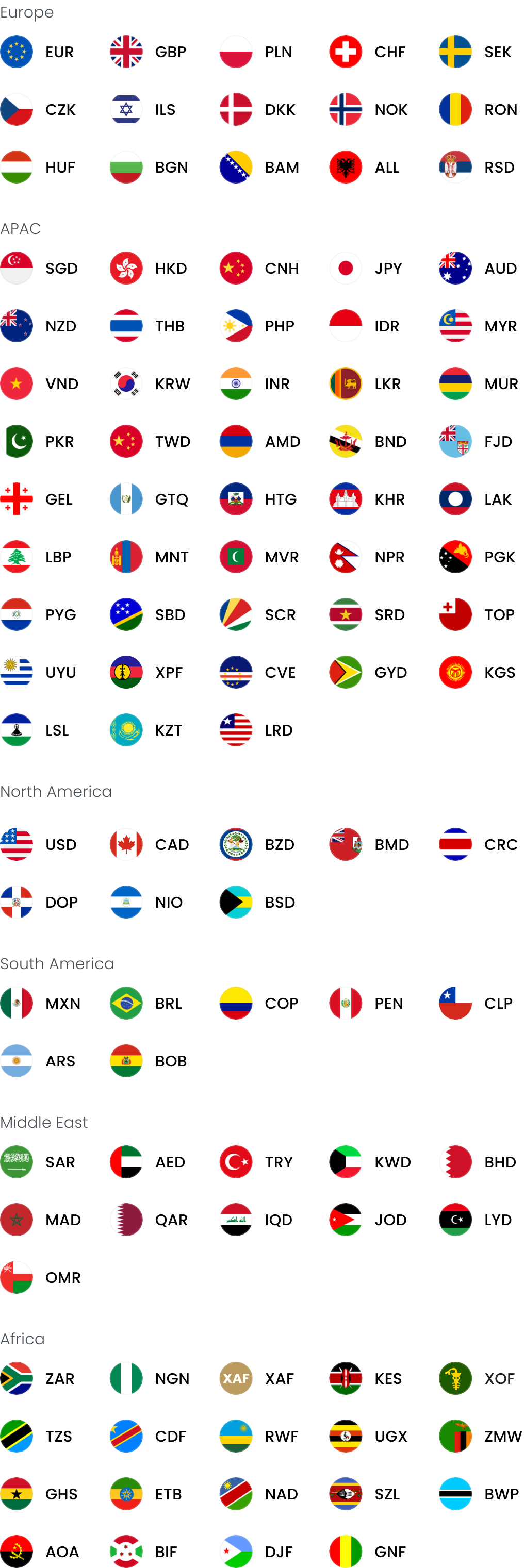
WorldFirst is a digital solution that lets you open 20+ multi-currency accounts and convert currencies without paying an FX fee. With a World Account, you can receive and hold AUD just like a local, without the hassle of opening a traditional bank account.
Instead, the World Account is free to open and only takes a few minutes to apply online. And in just 1–2 working days, you’ll be approved and ready to operate in AUD.
In this guide, we’ll show you:
Ready for fast, easy transactions in AUD, even without a local business presence? Sign up for a World Account today.
For over two decades, WorldFirst has helped 1.5 million customers send money in over 150 currencies to 210+ countries and regions worldwide.
We created the World Account to support companies to more easily do business across borders, without the hassles and restrictions of traditional banking.
Instead of opening a separate bank account in every country where you do business, you can use one World Account to send, receive and manage funds globally from a single dashboard.
It only takes 1–2 days to sign up, get approved and start holding 20+ currencies – including AUD, SGD and USD – in a single account. You can send and receive AUD just like you would with a local traditional bank.
Here are some additional benefits WorldFirst offers global businesses.
Unlike Australian banks that can take up to eight weeks to process your application, you can apply for a World Account in under 15 minutes and get approved within 48 hours – no matter where you are in the world.
If you’re based in Singapore, you can sign up using Singpass, making the process even faster and easier. This removes the need to manually upload documents and gives you a safe, seamless digital onboarding experience.
It’s also free to open a World Account, with no minimums or maximums for international transfers, and no monthly account fees, ongoing fees or hidden charges. Unlike traditional banks, which often hide their FX markup fees, we’re fully transparent with our fees so you always know what you’re paying.
Read more: Corporate bank account in Singapore: 5 options compared
A World Account lets you hold, send and receive AUD (and 20+ other currencies) as if you were a local.
Just like a traditional Australian bank account, a World Account provides you with local account details, including a six-digit BSB code. This allows you to access Australia’s local payment rails, like NPP or RTGS, so transfers are processed domestically rather than internationally.
Not only does this eliminate FX fees, but it also cuts out intermediary banks, resulting in fewer fees and 90% of payments arriving within a day.
You can also receive and hold AUD in your currency account and pay Australian businesses when you’re ready. So rather than converting AUD profits back to SGD, you can hold AUD and pay Australian businesses or expenses from that currency.
Read more: What’s the cheapest international money transfer method?
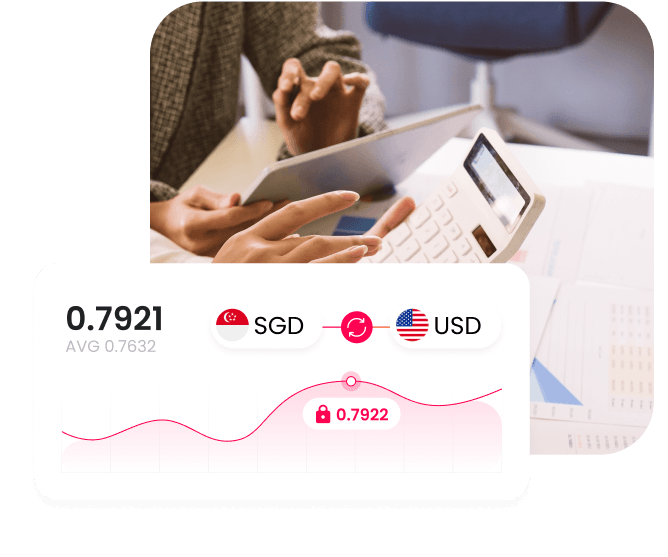
When you need to make international payments and convert currencies, you pay the mid-market rate with a small markup of 0.6% on major currencies.
As your money moves internationally, it’s exposed to fluctuating exchange rates, especially since transfers can take 3–6 days to settle. If the rate moves against you, you could end up paying more than you originally budgeted for.
To counteract this, WorldFirst offers FX tools, like forward contracts and firm orders, so you can protect your money against these fluctuations.
Firm orders let you choose your currencies, pick your target rate and set an expiration date. WorldFirst will keep an eye on the rate 24/7, and once it’s reached, we’ll execute the trade. This lets you automate the process so you don’t have to constantly watch the rate.
You’ll also have the option to use forward contracts. These let you hedge against currency risk by locking in an exchange rate for up to two years, so you know exactly what you’ll pay.
For example, if you’re planning to pay an Australian supplier in AUD in a few months, you can secure today’s rate in advance. So, even if the market moves against you, the rate you agreed on stays the same, giving you certainty over what you’ll pay.
Read more: FX international payments: How to affordably send money abroad
If WorldFirst doesn’t feel like a good fit for you, you’ll need to apply for a business account with a traditional Australian bank.
While these are safe and reputable places for your funds, they do require you to jump through additional hoops – and you may not be able to open an account from Singapore. That’s precisely why companies are increasingly turning to platforms such as WorldFirst.
Here’s what you typically need to do if you want to open a traditional business bank account in Australia.
To open a business account in Australia as a foreigner, you’ll likely need to register your company with the Australian Securities and Investments Commission (ASIC). Even if you don’t plan to relocate, registration is typically required if you intend to do business in Australia.
Important details:
To open a business account as a foreign company, banks often require at least one director or authorised representative to visit the branch in person and complete identity verification.
This is part of standard KYC checks and is often one of the biggest onboarding bottlenecks, not only because it requires you to travel to Australia, but because it can also prolong the process.
Important details:
To open a corporate bank account, each director and authorised representative must meet Australia’s 100-point ID requirement. Each document carries a set number of points, and you’ll need to provide enough to reach at least 100 points.
For instance, primary documents (such as a passport or birth certificate) are typically worth 70 points, while secondary documents (such as a foreign driving licence or Land Titles Office record) may be worth 25–40 points.
Important details:
For local businesses, onboarding typically takes 1–4 weeks. For foreign companies, this is usually extended by an additional 2–4 weeks, meaning the process can take up to eight weeks.
Important details:
Even after opening a business bank account in Australia, cross-border transactions can still be slow and costly. For example, converting AUD back to SGD can take several days, with added FX fees, intermediary bank deductions and sending and receiving charges along the way.
Important details:
If you’re committed to a local Australian business account, your best bet is one of the big four banks. They have the most extensive branch networks in Australia and have a good reputation with foreigners.

Best for: Businesses with a physical or operational presence in Australia.
One of Australia’s largest banks, Commonwealth Bank, has a strong international footprint, particularly across the Asia-Pacific region. It’s a well-recognised option for businesses that need a trusted local banking partner in Australia.¹
While you can begin the application online, most non-resident applicants will need to complete identity verification in person at an Australian branch before the account becomes fully operational. Foreign currency accounts are available, but you’ll need to have an eligible CommBank AUD account, have an ABN or ACN and register for ASIC.²
Foreign exchange costs can also be higher than some alternatives, with margins often around 4–5% above the interbank rate. This is an important consideration if you’re making frequent cross-border payments.

Best for: Businesses with ongoing cross-border transactions or trade relationships
Westpac is Australia’s oldest bank, with deep experience in international trade and cross-border banking.³ It has a strong presence across the Asia-Pacific region, including a regional office in Singapore, making it a relevant option for businesses operating between markets.
It offers a range of business account tiers, from simple low-fee accounts to more advanced options for higher-volume or more complex businesses.
Westpac’s Business Foreign Currency Account lets you receive and hold funds in foreign currencies, giving you more control over when to convert into AUD.⁴ These accounts can be managed alongside other accounts through Westpac Online Banking.
There is typically a AU$12 fee for receiving international payments, although this is often waived for smaller transfers (around AU$100 or less).
As with most Australian banks, foreign applicants will usually need to visit a branch to verify identity documents before the account is fully activated.

Best for: Cost-conscious SMEs with international payment needs
NAB is widely seen as one of the most SME-friendly banks in Australia, offering straightforward business accounts with competitive pricing. It provides a range of options, including fee-free everyday accounts and foreign currency accounts for businesses operating internationally.⁵
NAB’s foreign currency account lets you hold funds in multiple currencies and convert them when it suits your business, giving you more control over exchange rate exposure.⁶
While there are generally no monthly account fees, international transfers can cost up to AU$30–$35 per transaction, depending on the payment method. Daily transaction limits also apply, with a default cap of $5,000 via National Australia Bank Internet Banking or the NAB mobile app, and a minimum limit of $1,000.
As with most Australian banks, foreign applicants will typically need to complete identity verification, often in person, before the account is fully activated.

Best for: Businesses with high-volume FX needs or expanding across Asia-Pacific
ANZ is one of Australia’s largest banks, offering a range of business accounts from low-fee everyday options to more specialised solutions for complex or international operations⁷. It combines a strong digital banking platform with established international payment capabilities.
ANZ offers an FX online platform designed for businesses with more complex foreign exchange needs.⁸ It provides access to a wide range of currencies, real-time trading and tools to manage and track transactions.
Fees vary depending on the account type and how you send or receive payments, so choosing the right setup is important. International transfers are often around AU$15–$25 per transaction, though this can vary.
You can start the application online, but most foreign applicants will need to complete an in-person visit to finalise identity verification and activate the account.
If you want your Singapore business to operate in Australia without the friction of opening a traditional bank account, a World Account is a simpler alternative. It’s free to set up and maintain, and the entire process is completely online.
Here’s how to get started:
If you’re interested in opening a World Account, but would like to talk to a specialist first, go to our contact page and find Singapore’s contact details.
Yes. Many businesses use multi-currency accounts like WorldFirst instead of opening a separate business bank account in Australia. These let you receive, hold and send AUD using local account details, without setting up a local entity or going through lengthy onboarding processes.
It depends on the bank and your business structure. For foreign businesses, the process typically takes 2–6 weeks or longer, especially if additional documents or in-person verification are required.
Australia’s four major banks are Commonwealth Bank (CBA), Westpac, NAB, and ANZ. All offer business accounts and international payment capabilities, but they have similar requirements for foreign businesses, including local registration and identity verification.
If you’re a small business owner, it may be possible to use a personal account for business needs; however, a separate business bank account is generally recommended.
Keeping your personal finances separate from your business finances makes it easier to track income and expenses, stay compliant with tax requirements and maintain a clear view of your financial situation. Most banks also require businesses to operate under a registered business name with a dedicated account.
Sources:
Shawn Shen is the Country Manager for Singapore and the Philippines, with over 15 years of experience in commercial leadership across payments, SaaS and fintech.
Shawn Shen
Author
Country Manager, Singapore & Philippines WorldFirst Singapore
© WorldFirst 2026, All rights reserved.
How to redeem:
How to redeem:
How to redeem:
How to redeem: