




























Home > Bank wire vs bank transfer: Which one should your business use?
Bank wire vs bank transfer: Which one should your business use?
Last update:


If you’ve ever sent money domestically or abroad, you’ve probably heard the terms bank transfer and bank wire – sometimes used interchangeably. While they’re related, there are important differences that can affect your business’s bottom line.
Technically, “bank transfer” is a general term for moving money from one bank account to another. A bank wire is a specific type of bank transfer, typically used for large or international payments.
In other words, all bank wires are bank transfers, but not all bank transfers are wires.
When thinking about the difference, it can be helpful to frame it as bank wire vs. a standard bank transfer, with “standard” covering transfer methods that aren’t a wire.
In this post, we’ll break down bank wires and bank transfers side by side, comparing speed, cost, geographic reach, use cases and more.
We’ll also explore how non-bank, multi-currency accounts, like WorldFirst’s World Account, can save your business time and money by combining the speed of local transfers with the global reach of wire transfers, often at a fraction of the cost.
Open a WorldFirst account for free to start making faster, more affordable international payments.
Bank wire vs bank transfer: Key differences
| Feature | Standard bank transfer | Bank wire |
|---|---|---|
| Definition | Domestic or international transfer via standard banking methods | Specific type of high-value or international transfer, often via the SWIFT network or CHAPS in the UK |
| Processing times | Hours to a few days | Same day for domestic wires; 1–5 business days or more for international wires |
| Cost | Usually free or low-cost | High fees; International wires are more expensive than domestic wires + involve FX fees |
| Geographic reach | Mostly domestic, but there are some with international reach (SEPA, for instance, is used for cross-border EUR transfers) | Domestic high-value and global payments |
| Processing | Typically batch processing | Individual processing, directly between banks |
| Security | Standard banking security | High; banks verify funds and identity |
| Tracking | Limited tracking | Full tracking, confirmation numbers provided |
| Fees for recipients | Usually none | May be charged by the receiving bank for incoming wires |
Best use cases for bank wires vs. bank transfers
Bank wires, such as through SWIFT, are most often used for international payments. This includes use cases like paying overseas suppliers or moving funds between subsidiaries. Domestic wire transfers (like CHAPS) are typically reserved for high-value payments that are time-critical. Think big-ticket financial transactions like property purchases.
Bank wires are fully tracked end-to-end and have high transfer limits, which is why they’re popular for large or sensitive payments.
The trade-off is that wires are more expensive than standard transfers and usually need detailed recipient information. International wire transfers are also slower than bank transfers, though domestic wire transfers are fast.
On the other hand, standard bank transfers work well for everyday domestic payments. Businesses often use them for payroll, local suppliers, subscriptions or recurring payments.
They’re usually inexpensive or free and move quickly within the local banking system. The downside is that they offer limited tracking and have lower daily transfer limits. Cross-border payments are also not widely available via standard bank transfers.
While both bank wires and standard transfers have their uses, international money transfers can be tricky: wires are secure but often costly and slow, while standard transfers are more affordable but limited for cross-border payments.
How a WorldFirst multi-currency account makes international payments faster and more affordable
WorldFirst specialises in international transactions, helping businesses of all sizes send, receive and manage money across borders efficiently.
Our World Account is a multi-currency business account designed to help you manage global payments, but without the traditional banking headaches.
Here’s how it works:
Hold and pay in multiple currencies to avoid costly FX conversions
One of the biggest headaches for businesses operating internationally is managing multiple currencies and the associated conversion costs.
Most traditional bank accounts only allow you to hold one currency. That means every foreign currency payment – whether wire or transfer – requires converting currencies at your bank’s exchange rate. That rate typically includes significant hidden markups of 2–3% above the mid-market rate.
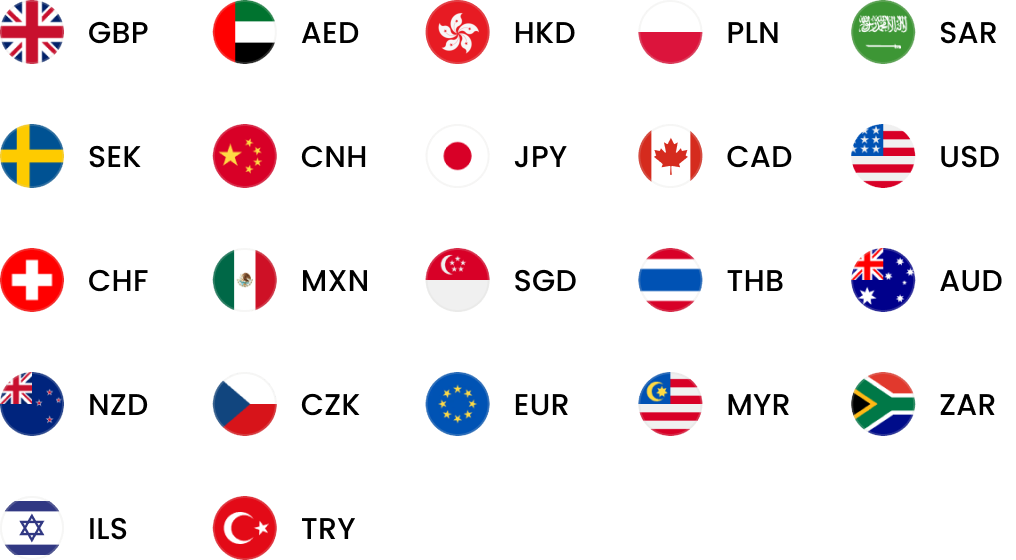
WorldFirst’s World Account solves this by letting you simultaneously hold and manage funds in over 20 currencies, including GBP, USD, EUR, CNH and more. And you can do so without having a physical presence or local entities in those countries.
This means you can pay suppliers or employees directly in their local currency without repeated conversions. You also avoid high foreign exchange fees and protect your business from volatile exchange rates by controlling when and how you convert funds.
Read more: Multi-currency payments: How to manage business transactions across borders?
Pay like a local with fast and cost-effective transfers
International bank wires via SWIFT aren’t just expensive. They’re also slow, often taking 1–5 business days depending on correspondent banking relationships.
With WorldFirst, you can make speedy payments in 100+ currencies to 200+ countries and territories. We use local banking networks wherever possible, which means your international transfers can arrive much faster – often as quickly as domestic payments – without the traditional wire fees piling up.
In fact, around 90% of WorldFirst transfers arrive within the same day.
This is particularly useful if you’re paying overseas suppliers, freelancers or subsidiaries regularly. Faster payments can also help strengthen your relationships with overseas partners and improve negotiating power, opening the door to premium and flexible order adjustments.
Avoid hidden costs with WorldFirst’s transparent fees and competitive exchange rates
Another common frustration with international wires is the lack of clarity around transfer fees and exchange rates. Traditional banks often charge both upfront fees and hidden FX markups, making it hard to know the true cost of sending money abroad.
WorldFirst keeps our pricing simple and transparent. It’s free to open a local currency account, and there are no ongoing account fees, either.
When sending money, you see exactly what you’re paying before sending money and benefit from competitive mid-market exchange rates. Plus, our conversion fees are capped at 0.5%.
Better still, payments to other World Account holders – which include more than 150,000 Chinese suppliers – are processed instantly and free of charge.
Meanwhile, advanced FX tools – like forward contracts, firm orders and spot contracts – let you manage and lock in rates. These tools make budgeting for global payments far easier and can protect your business from unexpected losses.
Read more: How to lock in exchange rates as a cross-border business: 3 best methods
Bank wire vs bank transfer? WorldFirst combines the best of both
Choosing the right transfer type can be tricky. Bank wires are ideal for handling large international payments, while standard transfers work well for routine domestic transactions. But relying solely on traditional payment methods often comes with trade-offs like high fees, slow delivery and frustrating currency conversions across multiple financial institutions.
WorldFirst addresses those pain points for businesses transferring money globally.
With a World Account, you can send money in 100+ currencies to over 200 countries and territories. And because we use local payment networks where possible, transfers often arrive same-day or next-day. Think of it as getting the global reach of bank wires with the speed of local bank transfers.
Open a WorldFirst account for free today and start making faster, more affordable global payments.
Shawn Ma leads business development at WorldFirst UK, with a deep expertise in fintech, risk management and cross-border commerce.

Shawn Ma
Author
Continue reading


Subscribe
The Weekly Dispatch
Get the latest news and event invites. Signup for our weekly update from the worlds of fashion, design, and tech.