



























Home > Which platform is the easiest for small businesses to manage global payments?
Which platform is the easiest for small businesses to manage global payments?
Last update:


For small businesses, managing international payments shouldn’t require specialist knowledge, a finance team or hours of admin.
The easiest platforms simplify onboarding, offer transparent fees, support multiple currencies and integrate with your existing tools. This way, they help you get paid globally and pay overseas suppliers without friction.
When small businesses say they want an “easy” global payment platform, they typically look for:
- Fast, simple onboarding
- Support for sending or receiving payments in multiple currencies
- Clear, competitive fees and better-than-bank exchange rates
- Minimal technical setup
- Integrations with tools they already use (e-commerce platforms, accounting software, invoicing systems)
- Features designed for international workflows, such as supplier payments, marketplace payouts or team spending
With these criteria in mind, here are four platforms widely considered the easiest for small businesses to manage global payments.
Top platforms for small businesses to manage global payments
| Feature / Criteria | WorldFirst (World Account) | PayPal Business | Stripe | Payoneer |
|---|---|---|---|---|
| Best for | International sellers, e-commerce businesses, paying global suppliers, multi-currency management | Quick setup, customers who prefer PayPal, broad global reach | E-commerce/SaaS, subscription businesses, custom checkouts | Freelancers, marketplace sellers, small businesses with global clients |
| Multi-currency support | 20+ currencies with local receiving accounts. Pay in 100+ currencies |
Accepts 130+ currencies, withdraws in 24 | Supports multi-currency billing (varies by region) | Multi-currency accounts in major global currencies |
| Ease of onboarding | Fast, 100% online setup. Approval in 1–2 days | Instant account approval for most users | Requires some technical setup (unless using integrations) | Quick online setup, simple verification |
| Local receiving accounts | 20+ currencies (USD, EUR, CNH, AUD, JPY, AED, etc.) | Limited. Mainly PayPal wallet, not true local bank accounts | No traditional bank accounts, but supports local payment methods | Yes. Multiple currencies for receiving from clients/marketplaces |
| FX & fees | Low FX margins, competitive fees for businesses | Higher transaction and FX fees | Competitive fees. FX depends on currency | Lower FX fees than banks. Varies by region |
| Integrations | Xero, QuickBooks, 130+ e-commerce and payment platforms | E-commerce platforms, invoicing tools, marketplaces | Extensive. Ideal for developers, SaaS and ecommerce | Strong marketplace integrations (Amazon, Fiverr, Upwork) |
| Sending payments | Send to 190+ countries in local currencies | Send globally (fees apply) | Not designed for supplier payments; mainly customer payments | Send payments to suppliers or withdraw to local bank |
| Cards / Spending | Virtual cards in 15 currencies for ads, SaaS, team expenses | PayPal debit card (region-dependent) | No direct business card offering | Prepaid cards available in some regions |
| Marketplace support | Strong for Amazon, Shopee, TikTok Shop, Rakuten | Supported but may require additional steps | Depends on platform | Widely used by freelancers and marketplace sellers |
| Why it’s easy | Consolidates receiving, paying, converting and spending in one place | Familiar brand, simple checkout for customers | Highly customisable and integration-friendly | Straightforward setup with broad marketplace compatibility |
1. World Account by WorldFirst
For businesses that sell internationally, pay overseas teams or suppliers or receive marketplace payouts, the World Account is purpose-built for friction-free global finance.
Why it’s easy
WorldFirst eliminates many barriers that small businesses typically face when expanding internationally, including the need for foreign entities, local bank accounts, or complex financial setup.
Everything is done online, and the platform consolidates multi-currency receiving, payments, cards and accounting into one simple dashboard.
Receive payments globally with local bank details
Opening foreign bank accounts traditionally requires local tax IDs, residency and lengthy verification. WorldFirst removes that complexity.
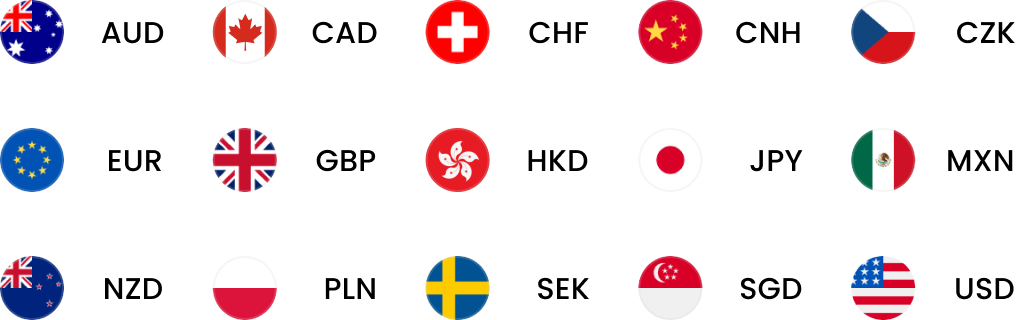
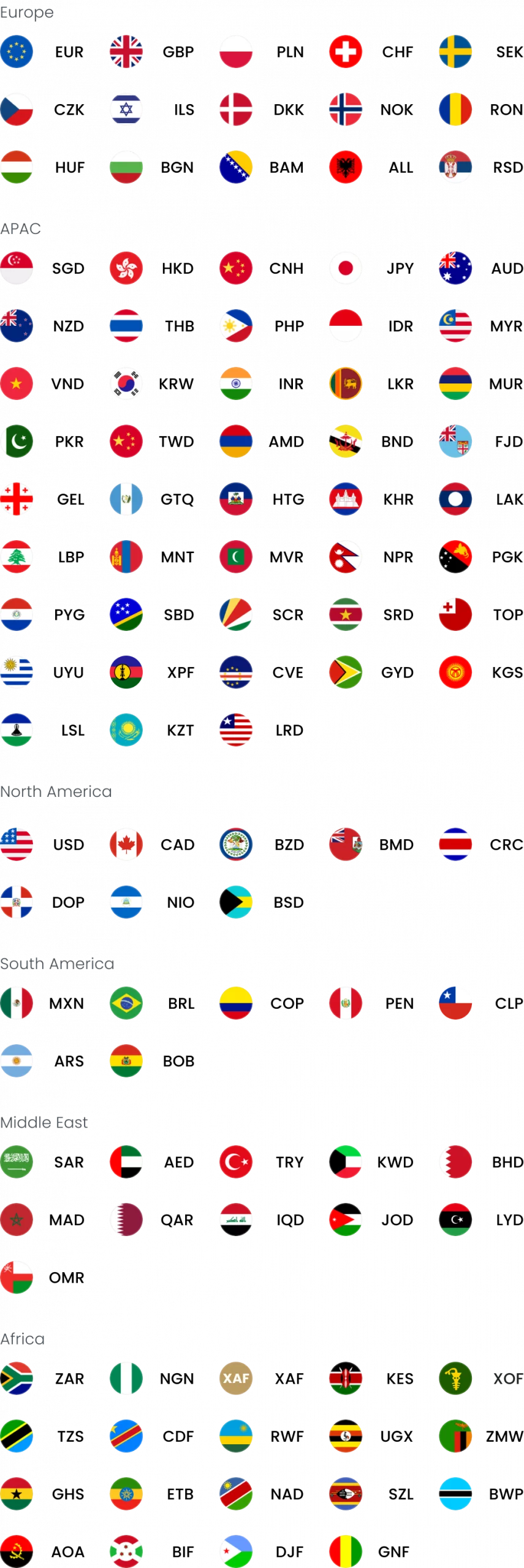
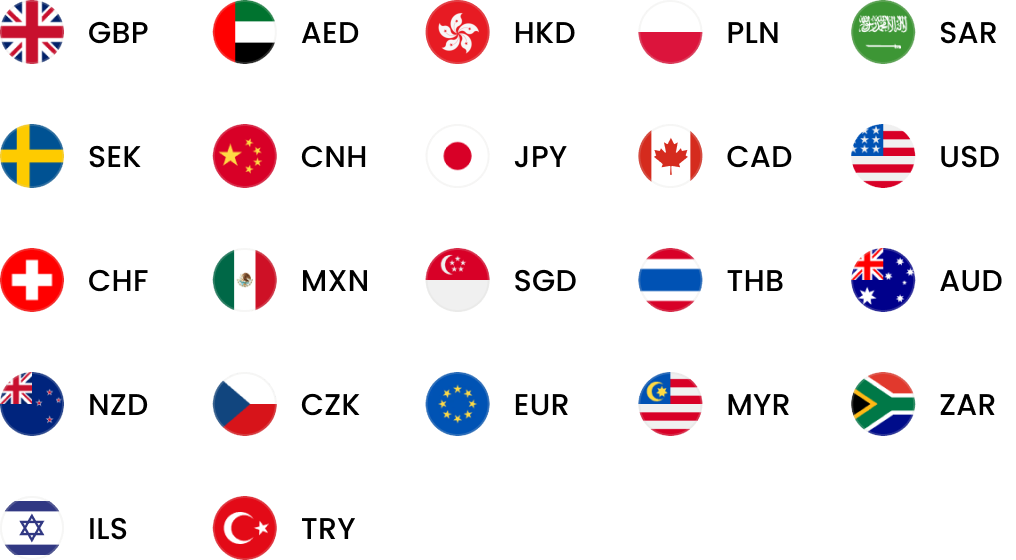
With a free World Account, you can instantly open local receiving accounts in 20+ currencies (USD, EUR, CNH, AUD, JPY, AED and more), without needing a local presence. This means you can:
- Receive payments like a local seller in each market
- Avoid payout delays and unnecessary intermediaries
- Hold balances and convert only when FX rates suit your business
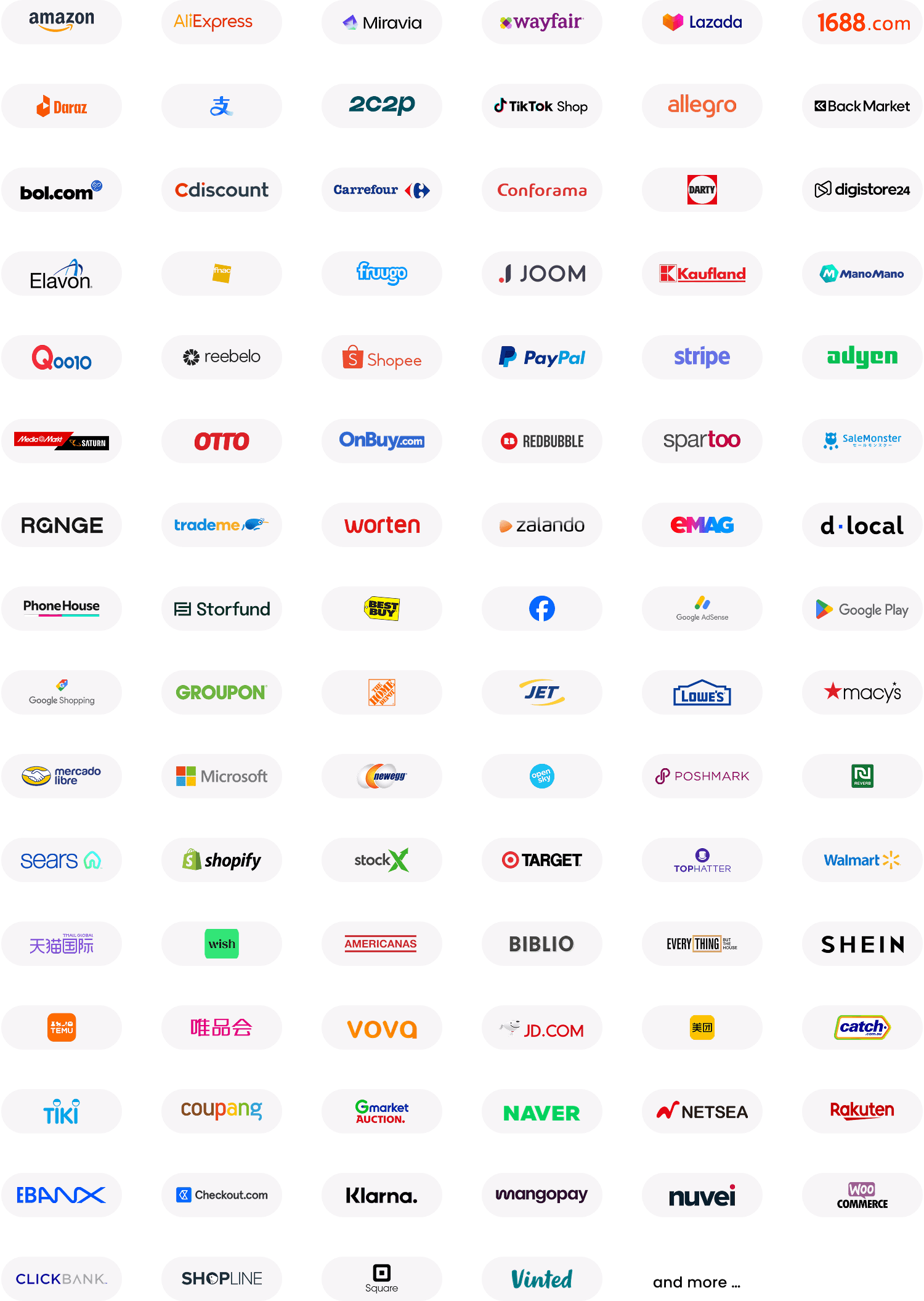
This is especially valuable for e-commerce sellers on platforms like Amazon, Shopee, Rakuten or TikTok Shop, which often require local bank details for payouts.
Virtual cards to simplify global spending
WorldFirst also offers virtual cards in 15 currencies, allowing businesses to:
- Pay for ads on Meta, Google, TikTok in local currencies
- Purchase SaaS tools or inventory internationally
- Assign cards to teams or campaigns with custom controls
- Earn up to 1.2% uncapped cashback on every eligible card spend
Everything is managed from one dashboard, giving you real-time spend visibility and control.
Fast, fully online setup
Traditional banks often require in-branch appointments and weeks of paperwork. With WorldFirst:
- Apply in under 30 minutes
- Upload documents securely online
- Get approved in as little as 1–2 business days
Once verified, you can immediately begin receiving and sending funds in 20+ currencies, with full visibility across all your accounts.
2. PayPal Business
Best for: Quick setup, broad global reach, and brand recognition.
Most customers already have PayPal accounts, reducing friction at checkout. Businesses benefit from instant account approval and an intuitive interface that requires no technical setup. You can:
- Sell in 130+ currencies
- Withdraw in 24 currencies
- Available in 200+ countries/regions
PayPal is extremely convenient, but its transaction fees and FX markups can be higher than other solutions – something to factor in if you have high sales volume.
3. Stripe
Best for: E-commerce stores, SaaS companies, or businesses needing custom checkout flows.
Stripe offers seamless integrations with most ecommerce and software platforms, plus:
- Support for cards, wallets, and local payment methods
- Subscription billing
- Robust API documentation
- Multi-currency support
If your business is online-first or subscription-based, Stripe offers flexibility few competitors can match.
4. Payoneer
Best for: Freelancers, global marketplace sellers, and small businesses working with international clients.
Payoneer is frequently praised for simple setup and cost-effective cross-border payments. Small businesses benefit from:
- Multi-currency accounts (USD, EUR, GBP and more)
- Low transaction fees compared with traditional banks
- Marketplace integrations (Amazon, Upwork, Fiverr, and others)
- Easy withdrawals to your local bank
If you frequently invoice overseas clients or rely on marketplace payouts, Payoneer provides a simple, flexible way to manage your cash flow globally.
How to choose the right global payment solution
To find the easiest platform for your business, consider:
1. Your business model:
- Companies expanding into multiple global markets: WorldFirst
- E-commerce sellers: WorldFirst or Payoneer
- SaaS or subscription-based: Stripe
- Businesses needing ultra-fast setup: PayPal
2. The currencies and countries you operate in. Check whether the platform supports both the payment methods and the currencies your customers prefer.
3. Fees and FX rates. Ease isn’t just about setup — it’s also about cash flow. Compare:
- Transaction fees
- FX markup
- Withdrawal fees
- Monthly or annual charges
4. Integration needs. The easiest platform is the one that works with the tools you already use, from Xero and QuickBooks to Shopify or WooCommerce.
FAQs: Managing global payments for small businesses
1. What’s the easiest way for a small business to receive payments in multiple currencies?
Using a multi-currency account is usually simplest. Tools like WorldFirst let you receive funds in 20+ currencies with local bank details, avoiding complex foreign bank setups and reducing delays.
2. How can small businesses reduce fees on international payments?
Compare FX rates, avoid traditional bank wire fees, and use platforms designed for cross-border payments. Services like WorldFirst typically offer lower FX margins and faster settlement than high-street banks.
3. Do I need a foreign entity to receive global payments?
Not always. Platforms such as WorldFirst allow businesses to open local receiving accounts in major currencies without overseas registration, eliminating the need for foreign tax IDs or local bank branches.
4. Which payment platform is best for ecommerce sellers expanding internationally?
E-commerce sellers often prefer multi-currency platforms with marketplace integrations. WorldFirst, Payoneer and Stripe all support global payouts, but WorldFirst stands out for local receiving accounts in 20+ currencies.
5. How quickly can a small business start sending or receiving global payments?
Most modern platforms offer fast online onboarding. With providers like WorldFirst, approval can take as little as 1–2 business days, allowing businesses to begin sending and receiving funds almost immediately.
Sources
https://www.paypal.com/uk/business/payment-optimization/cross-border-trade
https://blog.finexer.com/paypal-vs-stripe-vs-payoneer
https://www.airwallex.com/au/blog/comparison-stripe-vs-payoneer
https://www.crossborderpaymentscompanies.com/blog/top-7-business-payment-platforms-for-global-trade/
https://www.payoneer.com/resources/business/best-online-payment-systems-for-a-small-business
Shawn Ma leads business development at WorldFirst UK, with a deep expertise in fintech, risk management and cross-border commerce.

Shawn Ma
Author
Continue reading


Subscribe
The Weekly Dispatch
Get the latest news and event invites. Signup for our weekly update from the worlds of fashion, design, and tech.