
























If you’re doing research on UK e-commerce platforms, you’re probably looking to break into the British consumer market. But with so many platforms out there (and so many confusing fee structures and logistics rules), how do you know which ones are likely to be worth the cost and effort?
In this article, we’ll run through some of the top e-commerce platforms in the UK and help you choose the best one for your business. Including:
- What to consider when selling on UK e-commerce marketplaces
- Top UK e-commerce platforms
- The challenges you might face when selling on UK and global e-commerce platforms
- How WorldFirst makes it easier to sell on UK e-commerce platforms
- How Wild & Stone leveraged marketplaces to expand across the UK and globally
Want to save money and trade faster in multiple currencies as you expand in the UK and beyond? Open a World Account today.
Key Takeaways
- Selling on UK e-commerce platforms is the fastest way to enter the market
Marketplaces like Amazon and eBay give instant access to millions of UK customers, removing the need to build traffic from scratch. - Marketplace vs DTC is a trade-off between reach and control
Marketplaces offer built-in demand and logistics, while your own store gives you full control over branding, margins, and customer experience. - Platform choice should match your product and growth strategy
Options like Etsy (niche/handmade), TikTok Shop (discovery-driven), and OnBuy (retail-focused) serve different audiences and business models. - Fees, competition, and logistics are the main challenges
Sellers must manage listing fees, commissions, fulfillment costs, and increasing competition across platforms. - Cross-border payments and multi-currency management are critical
Handling GBP and global payouts efficiently is important; solutions like WorldFirst help reduce FX costs, simplify payments, and improve cash flow across marketplaces.
What to consider when selling on UK marketplaces
If you’re considering selling on UK platforms, you might be weighing the benefits of selling on marketplaces versus your own direct-to-consumer (DTC) site. Here are some of the main factors and tradeoffs to think about when it’s time to make the decision:
- Reach vs. competition: With your own e-commerce site and custom domain, you’re responsible for driving traffic through ads, social media, and email marketing campaigns. Even if you’ve already built a solid customer base, entering a new market can be slower and more challenging. When you sell on a well-established platform like Amazon, you automatically tap into a base of millions of UK shoppers. But that also means contending with stiff competition from other sellers on the platform.
- Ease of setup vs. brand control: Setting up your own site gives you full control of the online shopping experience, but can be costly and time consuming. Even with user-friendly website builders like Wix, WordPress, Squarespace, Big Commerce, or WooCommerce, you may still need engineering resources to tackle the complexities of web hosting, plugins, and other e-commerce functionality. Marketplaces give you much more ease of use, but they can limit your ability to control the look and feel of your storefront (as well as domain name, payment methods, etc.). They also typically have strict rules about what you can and can’t say, the images and templates you use, and more.
- Costs: When you sell on a marketplace, you’re subject to the fees they charge, which can be significant for high-volume sellers. You typically have to pay to list your products, pay a percentage or flat fee on each sale (aka referral fees), and cover the costs of picking and packing orders, shipping rates and storage. Plus, fees can increase at any time at the marketplace’s discretion, especially over the holidays. When you sell through your own online store, the initial investment can be higher — you have to set up your site, pay marketing costs, handle payment processing, and manage your own logistics. However, you may wind up with more control over your margins further down the line. Some platforms, like Amazon, also have strict rules about inventory management, so you can end up paying penalty or overage fees in addition to your other costs.
- Logistics: Some platforms, like Amazon, offer built-in logistics services such as Fulfilment by Amazon (FBA). These programs handle storage, packing, shipping, and a customer support team — though often at a substantial cost. Whether you sell on a marketplace or through your own e-commerce store, the alternative is to manage your own logistics or partner with a third-party logistics (3PL) provider. While these options give you more flexibility and can become more cost-effective at scale, they often involve higher upfront setup and integration costs.
Top 7 UK e-commerce platforms in 2026
| Platform | Best for | Key advantage | Typical fees | Ideal seller type |
| Amazon | Mass-market sales | Huge traffic + built-in logistics (FBA) | ~£25/month + ~15% commission + fees | High-volume sellers, global brands |
| eBay | Testing products & resale | Lower entry cost + flexible pricing (auction/fixed) | ~15% final value fee, free listings (limit) | New sellers, resellers, niche products |
| Etsy | Handmade & niche products | Audience seeking unique/small brands | Listing fee + ~6.5% + payment fees | Creators, handmade, custom products |
| OnBuy | Retail-focused sellers | No competition with platform (no own stock) | 7–20% commission + ~£25/month | SMBs, brands wanting fair marketplace |
| TikTok Shop | Social commerce | Discovery via content & influencers | ~9% commission | DTC brands, viral products |
| Temu | Price-driven marketplace | High demand for low-cost products | Variable (supplier-focused model) | Price-competitive sellers, suppliers |
| Fruugo | Cross-border selling | Built-in localisation (languages + currencies) | ~15% commission + processing fee | International sellers, exporters |
If you’ve decided to sell on e-commerce platforms in the UK, here are some of the best places to get started:
Amazon.co.uk
Amazon’s UK site attracts upwards of 350 million users per month. In a population of only around 68 million, that’s a staggering number of visits from UK customers. The sheer amount of UK Amazon traffic makes it the top website for online sellers looking to break into the British market.
Amazon has 21 global marketplaces and ships to over 100 countries. The platform sells pretty much every product you could imagine – from books and home appliances to wigs for your pet dog.
You can find out more about getting set up with Amazon in this seller’s guide. In summary, you need to provide your e-commerce business details (including VAT number) and ID. Next, you need to meet the packaging requirements for shipping your products to your local Amazon warehouse, and finally, you need to input clear product descriptions and photos.
Amazon seller charges vary. For merchants, it costs approximately £25 a month to list products (there’s also a free plan for very small sellers) as well as a flat fee of 75p for every item sold. Amazon also takes a referral commission fee of around 15% (depending on the item), and may charge additional fees for high-volume listings.
If you use Fulfilment by Amazon (FBA), the site charges for storage and shipping – depending on your products’ stock levels and size dimensions. You may also incur additional inventory fees for long-term storage, overage, or removal.
eBay
eBay is also among the heaviest hitters in the UK e-commerce landscape, attracting over 150 million site visits a month. With separate sites for over 20 countries and buyers in at least 190, eBay is most well-known for enabling sellers to list one-of-a-kind items in an online auction format.
However, business e-commerce sellers can also list their goods at set price points. eBay, like Amazon, also offers a click and collect service – making it super convenient for UK customers to place an order and collect their goods from a secure pick-up point.
The site also has the advantage of offering lower merchant fees of around 15% of your total eBay sales. A merchant’s first 250 listings are free in most item categories, with additional fees for more items or select categories such as heavy equipment and food trucks. So, if you are looking to test UK demand for certain products, eBay may be the right marketplace for you.
Etsy
Etsy lags behind its competitors (eBay and Amazon) in global sales, but it still receives around 30 million UK visits a month. Originally founded as a space for small businesses specialising in artisanal goods, Etsy has since expanded to allow a wide range of products, including clothes (both new and vintage), art, homewares, toys, craft supplies, mobile accessories and much more.
One of the advantages of selling or dropshipping on Etsy is that it attracts customers who specifically want to buy from small businesses rather than more prominent brands. It’s an ideal platform for sellers with niche, handmade, or artsy offerings, as well as those looking to sell customisable products.
To list on Etsy, you pay a 15p listing fee per item, plus a 6.5% transaction fee and a 4% + £0.20 payment processing fee for each sale. Further, if you use their onsite and off-site advertising service, they will charge you a 15% commission fee on any sales made through their ads.
OnBuy
Founded in the UK in 2014, OnBuy aims to level the playing field for sellers – whether they’re a big international brand or a family-run business. The platform prides itself on being a true marketplace and a “partner” to retailers, not a competitor. It has pledged not to hold its own stock or sell its own products.
While the company has suffered some profit losses in recent years, it saw record-breaking growth in 2024 and made #42 on Britain’s 2025 Sunday Times 100 Tech List. Currently, the site has over 6 million customers, and aims to grow its headcount by 30% in 2025 as it expands across the EU and USA.
OnBuy lists over 35 million products across 17 departments and thousands of categories. If you are a seller looking to host on the platform, fees range from 7–20% commission on products sold (depending on category) and there are no listing or transaction fees. The basic plan for sellers starts at £25 +VAT per month (month to month; cancel at any time), and you can receive payments directly to your WorldFirst or Payoneer account.
TikTok Shop
Launched in the UK in 2021, TikTok Shop now has over 1.5 million British businesses, and an audience of over 30 million regular users. Its unique algorithm helps users discover relevant products as they scroll a personalised entertainment feed.
What makes TikTok Shop special is that shoppers learn about products from content creators they know and trust. Brands can take advantage of strategic partnerings with nano- and micro-influencers to reach target audiences and earn loyal fans.
TikTok Shop charges a percentage-based commission fee, which varies by region and product category. In the UK, the commission fee rate is 9%, inclusive of VAT and other applicable taxes. The top five categories by sales volume on TikTok Shop are beauty and personal care, womenswear and underwear, food and beverages, home supplies, and fashion accessories. In 2024, there were 370 million items sold in the beauty and personal care category alone.
Temu
Founded in 2022, Temu is an online marketplace operated by Chinese e-commerce powerhouse PDD holdings. The platform expanded to the UK in 2022, initially selling goods from Chinese suppliers.
With over 16 million downloads, Temu was the most popular mobile shopping app in the UK in 2024, and the most downloaded iPhone app in the UK across all categories. In a recent survey, 14% of shoppers said they had also used the platform to start or grow their own business. The platform offers around 10 million SKUs worldwide, of which some of the most popular categories are household items, accessories and beauty products, and shoes.
In 2024, Temu began recruiting UK-based sellers and suppliers in order to reduce delivery times and shipping costs. There have also been accounts of Chinese immigrants converting their UK homes into makeshift warehouses for local fulfilment, and there may be plans for a local office and formal warehouse in the works.
Fruugo
Founded in 2006, Fruugo is a UK-based global marketplace (with roots in Finland) that connects consumers with retailers in 46 countries. The platform uses automated translation technology to localise product listings into 28 shopper languages and currencies.
There are no listing fees, but Fruugo charges a commission of about 15% of each shopper’s basket value, plus a 2.35% transaction processing fee.
With over 100 million SKUs and more than 3,000 active retailers, Fruugo sees around 20 million monthly visitors. Over 80% of sales on the platform are cross-currency, making Fruugo one of the UK’s most globally-focused marketplaces. Popular categories include health and beauty, clothing, electronics, home and garden, and sports equipment.
In 2023, Fruugo received the King’s Award for Enterprise for International Trade and was ranked number 41 on The Sunday Times 100. The platform continues to scale internationally and add new e-commerce features, helping small and mid-sized businesses reach global buyers without paying upfront listing fees.
Common challenges of selling on UK and global e-commerce platforms
One of the advantages of selling on UK and global e-commerce platforms is that it’s easy to get a business up and running across borders. There’s less technical lift than establishing your own e-commerce website and managing checkout, fulfilment, marketing and other logistical details.
That said, some businesses underestimate the challenges associated with selling on multiple marketplaces – namely the financial complexities of operating a cross-border business. They may overlook the many logistical hurdles necessary to manage multiple currencies across different platforms. For example:
- Receiving, holding, withdrawing, and paying in multiple currencies can be expensive and slow, especially with unfavourable currency conversion rates and high FX fees
- If you’re based outside the UK, you may need local bank account details in order to sell on marketplaces that require them
- The more marketplaces you sell on, the harder it is to manage your revenue and get visibility across all of your platforms
- You need to maintain your margins as you grow, but it can be challenging and expensive to source affordable, high-quality products and pay suppliers on time
To sum it up, expanding to new platforms is simple, but managing global finances adds complexity. A multi-currency account can take the growing pains out of expansion by making it easier to manage cross-border payments.
How WorldFirst makes it easier to sell on UK e-commerce platforms
Founded in 2004 in the UK, WorldFirst provides international payment solutions that empower businesses to scale globally with fewer barriers.
Partnering with trusted financial institutions like Mastercard, Barclays, J.P. Morgan, and HSBC, we’ve helped over a million customers manage more than $300 billion in total transaction value across 210+ regions worldwide.
Opening a World Account with WorldFirst can help you reduce your costs and unlock access to new markets and platforms. Here are just some of the ways we empower businesses to grow fast and spend less:
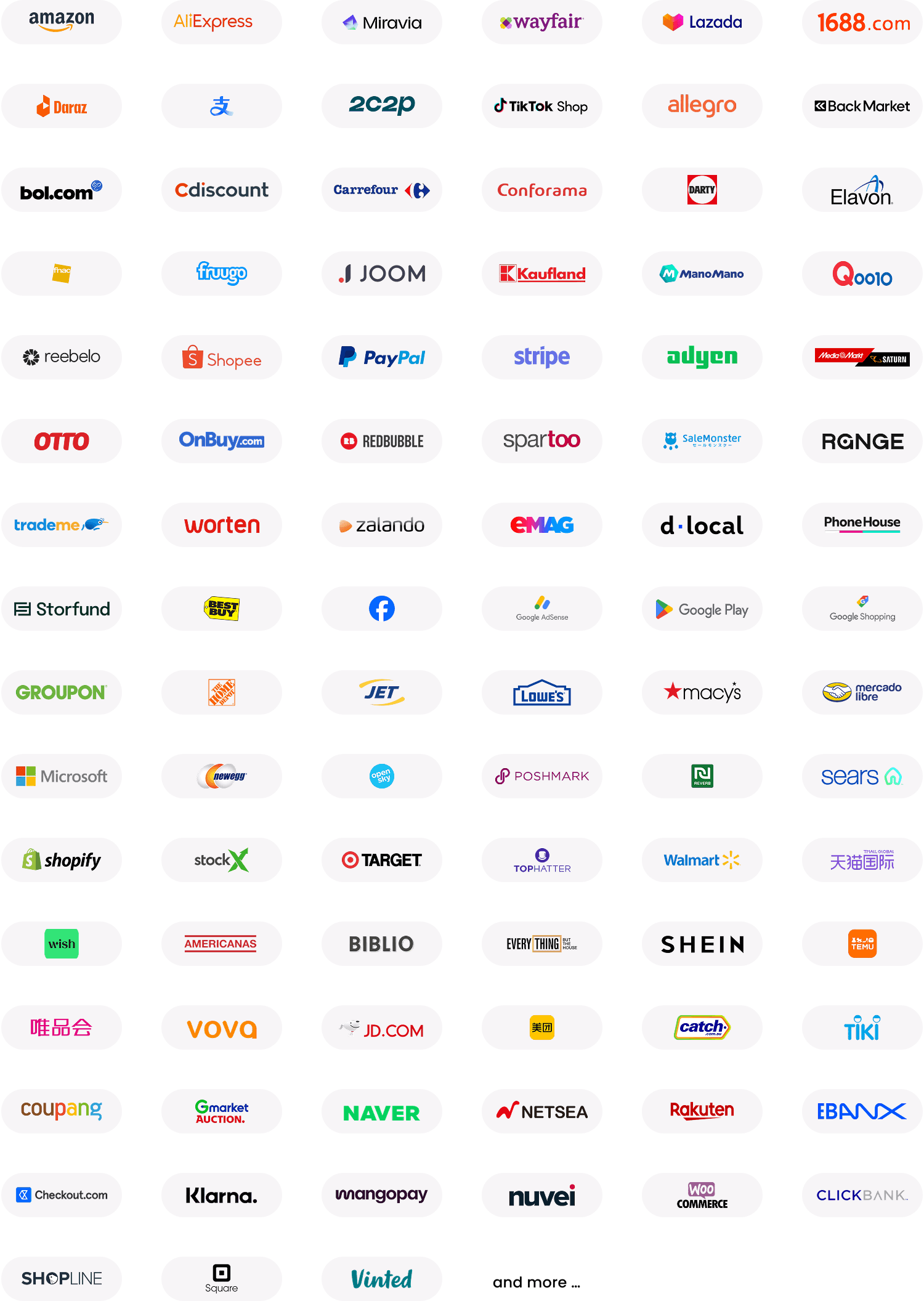
Connect to 130+ global marketplaces and payment providers from just one dashboard
WorldFirst offers direct connections to over 130 global marketplaces and payment providers, including top UK e-commerce platforms, like:
- Amazon.co.uk
- eBay
- Etsy
- Fruugo
- TikTok Shop
With World First, you can get paid directly into your multi-currency World Account, for full visibility into your marketplace earnings. It’s free to receive and hold funds, and there are no minimum balances and no monthly account fees.
We use local account details and domestic payment networks to get your payouts to you faster. And if you need to switch receiving accounts for any of your marketplaces, simply download an account verification letter from our online portal.
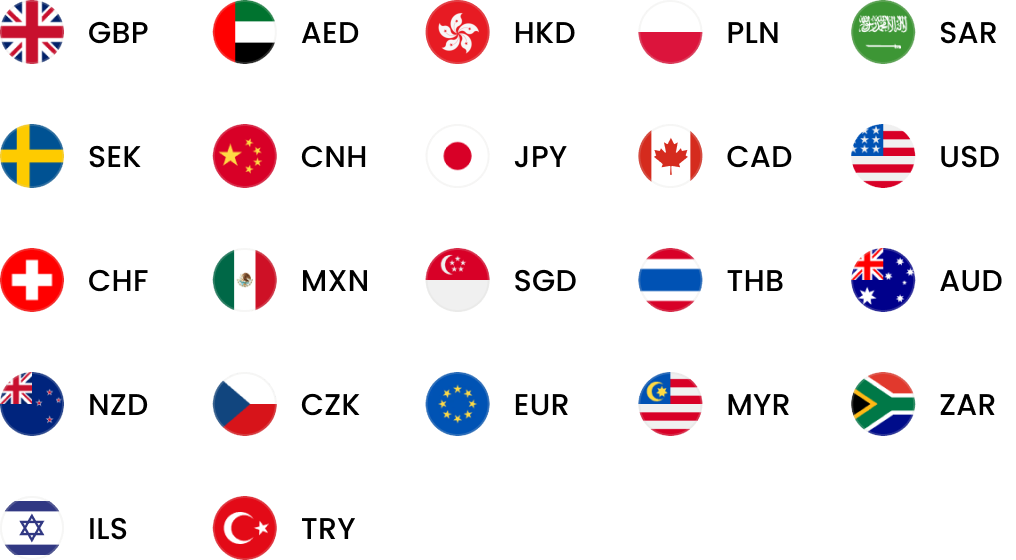
Collect and hold funds (with no fees) in 20+ currencies and get local account details in each
With your WorldFirst account, it’s free to receive and hold funds in 20+ currencies, including GBP, EUR, USD, CNH and JPY. You also get local account details in each of these currencies, enabling you to sell on any marketplace that requires a local bank account.
This eliminates the need to establish a local entity or open local bank accounts in each country you sell in. Instead, you can simply apply online and start using your local account details as soon as you’re approved (usually in 48 hours or less).
With local account details, you can use local payment methods to make and receive payments faster and more cheaply than an international transfer. You can get marketplace payouts on the same or next day, or or pay suppliers, seller fees, and other business expenses reliably and on time.
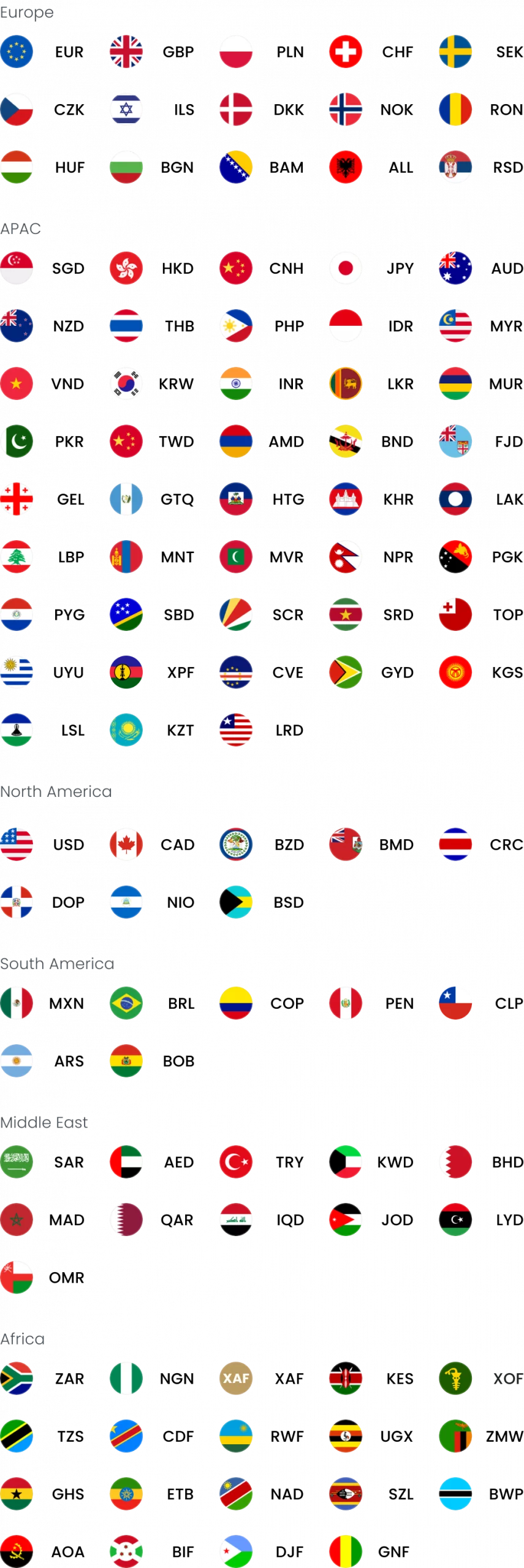
Pay in 100+ currencies to 210+ countries, save on FX costs, and get more ways to pay
With your World Account, you can pay suppliers, partners and staff in 100+ currencies to 210+ countries, with competitive FX rates and low, transparent fees. You can automate and schedule payments in advance, all from your WorldFirst login.
Payments are made using local networks or SWIFT, with 80% of payments landing on the same day. You can also make free instant payments when you pay other World Account holders through WorldFirst.
When you join WorldFirst, you can apply for up to 20 free virtual World Cards, enabling you to pay in 150+ currencies anywhere MasterCard is accepted. Use them to pay marketplace fees, advertising costs, shipping and logistics, or any other business expenses — all with no FX fees when you pay in 15 major currencies (using existing balances), while earning up to 1.2% cashback on eligible business expenses.
WorldFirst saves you more money on currency conversion, by letting you hold funds until exchange rates are in your favour. Choose when to convert funds by holding them in your multi-currency account until you’re ready, or use firm orders and forward contracts to lock in specific rates.
Source new suppliers as you grow, with direct integration with 1688.com
One of the challenges of expanding to new marketplaces is keeping your operations lean and your margins wide. To make it work, you need to source high quality products at affordable prices, from trustworthy suppliers.
When you join WorldFirst, you benefit from our exclusive partnership with 1688.com, the leading B2B wholesale platform in China. With WorldFirst and 1688.com, you can choose from over 10 million suppliers across 1,700 product categories, to find exactly the products you want.
1688.com allows you to save as much as 40% on bulk orders, or make small sample orders of just one or two items to vet new suppliers. Then, use your World Account to make instant 1688.com payments to suppliers in China in CNH.
How to set up a World Account
Ready to open a World Account and start expanding to new e-commerce platforms? Follow these simple steps:
- Head to our Sign up page
- Enter in some basic personal and business details
- Upload all necessary verification documents
- Configure your World Account requirements
- Start selling on e-commerce platforms in the UK and other global marketplaces
Note: Need a little help opening your account? Browse our official Help Centre guide.
How Wild & Stone leveraged marketplaces to expand across the UK and globally
Wild & Stone is a UK-based brand that sells sustainable household goods, like plastic-free toothbrushes and hair ties. When COO and cofounder Andrew Dowley decided to expand, he understood that marketplaces would be the fastest entry point to market and to global growth.
With marketplaces, the company could easily trial new products and grow their product portfolio, with less startup investment. Wild & Stone started on Amazon, then expanded to UK-specific marketplaces like Debenhams and Superdrug. Andrew realised they could use strong brand differentiation and copywriting to highlight the brand’s sustainability standards and stand out from competitors.
But selling on all these new marketplaces and constantly testing new products meant they often had to make localised modifications, like adapting product information to different packaging sizes. To scale their product line, the company had to maintain excellent relationships with suppliers abroad, in order to communicate effectively and meet changing business needs.
WorldFirst makes it easier for Wild & Stone to get their marketplace payouts faster, save on FX fees, and keep cash flowing. WorldFirst also enables them to pay suppliers faster – especially in China – so they can establish more trust.
Andrew is so happy with WorldFirst that he’s asked several of his suppliers to open their own World Accounts. This enables him to pay those suppliers instantly, without fees or hassle.
Read the full case study here: Wild & Stone: Scaling a sustainable brand through marketplaces
Scale in the UK and beyond with a World Account
Choosing the right global and regional e-commerce marketplaces can be the key to faster, lasting scalability. But to do it well, you need a better way to manage international payments in multiple currencies.
A World Account empowers your online business to make and receive fast, secure payments while minimising FX fees. Register now to see how easy it can be to streamline your growth across borders.
Frequently Asked Questions
What are the best ecommerce platforms for UK businesses?
The best ecommerce platforms for UK businesses include Shopify, WooCommerce, Wix, BigCommerce, and Squarespace. Shopify is widely used for its ease of use and scalability, WooCommerce is ideal for businesses that want full control through WordPress, while Wix and Squarespace are popular for simple store setups with built-in design tools. BigCommerce is suited for larger or fast-growing businesses that need advanced features. The right platform depends on your budget, technical skills, and whether you prioritise flexibility, ease of use, or scalability.