





























Home > blog > Global Business Tips > Setting up a business in Japan? 5 key considerations before you get started
Setting up a business in Japan? 5 key considerations before you get started
Last update:


With one of the world’s largest economies, Japan is an appealing market for businesses ready to expand internationally. But while the opportunity is clear, figuring out how to get started can feel overwhelming.
If you’re considering setting up a current or new business in Japan, you may be asking practical questions like:
- How do I navigate a new language and culture?
- Where can I learn about local regulations?
- How do I set up banking and manage business transactions correctly?
- How do I handle payments in yen and other currencies?
In this article, we’ll break down the key considerations for setting up a Japanese business and provide practical guidance on managing business payments from day one.
We’ll also share how a multi-currency business account from WorldFirst can support your foreign business as you operate in and beyond Japan.
Trusted by over 1.5 million businesses since 2004, WorldFirst makes cross-border payments faster and more cost-effective, with most payments arriving within 24 hours and over 90% completed within 48 hours.
Here’s what you’ll learn:
- 4 things to consider before setting up a business in Japan
- How to set up a business in Japan: 5 hoops to jump through
- What to look for when choosing a payment solution for your Japan business
- How WorldFirst supports international companies doing business transactions in Japan
Ready to simplify your money transactions in Japan? Set up your WorldFirst account for free.
4 things to consider before setting up a business in Japan
Japan is a market full of potential, but long-term success depends on understanding the local business landscape. To help you prepare, here are five key considerations to keep in mind when entering the Japanese market.
1. Understand the market opportunity and culture. With its large economy, modern infrastructure and reputation for high-quality goods, Japan is an appealing place to do business – and a practical base for regional growth.
That said, expectations are high. Research consistently shows that Japanese consumers place a strong emphasis on product quality, consistency and service standards, with attention to detail often influencing trust and long-term loyalty. Conducting thorough market research early on can help you better understand these expectations and position your offering accordingly.
Plus, business culture is also more formal than you might be used to, with a strong focus on politeness, preparation and punctuality. Taking the time to understand local etiquette – and planning for practical realities like natural risks – can go a long way in building trust and avoiding costly missteps early on.
2. Calculate costs and cash flow. Japan can be an expensive place to operate, especially in major cities like Tokyo, where the cost of living ranks in the top 50 for international workers. The upside is that customers often prioritise quality and reliability, which can make it easier to justify premium pricing if your offering meets local expectations.
Beyond everyday expenses, setup and ongoing costs (such as visas, translation services, office space and professional support) can quickly impact cash flow. Managing these fees early on helps keep your finances predictable as the business gets up and running.
3. Understand how your sector performs. While there’s plenty of opportunity in Japan, competition can be intense, particularly in more established industries. Some markets are crowded, which makes it important to be clear about what sets your business apart. Researching how your sector performs will help you understand demand, assess the competitive landscape and decide whether there’s real room to grow.
4. Choose your business location. If you want to test demand before setting up a physical shop, selling through a Japanese online marketplace can be a smart way to enter the market. Platforms like Amazon, Rakuten and Mercari are popular options, each attracting different audiences and product categories.
Read more: How to sell globally on Amazon (& top tips)
If your business needs a physical base, location can shape both costs and daily operations. Tokyo offers unmatched access to talent and infrastructure, though at a higher price. Nearby cities like Yokohama provide a more affordable option with easy access to the capital, while hubs such as Osaka and Kyoto may better suit businesses focused on manufacturing, transport links or tourism.
Read more: How to break into a new market: Actionable tips for expanding abroad
How to set up a business in Japan: 5 hoops to jump through
Setting up a company in Japan involves several key stages, and understanding the local requirements early can help UK businesses avoid delays.
- Choose the right company structure. The two most common options are a Kabushiki Kaisha (KK) and a Godo Kaisha (GK). A KK is similar to a UK public limited company – often viewed as more prestigious and better suited to larger firms or those seeking investors. A GK is closer to a limited liability partnership, with simpler governance, lower setup costs and greater flexibility, making it popular with SMEs.
- Secure a registered address in Japan. All companies must have a local business address before incorporation. Many overseas firms use serviced offices or partner locations initially.
- Appoint directors and representatives. A Japanese entity must have at least one representative director. While foreigners can fill this role, some banks or authorities may require a Japan-based representative for practical purposes.
- Prepare incorporation and seal documents. You’ll need formal paperwork such as articles of incorporation, proof of capital, and an official company seal (inkan), which is used widely in Japan for contracts and banking.
- Register the company with the Legal Affairs Bureau. This step legally establishes your business. Registration typically takes a few weeks, depending on documentation and notarisation requirements.
Once your business is set up, you’ll also need to research multi-currency payment solutions for doing business in JPY. Cross-border payments can quickly become complicated, especially if your existing accounts can’t hold Japanese yen or require frequent currency conversions.
On top of that, opening a local corporate bank account in Japan can also be a slow, paperwork-heavy process for foreign companies, often involving strict eligibility checks, extensive required documents and, in some cases, the need for an in-country presence.
These hurdles can lead to delays and higher costs. That’s why it’s important to decide how you’ll handle payments in Japan early on – including how you’ll manage JPY, control FX costs and support day-to-day operations as your business grows.
What to look for when choosing a payment solution for your Japan business
If you’re serious about doing business in Japan from the UK, you’ll need more than just a way to send money – you’ll need to hold both JPY and GBP and move between them easily.
That’s why, when comparing payment solutions, it’s worth focusing on these practical essentials that can make a real difference in your day-to-day operations:
- Paying in JPY: Behind the scenes, businesses are often charged to convert currencies. When looking for a payment solution, check to see if there’s a currency conversion fee every time you pay from GBP to JPY.
- Receiving funds from marketplaces: Some providers limit or block incoming payments from overseas platforms because of stricter compliance requirements or fraud concerns tied to international e-commerce. When choosing a provider, check whether it supports incoming payments from platforms or customers – without delays or extra fees.
- Managing FX fees and hidden markups: What foreign exchange fees or markups apply when you convert currency, and how clearly are those costs shown before you commit? Having visibility into FX rates helps you understand the true cost of each conversion – and avoid surprises that can impact profitability.
- Payment networks and speed: Some international payments are sent via the SWIFT network, which passes funds through multiple intermediary banks – often taking up to 6 days to process. Payment providers that can use local payment networks instead of SWIFT often deliver funds much faster.
- Integrations with business tools: Connecting your payment solution to the tools you already use can save time and simplify reporting. Look for solutions that are compatible with the tools you already use, such as marketplaces or accounting software, to reduce manual work.
- Security and fund protection: Keeping your money safe and secure is vital as your money grows. When researching payment options, ask how funds are safeguarded, and what protections are in place to keep your money secure as you scale.
The right payment solution can help you avoid hidden costs, delays and unnecessary admin – and make managing money in Japan far simpler as your business grows.
How a WorldFirst Account simplifies business in Japan
Managing money across borders can quickly become complicated, especially when you’re dealing with Japanese yen alongside other currencies. That’s where having the right payment partner makes a real difference.
Serving over 1.5 million businesses worldwide, WorldFirst brings everything together in one place, so you can receive, hold and manage funds – including in JPY – without high or unexpected fees.
Instead of relying on slow, expensive bank transfers, WorldFirst lets you pay in 100+ currencies across 210+ countries and territories, with 90% of payments arriving the same day or next day, at competitive rates. This helps you stay in control of cash flow as you set up and scale in a new country.
Here are four ways WorldFirst makes doing business in Japan easier.
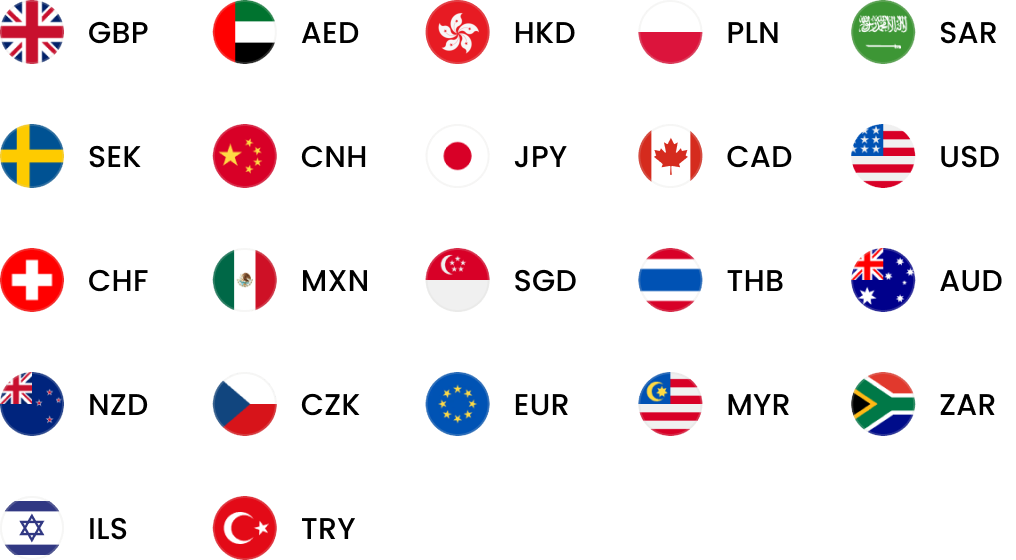
Hold 20+ currencies (including JPY) and avoid unnecessary conversion costs
With a World Account, you can open up to 20 currency accounts and collect funds in 20+ currencies, including JPY, GBP and EUR – each with its own local bank details. If you’re opening a company in Japan, a World Account can support you just as a local account could.
Once funds are in your account, you can pay in those 20+ currencies without holding fees or a minimum balance. This means you can use your existing JPY balance to pay suppliers, contractors or services in Japan directly, avoiding repeated currency conversions.
And when you do need to convert, WorldFirst offers competitive FX rates across major currencies, with clearly stated markup fees of up to 0.6% on major currencies. That gives you full visibility and control over FX costs, so you can decide when to convert – instead of paying for it every time you make a payment.
Plus, local accounts make it easy to receive payments locally from 130+ marketplaces, such as Amazon and Shopify, as well as from global partners, without relying on costly international wire transfers.
Read more: How to pick the best online business bank account (12 options)
Manage how you do business in Japan, even if you’re not there physically
You don’t need a physical presence in Japan to stay in control of your finances. With WorldFirst, you can set up and manage your account entirely online – no in-person checks or local visits required.
The online application usually takes around 10–15 minutes to complete, and most accounts are approved and verified within 2–5 business days. Once you’re approved, you can view balances, make payments and track transactions – from one central platform.
You can even lock in exchange rates for up to 24 months, helping you plan ahead and keep budgets on track. WorldFirst also connects with accounting tools like Xero and NetSuite, or via a dedicated API, so reconciliation is simpler and less time-consuming.
Pay with the World Card and get up to 1.2% cash back
With a World Account, you can create up to 50 virtual World Cards. You can create these straight from your account and assign them to specific vendors, teams or expense types – even by currency, like JPY – so everything stays organised and easy to track.
Each card comes with its own spending limit, giving you clear control over budgets. Everything is managed from one dashboard, where you can instantly freeze or delete a card if it’s no longer needed or if you have security concerns.
What’s more, you can earn up to 1.2% unlimited cashback on eligible business spend, with zero FX fees when paying in 15 major currencies directly from your WorldFirst balance. You also have the flexibility to spend in 150+ currencies across 210+ countries and territories, making it easy to scale without adding complexity.
Read more: How to get an instant virtual debit card online: Your options
Integrate with Japanese marketplaces and funnel payouts into your World Account
You can collect JPY payouts from Japanese and global marketplaces and manage everything from a single World Account.
WorldFirst supports payouts from 100+ marketplaces and 30+ payment gateways – including Amazon, AliExpress, eBay and PayPal – so all your earnings are funnelled into one place.
If you need to update payout details, WorldFirst makes it simple. Many marketplaces require proof of account ownership, which you can download directly from your dashboard in minutes – without needing to open a local Japanese bank account.
You can also automate marketplace payouts to improve cash flow and cut down on manual transfers. With no fees to receive funds, no minimum balance, no cost to hold balances and no monthly fees, more of what you earn stays with your business as you grow in Japan.
Open a World Account and start making payments in Japan
Instead of opening a new bank account in Japan, skip the hassle and open a WorldFirst Account. Unlike traditional banks, we help businesses move money across borders quickly by offering multi-currency accounts and low to no-cost FX fees.
With a WorldFirst account, you can:
- Open 20+ local currency accounts and get paid like a local
- Pay suppliers, partners and staff worldwide in 100+ currencies
- Collect payments for free from 130+ marketplaces and payment gateways, including Amazon, Yahoo! JAPAN, Etsy, PayPal and Shopify
- Save with competitive exchange rates on currency conversions and transfers
- Lock in exchange rates for up to 24 months for cash flow certainty
Ready to set up your business payments in Japan? Open a WorldFirst account for free and see how simple international money transactions can really be.
FAQs
What do foreign businesses need to set up a business in Japan?
Most foreign businesses need a clear business plan, a defined business structure, proof of address, director identification and other required documents to meet local eligibility and compliance requirements.
Do foreign companies need a Japanese corporate bank account?
Not always. While some businesses choose to open a local corporate bank account, many foreign companies use multi-currency payment platforms to receive, hold and pay JPY without setting up a traditional Japanese bank account.
How much capital do I need to start a business in Japan?
Japan allows businesses to be registered with as little as one yen in capital, which has made it easier for foreign entrepreneurs, small businesses and start-ups to enter the market without significant upfront investment. That said, practical costs such as visas, office space and professional support should still be factored into your planning.
What’s involved in company registration in Japan?
Company registration involves choosing a legal structure and understanding the different types of businesses available (such as a limited liability company or branch office), preparing required documentation and registering your business with the Legal Affairs Bureau. Understanding the differences early on helps ensure your setup matches your business goals.
What’s the difference between a branch office and a local company in Japan?
Foreign companies that wish to operate business in Japan can choose a type of operation from among three main options: a representative office, a branch office or a subsidiary.
A branch office allows a foreign company to establish a presence without creating a separate legal entity and is often quicker to set up, while a subsidiary is a locally incorporated company with greater flexibility for long-term operations. A representative office is typically used for market research or liaison activities and cannot engage in direct commercial transactions.
Do I need to submit articles of incorporation?
To register a company in Japan, you must submit articles of incorporation, along with documents such as a certificate of capital deposit and director details. You’ll also need to register a company seal with the Legal Affairs Bureau, which is used for official filings and contracts.
What is Japan’s Start-up Visa and who is it for?
Japan’s Start-up Visa is a government initiative designed to attract foreign entrepreneurs who want to launch a business in Japan. The visa is typically valid for six months, giving founders time to prepare their business setup – such as finalising a business plan, securing a location and completing company registration.
Abdul Muhit has 17 years' experience in banking and payments, spanning across regulation, payment networks, acquiring, issuing and treasury.

Abdul Muhit
Author
Continue reading


Subscribe
The Weekly Dispatch
Get the latest news and event invites. Signup for our weekly update from the worlds of fashion, design, and tech.
You might also like
Choose a product or service to find out more

E-commerce guides


Doing business with China

Exploring new markets

Business Tips

International transactions
E-commerce expansion guides
Doing business with China