



























For businesses involved in international trade, the best payment methods strike the right balance between speed and cost. You’ll want to ensure that suppliers get paid on time, without paying a premium on overseas transactions.
The reality is that most importers and exporters could be using a better option when making international payments:
- You might be using traditional wire transfers to make payments, even though these come with high transaction costs
- Or you may have an elaborate network of international accounts to hold funds in foreign currency
Unfortunately, both options are slow, inconvenient and relatively expensive. That’s why, in this guide, we share some alternative options.
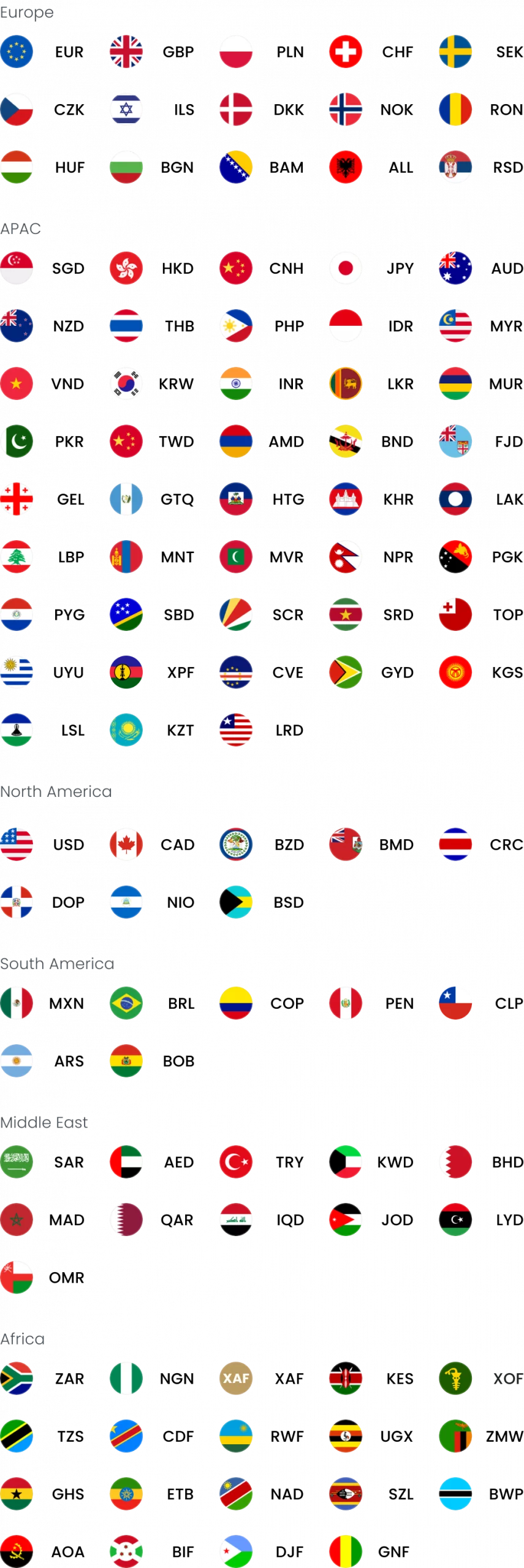
We’ll start by introducing what we do at WorldFirst and how we enable international businesses to make payments in 100+ currencies across 210+ countries and regions worldwide.
We’ll cover:
- How WorldFirst makes international payment easier, faster and more affordable for import-export businesses
- Five alternative import export payment methods for global businesses
- Challenges involved in international trade payments (and what to look for in a payments solution)
- What you should know before you buy or sell overseas
Sign up for a World Account for free and simplify how you buy and sell internationally.
How WorldFirst makes international payment easier, faster and more affordable for import-export businesses
At WorldFirst, we offer a safe, digital payment platform for businesses importing and exporting goods globally.
For over 20 years, WorldFirst has supported businesses making international payments. That’s thanks to our World Account – a multi-currency account designed to help businesses manage cross-border payments without the complexity of opening bank accounts in every country they operate in.
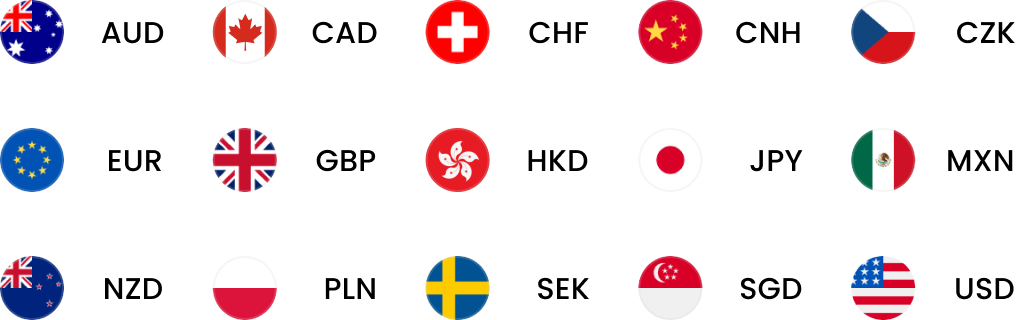
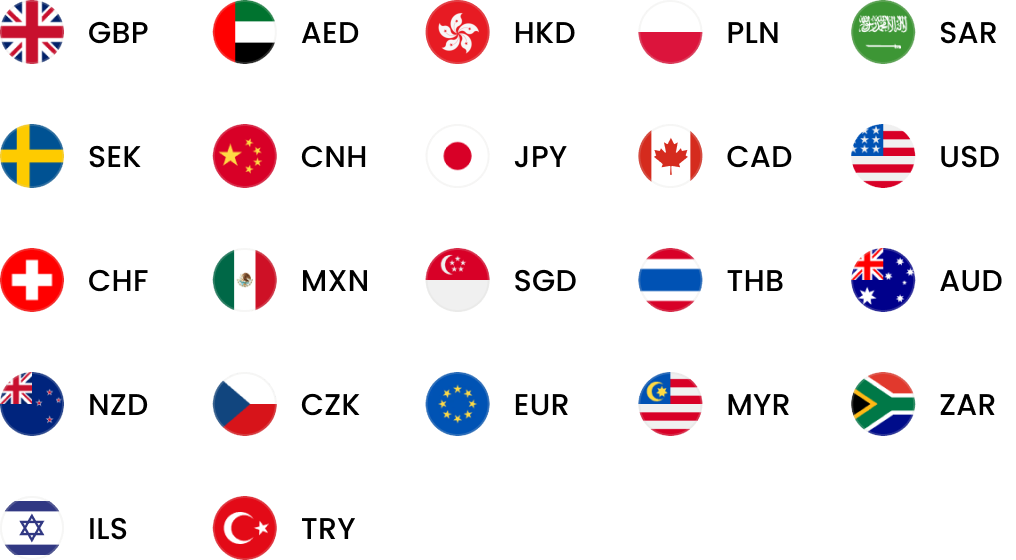
With a World Account, you can open 20+ currency accounts to collect and hold the currencies you need. And because you’re paying with currency you already hold, you won’t be charged FX fees.
International payments are fast (with 90% arriving in 24 hours), and businesses have full visibility from the moment payments are sent – making it easier to track progress and keep suppliers informed every step of the way.
Here’s why WorldFirst is one of the top payment methods for import-export businesses.
Pay zero fees when accepting payment or paying suppliers in 20+ currencies
One of the biggest challenges businesses face when trading internationally is the cost of moving money across borders. Between transfer fees, intermediary bank deductions, currency conversion costs and FX markups, expenses can quickly add up – especially for businesses making large or frequent payments.
With a World Account, you hold funds in 20+ currencies, including USD, EUR, GBP and SGD. This allows you to receive payments from your sales, hold the funds, then use that same currency to pay suppliers or purchase goods.
Not only do you avoid paying FX fees, but you also bypass intermediary bank fees commonly associated with SWIFT payments.
And when you do need to convert currencies outside the balances you hold, WorldFirst keeps pricing predictable with low FX markups capped at 0.5% on major currencies – so you always know what you’re paying.
Of course, currency exchange rates can still fluctuate over time, affecting the total cost of international payments. To help businesses manage that risk, WorldFirst also offers tools, like forward contracts, which allow you to lock in exchange rates for up to two years so you can budget more confidently.
Read more: Foreign exchange risk management: How to make international business more affordable
90% of payments arrive in one day to ensure you pay suppliers on time
When payments take too long to arrive, you can miss payment deadlines and damage business relationships with your suppliers.
With a World Account, you receive local account details for each currency you hold (like sort codes, account numbers and IBANs), so that you can pay through domestic payment rails.
By bypassing traditional cross-border banking networks, 90% of transactions land in 24 hours.
Not only does this help you predict delivery timelines and make it easier to plan and operate, it also keeps the buyers/seller relationship strong.
And for suppliers who accept card payments, the World Card offers even more flexibility. You can pay instantly in 15 major currencies directly from your World Account balance with zero FX fees – all while earning 1.2% cashback on eligible purchases.
Read more: How to choose a virtual euro card for international business spending
256-bit encryption and 2FA protect risk between buyer and seller
When payments move across borders, delays and limited visibility can create uncertainty for both buyers sending funds and sellers waiting to ship goods.
WorldFirst is designed to reduce that risk with secure infrastructure, transparent payment tracking and regulated global operations. The platform is authorised across key international regions and aligned with UK and global compliance standards, including AML and KYC requirements.
Funds are safeguarded, held with tier-one banking partners such as JPMorgan Chase, Barclays and Citibank. Each business is also verified and assigned a unique digital identity, helping trading partners build trust while maintaining privacy and security.
To further protect transactions, payments are secured with 256-bit encryption and two-factor authentication, to prevent unauthorised access and keep sensitive financial data protected end to end.
You can also track payments in real time, receive instant status updates and access downloadable payment records for reporting and reconciliation. In some cases, funds can even be held securely in escrow until shipment conditions are met, helping balance risk between buyers and sellers throughout the transaction process.
Sign up for a World Account for free and simplify how you buy and sell internationally.
Five alternative import export payment methods for global businesses
While WorldFirst is a great option for international buyers and sellers, you may want to weigh your options. Here are the five most common payment methods used in international trade – along with where they work well and where they can create friction.
1. Wire transfers
Wire transfers remain one of the most widely used international payment methods because they’re familiar, relatively simple and accepted across nearly every banking system worldwide.
However, the level of risk depends largely on when payment is made and how much trust exists between the buyer and supplier.
Unlike more structured trade finance solutions, wire transfers don’t include built-in protections, guarantees or payment conditions. That’s why they’re most commonly used when both parties already have an established working relationship.
Why they’re popular:
- Simple, familiar and easy for most businesses to arrange through their bank
- Accepted across almost all countries, currencies and banking systems
- Flexible enough to be used for deposits, milestone payments or full settlement
- Useful for businesses that need a fast, direct way to move funds internationally
Common use cases:
- Repeat transactions with long-term suppliers or buyers
- Lower-value or routine shipments where risk is considered manageable
- Businesses with established payment terms and trusted relationships
What to watch out for:
- Hidden FX markups (ranging from 1–4%) are often built into the exchange rate, increasing overall costs
- Intermediary bank fees (ranging from £12–£40) can reduce the amount the supplier actually receives
- Limited payment transparency makes it difficult to track funds in transit
- Traditional bank wire transfers can take 3–6 business days to settle internationally
Wire transfers are often prepaid agreements, meaning the buyer pays before goods are shipped. This option is secure for exporters, but riskier for buyers.
2. Open accounts (buy now, pay later)
Open account terms have become increasingly common in international trade, particularly in competitive industries where flexible payment terms can help suppliers win and retain business. With this arrangement, the seller ships goods first and the buyer pays later – typically within 30, 60 or 90 days.
In practice, this works much like trade credit. Buyers benefit from receiving inventory before payment is due, often giving them time to sell goods and generate revenue before settling the invoice. While this improves flexibility for buyers, it also shifts more financial risk onto the seller.
Because of that, open account agreements are usually reserved for long-standing relationships where trust has already been established.
Why they’re popular:
- Improves cash flow for buyers by delaying payment until after goods are received
- Gives buyers more flexibility to manage inventory and operating costs
- Helps exporters stay competitive in crowded global markets
- Often expected in mature B2B supplier relationships
Common use cases:
- Long-term supplier, distributor or wholesale partnerships
- Larger repeat transactions between established trading partners
- Industries where extended payment terms are standard practice
What to watch out for:
- Higher risk of delayed payment or non-payment for exporters
- Requires careful credit checks and ongoing buyer monitoring
- Can create cash flow strain for sellers while waiting for payment
- Limited protection or recourse if disputes or payment issues arise
In an open account agreement, the buyer takes on less risk and more flexibility, while the seller relies heavily on trust and the buyer’s ability to pay on time.
3. Letters of credit
A letter of credit is a bank-backed payment agreement designed to reduce risk in international trade. Under this arrangement, the buyer’s bank guarantees payment to the seller, provided the seller meets specific conditions (usually by submitting the correct shipping, customs and trade documentation).
Because the payment is backed by a financial institution rather than relying solely on trust between buyer and seller, letters of credit are commonly used for larger, more complex or higher-risk transactions.
They’re considered one of the most established and secure international trade payment methods, particularly when both parties are working together for the first time.
Why they’re popular:
- Helps reduce risk for both buyers and sellers
- Provides a bank guarantee that payment will be made if the agreed conditions are met
- Builds trust in first-time or high-value international transactions
- Gives sellers greater confidence to ship goods before payment is received
Common use cases:
- First-time trading relationships without an established history
- High-value or complex international shipments
- Transactions involving politically or economically higher-risk regions
- Industries where additional payment security is standard practice
What to watch out for:
- Documentation requirements can be highly detailed, and even small errors may delay payment
- Banking, processing and administrative fees are typically higher than simpler payment methods
- Approval and processing timelines can slow down transactions
- Once terms are agreed, there’s often less flexibility to make changes mid-transaction
With a letter of credit, both sides have more protection. However, that added security comes with more complexity, cost and time.
4. Documentary collections (D/P and D/A)
A documentary collection is a payment method that sits between an open account arrangement and a letter of credit in terms of cost, complexity and risk.
In this setup, the exporter ships the goods and sends the shipping documents through their bank to the importer’s bank, along with instructions for when those documents can be released.
The buyer can only access the documents needed to claim the goods once certain conditions are met. Depending on the agreement, this may require immediate payment through Documents against Payment (D/P) or a formal promise to pay at a later date through Documents against Acceptance (D/A).
Because banks facilitate document exchange rather than guaranteeing payment, documentary collections offer more structure than open accounts, but less protection than letters of credit.
Why they’re popular:
- Provides more security than open account terms because goods cannot be claimed without the required documents
- Less expensive and administratively complex than letters of credit
- Offers a practical middle ground between cost, control and risk
- Helps maintain some oversight of goods during the payment process
Common use cases:
- Trading relationships where some trust already exists, but full confidence has not yet been established
- Ongoing international trade with repeat buyers or suppliers
- Businesses looking to reduce transaction costs while still maintaining a level of payment protection
What to watch out for:
- Banks do not guarantee payment and only act as intermediaries in the transaction
- Exporters still carry risk if the buyer refuses to pay or accept the terms
- Delays can occur if documents, approvals or payments are not handled quickly
- Provides less protection than letters of credit for high-risk or high-value transactions
With documentary collections, banks help facilitate the process – but ultimately, payment still depends on the buyer following through.
5. Digital payment platforms and multi-currency accounts
Digital payment platforms and multi-currency accounts (like WorldFirst) have quickly become one of the fastest-growing payment solutions in international trade.
Instead of relying solely on traditional banking systems, these platforms are designed to make cross-border payments faster, more transparent and more cost-efficient.
With a multi-currency account, businesses can send, receive and hold funds in multiple currencies from a single platform. This makes it easier to manage international cash flow, pay suppliers in local currencies and reduce the costs associated with frequent currency conversions.
For businesses operating globally, these platforms can simplify international payments without the need to open separate bank accounts in every market.
Why they’re popular:
- Faster international payments, often arriving the same day or next business day
- Lower FX costs and fewer intermediary fees compared to traditional banks
- Ability to hold, send and receive multiple currencies in one account
- Greater visibility into payment status, fees and exchange rates
- Simplifies international operations by centralising payments in one platform
Common use cases:
- Businesses managing frequent or high-volume cross-border transactions
- Ecommerce brands and global suppliers working across multiple currencies
- Companies expanding into new markets without opening local bank accounts
- Businesses looking for more flexibility and visibility over international cash flow
What to watch out for:
- Fee structures and FX pricing can vary significantly between providers
- Not all providers offer the same level of regulatory protection, security or global coverage
- Transfer speeds and supported currencies can differ depending on the platform and destination
Digital platforms offer a more modern, flexible way to manage international payments – especially for businesses looking to reduce costs, improve speed and simplify operations.
Challenges involved in international trade payments (and what to look for in a payments solution)
Here are the most common challenges businesses run into when buying and selling internationally, and what to look for in a solution that actually helps solve those challenges.
1. Late or non-payment risk
One of the biggest concerns in international trade is trust. Buyers worry about sending money upfront and not receiving goods. Sellers worry about shipping products and not getting paid.
Without the right safeguards, both sides are exposed.
What to look for:
- Payment tracking and confirmation visibility so you know when funds are sent and received
- Secure payment rails and verification processes to reduce fraud risk
- Ability to structure payments (e.g. automatic transfers or recurring payments) to balance risk between both parties
2. Payment delays and processing times
International transfers aren’t always predictable. Payments can be held up by bank cut-off times, time zone differences or intermediary banks – turning what should be a simple transfer into a multi-day delay.
These delays don’t just cause frustration. They can slow down shipments and impact inventory.
What to look for:
- Faster payment networks that reduce reliance on multiple intermediaries
- Real-time or near real-time tracking so you’re not left guessing
- Clear delivery time estimates so you can plan around when funds will arrive
3. Lack of cost transparency
A lot of businesses underestimate how much they’re actually paying to move money internationally. Costs aren’t always obvious, and are often hidden in exchange rates, intermediary fees or other deductions along the way.
That means you’re paying more than the agreed-upon price tag.
What to look for:
- Upfront, transparent pricing and clearly quoted FX rates
- A full breakdown of fees before you send a payment
- The ability to see exactly what the recipient will receive, not just what you’re sending
4. Currency exchange fluctuations
Exchange rates move constantly, and even small shifts can have a meaningful impact on your margins – especially if you’re dealing with large or frequent payments.
If you’re forced to convert currency at the wrong time, those fluctuations can quickly eat into profits.
What to look for:
- Competitive FX rates (not just “no fees” – the rate itself matters)
- The ability to hold multiple currencies so you’re not forced to convert immediately
- Tools or flexibility to time conversions or lock in rates when needed
5. Compliance and regulatory friction
International payments often involve extra security and compliance checks, which can help prevent fraud and illegal activity. However, they can sometimes slow payments down if the process isn’t handled smoothly.
What to look for:
- A regulated provider with a strong compliance infrastructure already in place
- Smooth onboarding and verification processes
- Support navigating international requirements and avoiding unnecessary delays
6. Operational complexity
As your business grows, so does the complexity of your payments. Managing multiple suppliers, currencies and systems can quickly become time-consuming and error-prone. What starts as a few simple transactions can turn into a fragmented, manual process.
What to look for:
- Multi-currency accounts that centralise payments in one place
- A single dashboard to manage, send and track transactions
- Easy reconciliation and reporting tools to reduce manual work and improve accuracy
Simplify how you pay and get paid globally with WorldFirst
In this article, we’ve covered the most common import-export payment methods and the key challenges businesses face when transacting internationally.
We’ve also shown how WorldFirst helps solve these challenges – giving UK businesses a faster, more cost-effective and more secure way to manage the gap between sending and receiving international payments.
Unlike foreign bank accounts that may take months to sign up for, a World Account is free, takes less than 15 minutes to apply for and most accounts are approved in under two days.
Sign up for a World Account today and simplify how you buy and sell internationally.
FAQs
Do I need a foreign bank account to trade internationally?
No. Many businesses use multi-currency accounts to receive, hold and send international payments without opening separate bank accounts in every country they trade with.
These accounts can simplify international banking by giving businesses more flexible payment options when working with overseas suppliers or foreign buyers. They can also help reduce conversion costs and lower the risk of delayed payments compared to some traditional methods of payment.
How can businesses reduce FX fees when trading internationally?
Businesses can reduce FX fees by avoiding unnecessary currency conversions, holding multiple currencies and choosing providers with transparent exchange rates and lower transfer costs. The best way to do this is with a multi-currency account, like WorldFirst.