





























Home > blog > Global Business Tips > 6 cross-border e-commerce payment solutions in 2026
6 cross-border e-commerce payment solutions in 2026
Last update:


For UK companies trading beyond domestic borders, cross-border e-commerce payments are part of everyday operations.
Online sales continue to expand beyond domestic markets, with the UK e-commerce sector projected to reach from $265.14 billion in 2025 to $906.25 billion by 2030, with a compound annual growth rate (CAGR) of 22.73%.
That growth brings added payment complexity. Currency movements, conversion costs, payout delays and regulatory requirements can all affect margins after a sale completes.
Recent analysis indicates that UK SMEs lost an average of around £53,000 each to currency volatility during 2024–25, highlighting how unmanaged FX exposure can directly impact cash flow.
This guide is for UK-based e-commerce sellers, marketplace merchants and export-led businesses trading internationally. It explains how cross-border e-commerce payments work in practice, where costs and complexity tend to arise and what matters when choosing a payment solution in 2026.
Key takeaways:
- Cross-border e-commerce payments affect cash flow beyond checkout: Settlement timing, currency conversion and payout rules determine when international revenue becomes usable. Understanding the whole payment journey helps UK sellers spot delays and hidden costs earlier
- FX management has a direct impact on margins: Automatic currency conversion and repeated FX transactions quietly reduce profitability. Holding and using foreign currency, where possible, gives businesses greater control over timing and costs
- Various payment solutions solve different parts of the problem: Marketplaces handle checkout well, gateways support local payment methods, banks provide familiarity and local accounts reduce friction in specific regions
- Multi-currency operational platforms help businesses regain control: Platforms that allow sellers to receive, hold and pay in multiple currencies reduce unnecessary FX conversions, improve cash flow planning and simplify reconciliation across sales channels
Open a World Account for free and receive, hold and pay in multiple currencies through one platform designed for global e-commerce.
What cross-border e-commerce payments mean in 2026
Cross-border e-commerce payments extend well beyond the moment a customer completes checkout. In practice, they cover how funds are settled, converted, held, released and ultimately used across multiple countries and currencies.
For UK businesses selling internationally, payments shape cash flow long after the sale.
How money actually moves in cross-border e-commerce payments
A typical cross-border e-commerce transaction passes through several stages before revenue becomes usable cash:
- A customer pays in their local currency through an e-commerce site or marketplace
- The marketplace or payment platform holds the funds for a set settlement period
- Funds are converted or settled into a payout currency, often automatically
- The seller receives the payout into a bank account or payment platform
- The seller then pays suppliers, manufacturers, freight providers, ad platforms or software tools, frequently in other currencies
Each stage can introduce delays, FX markups, platform fees or gaps in visibility.
By the time funds reach the seller, their value and timing may already differ from what the seller expected at the point of sale.
Why cross-border payments are more complex than domestic e-commerce
Domestic e-commerce payments usually follow a predictable pattern, with a single currency, familiar settlement cycles and clear expectations around fees and timing.
Cross-border e-commerce changes that picture:
- Revenue is collected in one currency, while costs sit in several others
- Settlement timelines vary by country, marketplace and payment method
- Currency conversion may happen automatically, with limited transparency
- Multiple providers handle different parts of the flow, each applying fees or FX margins
Businesses that treat cross-border payments as a secondary concern often find that international growth brings hidden costs.
Key challenges UK e-commerce businesses face with cross-border payments
In 2024, the EU remained the UK’s largest export market at £358 billion, representing around 41% of all exports, followed by the US at £59.3 billion.
That level of cross-border activity brings opportunity, but it also exposes weaknesses in how businesses manage payments as money moves across currencies and platforms.
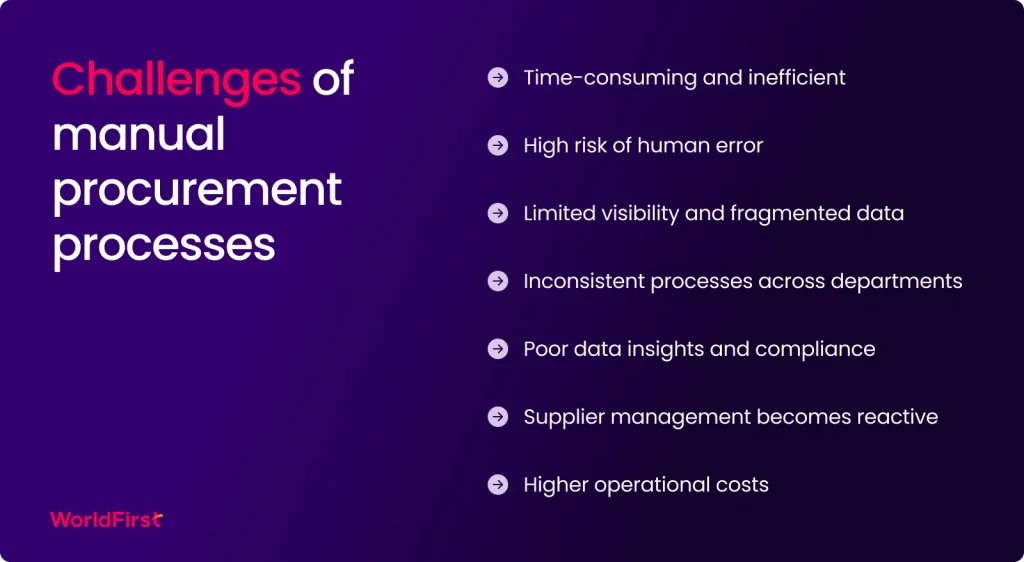
Across e-commerce, the same payment challenges tend to surface as volumes grow:
1. Forced currency conversion and reduced margins
One of the most persistent issues is automatic currency conversion. Many marketplaces and traditional banks convert incoming funds into GBP by default, regardless of where the business ultimately needs to spend that revenue.
The result is two practical problems. Conversion takes place on the provider’s timetable rather than the seller’s and FX rates often include built-in margins that reduce net proceeds without being clearly itemised.
For example, a UK seller may collect revenue in US dollars from American customers and pay US-based suppliers, manufacturers or ad platforms in the same currency. Automatic conversion into pounds, followed by a second conversion back into dollars, adds cost without improving cash flow or operational efficiency. Over time, those unnecessary FX turns quietly reduce margins.
2. Slow settlement and cash flow pressure
Cross-border payouts rarely move at the same pace as domestic ones. Marketplace holding periods, international clearing processes and intermediary banks all extend the time between a sale and the availability of usable funds.
For e-commerce businesses, this often results in:
- Delayed access to earned revenue
- Gaps between customer payments and supplier obligations
- A heavier reliance on overdrafts or short-term financing
In fast-moving categories with short inventory cycles, delays in settlement can directly affect stock availability, advertising spend and the ability to respond to demand. Growth doesn’t stall because sales are missing, but because cash arrives too late.
3. Fees that are difficult to track or explain
The actual cost of cross-border payments is often hard to pin down. Rather than appearing as clear line items, charges are frequently embedded in FX spreads or deducted along the payment chain.
Costs may surface through:
- Exchange rates that differ materially from market levels
- Intermediary bank deductions taken before funds arrive
- Charges for receiving, holding or sending foreign currencies
When fees are fragmented and poorly explained, finance teams struggle to forecast costs accurately or see where margins decline. What looks like a healthy international sales figure can mask a steady drain on profitability.
4. Growing operational strain as international sales scale
As e-commerce businesses expand into more regions, payment operations become harder to manage. Multiple marketplaces, currencies and settlement schedules introduce friction that doesn’t exist in single-market models.
Common challenges include:
- Reconciling payouts across multiple platforms
- Maintaining bank or payment accounts in several jurisdictions
- Tracking FX exposure across both revenue and supplier payments
When systems are fragmented, visibility suffers. Teams spend more time piecing together data and less time making informed decisions. At scale, the issue isn’t the number of transactions, but the lack of a clear, consolidated view of where money sits and how it moves.
6 cross-border e-commerce payment solutions for 2026
The six payment approaches listed below are the dominant solutions exporters use to manage cross-border flows effectively:
1. Marketplace-native payout systems
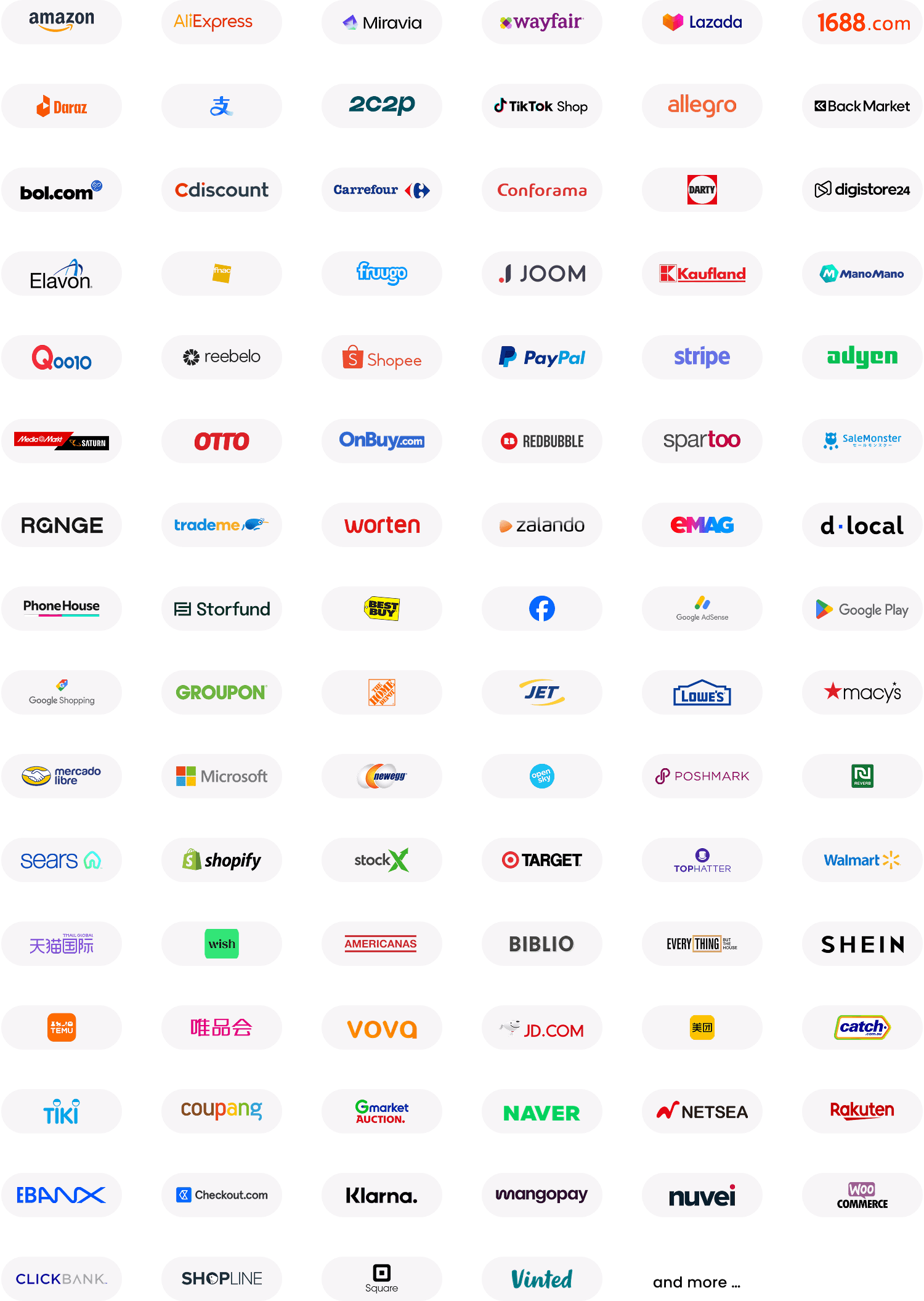
Marketplaces such as Amazon, eBay and Etsy remain entry points for many UK sellers looking to break into international markets.
These platforms handle checkout, fraud filtering and customer payments in local currencies, then distribute seller funds according to fixed cadence and settlement rules.
This approach is straightforward and requires little upfront setup. However, marketplace payout systems often determine which currency you receive and when you receive it. Automatic currency conversions can happen before funds hit your account, locking in FX rates that may not align with your cost base.
2. Payment gateways and direct checkout engines
For brands with their own e-commerce storefronts, payment gateways (such as Stripe, Adyen or PayPal) power international card and wallet transactions. These gateways bring flexibility at checkout, accept a range of local payment methods and can help lift conversion rates in key markets.
However, gateways often settle funds into a single currency and route them through correspondent banks, which can slow access to cash and inflate effective costs through embedded FX spreads and intermediary fees.
3. Traditional bank accounts with international transfers
Many businesses still use UK high-street banks to receive and send international business payments. Banks provide regulatory certainty and easy integration with existing accounting workflows, but they are among the slowest and most expensive routes for cross-border cash flow.
International business transfers can move through multiple correspondent banks, adding days of delay and undisclosed deductions along the chain. In an environment where global commerce expectations are shifting toward speed and clarity, the cost and opacity of bank-centric transfers often frustrate fast-moving e-commerce teams.
4. Local market collection accounts
Opening local-currency accounts in major markets (e.g., USD accounts in the United States or EUR accounts in the EU) lets sellers receive funds natively in the customer’s currency.
For sellers with consistent volume in specific regions, local collection accounts reduce friction and FX risk at the point of collection.
The trade-off is operational complexity: managing multiple bank relationships and liquidity buffers in several jurisdictions increases administrative overhead unless you have consolidated systems in place.
5. Multi-currency operational platforms
Multi-currency operational platforms are playing an increasingly important role for UK e-commerce businesses selling internationally.
Rather than focusing on checkout or customer payments, these platforms support the stages that follow, from revenue collection through to supplier settlement.
Instead of forcing immediate conversion into GBP, these platforms allow sellers to receive, hold and pay in multiple currencies. That flexibility matters when revenue and costs sit in different markets and currencies or when timing FX conversion affects margins and cash flow.
For many e-commerce businesses, the practical benefits include:
- Holding foreign currency balances without automatic conversion
- Paying overseas suppliers, manufacturers and service providers directly in their local currencies
- Choosing when to convert currency based on cash flow needs rather than provider rules
- Improving visibility over balances, settlements and FX exposure across markets
- Simplifying reconciliation across marketplaces and direct-to-consumer channels
This model works particularly well for sellers managing multiple payout sources. Marketplace revenue, website sales and regional platforms can all feed into a single operational layer, reducing fragmentation and manual work for finance teams.
World Account from WorldFirst supports this stage of the payment journey directly. It works alongside marketplaces and payment gateways, receives international payouts, holds funds in multiple currencies and enables businesses to pay suppliers or partners without forcing immediate conversion into GBP.
6. Hybrid payment stacks for scale
At a larger scale, most UK exporters adopt hybrid payment stacks that combine multiple services to cover different needs. For example:
- Marketplace payouts feed into a multi-currency platform that consolidates funds
- Payment gateways handle checkout in local markets
- Local collection accounts reduce FX friction in high-volume regions
- Bank accounts and APIs manage regulatory flows and large transfers
The hybrid model recognises there is no single “best” provider. What matters for growing businesses is how well the stack reduces delays, minimizes unnecessary FX costs and simplifies reconciliation across regions and platforms.
Comparison: how cross-border e-commerce payment solutions differ in practice
The table below compares the six payment approaches based on the factors that most affect UK e-commerce businesses as international sales scale:
| Payment solution | Best for | FX control | Speed of access to funds | Cost transparency | Operational complexity |
| Marketplace-native payouts | Early-stage marketplace sellers | Low | Low to medium | Low | Low |
| Payment gateways (DTC) | Brands focused on own storefronts | Low to medium | Medium | Medium | Medium |
| Traditional bank accounts | Low-frequency international payments | Low | Low | Low | Medium |
| Local market collection accounts | High volume in specific regions | Medium | High (locally) | Medium | High |
| Multi-currency payment platforms | Sellers managing multiple currencies | High | High | High | Low to medium |
| Hybrid payment stacks | Established exporters at scale | High | High | High | Medium |
How WorldFirst supports cross-border e-commerce payments
WorldFirst focuses on the practical realities of trading internationally. UK e-commerce businesses collect revenue in multiple currencies, pay suppliers across borders and manage cash flow across platforms that rarely align. WorldFirst built its infrastructure to support that complexity rather than work around it.
At the centre of this setup is World Account, a multi-currency payments and collections account (not a bank account) designed specifically for businesses that trade across markets and currencies.
World Account gives UK e-commerce businesses a single place to manage international money flows, without forcing early currency decisions or unnecessary conversion.
Key features of World Account:
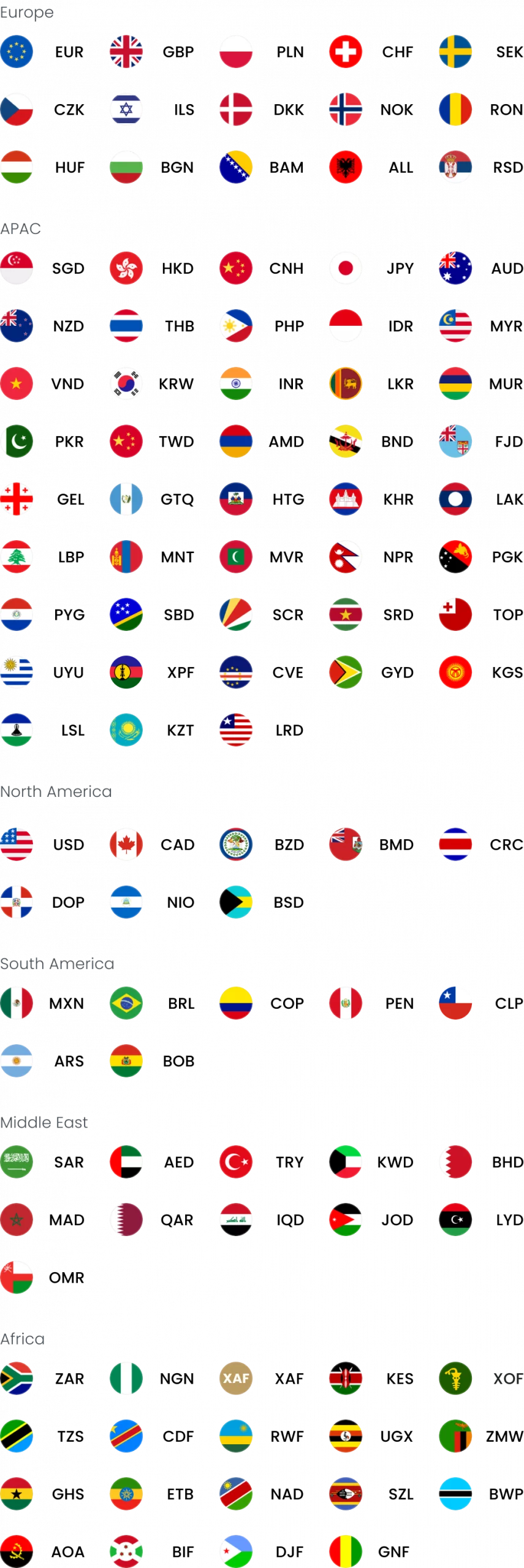
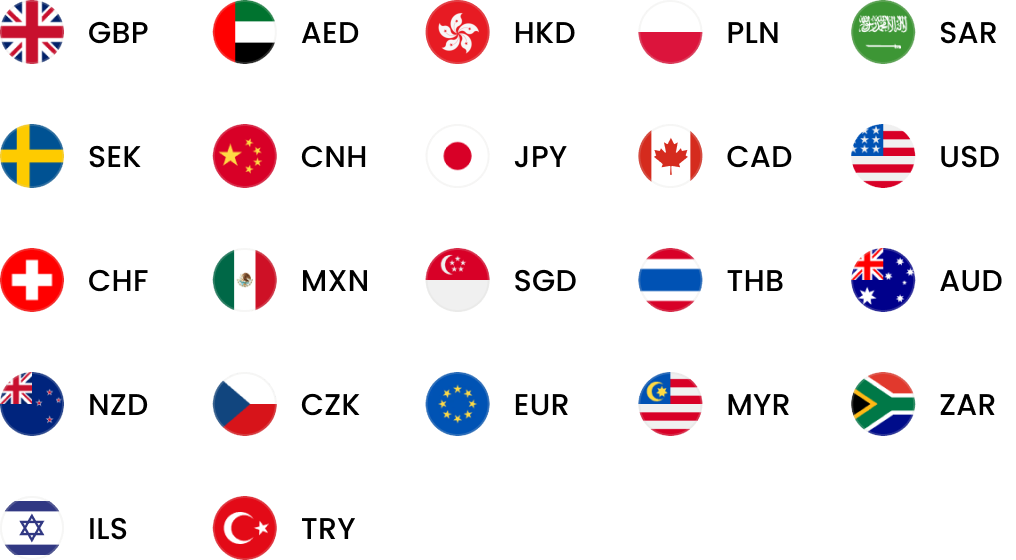
- Multi-currency local accounts: Receive funds in 20+ currencies using local bank details, such as IBANs. This allows you to collect USD, EUR, AUD, HKD and other currencies directly into your World Account, as if you had local accounts in those markets
- Worldwide payments: Send payments in 100+ currencies using local payment rails where available, helping avoid delays associated with traditional international transfers. You can see FX rates and fees clearly before converting and choose when the conversion takes place
- Marketplace integrations: Connect World Account to major e-commerce and marketplace platforms, including Amazon, Etsy and TikTok Shop
- Expense management with World Card: Use the World Card, a multi-currency prepaid card, for international business spending. It helps reduce foreign transaction costs and allows you to manage spend limits and capture receipts directly within the platform
- Accounting and ERP integration: Sync World Account with accounting and ERP systems, including Xero and NetSuite
- Transparent pricing and support: Opening a World Account is free, with no monthly account fees. WorldFirst applies clear FX pricing rather than hidden mark-ups and provides account support for businesses managing international payments
For UK e-commerce businesses trading internationally in 2026, WorldFirst supports cross-border payments by making cash flow more predictable, FX decisions more deliberate and international revenue easier to manage at scale.
Open a World Account for free and manage international revenue and supplier payments through one platform built for global trade.
Sources:
- https://www.worldfirst.com/uk/
- https://www.youtube.com/@worldfirst
- https://www.statista.com/
- https://www.ons.gov.uk/
- https://www.moneycorp.com/en-gb/
- https://www.fca.org.uk/publication/finalised-guidance/fg22-5.pdf
- https://www.bankofengland.co.uk/
- https://www.gov.uk/government/publications/the-digital-pound
- https://www.mastercard.com/global/en/newsroom.html

Abdul Muhit has 17 years' experience in banking and payments, spanning across regulation, payment networks, acquiring, issuing and treasury. He has served across strategic and delivery roles in product, technology and operations functions at global companies including JP Morgan, KPMG and Visa."

Abdul Muhit
Author
Continue reading


Subscribe
The Weekly Dispatch
Get the latest news and event invites. Signup for our weekly update from the worlds of fashion, design, and tech.
You might also like
Choose a product or service to find out more

E-commerce guides


Doing business with China

Exploring new markets

Business Tips

International transactions
E-commerce expansion guides
Doing business with China
The simpler way to pay and get paid
Save money, time, and have peace of mind when expanding your global business.