



























Home > blog > International Transactions > How to transfer money from Singapore to India [Guide]
How to transfer money from Singapore to India [Guide]
Last update:


For many businesses, transferring funds between Singapore and India is a routine financial task tied to trade, services and group operations.
In fiscal year 2024–25, total bilateral trade between the two countries reached approximately US$34.26–US$34.29 billion, reflecting the regularity of supplier payments, service fees and intercompany transfers moving across this corridor.
Sending funds is rarely the issue. The impact comes from hidden FX margins, unpredictable settlement timelines and India-specific clearing and compliance requirements. These shape the actual outcome of a transfer, affecting when funds arrive and how easily transactions reconcile.
This guide explains how to transfer money from Singapore to India for business use. It covers different payment methods, FX pricing mechanics, settlement timelines and key regulatory considerations, with a focus on helping finance teams build predictable, repeatable cross-border payment workflows.
Key takeaways:
- The real cost of Singapore–India transfers goes beyond headline fees: FX margins embedded in exchange rates, intermediary bank deductions and settlement delays often have a bigger impact than the upfront transfer fee
- The choice of payment method directly affects speed, cost and visibility: Traditional SWIFT wires remain common but can be slow and opaque for frequent payments. Multi-currency business accounts and direct INR payout models reduce intermediaries, improve FX transparency and deliver more predictable settlement timelines
- Regulatory compliance is manageable but non-negotiable: Business payments must meet MAS requirements in Singapore and RBI rules in India. Clear documentation, authorised payment channels and proper tax handling help avoid delays, rejections and follow-up requests from banks
- FX timing matters as much as FX pricing: For recurring INR payments, exchange rate movements can materially affect costs. Holding multiple currencies and choosing when to convert gives finance teams better control than forced conversions at bank-set rates
- WorldFirst provides a practical setup for regular India payments: With the WorldFirst World Account, Singapore businesses can hold and convert 20+ currencies to pay INR, see FX pricing upfront and track every transaction in one place
Open a WorldFirst account and manage INR transfers with more confidence and control.
Singapore–India payment corridor: volumes and costs
India remains one of the world’s largest recipients of cross-border inflows. In 2023–24, Singapore accounted for about 6.6% of India’s total inward remittances, the highest share from Singapore since at least 2017. The data points to a growing role for advanced economies, including Singapore, in India’s cross-border payment activity.
Singapore businesses make regular payments to India for suppliers, services and intercompany funding. These payments move through different banking rails and clearing systems, which directly affect when funds are credited and how much the recipient ultimately receives.
How transfer costs typically arise
International transfer costs are rarely limited to a single, visible fee. For business payments, the total cost usually combines three elements:
- Transfer and handling fees, charged by the sending bank or payment provider
- FX margins are often embedded into the exchange rate rather than shown separately
- Intermediary banks may deduct fees before the funds reach the beneficiary
The World Bank’s Remittance Prices Worldwide database tracks costs for sending small remittance amounts across hundreds of corridors. It reports an average global total cost of about 6.49% for remittance transfers, reflecting small consumer flows rather than business payments.
Providers typically price business payments between Singapore and India more competitively, but total costs still vary materially by provider, payment rail and transaction size.
Power your global growth with one account
Get local currency accounts, fast payments and competitive FX – all in one place.
Bank-based transfers: predictable access, variable costs
Singapore businesses using traditional bank SWIFT transfers commonly face:
- Flat transfer fees, often in the range of SG$10–40 per payment
- FX spreads increase the exchange rate and banks may apply margins above 1% depending on pricing models and account structure
- Settlement times of roughly two to five business days, influenced by correspondent banking chains and local clearing in India
In some cases, intermediary banks deduct fees as a transfer moves between institutions, reducing the final INR amount the recipient receives. These deductions aren’t always visible at the time of sending, which makes reconciliation and supplier communication more difficult.
Alternative payment models: fewer layers, clearer outcomes
Multi-currency payment accounts and direct INR payment solutions typically reduce reliance on correspondent banks. In practice, Singapore businesses using these models often see:
- Lower or no flat transfer fees
- More transparent FX pricing, with margins applied closer to market rates
- More consistent settlement timelines, often within one to three business days for INR payments
While exact pricing depends on volume, currency pairs and provider terms, the operational benefit is consistency.
For businesses making regular payments to India, even modest improvements in FX pricing or settlement predictability can materially affect cash flow planning and month-end reconciliation.
Regulatory framework: MAS and RBI Requirements
If you’re moving money across borders for business purposes, there are regulatory requirements to follow. Singapore’s Monetary Authority of Singapore (MAS) and India’s Reserve Bank of India (RBI) both have regulations controlling cross-border payments.
MAS (Singapore)
Licensed institutions must process cross-border transfers from Singapore under the Payment Services Act (PSA), which requires strong KYC/AML controls. Banks and licensed payment providers need to verify customer identities and flag suspicious transactions.
All providers must follow MAS AML/CTF notices (e.g., Prevention of Money Laundering notices) and obtain licences if operating remittance or account services.
RBI (India)
The Reserve Bank regulates payments involving India under the Foreign Exchange Management Act (FEMA). Businesses paying Indian suppliers are making current account transactions, which India generally permits freely (no fixed limit), provided they relate to legitimate trade in goods or services.
In practice, companies have to submit standard trade documents, such as invoices, contracts and customs forms, to meet bank and regulatory requirements.
The Reserve Bank of India requires businesses to route cross-border transfers through authorised channels, allowing only licensed banks or registered money-transfer agents to execute remittances involving India.
4 common ways to transfer money from Singapore to India
Singaporean businesses have several options for sending money to India. Each method uses different payment rails, has different cost structures and delivers funds on different timelines.
Understanding how they work helps finance teams choose the right approach and manage cash flows more predictably.
1. Traditional bank wire transfers (SWIFT / TT)
Singapore companies instruct their bank to send funds via the SWIFT network to an Indian beneficiary. The payment typically moves through one or more correspondent banks before reaching the recipient’s account.
Some banks convert SGD or USD into INR before sending, while others rely on the receiving bank for conversion.
What to expect:
- Settlement usually takes 2 to 5 business days, depending on cut-off times and intermediary banks
- Banks charge flat wire fees and add FX margins to the exchange rate
- Intermediary banks may deduct fees during routing, reducing the final INR amount that arrives
SWIFT wires are reliable for established supplier relationships or large transfers, but costs and timing variability are meaningful for frequent payments.
2. Instant payment links (PayNow–UPI)
Singapore launched a PayNow-UPI linkage (Feb 2023) to allow instant transfers, which MAS calls a “safe, simple and cost-effective way to make cross-border fund transfers.”
What to expect:
- Transfers settle in seconds and operate 24/7 with no cut-off times
- Daily limits apply; the RBI currently restricts the PayNow–UPI link to peer-to-peer flows (such as maintenance and gifts) up to ₹60,000 (around SG$1,000) per day
- The service is designed for personal remittances and doesn’t support corporate invoicing or business payments, which limits its use for companies
On July 16, 2025, the National Payments Corporation of India expanded the UPI-PayNow service to include 19 Indian banks, increasing coverage for P2P flows.
Although not positioned for business invoicing today, the PayNow–UPI link shows regulatory willingness to innovate cross-border rails that could inform future business solutions.
3. Bank-operated online remittance services
Some banks in Singapore offer online remittance portals tailored for outward transfers to India. These services still operate over SWIFT or internal bank networks, but they promise local currency credit and sometimes lower overall fees.
What to expect:
- A few banks differentiate their remittance channels by offering preferential exchange rates and lower visible fees
- Banks may provide online forms and beneficiary management tools to streamline recurring payments
- These remain tied to traditional correspondent networks and FX pricing models, allowing hidden costs to persist
For example, specific online remittance options allow beneficiaries to register and receive funds directly into Indian accounts without additional branch visits.
4. Multi-currency accounts and fintech providers
Multi-currency business accounts let finance teams hold funds in SGD, USD or other currencies, convert to INR when desirable and initiate local INR payouts using domestic clearing networks rather than full international wires. However, support for INR balances and local settlement depends on the provider – not all platforms enable INR as a holdable or payout currency.
What to expect:
- More control over when FX conversion happens and better visibility on rates before execution
- Local INR payouts typically complete within 1 to 3 business days
- Fewer intermediaries compared with traditional SWIFT payments, which can simplify reconciliation and reduce unexpected deductions
Providers of multi-currency business accounts – including global fintech platforms headquartered in Singapore – combine local payment rails with banking partnerships to optimise settlement routes and reduce reliance on traditional correspondent banking.
Comparison: ways to transfer money from Singapore to India
| Method | How it works | Settlement | Cost profile | Best for |
| Bank wire (SWIFT / TT) | Routed through SWIFT and correspondent banks; FX conversion before sending or on receipt | 2–5 business days | Wire fees plus embedded FX margins; intermediary deductions may reduce final INR | Occasional or high-value business payments to established suppliers |
| PayNow–UPI (P2P only) | Real-time transfer via PayNow (SG) and UPI (India) using mobile identifiers | Seconds, 24/7 | Low or no fees within limits; RBI caps P2P transfers at ₹60,000 (~SG$1,000) per day | Personal remittances only; not suitable for business payments |
| Bank online remittance services | Digital bank portals route payments via internal or SWIFT networks with local INR delivery | 1–4 business days | Sometimes lower visible fees; FX pricing and hidden costs still apply | Businesses improving on basic SWIFT without changing banks |
| Multi-currency business accounts | Hold, convert, and pay in multiple currencies using local clearing networks | 1–3 business days | Transparent pricing with fewer intermediaries and fewer forced conversions | Businesses with regular India payments that need FX control and predictable settlement |
Important tips for Singapore businesses transferring money to India
Most transfers work as expected, but delays and extra costs often come from documentation, tax handling, bank limits or FX timing. Getting these details right helps payments arrive on time and reconcile cleanly:
1. Documentation requirements
Keep trade documentation clear and complete, including invoices, contracts and shipping or service agreements.
Banks in Singapore and India often require proof of the business purpose for larger transfers to meet regulatory obligations.
In India, the Reserve Bank of India may request supporting documents, such as import contracts or declarations, under the advance payment rules.
2. Tax and withholding considerations
Certain payments to India, including royalties, technical service fees and contractor payments, may be subject to withholding tax under Indian tax law.
Where applicable, arrange for the correct deduction at source and provide the necessary tax certificates to counterparties. These tax obligations sit alongside, but are separate from, remittance and banking rules.
3. Limits and payment thresholds
The RBI doesn’t cap payments for legitimate imports or supplier obligations, but Singapore banks and payment providers may apply daily or per-transaction limits.
Some remittance schemes impose limits of SG$200,000 per day. For large or time-sensitive payments, plan or confirm limits with your bank or provider.
4. Managing exchange rate exposure
Exchange rate movements can materially affect payment costs, especially for large or recurring INR obligations.
Tools such as forward contracts from WorldFirst allow businesses to lock in exchange rates for future payments, improving cost certainty and cash flow planning.
5. Customer support and issue resolution
Despite the best planning, issues such as failed transfers, delays or reconciliation mismatches can occur.
Working with a provider that offers responsive support and clear escalation paths helps resolve problems quickly. You can contact WorldFirst support via phone, email or live chat.
WorldFirst’s World Account: how it works
The World Account is a multi-currency business account built for international payments.
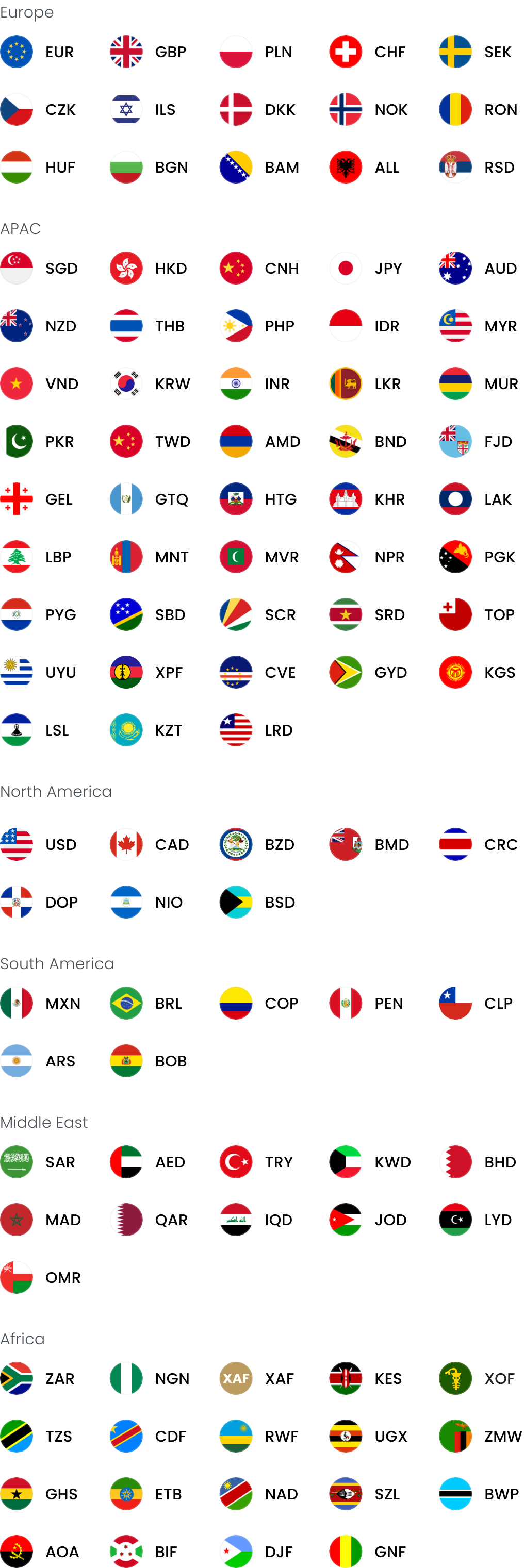
WorldFirst isn’t a bank and operates as a MAS-regulated payment institution in Singapore. Businesses use the account to manage FX and send international payments in 20+ currencies, including SGD, USD and EUR, from a single platform.
For payments to India, WorldFirst enables INR transfers via SWIFT, with a focus on clear FX pricing, predictable processing, and complete visibility from conversion through settlement.
Typical Singapore–India workflow:
- Convert funds with upfront pricing: A Singapore business opens a World Account with no setup fee and funds it in SGD or another supported currency. When a payment is due, the business converts funds at the quoted FX rate. Fees are transparent at the point of conversion, rather than embedded into the rate
- Send INR via SWIFT: After conversion, the business initiates an INR payment by entering the beneficiary’s Indian bank details, including the account number and IFSC code. WorldFirst sends payments via the SWIFT network through its banking partners
- Settlement and confirmation: INR payments typically credit the beneficiary within four business days, subject to cut-off times and intermediary banks. Payment status updates and confirmation appear in the online dashboard once funds are credited
- Tracking and reporting: The dashboard provides a consolidated view of balances, conversions, payment status, and transaction history, supporting reconciliation and ongoing payment management
Why businesses use WorldFirst for India payments:
- FX-led approach: WorldFirst specialises in currency conversion and international payments. The platform shows FX rates and fees upfront, helping businesses understand the total cost before sending funds
- Control over FX timing: Hold major currencies such as SGD, USD, EUR and GBP, and convert only when payments are due
- Consistent SWIFT processing: INR payments follow a structured SWIFT workflow with clear expectations around timing, helping teams plan payments and manage follow-ups
- Centralised visibility: A single platform displays conversions, payments, approvals, and history across currencies, improving cash flow oversight and reconciliation
Still reviewing how you send INR payments from Singapore?
Open a WorldFirst account today and take control of how you transfer money from Singapore to India – with transparent FX rates and complete visibility over every transaction.
Sources:
- https://www.ibef.org/indian-exports/india-singapore-trade
- https://www.worldbank.org/en/topic/migrationremittancesdiasporaissues/brief/remittance-prices-worldwide
- https://remittanceprices.worldbank.org
- https://www.mas.gov.sg/regulation/payment-services
- https://www.mas.gov.sg/regulation/anti-money-laundering
- https://www.rbi.org.in/Scripts/Fema.aspx
- https://www.rbi.org.in/Scripts/BS_FemaNotifications.aspx
- https://www.rbi.org.in/Scripts/FAQView.aspx?Id=94
- https://www.mas.gov.sg/news/media-releases/2023/singapore-and-india-launch-paynow-upi-linkage
- https://www.npci.org.in/what-we-do/upi/product-overview
- https://economictimes.indiatimes.com/wealth/save/upi-paynow-international-remittance-enabled-for-more-banks/articleshow/
- https://www.swift.com/resource/swift-gpi
- https://www.dbs.com.sg/personal/deposits/pay-with-ease/paynow/paynow-up

Joan Poon leads marketing across Southeast Asia at WorldFirst, driving growth and brand leadership in key markets including Singapore, Malaysia and the Philippines.

Joan Poon
Author
Head of Marketing SEA, WorldFirst Singapore
Continue reading


Subscribe
The Weekly Dispatch
Get the latest news and event invites. Signup for our weekly update from the worlds of fashion, design, and tech.
Open a World Account for free

Get local currency accounts, fast payments and competitive FX – all in one place.
You might also like
Choose a product or service to find out more

Customer Stories


Latest Happenings

e-Commerce & Online Sellers
Doing business with China

International Transactions

Foreign Currency Exchange
Doing business with China
The simpler way to pay and get paid
Save money, time, and have peace of mind when expanding your global business.