



























Home > blog > International Transactions > How businesses can avoid the double-conversion trap
How businesses can avoid the double-conversion trap
Last update:


A Singapore business sends a payment overseas or receives money from an international customer. The transaction goes through, no alerts appear and nothing looks out of place. Yet over time, the numbers stop lining up. Margins feel tighter and international sales do not seem as profitable as they should be.
Often, the problem is not pricing or volume but payment flow. Double conversion means money is exchanged twice, quietly adding FX costs at each step.
Understanding how businesses can avoid the double-conversion trap is therefore less about theory and more about protecting everyday revenue.
In the sections below, we explain how double conversions occur in real payment flows, why they cost more than most businesses expect and how to avoid them in practice.
Key takeaways:
- Double conversions quietly drain profit: Double conversion happens when the same funds are exchanged twice, often due to default bank or platform settings. Each conversion adds FX margin, which compounds over time and can materially reduce the value of international revenue without obvious warning signs
- Hidden FX markups are a major cost driver: Banks and platforms build FX markups into exchange rates rather than showing them as fees. That makes international payments more expensive and harder to track
- Default settings cause most double conversions: Automatic conversion on receipt, reconversion for supplier payments and marketplace payout rules usually trigger the problem
- Control over currency flow is the real solution: Receiving funds in the original currency, matching income and expenses by currency, simplifying payment routes and regularly reviewing platform settings all help reduce unnecessary conversions and FX leakage
- A multi-currency account eliminates double conversions at the source: By holding, converting and paying in multiple currencies from a single location, Singapore businesses can avoid forced conversions altogether and keep more of their international revenue
Open a World Account for free and manage multiple currencies in one place, without forced conversions or hidden FX costs.
What is the double-conversion trap?
Double conversion means your money is converted into another currency twice during its journey, incurring two sets of fees. This often happens in cross-border business transactions.
For example, you might receive overseas revenue in USD, which your bank automatically converts into Singapore dollars (taking a cut in the exchange rate).
Later, you need to pay a supplier in USD, so you convert SGD back to USD – paying FX fees a second time. Each conversion typically carries a hidden markup of a few percent, so two conversions can remove a substantial portion of the payment.
Imagine a Singapore seller gets a US$50,000 payment from a US customer. When the bank converts the funds from SGD to USD and back, each time with a 2.5% markup, the business loses nearly US$2,500. That’s roughly 5% of the revenue due to currency exchange. This double-conversion trap destroys margins by charging hidden FX fees twice on the same money.
A single conversion may be tolerable. The problem is that the same money gets “taxed” twice through two FX rate markups and because the second markup applies to money that was already reduced by the first, the total loss compounds.
How double conversions hurt Singapore businesses
International payments are expensive by default. Double currency conversions are one of the main reasons those costs climb so quickly, especially for SMEs handling regular overseas payments.
Exchange rate markups account for about 32% of international transaction fees, instead of appearing as visible charges. That lack of transparency is what allows double conversions to quietly drain value without raising red flags.
Power your global growth with one account
Get local currency accounts, fast payments and competitive FX – all in one place.
Each conversion quietly adds cost
Every currency conversion includes a margin built into the exchange rate. Instead of charging a visible fee, banks and payment providers adjust the rate they offer, so the business receives slightly less value than the market rate would suggest.
The difference may seem minor on a single transaction. When the same funds go through multiple conversions, those margins add up quickly. The business does not gain extra services or faster delivery. It simply pays to move the same money again.
In practice, industry analysis shows that total cross-border payment costs often reach 3–5% of a transaction’s value, including FX margins and processing fees. Unnecessary extra conversions push businesses toward the higher end of that range.
Because providers build the cost into the exchange rate, it rarely shows up clearly on statements or fee schedules. Finance teams often spot the issue only when the revenue they expected does not match what actually arrives in the account.
Where double conversions usually happen
Double conversions usually result from default settings rather than deliberate decisions. Common situations include:
- Automatic conversion on receipt: The business receives overseas revenue in a foreign currency, but the bank or platform converts it to SGD immediately
- Reconversion for outgoing payments: Later, the business needs to pay a supplier or partner in the original currency, forcing a second conversion
- Platform-controlled currency handling: Marketplaces and payment gateways often determine when and how conversions occur, unless the seller actively configures currency preferences
In each case, the business loses control over when conversion happens. The system optimises for convenience, not cost efficiency.
How does the impact compound over time
The real damage is cumulative. A single double conversion might reduce the usable value of a payment by a few percentage points. Across dozens or hundreds of transactions, the effect becomes structural.
This is especially relevant for Singapore-based SMEs that:
- Sell regularly to overseas customers
- Pay foreign suppliers in the same currencies they earn
- Operate through global marketplaces with automated payout rules
When revenue flows in one currency and costs flow out in the same currency, converting between them serves no economic purpose. It increases costs without improving how the payment works.
Thin margins make FX losses harder to absorb
Many SMEs operate on tight margins. Even a small percentage of revenue lost to unnecessary FX costs can materially affect profitability.
Marketing and logistics costs usually support growth or operations. FX losses do not. They do not add value or solve problems. FX losses simply leave the business with less of the original payment to work with.
For businesses managing cash flow carefully, repeated conversion losses can influence pricing decisions, supplier terms and expansion plans without ever being labelled as a “problem” in financial reports.
More intermediaries mean more leakage
Traditional cross-border payments often pass through multiple banks and change currency along the way before reaching their destination.
Despite the growth of alternative payment providers, about 76% of SME cross-border payment flows still run through banks, which helps explain why multi-step routing and repeated conversions remain common.
Each intermediary introduces potential costs:
- additional FX spreads,
- processing fees,
- or settlement delays.
If a payment routes through a major currency like USD before reaching its final currency, it can trigger multiple conversions even when the sender and recipient are known upfront. The more steps involved, the less transparent the final cost becomes.
For smaller transfers, these layered costs can represent a disproportionately large share of the payment value.
Why double conversions are easy to miss
Double conversions rarely cause failed payments or obvious errors. Funds still arrive. Suppliers still get paid. Everything appears to work.
That normality is what makes the issue persistent. Without clear visibility into each stage of the currency process, businesses often treat FX losses as unavoidable, even when they are not.
Businesses avoid double conversions by understanding where they lose control in the payment flow. Once they regain that control, cost savings tend to follow.
Strategies to avoid the double-conversion trap
The good news is that double conversions are not inevitable. In most cases, they happen because of default settings or legacy payment habits.
With a few deliberate changes, Singapore businesses can significantly reduce unnecessary FX costs and keep more of their international revenue.
Here are practical, proven strategies for day-to-day operations:
1. Receive payments in the original currency whenever possible
One of the simplest ways to avoid double conversion is to stop automatic conversion at the point of receipt. Many marketplaces and payment platforms default to converting incoming funds into SGD, even when the business has future expenses in the same foreign currency.
If you sell internationally through platforms such as Amazon, you can usually choose your payout currency. For example, sellers targeting US customers can receive payouts in USD rather than have the platform convert funds to SGD by default. That choice alone can prevent an unnecessary conversion and its associated FX margin.
Review your account settings to see if you can hold balances in foreign currencies or route funds to an account that supports them.
The goal is simple: let the money arrive in the currency your customer paid, without an automatic conversion.
2. Match currencies for income and expenses
Double conversion often occurs when businesses convert money out of habit rather than necessity. A typical example is converting overseas revenue into SGD immediately, then converting it back later to pay foreign suppliers.
If you earn revenue in USD and also pay suppliers, manufacturers or service providers in USD, keep those funds in USD and use them directly.
Many Singapore-based e-commerce businesses already operate this way for logistics, advertising or inventory costs overseas. Aligning income and expenses by currency reduces FX exposure and removes unnecessary conversion steps from the payment flow.
3. Use a multi-currency account or specialist FX service
Traditional banks and marketplace-managed conversions often include wider FX spreads directly in the exchange rate. A multi-currency account or specialist FX service gives you more control.
These services typically allow you to:
- Hold balances in multiple currencies in one account,
- Convert funds only when it makes sense for your business,
- Understand FX costs clearly instead of paying them through the exchange rate.
For businesses handling regular international payments, even minor percentage differences in FX pricing can add up quickly. More importantly, having control over when and how conversion happens helps prevent accidental double conversions altogether.
4. Reduce unnecessary currency hops
Every extra currency involved in a transaction increases the chance of double conversion. Where possible, simplify the payment path.
For example:
- If you know you will ultimately need USD, billing a client in USD rather than SGD can avoid an extra conversion
- If a supplier offers invoices in multiple currencies, choose the one that aligns with your revenue currency to avoid double conversion
- If both parties to a transaction are comfortable with the same currency, stick with it from start to finish
These decisions may seem small, but they compound across repeated transactions.
5. Review platform settings and payment routes regularly
Many double conversions persist because businesses do not check their settings after setting up the account. Payment platforms, banks and card networks all have default behaviours that may not suit your business.
Make it a habit to:
- Review payout and settlement currencies on marketplaces,
- Check how your bank handles incoming foreign transfers,
- Confirm that platforms do not automatically convert funds without clear visibility.
The same applies to card payments abroad. Paying in the local currency instead of accepting dynamic currency conversion at checkout helps avoid poor exchange rates applied at the point of sale.
6. Keep control over when conversion happens
At its core, avoiding the double-conversion trap is about control.
Check whether your bank is performing a hidden conversion (for instance, some Singapore banks auto-convert incoming foreign-currency cheques or transfers to SGD by default).
When paying by card abroad, decline dynamic currency conversion and pay in the local currency to avoid poor exchange rates at the point of sale.
In short, maintain control over when currency conversion happens. When systems decide for you, costs tend to rise quietly. When you decide, you can choose the right currency, the right timing and the proper route.
Singapore businesses that take control of their currency flows usually find that cost savings follow naturally, without changing who they sell to or how they operate internationally.
How World Account helps businesses avoid double conversions
By implementing the strategies summarised above, you can significantly reduce FX margin leakage in your business. But the most powerful tool to avoid double conversions altogether is a multi-currency account.
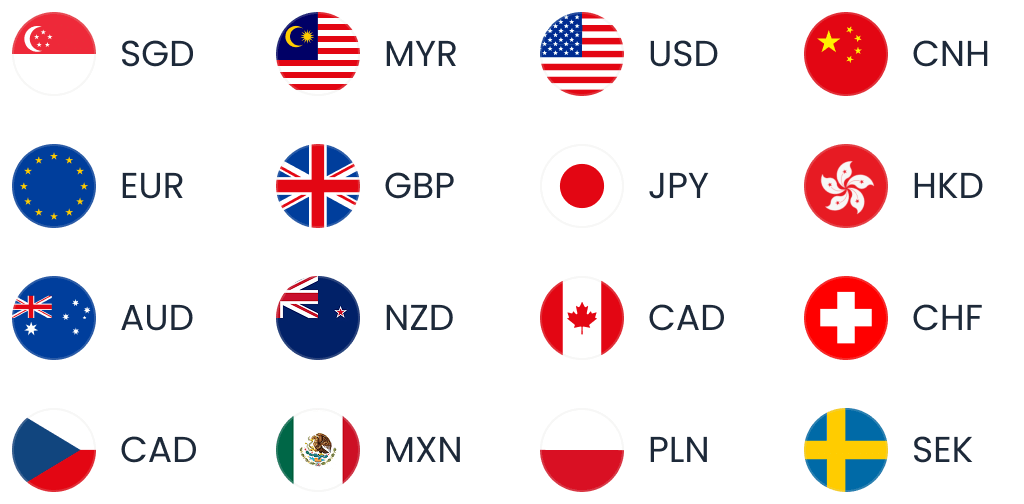
Think of it as having local bank accounts in the currencies where you do business – all without needing a physical presence overseas. For Singapore companies, this means you could, for example, have a USD account, an EUR account, a GBP account, an RMB account and so on, all under one platform.
World Account from WorldFirst is an example of a multi-currency account designed for businesses to take control of FX.
It’s important to note that the World Account is not a bank account but a multi-currency business account designed to give companies control over how international payments flow and when currency conversion occurs.
With World Account, businesses can:
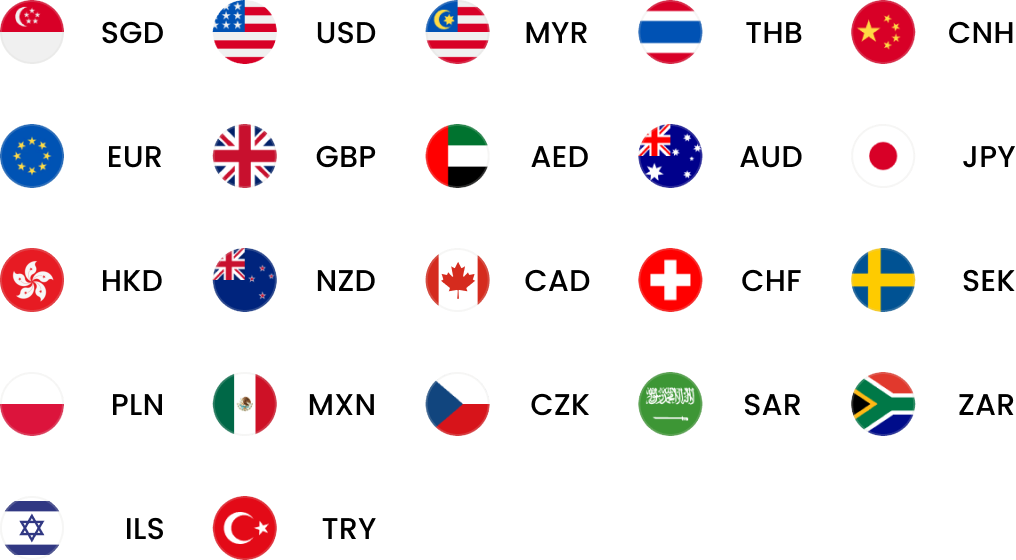
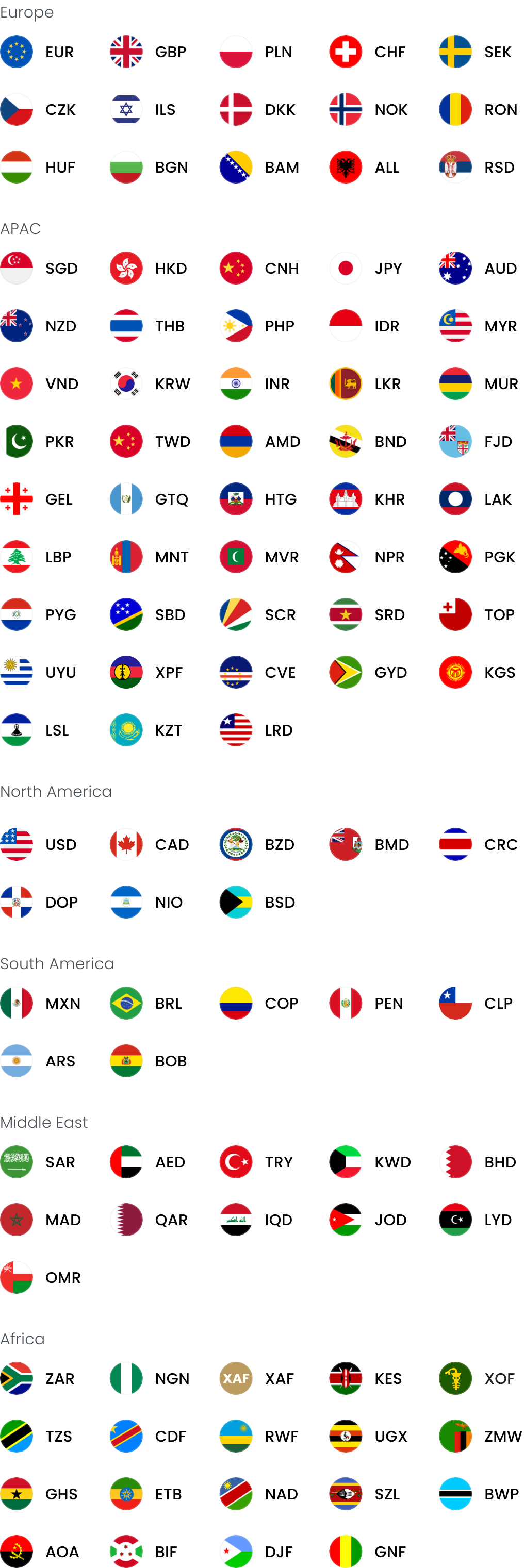
- Open and manage 20+ local currency accounts, including USD, EUR, GBP, AUD, JPY, CNH and more
- Hold balances in multiple currencies without forced conversion
- Convert funds only when needed, with FX pricing shown upfront
- Pay overseas suppliers directly from foreign currency balances
- Send payments in 100+ currencies worldwide without unnecessary intermediary conversions
By choosing the currency path themselves, Singapore businesses gain clearer visibility over international payments and prevent double conversions from becoming part of everyday operations.
Are unnecessary double conversions built into your current payment setup?
Open a World Account for free and take control of currency handling across all your international transactions.
Sources:
- https://www.worldfirst.com/sg/
- https://www.bis.org/cpmi/publ/d173.htm
- https://www.fxcintel.com/research/reports/ct-b2b-cross-border-payments-2024
- https://www.mas.gov.sg/
- https://www.oecd.org/en/topics/finance-and-investment.html
- https://www.businesstimes.com.sg/opinion-features/cross-border-payments-new-benchmarks-needed

Shawn Shen is the Country Manager for Singapore and the Philippines, with over 15 years of experience in commercial leadership across payments, SaaS and fintech.

Shawn Shen
Author
Country Manager, Singapore & Philippines WorldFirst Singapore
Continue reading


Subscribe
The Weekly Dispatch
Get the latest news and event invites. Signup for our weekly update from the worlds of fashion, design, and tech.
Open a World Account for free

Get local currency accounts, fast payments and competitive FX – all in one place.
You might also like
Choose a product or service to find out more

Customer Stories


Latest Happenings

e-Commerce & Online Sellers
Doing business with China

International Transactions

Foreign Currency Exchange
Doing business with China