



























Learning how to pay on Alibaba is really two problems: choosing a payment method that protects your money, and moving funds to China without losing a chunk to fees and slow banks. This guide covers the payment options Alibaba offers, how to avoid supplier scams, and how sellers across Africa can pay Chinese suppliers more efficiently. It is written for importers and online sellers sourcing stock from China.
Key Takeaways
- Alibaba offers several payment routes, and paying through the platform’s Trade Assurance keeps your money in escrow until you confirm the order is correct.
- Trade Assurance is free for buyers and refunds you if a supplier ships late or the goods fail to match the agreed contract, up to the supplier’s coverage limit.
- Paying outside the platform, such as by direct wire to save a small discount, removes Trade Assurance protection entirely.
- Traditional SWIFT transfers to China can absorb 15 to 20 percent of order value through intermediary fees and poor exchange rates, hurting importer margins.
- A multi-currency business account lets you hold funds, convert on your terms, and pay suppliers in CNH or USD, giving you more control over conversion costs.
How to pay on Alibaba safely when sourcing internationally
To pay on Alibaba safely, place and pay for your order through the platform using a Trade Assurance supplier, keep all communication and contracts on Alibaba, and never move the payment off-platform. This keeps your money protected and gives you a route to a refund if something goes wrong.
The reason this matters is simple. Once you wire money directly to a supplier’s bank account, there is no chargeback or built-in dispute route.¹ Alibaba’s own protection only applies when you pay through the platform, so the payment method you pick decides whether you are covered at all.²
If you already have suppliers lined up and just need a reliable way to move money to China, you can also pay Chinese suppliers directly from a business account. That combines platform-level order safety with lower-cost currency handling, which we cover further down.
What payment methods can you use on Alibaba?
Alibaba supports online card payments, bank and wire transfers, and several digital methods, most of which can be routed through the platform so your order stays under Trade Assurance. The right choice depends on your order size, your bank’s international limits, and how much you want to spend on fees.
Here are the main options an African importer will meet:
- Trade Assurance (online order payment): You pay through Alibaba’s platform and the money is held in escrow until you confirm receipt.² This is the safest route for a new supplier relationship.
- Bank or wire transfer (T/T): Common for larger orders, but international wires often pass through intermediary banks that each deduct a fee, and delivery can take several days.
- Credit or debit card: Fast and familiar, but card processing usually carries a higher percentage cost than a bank transfer for large sums.
- Digital wallets and third-party providers: Convenient, though availability and cost vary by provider and by country.
The important detail is that protection follows the payment, not the supplier. A verified supplier paid off-platform is still an unprotected payment.
Note: Features and availability may vary by region and are subject to change. Always verify current offerings directly with each provider before making a decision.
Alibaba states that Trade Assurance only applies when you check out with an online payment method or make a wire transfer through Alibaba itself, and that payments made outside the platform cannot be protected.² So the method you choose is inseparable from whether you are covered.
What is the safest way to pay Alibaba suppliers?
The safest way to pay Alibaba suppliers is to use a Trade Assurance supplier, pay through the platform, and confirm the goods before releasing funds. Trade Assurance holds your payment in escrow and only releases it to the supplier after you confirm receipt or the inspection period ends.²
Trade Assurance is a free service that covers you if products are not shipped on time or do not meet the quality standards in your order contract, up to the coverage amount shown on the supplier’s profile.³ That coverage limit matters: if your order value is larger than the supplier’s limit, the portion above it is not fully protected, so check the figure on the supplier’s page before you commit.⁴
To get the most from it:
- Filter your search for Trade Assurance suppliers and look for the badge on the supplier profile.²
- Agree the order details, quality standards, and shipping deadline in the online contract before paying.
- Pay through Alibaba, never by a side transfer, even if offered a discount to do so.⁴
- Inspect the goods, and open a dispute within the platform’s refund window if they fall short.³
If a supplier pushes for a 3 to 5 percent discount in exchange for paying by direct wire, treat it as a warning sign. That discount strips away your protection, and for a first order the lost cover usually outweighs the saving.⁴
Why paying Chinese suppliers can be challenging for African businesses
Paying Chinese suppliers from Africa is often slow, expensive, and hard to track, because payments usually travel through the SWIFT network and several intermediary banks before reaching China. Each hop can add a fee and a delay, and you rarely get clear visibility of where the money is.
For an importer working on thin margins, the cost stacks up quickly. Industry estimates suggest traditional cross-border routes can absorb 15 to 20 percent of an order’s value once intermediary charges and exchange-rate markups are counted. On an order worth CNY 10,000, that difference is the gap between a workable margin and none at all.
The friction shows up in a few recurring ways for sellers in markets like Nigeria, Kenya, and Ghana:
- FX spreads: Converting NGN, KES, or GHS to USD and then to CNH through a bank often means an uncompetitive rate at each step.
- Transfer limits and access: Bank transfer caps and, in some markets, restricted foreign-exchange access can stall a supplier payment at the worst moment.
- Slow settlement: A wire that takes several days can delay production and shipping, especially around peak sourcing periods like the Canton Fair.
- Poor tracking: Once a SWIFT payment leaves your bank, confirming it arrived can mean chasing two or three institutions.
A Kenyan seller restocking inventory or a Ghanaian wholesaler importing goods faces the same core issue: the money is expensive and hard to see once it leaves.
How WorldFirst helps businesses pay Alibaba suppliers more efficiently
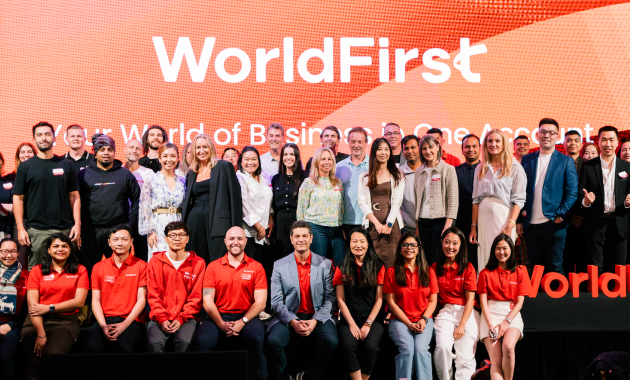
WorldFirst is a payments provider that lets you hold multiple currencies in one business account, convert them when the rate suits you, and pay Chinese suppliers in CNH or USD. That structure tackles the two biggest pain points directly: the number of conversions and the lack of payment visibility.
Because WorldFirst is connected to its sister company MYbank, a regulated bank in China, many payments move through local rails rather than SWIFT. WorldFirst reports that around 90 percent of payments to China clear on the same day, and that transfers between WorldFirst accounts are instant and free, with more than 150,000 Chinese suppliers already on the platform.⁵ Real-time tracking replaces the guesswork of a SWIFT wire.
You can also pay 1688 suppliers directly from your World Account, which is useful if you source from China’s wholesale marketplace alongside Alibaba. And for card-based supplier or advertising spend, a WorldFirst World Card gives you virtual card access, which is still uncommon for many Nigerian businesses and can be a genuine differentiator when a supplier or platform only accepts cards.
WorldFirst is backed by Ant International, holds 20+ currencies and sends to 100+ currencies across 200+ countries and regions.⁵ It is a payments provider, not a bank, and it holds no local licence in Africa, so it operates cross-border rather than in-country. To register, prepare your business details, identity verification documents, and company registration papers where applicable.
How to pay Alibaba suppliers with WorldFirst
Paying a supplier through a multi-currency account follows a simple loop that connects your marketplace income to your supplier payments, so money you collect from selling can fund the stock you reorder.
- Collect your marketplace or business income into your World Account, in USD, GBP, EUR, or a local currency where supported.
- Hold those funds in the currency you received them, avoiding an immediate forced conversion.
- Convert to CNH or USD when the rate works for you, using the account’s FX conversion feature.
- Pay your supplier, either to their bank details or instantly to their WorldFirst account if they have one.⁵
This is where the e-commerce seller solution is most useful: the same account that receives what you earn selling on Amazon or Temu can pay the supplier who made the stock, keeping one view of the whole cycle.
Other ways to pay Alibaba suppliers
Beyond the platform’s own routes, several providers handle payments to China. The table below compares the main approaches an African importer is likely to weigh up. Verify current terms with each provider before deciding, as features and fees change.
| Method | Advantages | Limitations |
| Alibaba Trade Assurance | Free escrow protection; refund route if the order fails | Only covers on-platform payments; capped at supplier’s coverage limit⁴ |
| Bank transfer (T/T) | Suitable for large orders | Slower; intermediary bank fees; limited tracking |
| Card payment | Fast and widely accepted | Higher percentage cost on large sums |
| Third-party PSP (e.g. Wise, XTransfer) | Multi-currency handling; often faster than bank wires | Terms, limits, and eligibility vary by provider and region |
Fees checked in June 2026. Pricing, eligibility, and product features may change over time. Always confirm the latest information directly with the provider.
Among third-party providers, Wise supports CNY transfers to Chinese bank accounts and has done so for both personal and business customers, with USD payments to businesses in China also available.⁶ XTransfer positions itself as a B2B foreign-trade platform for paying suppliers in mainland China and states it operates across 200+ countries and regions.⁷ Each has its own eligibility rules and documentation requirements, so check what applies to your country before relying on one.
How to avoid Alibaba payment scams
Avoiding Alibaba payment scams comes down to verifying who you are paying and keeping the transaction on the platform. Most losses happen when a buyer is persuaded to pay a supplier off-platform, where no protection or dispute route exists.¹
Work through this checklist before releasing funds:
- Confirm the supplier supports Trade Assurance and check their coverage limit against your order value.⁴
- Verify the beneficiary details match the supplier’s registered business name, and be cautious if asked to pay a personal account or a third party.
- Keep negotiations and contracts on Alibaba, so you have a record if you need to open a dispute.²
- Decline pressure to pay by direct wire for a discount, as this removes your cover.⁴
- Consider a pre-shipment inspection for a first or large order; the report also strengthens any later claim.⁴
Handled this way, a payment problem becomes a dispute you can escalate rather than money you cannot recover. If you want more background on vetting factories, WorldFirst’s guide to sourcing from 1688 is a useful companion read.
FAQs
How do I pay a Chinese supplier from Africa without losing money to fees?
To reduce fees when paying a Chinese supplier from Africa, avoid routes that convert your currency multiple times through intermediary banks. Holding funds in a multi-currency account and converting once to CNH or USD when the rate suits you cuts repeated FX markups. Paying through local rails rather than SWIFT can also speed up settlement and improve tracking.
Can I pay Alibaba suppliers in Chinese Yuan?
Yes, you can pay many Chinese suppliers in CNH or CNY, depending on the payment provider and the supplier’s account. Paying in the supplier’s own currency can avoid an extra conversion on their side. Check whether your provider supports CNH payments and whether the supplier has a CNY-denominated business account before you set up the transfer.
Is Alibaba safe for international buyers?
Alibaba can be safe for international buyers when you use Trade Assurance suppliers and pay through the platform. Trade Assurance holds your payment in escrow and offers a refund route if the supplier ships late or the goods fail to meet the agreed contract. It is not unconditional cover, so verify suppliers and inspect goods as well.
What happens if my supplier ships the wrong goods?
If you paid through Alibaba with a Trade Assurance supplier and the goods do not match your order contract, you can open a dispute within the platform’s refund window. Alibaba acts as mediator and can refund you up to the supplier’s coverage amount if the supplier is found at fault. Keep photos, contracts, and messages as evidence.
Can I pay Alibaba suppliers using a business account?
Yes, you can use a multi-currency business account to pay Alibaba and 1688 suppliers. It lets you collect income, hold several currencies, convert on your terms, and send funds to suppliers in CNH or USD. Where the supplier uses the same provider, transfers between accounts can be instant and free.
Conclusion
Knowing how to pay on Alibaba safely protects both your money and your margin: pay through the platform with a Trade Assurance supplier, verify who you are paying, and choose a payment route that does not lose value to unnecessary conversions and slow wires. If your next step is finding a lower-cost way to move money to China, a multi-currency business account is the practical place to start.
Sources
- https://www.sourcingarts.com/how-does-alibaba-trade-assurance-protect-buyers-interests/
- https://helpcenter.alibaba.com/s/buyer/knowledge?questionId=92572963d7b2496680fabbb2038ac60asgvpc278077001&categoryId=9207651
- https://activities.alibaba.com/alibaba/buyer/cp/trade-assurance.php
- https://chinesecheck.com/blog/alibaba-trade-assurance-guide
- https://www.worldfirst.com/af/product/pay/pay-chinese-suppliers/
- https://wise.com/help/articles/5ndADC6KmFdLDyaLq5kI64/how-to-send-cny-for-china-businesses
- https://www.xtransfer.com/services/payment
This article is intended for informational purposes only and does not constitute legal advice or professional advice. This article should not be regarded as constituting an offer or a solicitation to buy or sell any regulated or financial products or services. WorldFirst makes no representations or warranties regarding the accuracy, completeness, or applicability of the content, and readers are encouraged to consult with legal professionals or other professionals for advice tailored to their specific situation. WorldFirst does not guarantee the accuracy and completeness of this article and expressly disclaims any and all liability to any person in respect of the consequences of anything done or omitted to be done wholly or partly in reliance on this article.