























A practical guide to listing, shipping and getting paid on Amazon as a Nigerian seller or Kindle author.
Selling on Amazon from Nigeria means listing your products or books on Amazon’s international marketplaces and getting paid in foreign currency. This guide is for Nigerian importers, e-commerce sellers, artisans and Kindle Direct Publishing authors who want to reach buyers in the US, UK and Europe. You will learn how to register, list, ship and collect your earnings without a foreign bank branch. It solves the two problems that stop most sellers: setup and payment.
Key Takeaways
- Amazon has no local Nigerian marketplace yet, so Nigerian sellers list through Amazon Global Selling and sell into the US, UK, Germany, Canada and the UAE marketplaces instead.
- Registration needs a business registration, a government ID, an address document and an internationally enabled card, plus a foreign-currency receiving account for payouts.
- Amazon pays sellers and Kindle authors in the marketplace currency, so USD sales pay in USD, UK sales pay in GBP and German sales pay in EUR, with no automatic conversion.
- Kindle Direct Publishing lets Nigerian authors self-publish e-books and paperbacks for free, then receive royalties into a multi-currency receiving account rather than a local Naira account.
- A World Account lets you hold USD, GBP and EUR from Amazon, convert when the rate suits you, and pay 1688 suppliers directly without an agent.
Why sell on Amazon from Nigeria?
Amazon opened its seller program to Nigeria and several African countries in 2019, letting you sell from home, an office or a small workshop.¹ You reach high-income buyers in the US, UK and EU, you get paid in foreign currency, and Amazon handles the traffic so you do not need your own website.
Here is what makes it work for a Nigerian seller:
- High-income markets: sell to buyers in the US, UK, EU and UAE, where purchasing power is higher.
- No website needed: Amazon handles marketing, traffic and visibility.
- Earn in foreign currency: get paid in USD, GBP or EUR, which protects your margins against Naira movement.
- Export from home: manufacturers, resellers and artisans can all sell internationally.
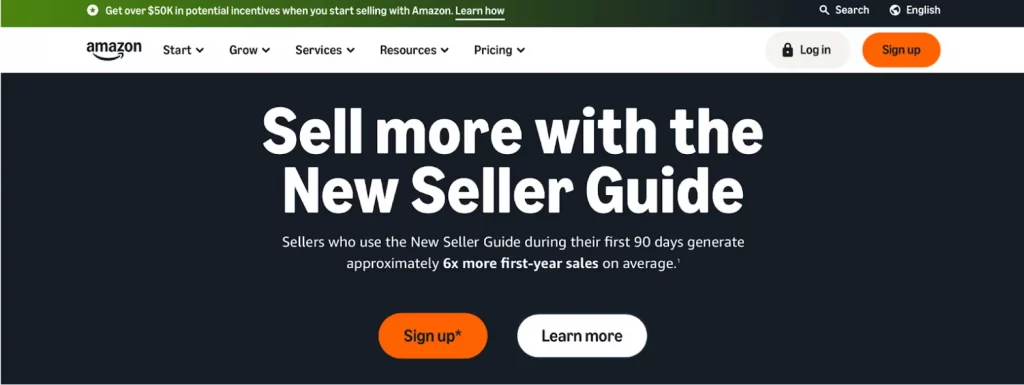
- Amazon’s Seller Central lists the countries it accepts for registration, and Nigeria is one of them.²
Can Nigerians sell on Amazon?
In short, yes.
There is no local Amazon Nigeria marketplace yet, so you sell through Amazon Global Selling, which lets you list on Amazon’s international marketplaces including the US, UK, Germany, Canada and the UAE.
To register you will need a valid business registration such as a CAC certificate, a passport or national ID, an address document (a utility bill or bank statement under three months old), and three months of bank statements to show active business activity. Amazon also requires a foreign-currency receiving account for payouts and an internationally enabled card to pay the seller subscription, which starts at USD 39.99 per month.² After you submit your ID photo, you complete a short video verification with your government ID and address proof to hand.
How to start selling on Amazon from Nigeria
Starting takes three moves: register and open your seller account, list your products, then arrange shipping. Verification usually takes two to five business days, after which you get access to Amazon Seller Central and can list on multiple global marketplaces.
Step 1: Register and open your seller account
Go to Amazon’s Global Selling sign-up and choose your target marketplace. Most Nigerian sellers pick Amazon US, UK or UAE. Then create your seller profile using:
- A valid business or personal email and phone number.
- A government ID (passport, NIN or driver’s licence).
- Business registration documents (a CAC certificate if you are registered).
- An internationally enabled credit or debit card for the subscription fee.
- A foreign-currency receiving account that links to Amazon for USD, GBP or EUR payouts.
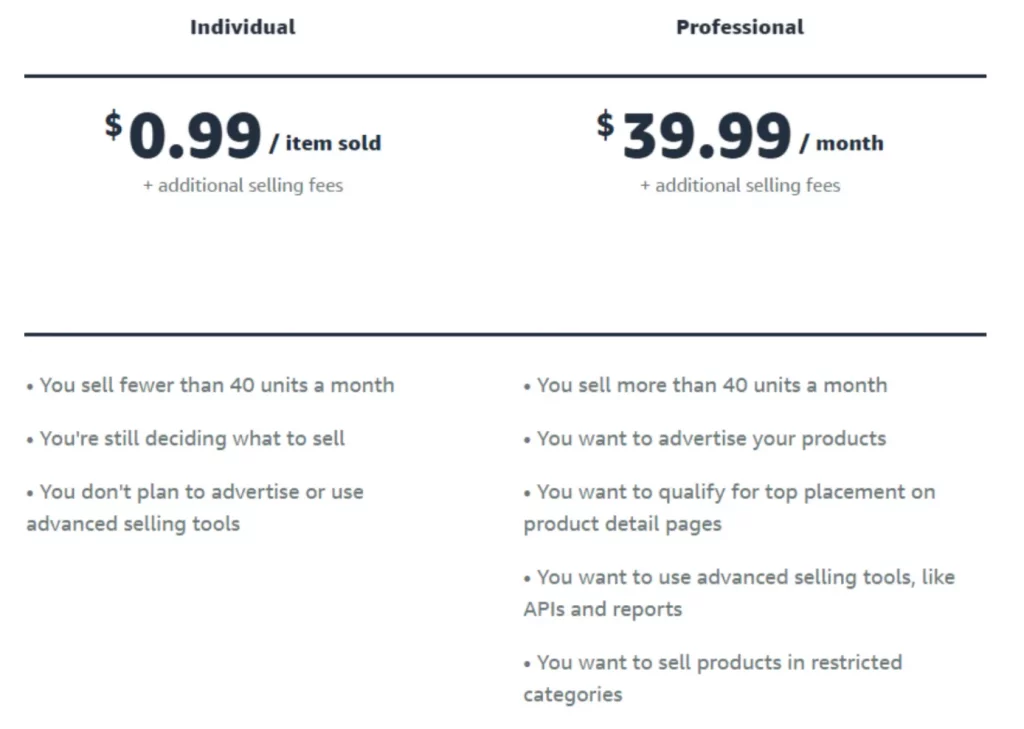
If you are new, you can start on an Individual account with no monthly fee and upgrade to a Professional account (USD 39.99 per month) once your sales grow.²
Step by Step:
- Go to https://sell.amazon.com
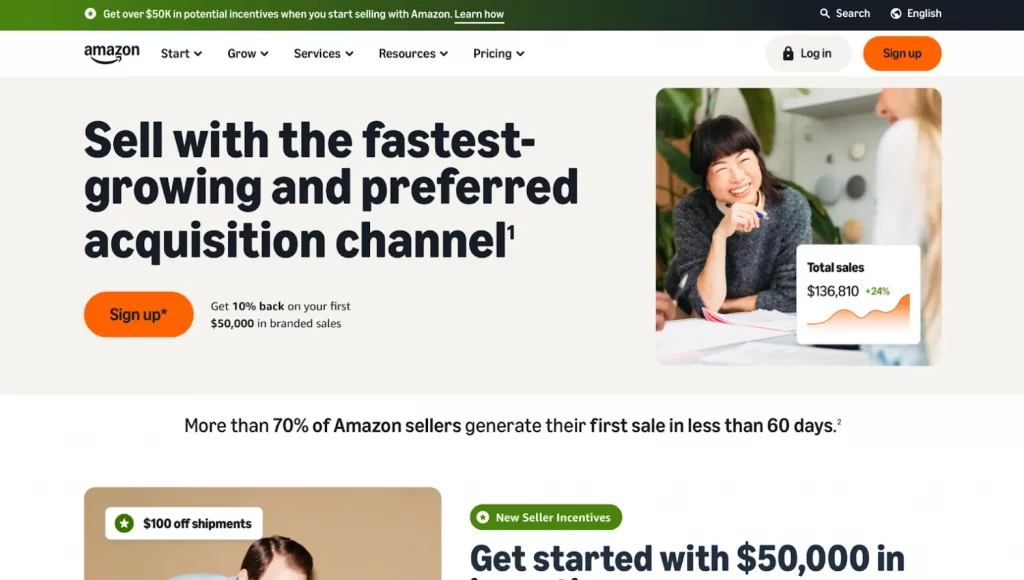
2. Choose your target marketplace (most Nigerian sellers prefer Amazon US, UK, or UAE).
3. Click on ‘Start Selling’ or ‘Sign Up’ and begin registration.
4. Create your seller profile using:
-
- A valid business or personal email and phone number
- A government-issued ID (passport, NIN, or driver’s license)
- Business registration documents (CAC certificate if you’re registered)
- A credit or debit card with international access
- A foreign currency bank account, which links to Amazon for smooth USD/GBP transfers
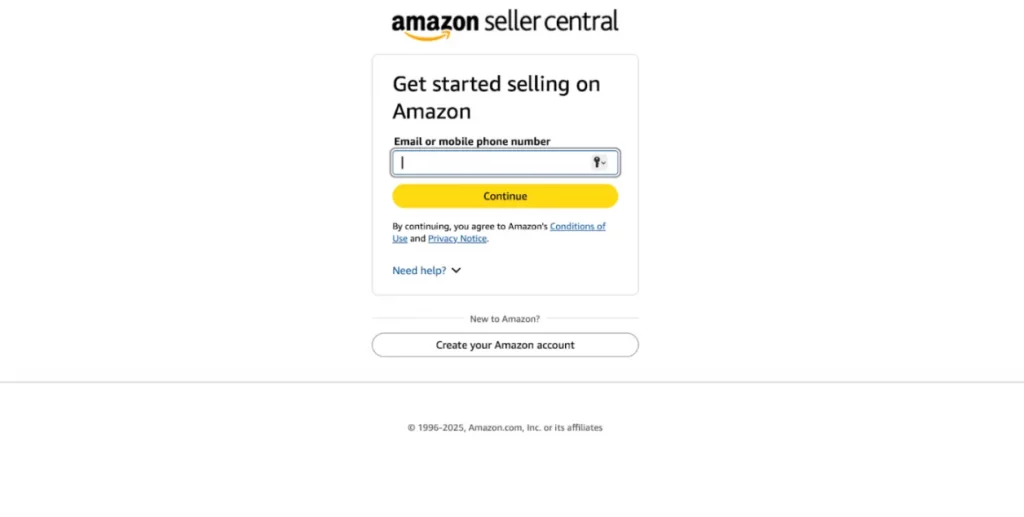
Once your documents are verified (usually 2–5 business days), you’ll get access to Amazon Seller Central, where you can start listing your products. One thing to remember is that if you’re new, you can start with an Individual Seller Account (no monthly fees) and later upgrade to a Professional Account( $39.99/month) once your sales grow.
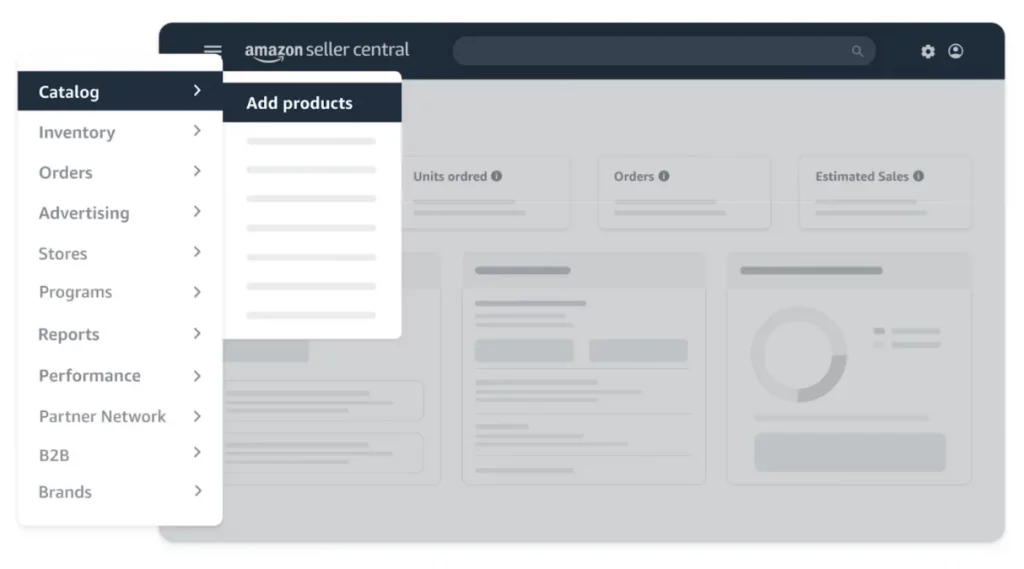
Step 2: List your products
List with clear titles, honest descriptions and good images. Say what the product is made of and name any special feature. Two habits help:
- Focus on products Nigeria is known for, like black soap, hibiscus tea, shea butter, ginger or wooden crafts.
- Optimise titles with keywords global buyers actually type, for example “organic African black soap” rather than just “black soap”.
You can also register your brand with Amazon Brand Registry for extra protection and visibility.
Step 3: Ship and deliver globally
Amazon has no fulfilment centre in Nigeria yet, so you handle logistics through one of two routes:
- Merchant Fulfilled Network (MFN): you pack and ship each order from Nigeria using couriers like DHL, FedEx or UPS. This suits low volumes or testing demand. Keep tracking numbers updated in Seller Central.
- Fulfilment by Amazon (FBA): you send stock in bulk to an Amazon warehouse abroad through a freight forwarder, and Amazon handles storage, delivery and customer service. This suits steady, consistent sales.
How to publish and sell on Amazon Kindle from Nigeria
Kindle Direct Publishing (KDP) lets you self-publish e-books, paperbacks and low-content books like journals and planners for free, and Nigerian authors are eligible to join.³ You keep the rights to your book, Amazon lists it across its global stores, and you earn royalties on every sale. You do not ship anything, because e-books are delivered digitally and paperbacks are printed on demand, which makes Kindle a low-cost way to earn foreign currency from Nigeria.
To get started:
- Go to the KDP site and sign in with your Amazon account.
- Complete your tax information (a W-8BEN form), because Amazon will not release royalties until your tax profile is verified.⁴
- Click “Create a new title” and fill in the book details: title, description, keywords and categories.
- Upload your manuscript file and cover file, then set your price.
The payment side is where most Nigerian authors get stuck, and it matters more than the writing for cash flow. A local Naira account cannot receive KDP royalties directly. Amazon pays royalties in the currency of each marketplace where the book sells, so US sales pay in USD, UK sales in GBP and German or French sales in EUR, with no automatic conversion.⁵ Amazon pays roughly 60 days after the end of the month in which the sale was reported, once you pass the minimum threshold for that currency.⁶
To collect these royalties, you provide Amazon with local receiving-account details in the matching currency. A multi-currency receiving account gives you a USD, GBP and EUR account, each with its own details, so Amazon pays you as if you held a local account in each market. You then choose when to convert to Naira instead of accepting Amazon’s built-in conversion. WorldFirst is one such option, and it is listed among Amazon’s participating Payment Service Providers, so KDP can verify a WorldFirst receiving account.⁷ You can open a multi-currency business account and add USD, GBP and EUR accounts to receive your royalties.
What can Nigerians sell on Amazon?
Nigerian sellers do well in fashion, handmade crafts, home décor and African-inspired products, plus high-demand categories like electronics, clothing, baby supplies and pet supplies. Kindle authors add another category entirely: digital and print-on-demand books that need no stock.
Some categories carry strict rules. If you sell food, cosmetics or supplements, prepare proper labelling and nutritional facts, a Certificate of Analysis (COA) from an ISO-certified lab, and packaging that meets Amazon’s guidelines.
If your goods are made locally, you can package them in Nigeria and send them straight to Amazon’s warehouse. If you import from China, ship straight from the supplier to Amazon’s fulfilment centre to save on double shipping. Always order a sample and verify your supplier before shipping large quantities.
For manufactured goods sold into the US, plan for these requirements:
- UPC/barcodes: every product needs a unique GS1 barcode for identification.
- Shipping terms: trial orders under 200 kg can go by air; larger shipments usually go by sea, so understand who pays duties under FOB (Free on Board) and EXW (Ex Works) terms.
- Inspection: for large orders, a third-party inspection service keeps quality consistent.
- Certifications: electronics, toys and cosmetics may need FDA, FCC or CPSIA approval.
Tips to grow your Amazon business
- Optimize your listings: Use high-quality images, 3D renders, and SEO-friendly titles. Include bullet points and videos to sell the product visually, as people often skim instead of reading
- Run ads smartly: Try Amazon Sponsored Product ads, test different keywords, and focus on the ones that work best
- Build your brand: Join Brand Registry to protect your brand and use premium A+ content and videos to showcase your product’s value
- Monitor performance: Track clicks, conversion rates, and sales via Seller Central reports. Adjust pricing and listings based on data
- Maintain credibility: Keep shipping timelines reliable and manage reviews actively to maintain high ratings
- Protect profits: Use services like WorldFirst to lock exchange rates when converting Naira to USD so you don’t lose out on payouts
- Boost organic reach: Focus on keywords that sell well to improve your product’s ranking and spend less on ads over time
Leverage external traffic: Share your products on TikTok or other social media to drive people straight to your Amazon listings
How to compare payment options for Amazon and Kindle earnings
Nigerian sellers and authors usually choose between a few cross-border payment providers. Compare them on the currencies they let you hold, how you cash out, and whether they support paying China suppliers, because those decide how much of your earnings you keep.
| Provider | Multi-currency receiving | Cash-out to Nigeria | Pay China suppliers | Amazon PSP listed |
| WorldFirst | USD, GBP, EUR, JPY and more⁸ | Via SWIFT transfer to your Nigerian account | Yes, direct CNY supplier payment and 1688 Balance Pay | Yes⁷ |
| Payoneer | USD, EUR, GBP and more⁹ | Withdraw to local account via SWIFT⁹ | Not a stated core feature; verify current offering⁹ | Not stated on its site; verify |
| Wise | USD, GBP, EUR and more¹⁰ | Withdraw to local account | Not a China-payment specialist; verify | Not stated on its site; verify |
Note: Features and availability may vary by region and are subject to change. Always verify current offerings directly with each provider before making a decision.
Each provider gives you receiving-account details you paste into Amazon, so Amazon pays you in the marketplace currency without converting first.⁵ The practical difference is what happens next: whether you can hold the currency and convert on your own timing, and whether the same account also pays your suppliers in China. A provider that does both keeps your money in one place from sale to supplier.
Collect international payments with WorldFirst
Managing international payments is one of the biggest challenges for Nigerian sellers and authors. You receive sales proceeds and royalties from Amazon marketplaces abroad, you may pay suppliers in China, and you need to move funds back to your Nigerian account. A World Account is a multi-currency account built for cross-border e-commerce that handles these flows in one place.
With it you can:
- Set up receiving accounts in USD, GBP, EUR, JPY, CNH and more, with no overseas bank needed.
- Collect Amazon payments and Kindle royalties directly from marketplaces in the US, UK, Europe and Japan. There are no fees to receive or hold Amazon payments in your World Account, and a competitive FX fee applies only when you convert.⁸
- Hold funds in multiple currencies and use Convert to change them when the rate suits you.
- Pay 1688 suppliers directly in CNY through World Pay and Balance Pay, avoiding an agent or a double conversion.
- Transfer your local-currency earnings home to your Nigerian account through the SWIFT network.
Here is how to collect Amazon and Kindle payments:
- Set up a receiving account in your dashboard in the currency matching your marketplace, for example USD for Amazon.com, then download the account verification letter.
- Confirm the account is in your own name (personal or business) to meet Amazon’s requirements, and verify it as prompted.
- Link it to Amazon under Deposit Methods in Seller Central, or under Getting Paid in your KDP account, then upload verification documents.
- Convert or withdraw once Amazon disburses, holding the currency or moving it home to Nigeria via SWIFT when you choose.
WorldFirst is a payments provider backed by Ant International, and over 1.5 million businesses have used WorldFirst and its partner brands since 2004.⁸ That track record and the Amazon PSP listing are the kind of verifiable detail worth checking before you connect any account.
FAQs
Can I publish on Kindle from Nigeria without a US bank account?
Yes. Nigerian authors are eligible for Kindle Direct Publishing, and a local Naira account cannot receive royalties directly. You provide a multi-currency receiving account with USD, GBP or EUR details, and Amazon pays your royalties into it in the marketplace currency. You then convert to Naira when you choose.
What currency will Amazon pay my Kindle royalties in?
Amazon pays in the local currency of each marketplace where your book sold. US sales pay in USD, UK sales pay in GBP, and German or French sales pay in EUR, with no automatic conversion. If you give only one account, Amazon converts the other currencies for you, usually at a less favourable rate than holding each currency separately.
How long does it take to get paid on Kindle?
Amazon pays royalties monthly, roughly 60 days after the end of the month in which the sale was reported, and up to 90 days for expanded distribution. You must also pass the minimum threshold for that currency before a payment releases, so early low-volume months may roll over.
Is it possible to receive both Amazon seller sales and Kindle royalties in one account?
Yes. A multi-currency account can hold USD, GBP and EUR, so you can link it to both your Seller Central deposit settings and your KDP receiving account. Your marketplace sales and your book royalties then land in the same set of currency accounts.
How do I move my Amazon earnings back to Nigeria?
You convert the foreign currency to your preferred currency inside your account, then transfer the funds to your Nigerian bank through the SWIFT network. Holding the currency first lets you convert when the rate is favourable rather than accepting an automatic conversion at payout.
Can I pay my China suppliers from the same account I use for Amazon?
Yes, if your provider supports it. A World Account lets you pay suppliers in China in CNY and pay directly on 1688, so the money you collect from Amazon can go straight to your next order without moving through an agent or converting twice.
Conclusion
Learning how to sell on Amazon from Nigeria comes down to three steps: register through Amazon Global Selling or Kindle Direct Publishing, list your products or books, and set up a foreign-currency account so you actually keep what you earn. Whether you sell physical goods or publish on Kindle, the payment side is where margins are won or lost. Set up your receiving account first, then focus on selling.
Sources
- https://sell.amazon.com/
- https://sell.amazon.com/pricing
- https://kdp.amazon.com/en_US/help/topic/G200635650
- https://kdp.amazon.com/en_US/help/topic/G200641090
- https://www.vappingo.com/word-blog/kdp-for-non-us-authors/
- https://kdp.amazon.com/en_US/help/topic/GJD7DFFX6X88AK46
- https://kdp.amazon.com/en_US/help/topic/GD9NN4LS8ZDU8XZ7
- https://www.worldfirst.com/global/solution/marketplaces/amazon/
- https://www.payoneer.com/
- https://wise.com/
This article is intended for informational purposes only and does not constitute legal advice or professional advice. This article should not be regarded as constituting an offer or a solicitation to buy or sell any regulated or financial products or services. WorldFirst makes no representations or warranties regarding the accuracy, completeness, or applicability of the content, and readers are encouraged to consult with legal professionals or other professionals for advice tailored to their specific situation. WorldFirst does not guarantee the accuracy and completeness of this article and expressly disclaims any and all liability to any person in respect of the consequences of anything done or omitted to be done wholly or partly in reliance on this article.