



























A practical comparison of dropshipping platforms for sellers who source internationally and need reliable ways to pay overseas suppliers.
Choosing between dropshipping platforms comes down to more than store design. This guide compares Shopify, WooCommerce, AliExpress, Alibaba, 1688, and marketplace options for African sellers, then explains how to handle the part most beginners overlook: sourcing from China and paying suppliers across borders without losing money to fees or agents.
Key Takeaways
- Dropshipping platforms fall into three groups: store builders (Shopify, WooCommerce), supplier marketplaces (AliExpress, Alibaba, 1688), and selling marketplaces (Amazon, Temu, Jumia).
- The right platform depends on your niche, budget, technical skill, and whether you source from China or sell to overseas buyers.
- Free dropshipping tools rarely stay free once you add supplier fees, marketing spend, and payment costs into your margins.
- Most dropshipping stores fail in the first year, and unreliable suppliers plus weak cost control are among the leading reasons.
- Verifying suppliers and using a dedicated cross-border payment setup reduces reliance on agents and helps protect your margins.
Best dropshipping platforms can help you start selling internationally
A dropshipping platform is the software or marketplace you use to list products, take orders, and connect with suppliers who ship directly to your customers. Choosing one is only the first step. You also need reliable suppliers, a sales channel, and a way to pay for stock across borders.
Most sellers mix several tools. You might build a store on Shopify, source products from 1688, and sell through both your own site and a marketplace like Jumia or Amazon. Each layer has its own costs and rules, so the “platform” you pick is really a combination of store, supplier source, and sales channel.
The part that decides whether you actually profit is often invisible at the start: how you pay suppliers and receive income determines your true margin. A cheap store builder means little if a large share of each supplier payment disappears into fees.
What should you look for in a dropshipping platform?
Look for supplier access, fair fees, integration options, payment support, and room to scale. A good platform connects you to reliable suppliers, keeps costs predictable, and works with the sales channels and payment methods you already use.
When comparing options, weigh these factors:
- Supplier access: Does the platform link directly to verified suppliers, or must you source separately?
- Product sourcing options: Can you find your niche, and are minimum order quantities realistic for dropshipping?
- Fees: Consider subscription costs, transaction fees, and any add-on apps you will need.
- Integration: Does it connect with your sales channels, sourcing tools, and payment setup?
- Payment support: Can you pay overseas suppliers directly, in the currency they want?
- Scalability: Will the platform still suit you when order volume grows?
Payment support is the factor most first-time sellers underrate. If a platform makes selling easy but leaves you paying suppliers through an agent, your margins suffer from day one.
Which platform is best for dropshipping?
There is no single answer, because the platforms serve different jobs. Store builders run your shopfront, supplier marketplaces provide the products, and selling marketplaces give you a ready audience. Most successful sellers combine two or three.
Shopify
Shopify is a hosted store builder known for ease of setup and a large app ecosystem. You can launch quickly, add dropshipping apps that connect to suppliers, and manage everything from one dashboard. Its entry-level Starter plan is priced at USD 5 per month, with a 5 percent transaction fee when you use Shopify Payments, and full store plans cost more.¹ It suits sellers who want a polished store without managing hosting themselves.
WooCommerce
WooCommerce is a free, open-source plugin for WordPress that turns a website into an online shop. The core software is free to download, with no monthly platform fee or revenue share, and you pay instead for hosting, typically quoted at USD 25 to 350 per month, plus optional paid extensions.² It offers deep customisation and lower recurring software costs, at the price of more technical setup. It fits sellers comfortable managing their own website.
AliExpress
AliExpress is a retail marketplace popular with beginner dropshippers because it has no minimum order quantity and huge product variety. You can order single units and have them shipped directly to customers. The trade-offs are longer shipping times and the need to check supplier ratings carefully, since quality varies between sellers.
Alibaba and 1688
Alibaba and 1688 are wholesale sourcing platforms better suited to scaling. Alibaba serves international buyers in English, while 1688 targets the domestic Chinese market at lower prices, though it operates mostly in Chinese and prices in CNY. Both require larger orders than AliExpress but improve your margins as volume grows. Supplier payment is a key consideration here, since wholesale suppliers often expect payment in CNY or USD.
Marketplace options such as Amazon, Temu, and Jumia
Selling marketplaces give you an existing customer base instead of a store you build from scratch. Amazon and Temu reach international buyers, while Jumia focuses on African markets. Each has its own seller requirements, fees, and payout rules. Many sellers list on a marketplace and run their own store at the same time to spread risk.
The table below groups the platforms by the job they do, so you can decide what to combine.
| Platform | Type | Best suited for | Payment consideration |
| Shopify | Store builder | Sellers wanting a quick, polished store | Starter from USD 5/month, plus transaction fees¹ |
| WooCommerce | Store builder | Sellers comfortable with WordPress | Free software, pay for hosting and extensions² |
| AliExpress | Supplier marketplace | Beginners testing products | Pay suppliers in USD, no minimum order |
| Alibaba / 1688 | Supplier marketplace | Sellers scaling with wholesale | Suppliers often expect CNY or USD payment |
| Amazon / Temu / Jumia | Selling marketplace | Reaching an existing audience | Marketplace payout in supported currencies |
Fees checked in August 2026. Pricing, eligibility, and product features may change over time. Always confirm the latest information directly with the provider.
The pattern across the table is consistent. Your sourcing and selling platforms decide where you operate, but your payment setup decides how much you keep.
Are free dropshipping platforms worth using?
Free dropshipping platforms are worth using to start, but “free” rarely means free once you run a real business. WooCommerce software is free, and AliExpress charges nothing to browse, yet you still pay for hosting, marketing, and supplier and payment costs that shape your actual margin.²
The hidden costs usually include:
- Supplier fees and the cost of goods, which is your largest expense.
- Marketing costs to drive traffic, since a free store attracts no visitors on its own.
- Payment costs on both incoming income and outgoing supplier payments.
Free tools are a sensible way to test whether a niche works. Just build the full cost picture, including payments, before you judge whether the model is profitable.
How do you start a dropshipping business?
Starting a dropshipping business follows a clear sequence: choose a niche, research suppliers, pick a sales platform, test products, set up payments, and track your margins. Treating it as a real business, rather than a quick-income scheme, is what separates sellers who last from those who quit.
- Choose a niche with steady demand and room for a reasonable markup.
- Research suppliers on AliExpress, Alibaba, or 1688, and check ratings and reviews.
- Select a sales platform, whether your own store, a marketplace, or both.
- Test products with small orders before committing to volume.
- Set up payment processes for paying suppliers and receiving income.
- Track margins closely, including FX and payment costs on every order.
Step five is where many new sellers stumble. Getting products and a store live feels like the finish line, but if you have not solved how to pay a supplier in China, your first order can stall.
How many dropshippers fail, and why?
Most dropshipping stores do not survive their first year. Industry estimates put the failure rate at roughly 80 to 90 percent, and finding reliable suppliers is repeatedly cited as the single biggest challenge sellers face.³ The model itself is not the problem. Stores usually fail through weak research, poor supplier choices, and thin cost control that ignores fees and currency conversion.
The encouraging side is that the outcome is not fixed. Sellers who research demand, focus on a niche, vet suppliers, and budget properly for marketing and payments succeed at far higher rates than those who launch on impulse. The costs you can control, including payment and FX costs, are often where the margin is won or lost.
How do dropshippers pay overseas suppliers safely?
Dropshippers pay overseas suppliers safely by verifying the supplier first, avoiding informal agents and untraceable transfers, and using a payment method that keeps currency conversion transparent. The goal is to pay the supplier directly, in the currency they accept, without losing a large share to conversion and transfer costs.
Common risks and how to reduce them:
- Unverified suppliers. Check trade history, request samples, and confirm business details before paying.
- Informal agents and middlemen. Every intermediary adds cost and reduces traceability. Paying suppliers directly is safer and cheaper.
- High conversion costs. Converting through an agent or a poor rate can quietly eat your margin. Know the rate you are getting.
- SWIFT transfer costs. International bank transfers can absorb a significant share of a small order’s value once fees and conversion are counted, so compare the total landed cost, not just the headline fee.
If you sell in Nigeria, forex controls and domiciliary account rules affect how you access foreign currency, so plan supplier payments around what your account actually allows rather than assuming unrestricted access.
You do not need to imply that any channel is unsafe to make a sensible choice. The practical priority is simple: verify who you pay, pay them directly, and keep your conversion costs visible.
How WorldFirst helps dropshippers manage international payments
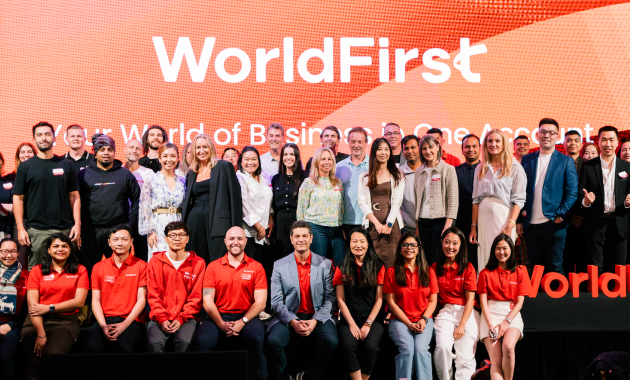
WorldFirst is a payments provider, backed by Ant Group (Ant International), that gives dropshippers a multi-currency business account for paying suppliers and receiving overseas income. It is built for cross-border commerce rather than local banking, so it fits sellers sourcing from China and selling to international buyers.
For a dropshipping business, the account supports three practical jobs:
- Collecting overseas income in major currencies such as USD, EUR, and GBP, so marketplace and customer payments from abroad land in one place. You can then convert between currencies within your account using Convert, the FX product available in the region.
- Paying into 1688 directly through payments on 1688 in USD, which suits sellers sourcing wholesale from Chinese suppliers.
- Paying Chinese suppliers in CNY, available for sellers in Nigeria, through supplier payments to China. This lets Nigerian sellers pay suppliers in the currency they expect.
A worked example shows the fit. A seller in Nigeria sourcing from 1688 might pay a supplier CNY 500 for a test batch, then collect USD 100 from an overseas customer into the same account and convert it as needed. Paying suppliers directly, rather than through an agent, keeps the cost of each order easier to track.
Local-currency payout, where offered, runs over the SWIFT network rather than a local instant rail, so treat it as a standard international transfer with normal timing. WorldFirst’s strength for African sellers sits on the collection, convert, and pay-China side rather than fast local payout.
Opening an account requires business information, identity verification documents, and business registration documents where applicable. WorldFirst is a payments provider, not a bank, and does not hold a licence to operate locally in these markets, so it works as a cross-border tool alongside your local banking.
What are common dropshipping mistakes?
The most common dropshipping mistakes are choosing products without demand research, ignoring supplier reliability, underestimating payment costs, and failing to calculate FX impact on margins. Each one quietly erodes profit, and payment mistakes are the hardest to spot because they hide inside every order.
- Skipping demand research and picking products on gut feeling rather than evidence.
- Ignoring supplier reliability, which leads to late shipments, poor quality, and refunds.
- Underestimating payment costs, treating fees as small when they compound across every transaction.
- Forgetting FX impact, since conversion losses turn a healthy markup into a thin one.
Avoiding these comes down to discipline: research before you buy, verify before you pay, and count every cost, including payments and currency conversion, in your margin.
FAQ
How do I choose a dropshipping platform if I am just starting out?
Start with a low-cost combination: a beginner-friendly supplier source like AliExpress, and either a marketplace or a simple store. Test a small range of products before committing to subscriptions or wholesale orders. Focus on learning demand and supplier reliability first, then scale into wholesale sourcing and a fuller store once you see what sells.
Can I run dropshipping and pay suppliers in China directly?
Yes. You can pay many Chinese suppliers directly in USD through platforms like 1688, and sellers in some markets can pay in CNY. Paying directly removes agents from the chain, which lowers cost and improves traceability. Confirm what currency your supplier accepts and which payment method gives you a clear, visible conversion rate.
What happens if I only use free dropshipping tools?
You can start with free tools, but you will still face real costs. Supplier payments, product costs, marketing, and payment fees all apply regardless of whether your store software is free. Free tools are good for testing a niche cheaply. Build your full cost picture, including FX and payment costs, before deciding if the business is profitable.
Is it possible to reduce the cost of paying overseas suppliers?
Yes. Paying suppliers directly rather than through an agent removes a layer of cost. Using an account built for cross-border payments keeps conversion transparent and can avoid a large share of value being lost to poorly handled international transfers. Always compare the total landed cost, including conversion, not just the headline transfer fee.
How do I avoid supplier fraud when sourcing from China?
Verify the supplier before paying. Check trade history and reviews, request samples, and confirm business registration details. Start with small orders to test reliability. Pay directly through traceable methods rather than informal transfers, and be cautious about sharing sensitive identity details with parties you have not verified.
Conclusion
Choosing between dropshipping platforms is really about matching a store builder, a supplier source, and a sales channel to your niche and budget. The platforms decide where you sell and source. Your payment setup decides how much of each sale you keep. Once you start paying overseas suppliers and receiving international income, a dedicated cross-border payment account helps you protect your margins and reduce reliance on agents.
Sources
- https://www.shopify.com/starter
- https://woocommerce.com/pricing/
- https://getcarro.com/blog/dropshipping-statistics
This article is intended for informational purposes only and does not constitute legal advice or professional advice. This article should not be regarded as constituting an offer or a solicitation to buy or sell any regulated or financial products or services. WorldFirst makes no representations or warranties regarding the accuracy, completeness, or applicability of the content, and readers are encouraged to consult with legal professionals or other professionals for advice tailored to their specific situation. WorldFirst does not guarantee the accuracy and completeness of this article and expressly disclaims any and all liability to any person in respect of the consequences of anything done or omitted to be done wholly or partly in reliance on this article.