






















Industry Solutions
Resources
We provide coverage in South Asia and Middle East: servicing 210+ countries and territories.
WorldFirst Home > blog > Marketplaces & Platforms > Is Dropshipping Profitable? A Realistic Guide for Starting an Online Business in Africa[2026]
Understanding what really determines whether your dropshipping business makes money.
Is dropshipping profitable? Yes, it can be, but profit is never guaranteed. Typical margins sit in single-digit to low double-digit percentages, so your success depends on product choice, supplier costs, marketing spend, and often overlooked payment and currency fees. This guide is for early-stage sellers in Africa who want a realistic picture, and practical ways to protect their margins.
Key Takeaways
Dropshipping can be profitable, but success is not automatic. Your profit depends on how well you select products, control supplier and marketing costs, price your items, and manage payment fees. Typical net margins often sit around 3 to 5% for new stores, so discipline on costs matters more than almost anything else.¹
The model looks simple. You list a product, a customer buys it, and your supplier ships it directly to them. You never hold stock. That low barrier to entry is also the problem. Thousands of sellers list the same products, so your real advantage comes from marketing, customer service, and cost control, not from the products themselves.
For sellers in Nigeria and Ghana, one extra factor matters a great deal: how you pay suppliers and receive income across borders. If you source from China, learning how dropshipping from China works helps you see where these costs sit and how they shape your final margin.
Dropshipping makes money on the gap between what your customer pays and what everything costs you to fulfil that order. In simple terms, your profit is the selling price minus the supplier cost, minus marketing, minus payment and currency conversion fees. When that gap stays positive across many orders, the business is profitable.
Here is how a single order breaks down:
Many new sellers only subtract the supplier cost and assume the rest is profit. That mistake is why margins often look healthier on paper than in the bank. Paid ads are one of the largest expenses for dropshippers, and transaction and software fees eat into profits fast.¹
The biggest costs in dropshipping are advertising, product sourcing, shipping, returns, and international payment fees. Advertising is usually the largest single expense, but for African sellers sourcing from China, payment and currency costs can quietly become one of the most damaging, especially when money moves through agents.
| Cost type | What it covers | Why it matters |
| Product sourcing | Supplier price per unit | Sets your base margin |
| Advertising | Ads on social and search | Often the largest ongoing cost |
| Shipping | Delivery to the customer | Slow shipping raises refund risk |
| Returns and refunds | Faulty or unwanted items | Directly eats confirmed profit |
| International payments | Sending money to suppliers | Fees and FX losses reduce margin |
| Currency conversion | Local currency to USD or CNY | Poor rates shrink every order |
Note: Features and availability may vary by region and are subject to change. Always verify current offerings directly with each provider before making a decision.
Sourcing and advertising are widely discussed, but payment costs get ignored. When you pay a supplier through an informal agent or a slow bank route, the conversion spread and fees can absorb a real slice of each order. Reliable suppliers are also a real challenge: 84% of retailers cite finding them as their biggest difficulty.² Over hundreds of orders, weak sourcing and poor payment routes decide whether you profit or break even.
Dropshipping is still a viable way to make money in 2026, but it is more competitive than it was a few years ago. Easy profits are gone. The sellers who succeed now treat it seriously, test products carefully, and build stores that customers trust rather than expecting instant results.
Three realities shape the market today:
None of this means the model is dead. **The high failure rate is largely attributed to execution problems, not the model itself.**¹ To pick the right sales channel, it helps to compare the best platforms to sell online before you commit.
You can start dropshipping with a modest budget, but you need enough to test products and fund early marketing. A realistic starting figure covers store setup, a small product testing budget, advertising to find what sells, and a way to pay suppliers and receive payments efficiently.
Plan for these early costs:
Starting too lean is a common trap. If you cannot afford to test several products, you may quit before finding one that works. Dropshipping is cheaper and less risky than many other models, but it is not free.¹
Many dropshippers fail because of unrealistic expectations, poor supplier research, and ignoring the true costs of running the business. Industry estimates suggest 80 to 90% of dropshipping stores fail, usually within the first few months, most often due to thin margins and poor customer experience.³
Common reasons for failure include:
For context, this is not unique to dropshipping. U.S. Bureau of Labor Statistics data shows about 20% of all new businesses fail in their first year, and roughly half within five years.⁴ Failure usually comes from avoidable operational mistakes, not from the model itself.
Dropshippers can pay overseas suppliers and manage international payments using a multi-currency business account that lets you hold, convert, and send money across borders. The goal is to reduce reliance on informal agents, avoid poor exchange rates, and keep more of each order as profit.
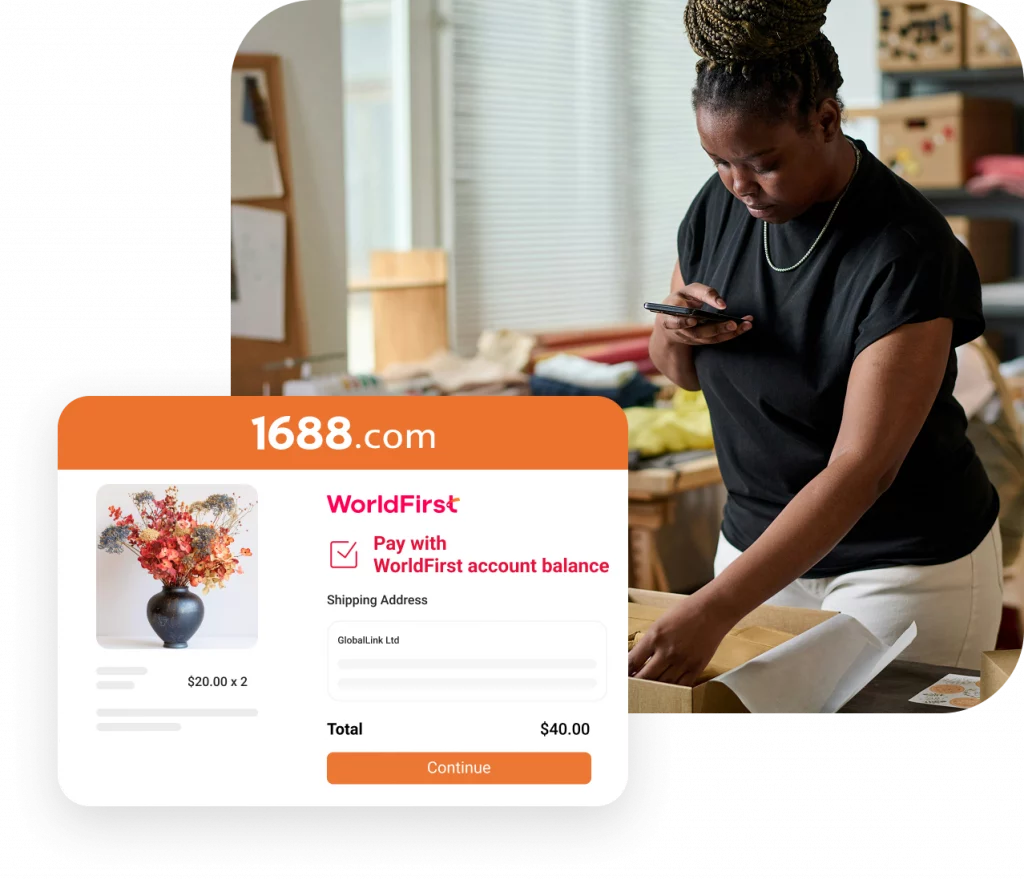
If you source from China, this matters most. Many African sellers still pay suppliers through middlemen, which adds cost and risk, or wait on slow bank transfers where conversion spreads eat into margin. A dedicated account can simplify this. With WorldFirst, a payments provider backed by Ant Group, you can pay into 1688 directly in USD through Balance Pay, and sellers in Nigeria can make supplier payments to China in CNY.
To pay suppliers safely and protect your business:
Setting up an account is straightforward. You provide business information, complete identity verification, and supply supporting business documents where required.
WorldFirst is a payments provider that helps sellers manage cross-border payments through a single multi-currency account. It suits dropshippers who source abroad and sell to international customers, because it brings supplier payments, currency conversion, and income collection into one place.
Depending on your country, you can:
WorldFirst supports businesses across 200+ countries and regions and lets you send to 100+ currencies, which helps as you deal with more suppliers and markets. Note that local-currency payout runs over the SWIFT network, so its main value for African sellers sits in collection, conversion, and paying suppliers in China. WorldFirst is a payments provider, not a bank, and holds no local licence in Africa.
Is dropshipping profitable? It can be, but only with realistic expectations and tight control of your costs. Profit depends on execution: choosing the right products, spending wisely on marketing, serving customers well, and protecting your margins from avoidable payment and currency losses.
Payment infrastructure is part of that discipline. The less you lose to agents, fees, and poor exchange rates, the more of each sale you keep. If you are ready to source from China and sell internationally with fewer payment headaches, a multi-currency account can help you manage the money side as you grow.
You cannot know for certain in advance, so profitable sellers test products with small ad budgets first. Track the selling price against supplier cost, ad spend, shipping, and payment fees. If a product still earns after all costs across several sales, it is worth scaling. If not, move on quickly rather than spending more.
You can start dropshipping on a small budget, but too little money limits your ability to test products and run ads. Since most products you try will not sell, you need enough to test several before finding a winner. Underfunding is a common reason new sellers quit before reaching profit.
If your supplier prices in USD or CNY, your local currency must be converted, and the exchange rate affects your real cost. Poor rates and high fees shrink your margin on every order. Using a multi-currency account to hold and convert currency can give you more control over conversion costs than paying through an agent.
Yes, it is possible to pay overseas suppliers directly without informal agents. Using a business account that supports supplier payments to China lets you send money through recognised routes. This reduces cost and risk compared with middlemen, and gives you clearer records for tracking your true margins.
Payment fees affect profit by reducing what you keep from each sale. Charges to receive customer money, plus conversion spreads and transfer fees to pay suppliers, all come out of your margin. On thin-margin products, these costs can be the difference between profit and loss, so track them alongside supplier and ad costs.
Dropshipping can be profitable when you treat it as a real business and control every cost. Focus on testing products, tracking margins, and choosing efficient payment routes so more of each sale stays with you. When you are ready to source and sell across borders, the right payment setup helps protect your profit as you scale.
Sources
This article is intended for informational purposes only and does not constitute legal advice or professional advice. This article should not be regarded as constituting an offer or a solicitation to buy or sell any regulated or financial products or services. WorldFirst makes no representations or warranties regarding the accuracy, completeness, or applicability of the content, and readers are encouraged to consult with legal professionals or other professionals for advice tailored to their specific situation. WorldFirst does not guarantee the accuracy and completeness of this article and expressly disclaims any and all liability to any person in respect of the consequences of anything done or omitted to be done wholly or partly in reliance on this article.
Linna is a Senior Content Strategy Manager specializing in fintech, cross-border payments, and global ecommerce. With extensive experience in international B2B growth content, and global market expansion, she leads content initiatives that help businesses navigate cross-border trade, international payments, and digital commerce at scale.
Choose a product or service to find out more
Save money, time, and have peace of mind when expanding your global business.

© 2026, Ant International or its affiliates